When TOHO Animation announced the My Hero Academia (2016) Ultra Expo last September, it did so with the unambiguous language of finality. The event was billed as the largest in the anime's history, a two-day gathering at Makuhari Messe in Chiba Prefecture on April 17 and 18, 2027. The framing was institutional rather than promotional: this was not a product launch or a fan convention retrofit. It was the announced terminus of a year-long anniversary project that TOHO had been architecting since before the television run even ended.
 Official trailer
That distinction matters. The pop culture industry has a well-worn template for franchise anniversaries — a wave of limited-edition merchandise, a commemorative illustration, perhaps a remastered release or a streaming event — after which the IP returns to its maintenance phase. What TOHO and the My Hero Academia production committee have executed over 2026 looks structurally different: a sequenced calendar of escalating events designed to give the decade-long television run a formal close, one act at a time.
The Architecture of the Anniversary Year
The My Hero Academia The Animation 10th Anniversary project officially launched on April 3, 2026 — exactly ten years after the anime's first broadcast. The date was not incidental. My Hero Academia season 8, the Final Season, had concluded on December 13, 2025, after nine years, eight seasons, and 170 episodes produced by Studio Bones. TOHO had already signalled the anniversary's scope at Jump Festa 2025, unveiling a commemorative logo, a teaser visual illustrated by longtime character designer Yoshihiko Umakoshi, a new extra episode, and the first details of a worldwide concert tour. The machinery was in motion before the last cut to black.
What followed across 2026 was a programme, not a scattershot. The My Hero Academia in Concert world tour, featuring composer Yuki Hayashi's score performed live alongside scenes from the series, launched May 30 at Pacifico Yokohama before expanding internationally. In August, an immersive virtual exhibition titled Heroes' Footsteps ran inside the VRChat platform from August 28 through September 27, free to access globally. In November came the two-day Ani-Rock Fes 2026: My Hero Academia Plus Ultra Live music festival, held November 22 and 23. Each event was distinct in format — digital, live orchestral, festival — and each occupied a different demographic register. None of them repeated the function of the last.
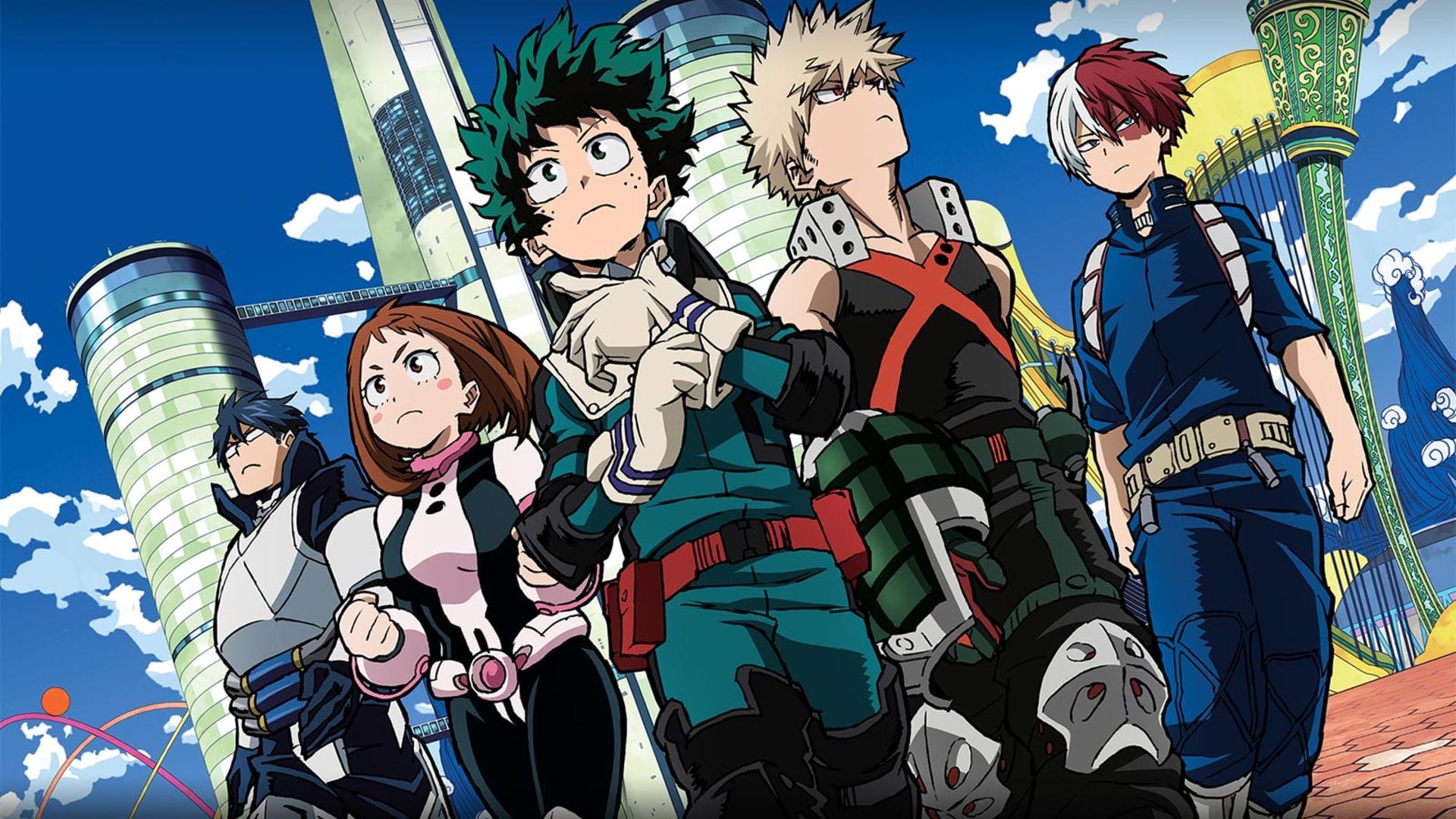
The exhibition leg alone demonstrates the sequencing logic. The My Hero Academia TV Anime 10th Anniversary Exhibition "OUR HERO" is set to open in Tokyo on January 8, 2027, then travel to Osaka from March 5, featuring life-size figures and character key visuals produced specifically for the milestone. It is not a touring merchandise fair. It is a museum-style retrospective of a completed work — the kind of institutional framing you give a finished thing, not an ongoing one. That exhibition closes in Osaka in early March. Ultra Expo opens in April. The sequencing is deliberate to the point of choreography.
What Ultra Expo Actually Is
Ultra Expo will occupy Makuhari Messe's Exhibition Halls 2 and 3, with a stage programme running in the venue's Event Hall — the same complex that hosts Jump Festa. A total of 30 cast members are confirmed to perform across the Main Stage and Open Stage over the two days. Programming details were staged for announcement in early October 2026, following the same drip-release strategy that characterised the entire anniversary year. The My Hero Academia production committee is organising the event, which formally closes the My Hero Academia The Animation 10th Anniversary project.
The scale of the confirmed programme — stage performances, editorial conversations with Kohei Horikoshi's former Shueisha editors, exhibition halls dedicated to the series' visual history — positions Ultra Expo closer to a convention-exhibition hybrid than a typical fan meetup. It is the kind of event that studios stage when they want to put something to rest with ceremony rather than simply let it expire. The gathering is explicitly intended to close out the franchise's anniversary year with an in-person celebration, and for now it remains confirmed only for Japan.
That Japan-only status is worth noting. The concert tour went global, hitting London, European cities, and U.S. venues. The VRChat exhibition was freely accessible worldwide. Ultra Expo, the capstone, stays domestic. This is not unusual for major Japanese franchise events — Jump Festa itself does not travel — but it does suggest that TOHO views Ultra Expo less as an international marketing vehicle and more as a cultural act of closure addressed primarily to the audience that grew up watching the series on its original broadcast schedule.
The Meaning of a Structured Sendoff
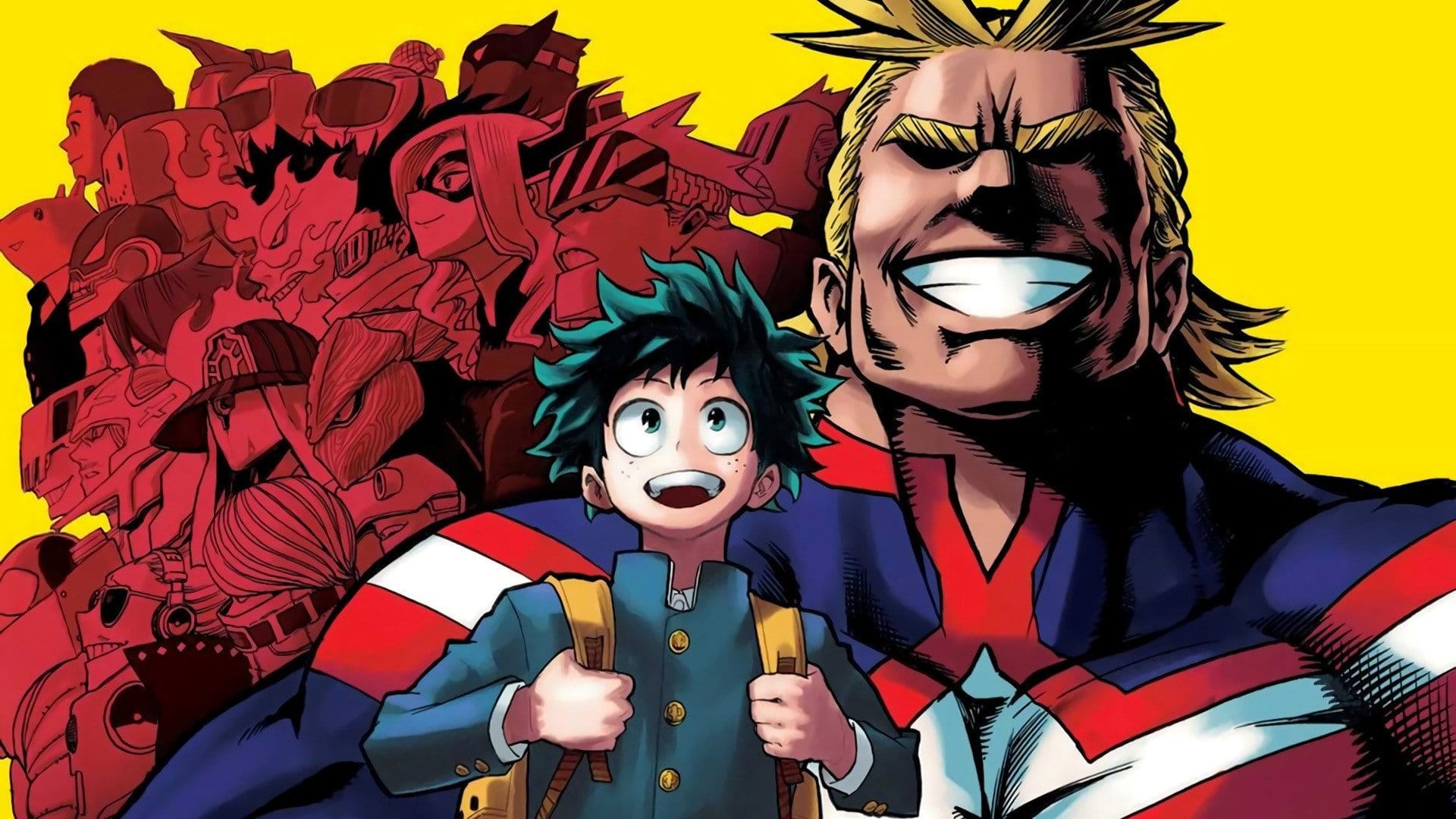
The campaign's architecture also reflects something broader about how the anime industry is learning to manage the end of long-form serialised properties. My Hero Academia ran for nearly a decade, generated a global fanbase, crossed 100 million manga copies in circulation worldwide, and won Crunchyroll's Anime of the Year award for its final season at the 10th Crunchyroll Anime Awards in 2026 — the first concluding season to win the prize. That is a property with enough cultural mass that its ending is itself a news event. How you manage that ending shapes the residual value of everything attached to the IP.
The structured anniversary campaign — extra episode in May, concert tour through the year, virtual exhibition in August, music festival in November, physical exhibition January through March, then Ultra Expo as the keystone in April 2027 — means the franchise's conclusion is prolonged but not diluted. Each event does discrete work. The concert tour is about emotional reactivation; the exhibition is about archival legitimacy; the music festival is about community; Ultra Expo is about gathering. Together they constitute something more like a graduation ceremony spread across thirteen months than a merchandise drop cycle.
This is not entirely unprecedented — the anime industry has staged large farewell events for major properties before — but the deliberateness of the sequencing and TOHO's willingness to announce the closing act months in advance gives the My Hero Academia anniversary project an institutional confidence that is rare. It signals that the studio is not waiting to see whether audience interest sustains before committing to a finale. It has committed to the finale and is working backwards, ensuring each prior event increases rather than exhausts the appetite for what comes next.
For other long-running shonen properties watching how the decade ends, that is a playbook worth studying. As the anime market's overseas revenue now dominates its domestic base — a structural shift the industry is still reckoning with — the question of how to close a global franchise with domestic ceremony becomes a genuinely interesting institutional problem. TOHO's answer, at least here, is to treat the ending as a first-class production: planned, sequenced, and given a room large enough to hold what it means.
Ultra Expo will not resurrect the anime. It will not announce a sequel — nothing in the event's framing suggests any such ambition. What it will do, if the anniversary year has built correctly, is give a room full of people a formal place to say that something they watched for ten years is finished, and that the finish was worthy of the run. In the economy of fan attachment, that is not a small thing. It is, arguably, the most valuable product the entire campaign can deliver.
The live-action Naruto film now in development at Sony and Lionsgate will face this same question eventually: not just how to adapt the property, but how to honour the institutional memory of an audience that spent years inside it. TOHO's structured sendoff for My Hero Academia offers one model of how that can be done without either abandoning the fanbase or holding it hostage to permanent nostalgia.