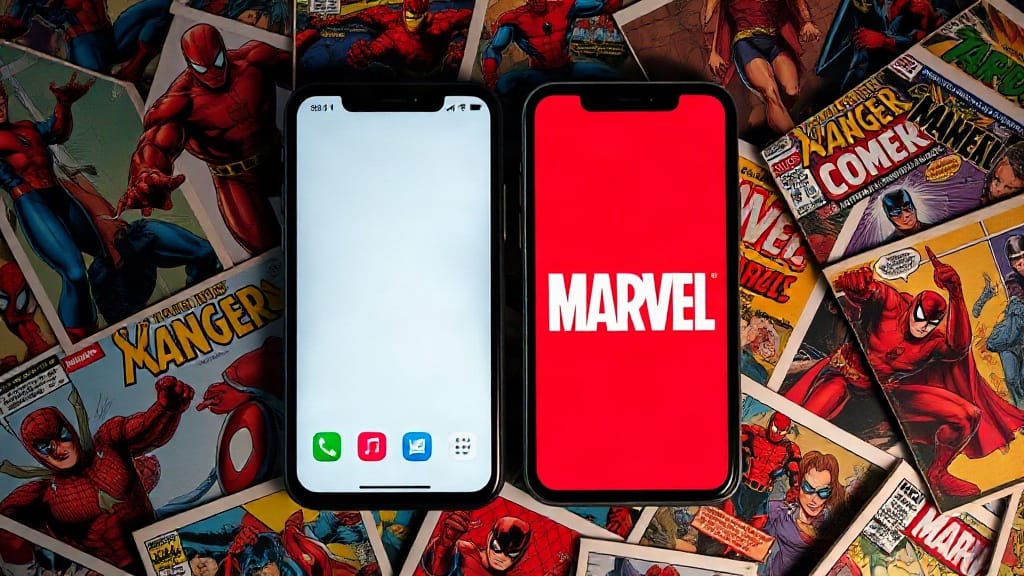
Marvel Unlimited is over. Not rebranded, not refreshed — ended. The subscription service that housed more than 35,000 digital comics and served as the primary archive for decades of Marvel storytelling has been formally replaced by the new Marvel Comics app, built in partnership with WEBTOON Entertainment. Existing subscribers have been migrated automatically. The library is still there, more or less. On the surface, this looks like a platform upgrade dressed up in corporate announcement language. Underneath, it's something more consequential: a structural transfer of the technical infrastructure powering Marvel's digital comics access to an outside operator with its own agenda, its own economics, and its own relationship with readers.
That distinction matters more than the press releases suggest.
What Marvel Unlimited Actually Was
Launched in 2007, Marvel Unlimited was, for all its technical flaws, a genuinely significant cultural institution. A flat monthly or annual subscription gave readers access to a rolling catalog of Marvel comics, with new issues arriving roughly six months after print publication. For longtime fans, it was a research library. For new readers, it was an on-ramp into decades of continuity. For the industry, it was evidence that the direct market's stranglehold on comics access wasn't permanent — that a streaming model for sequential art could function and attract paying subscribers.
The app itself was frequently criticized. It was slow, its offline reading was unreliable, its interface prioritized visual noise over usability, and its recommendation architecture was essentially nonexistent. But the content was the point. Thirty-five thousand issues spanning the Silver Age through last season's event comics, available for roughly ten dollars a month. Nothing else in Western comics came close to that breadth at that price point.
Marvel shutting it down — even while migrating the catalog — signals that the company no longer believes it should be in the business of building and maintaining that infrastructure itself.
WEBTOON's Play
WEBTOON is not a neutral technology vendor. It is one of the largest digital comics platforms on earth, built originally around a vertical-scroll format optimized for mobile reading, and it has spent the last several years aggressively expanding beyond its Korean webcomic roots into licensing, adaptation deals, and Western IP partnerships. Its parent company, Naver Webtoon Ltd., went public on NASDAQ in mid-2024. It is a publicly traded company with growth obligations, investor expectations, and the structural incentive to monetize its platform relationships in ways that pure technology partners do not.
Building the new Marvel Comics app is not a charitable act. WEBTOON gains the technical credibility of powering Marvel's digital reading experience, the user data generated by millions of Marvel readers, and — almost certainly — a commercial arrangement that positions WEBTOON as a preferred or exclusive infrastructure layer for Marvel's digital comics future. That is an enormous amount of leverage over one of the two dominant publishers in American comics.
None of this is necessarily sinister. But it is worth naming clearly, because the framing around this transition has leaned heavily on what readers gain — improved interface, better mobile performance, more consistent offline access — without examining what Marvel has quietly ceded in the process.
The Infrastructure Problem in Digital Media
There is a pattern visible across digital media that this deal fits neatly into. Content owners, under pressure to reduce operational costs and focus capital on IP development rather than platform maintenance, increasingly outsource the technical layer of their consumer relationships to specialized operators. Those operators then become structurally embedded, making it progressively harder to exit the arrangement without disrupting user experience. Over time, the infrastructure partner's commercial interests begin to shape — subtly, then less subtly — the terms under which content is accessed.
The comics industry has particular reason to be alert to this dynamic. Digital comics access has already contracted once at scale: ComiXology's absorption into Amazon, followed by the dismantling of its standalone app and the degradation of its purchasing infrastructure, erased a significant layer of the digital back-issue market and locked purchasing into the Amazon ecosystem. Readers who had spent years building ComiXology libraries found themselves managing a diminished product inside a platform that treated comics as a minor category within a vast retail operation.
The Marvel-WEBTOON arrangement is structurally different — WEBTOON is a comics-native platform, not a general retailer — but the underlying logic is the same: a third party now sits between Marvel and its readers at the infrastructure level. What that means in practice depends entirely on how commercial pressures develop over the next several years.
What Fans Should Watch
The immediate experience for most Marvel Unlimited subscribers will probably improve. WEBTOON has genuine technical competence and a strong incentive to make the migration feel seamless. The catalog appears intact. Pricing, at least at launch, is holding steady. For the reader who just wants to binge the full Annihilation saga on a Sunday afternoon, the transition may feel like nothing more than a forced app update.
But several pressure points are worth watching closely over the coming months and years. First, catalog completeness: does the full archive remain accessible at the base subscription tier, or does a tiered system emerge that puts older or more obscure issues behind a higher paywall? Second, purchasing infrastructure: does the new app support back-issue purchases for non-subscribers at competitive pricing, or does it funnel readers exclusively toward subscription? Third, data portability: what happens to reading history, bookmarks, and personal libraries if a subscriber wants to leave the platform? And fourth — the most consequential — does WEBTOON's involvement eventually reshape what kinds of comics Marvel prioritizes digitally, nudging the catalog toward formats and storytelling modes that perform better on WEBTOON's native infrastructure?
That last question is speculative, but not unreasonably so. Platform affordances shape content. Vertical scroll didn't just change how webcomics were read — it changed how they were written, paced, and structured. If WEBTOON's infrastructure begins to influence how Marvel thinks about digital-first presentation, the downstream effects on the comics themselves could be significant.
The Larger Stakes
American superhero comics are already a contracting print market propped up by the cultural weight of IP that has migrated almost entirely to film and television. The digital subscription model was one of the more credible paths toward expanding the readership of actual comics — the source material — rather than simply feeding the franchise machine. Marvel Unlimited, for all its technical inadequacies, represented a genuine commitment to that path.
Whether the new Marvel Comics app continues that commitment, or whether it gradually becomes a promotional anteroom for Disney+ content and event-comic marketing rather than a serious archive for readers, will depend on decisions made in boardrooms rather than editorial offices. WEBTOON's involvement doesn't make that outcome more likely. But it does mean that if the service degrades, or the pricing shifts, or the catalog narrows, Marvel will have one additional layer of institutional distance from which to explain why.
Infrastructure decisions are content decisions with a delayed fuse. Today, the library migrated. The question worth asking is who decides, in three years, what it contains — and who pays to read it.