The first thing Evangelion: Δ Cross Reflections asks of its player is not to pilot anything. In the teaser Pixelity released at the end of September, the camera is a pair of hands holding a hedge trimmer, working through a bush on a sunlit lawn while Rei Ayanami stands in the background. Another shot is a slice of pie. For a franchise whose most famous line is a boy repeating that he mustn't run away, it is a strangely quiet way to begin. It may also be the most faithful thing about the project.
On October 13, the Korean studio announced that the game is coming to Europe for the first time: a free hands-on preview in Frankfurt am Main on November 6, part of what it calls a global tour. According to the press release, applications close on October 26 at 23:59 CEST, attendees must be 18 or over, and places will be drawn by lottery if demand exceeds capacity — which is what happened in San Francisco on September 25, when the studio says it "received more applications than available spots."
What Pixelity Is Actually Building
Δ Cross Reflections is an immersive action-adventure built for extended reality — virtual reality plus mixed-reality passthrough — rather than a flat-screen game with a headset mode bolted on. The player is a NERV trainee in Tokyo-3, interacting with the series' principal cast alongside original characters, in what the studio describes as a new story that "crosses paths with" the world of Neon Genesis Evangelion (1995). It is not a remake of the anime. Kotaku describes it as the first part of a planned trilogy, with the protagonist a recruit hoping to become an Evangelion pilot, and Angel battles and returning locations promised along the way.
The project was first titled in September 2025, when Pixelity and Khara confirmed the trilogy structure and set the first instalment against the arc of the anime's opening episodes. At the time the release was pencilled for 2026. It is now 2027, and the platform list remains a single phrase: "various VR devices." No headset has been named, no price announced, no publisher other than Pixelity itself identified.
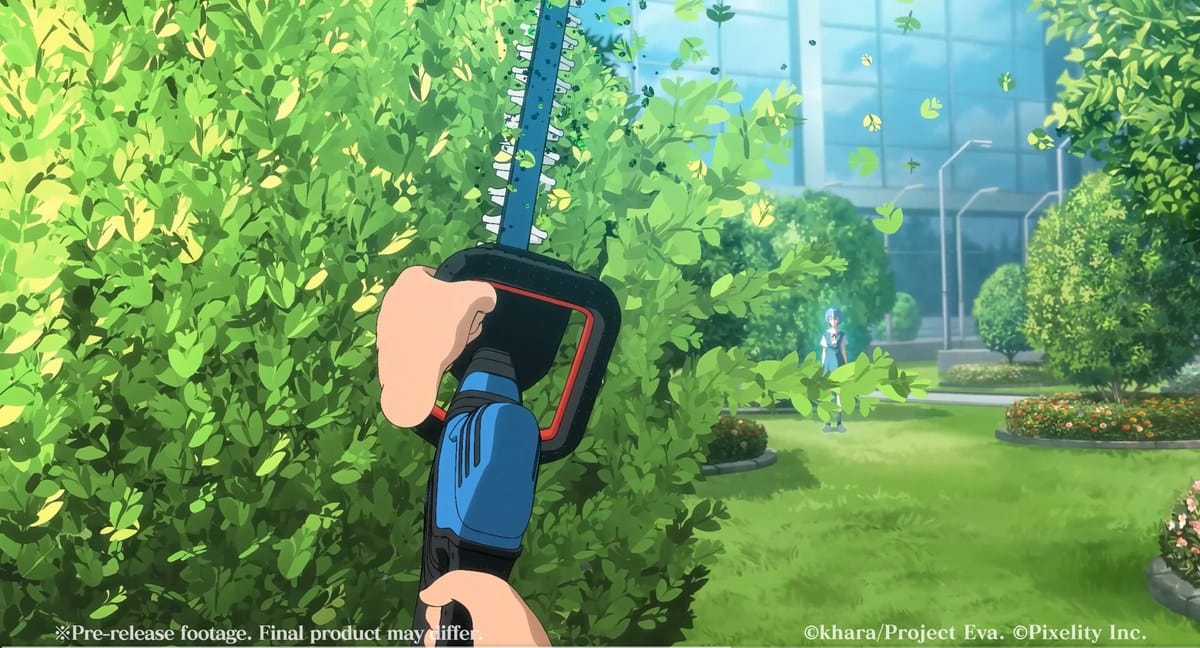
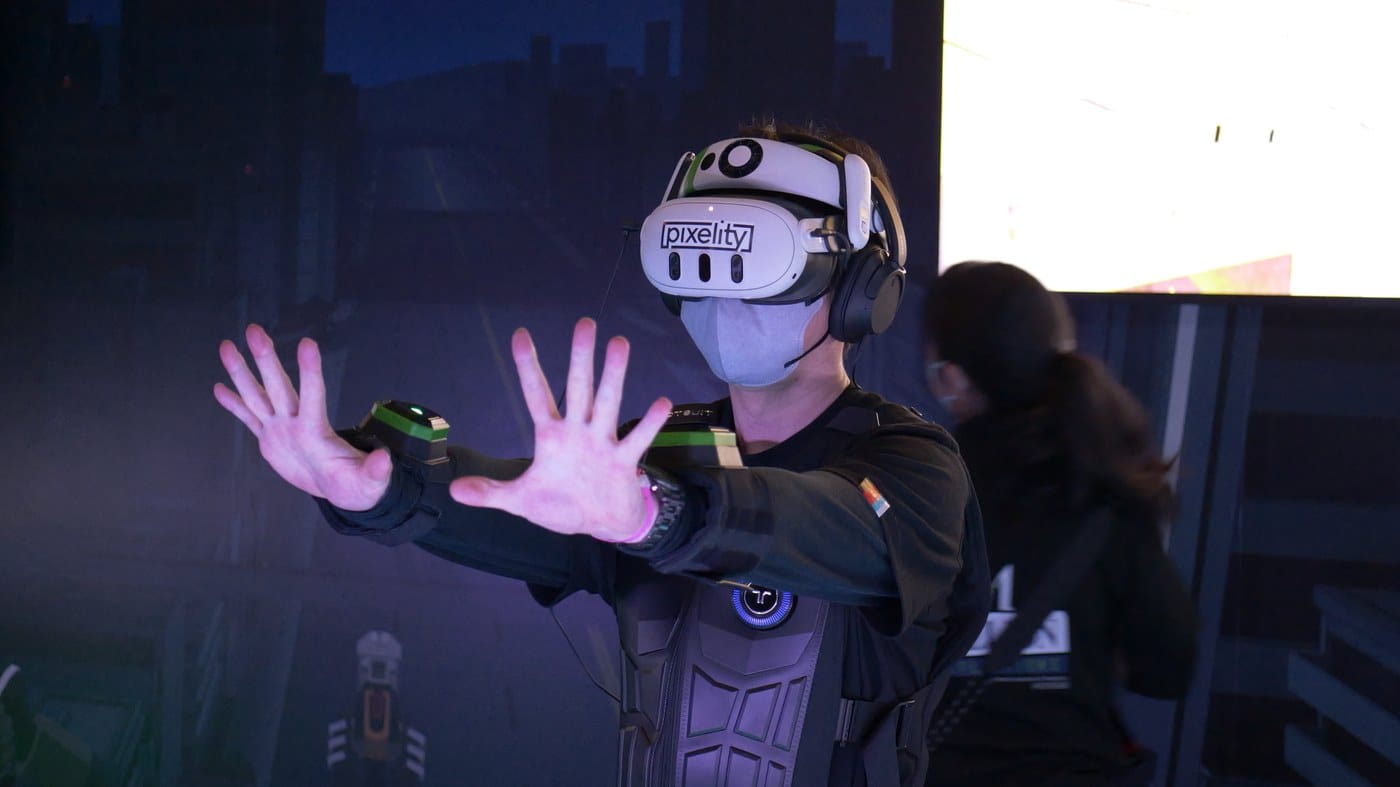
Hand tracking is the primary input. Road to VR reported earlier this year that the studio is designing around the player's own hands rather than controllers, which explains why so much of the footage so far is about manipulation: trimming, eating, repairing vehicles, handling a weapon at a shooting range. The Frankfurt build splits that into a "Story Mode," built on narrative and character interaction, and a "Battle Mode" set inside a NERV combat simulation. Attendees will also walk a virtual recreation of NERV Headquarters and take part in an AR moment in which, in the release's words, a major Evangelion character approaches and stands beside them, the encounter "captured in a photo."
Why the Hedge Trimmer Matters
The obvious pitch for an Evangelion VR game is the entry plug: the claustrophobia of LCL, the synchronisation ratio climbing, the Unit-01 cockpit made physical. Pixelity will surely deliver some version of that. But the material it has chosen to lead with points somewhere less predictable. The series Hideaki Anno made was never only about Angels. It was about the long, uncomfortable stretches between them — school corridors, shared apartments, cicadas, convenience-store dinners, children doing chores in a city built to be destroyed. The robots arrive in a few minutes of each episode; the waiting takes up the rest.
A game that casts you as a trainee rather than a chosen pilot is structurally aligned with that. You are not Shinji. You are someone on the periphery of NERV, close enough to the children to watch what the organisation does to them. If the writing is good, that position is more interesting than the cockpit, because it is the one the anime's audience has always occupied: a spectator who cannot intervene. If the writing is weak, it is a theme-park tour with famous mascots. Frankfurt is the first chance for European players to judge which.
The Legacy-IP Question
The timing is not incidental. More than thirty years after its broadcast debut, Evangelion remains one of anime's most relentlessly licensed names, and this project sits in the same current as CLAMP's Magic Knight Rayearth revival and the wider industry habit of returning to the canon for safe ground. What distinguishes Δ Cross Reflections is that it is using that safety to fund a technical gamble: a story-driven XR game, from a mid-sized studio founded in 2017, in a market where narrative VR remains commercially marginal. A familiar name is the only way a project like this gets made, and the only way it gets noticed.
That is also the risk. Evangelion fans are unusually alert to anything that smooths the series' edges, and the cheerful tone of the teaser — sunlight, greenery, dessert — will read to some as a misunderstanding of the source. To others it will read as the point. Canonised anime tends to be remembered for its climaxes; the people who made it often cared more about the ordinary days.
What to Watch For on November 6
Three things will tell us more than any trailer. First, whether hand tracking holds up in combat, not just in chores; precise input under pressure is where controller-free VR usually breaks. Second, how the original characters are written against the established cast, because a trainee protagonist only works if NERV feels like an institution and not a set. Third, platforms: a 2027 window with no named headset is a long way from a launch plan.
Until then, Evangelion: Δ Cross Reflections is a promising idea with an unusual instinct — that the way into Tokyo-3 is not through the cockpit, but through the garden outside it.