One hundred and sixteen. That is how many retailer-exclusive covers Chainkata #1 will carry when it hits comic shops on November 18, 2026. The number is so large it invites satire — and it got it; Comic Book Club Live's headline cheekily mourned that Daniel Warren Johnson and Image Comics had "just GIVEN UP" by releasing only 116 covers. But beneath the irony is a genuine data point, and it is one of the clearest reads on the state of creator-driven comics in the direct market that this year has produced.
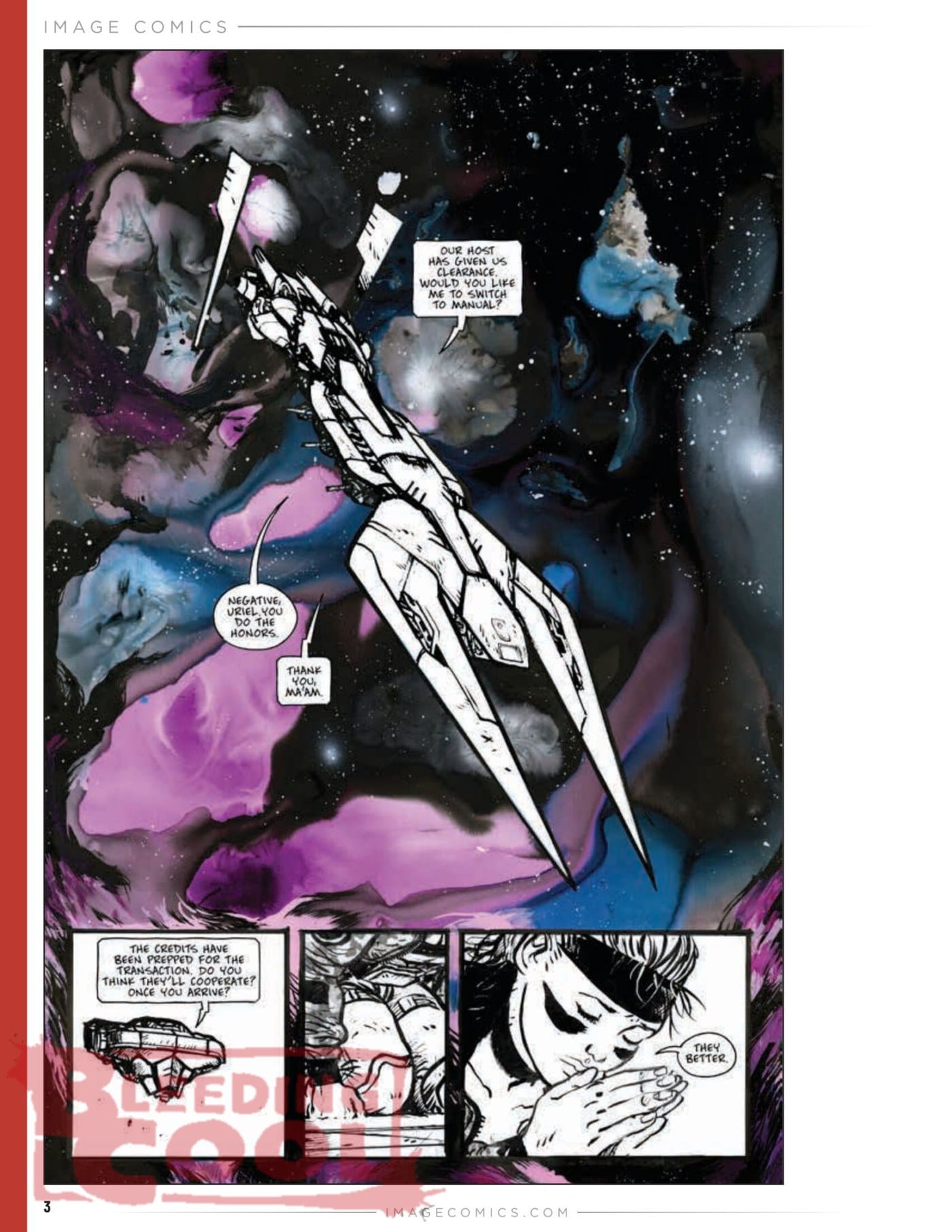
The premise of the series is pure Johnson: according to Image Comics, Chainkata follows Luma, a chainsaw-wielding warrior queen seeking an unknown power in the vastness of space — Princess Mononoke meeting Warhammer 40,000, in the publisher's own pitch. The book is 40 ad-free pages for $3.99. Johnson describes it as nine years in the making; he sketched Luma for the first time in 2017 and spent the intervening years deciding the story was worthy of publication. That long gestation is either stubborn perfectionism or earned patience, and in Johnson's case, it reads as both.
What the Covers Actually Represent
Retailer-exclusive variants are not chosen randomly. They require a shop to negotiate with the publisher, commission an artist, cover printing costs, and commit to a minimum print run — typically in the hundreds of copies. A retailer who does that is not hedging; they are betting. They are allocating inventory dollars and floor space months in advance on the conviction that a specific title will draw customers willing to pay a premium for a locally sourced object. When 116 shops across the industry make that bet simultaneously, the aggregate is a form of pre-order intelligence that no publisher survey can replicate.
Bleeding Cool reported that sources inside Image Comics described Chainkata #1 as tracking at "Energon or Absolute Batman levels" of retailer support — a comparison that names two of the most commercially dominant comics of the past two years. The SDCC ashcan edition of Chainkata #1, a 500-copy print run, reportedly sold out in minutes at the Image booth this past summer, with raw and CGC 9.8 copies already commanding aftermarket premiums before the series has published a single retail issue. That is not hype manufacture. That is organic secondary-market price discovery, which is the one signal in comics collecting that cannot be faked.
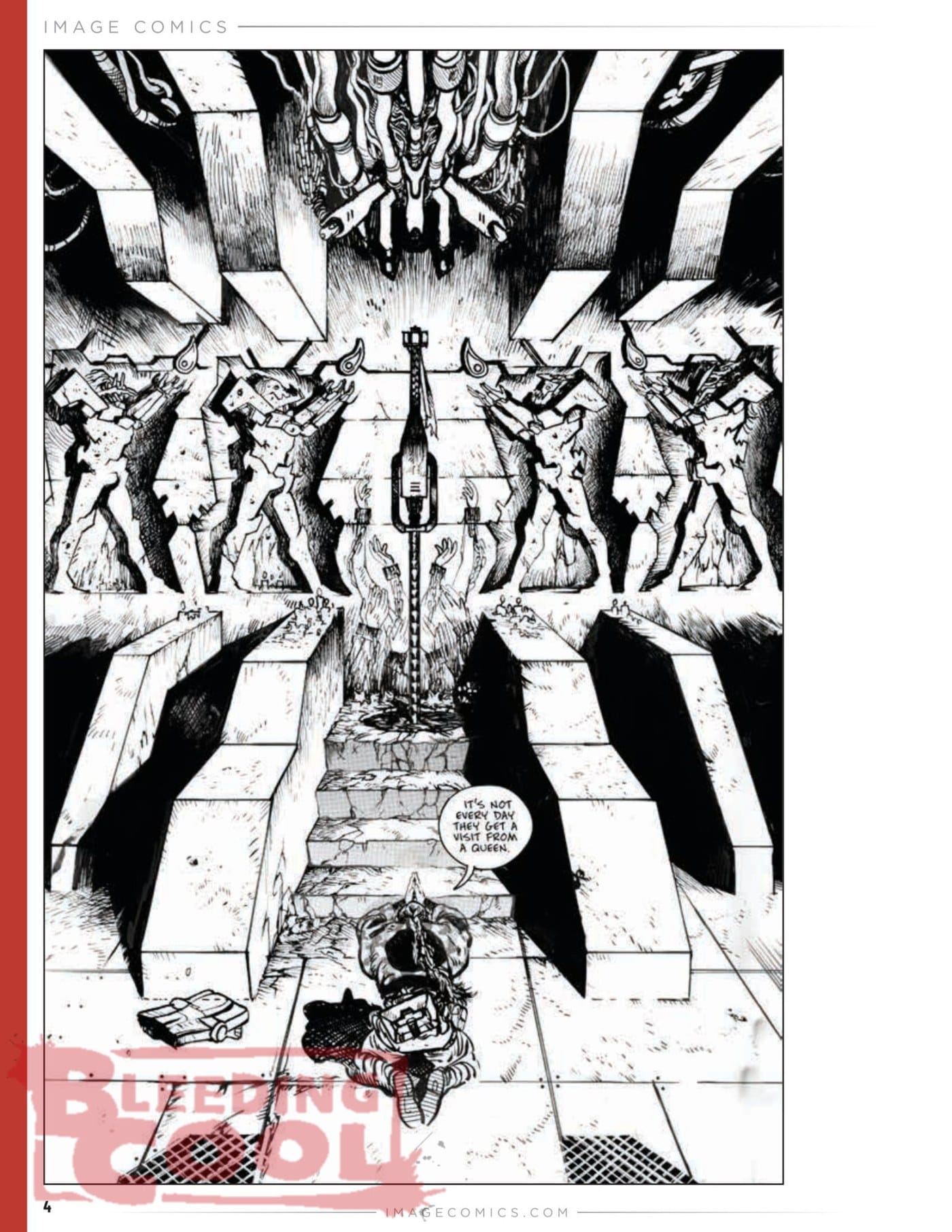
The variant artist roster confirms that retailers are not operating on speculation alone. Bleeding Cool's coverage of the full rollout lists confirmed contributors including Jim Rugg, Clay Mann, Skottie Young, Riley Rossmo, and Rob Liefeld — artists whose cover appearances themselves carry collector value. One cover, for Third Eye Comics, is drawn by Johnson himself; the other 115 are by artists who have either calculated or been convinced that their association with this book is worth their time. That is a separate endorsement from the retailer one, and it compounds the signal.
Johnson's Trajectory Makes the Bet Legible
To understand why 116 shops moved on this without hesitation, you have to walk the career. Johnson launched Extremity (2017) as a creator-owned Eisner-nominated sci-fi revenge epic at Image/Skybound, followed it with the heavy-metal monster saga Murder Falcon (2018–2019), then the Eisner Award-winning Do A Powerbomb (2022) — a pro-wrestling emotional devastator that confirmed he could operate at full pitch on serialized story structure, not just visual spectacle. Each book built a constituency that was less casual than loyal: readers who pre-ordered, who bought collections, who drove secondary market demand.
Then came the Skybound Transformers run. The Hollywood Reporter confirmed that the Energon Universe — the shared Hasbro comics universe Johnson helped launch — has now sold over 7.6 million units since 2023, with Transformers alone accounting for approximately 3.5 million of that total. Transformers #1, the issue Johnson wrote and drew, has gone through 15 printings and sold over 350,000 copies. Robert Kirkman, the Energon Universe architect, has publicly credited Johnson's inaugural run as the engine that made the line viable. For a creator to anchor a shared universe that outsells most DC and Marvel ongoings on the strength of pure craft — without IP nostalgia doing the heavy lifting — is not a small achievement.
Johnson's Transformers tenure earned the series Eisner Awards for Best Continuing Series and Best Writer/Artist in 2024. He concluded his run with issue #24 in September 2025 and pivoted immediately toward Chainkata, a creator-owned work where the upside — financial and artistic — belongs entirely to him. That transition is the context in which the 116-cover rollout has to be read. Retailers aren't just betting on a good comic. They're betting on a creator at the peak of his market power returning to the format — Image, creator-owned, no licensed IP — where his instincts have historically run hottest.
What the Number Measures
The variant-cover economy in American comics has taken substantial criticism over the past decade, and often correctly so. At its worst, the model taxes collectors, inflates print-run optics, and props up launches that wouldn't survive on story alone. But that critique, accurate in the aggregate, obscures what the model reveals when applied to a specific title at a specific moment. Retailers are not passive recipients of publisher marketing. They are small business operators with limited capital and direct exposure to reader demand in their local markets. When 116 of them independently decide to put skin in the game on the same debut issue, that is a consensus formed under real financial risk.
The comparison to Absolute Batman numbers — DC's prestige-tier relaunch of its flagship character — is striking for what it implies about category. Johnson's Chainkata has no Batman. It has no 40-year IP, no film franchise, no casual-reader recognition. What it has is a creator whose last four major projects have all overperformed expectations, a nine-year development arc that the market has now absorbed as a legitimacy signal, and a pitch — chainsaw, warrior, space — that arrives fully formed rather than committee-processed. The market is betting, essentially, that Johnson's personal creative mythology is now as bankable as a legacy property. That is a significant claim for the direct market to make.
This connects to a broader question about where creator-driven comics actually sits in late 2026. The direct market has spent years in a structural squeeze: digital migration, consolidation, the dominance of collected-edition economics, and a collector bubble that inflated and partially corrected. Against that backdrop, the Chainkata rollout functions as a confidence indicator. It suggests that when a creator has built a track record that translates across formats — floppies, trades, awards, secondary market — the direct market is still capable of mobilizing around them at scale. That is not guaranteed; it is earned. Johnson has earned it through a body of work that is, at its core, about people who absorb punishment and keep moving. The industry is now doing something similar, and it is placing its chips on him to lead it somewhere worth going.
Whether Chainkata actually delivers on the weight of that expectation — whether Luma's journey through black holes and violence is the science-fiction book Johnson has spent nine years believing it could be — is a question that only issue #1 can begin to answer. The 116 covers will exist regardless. What they already tell us, before a single page is read in a shop, is that the direct market's capacity for genuine enthusiasm is not exhausted. It is just selective. And on this particular Wednesday in November, it has made its selection clear.
For a broader look at how landmark first issues navigate the weight of commercial expectation, see Kynari's analysis of Amazing Spider-Man #1000 and what milestone issues demand of the industry. And for context on what happens when digital disruption reshapes how readers access comics entirely, the implications of Marvel Unlimited's end and the WEBTOON migration sit directly adjacent to this conversation about direct-market health.