The release calendar for today includes a dark action RPG, a detective noir, and a game where two people walk through a colorful world together. One of these is the most radical design statement of the year. It is not the one with skill trees.
Big Walk (2025), the new co-op title from Melbourne-based studio House House, asks almost nothing of its players. There are no objectives posted in the corner of the screen, no loot cascading from defeated enemies, no daily login bonus waiting to pull you back tomorrow. You walk. Your partner walks. The world is warm and wide and unconcerned with your productivity. That is, structurally speaking, an act of aggression against the dominant grammar of multiplayer gaming.
The Compulsion Economy
Co-op gaming over the past decade has been shaped almost entirely by retention mechanics dressed as social experience. The genre's most successful entries — from Destiny 2 (2017) to Diablo IV (2023) to Helldivers 2 (2024) — are engineered around what behavioral economists call variable reward schedules: unpredictable drops, timed seasonal content, and progression systems designed to manufacture need where none existed. Playing together, in this model, is a delivery mechanism for dopamine, not a condition with intrinsic value.
House House, characteristically, ignores this entirely. Their previous game, Untitled Goose Game (2019), was similarly allergic to convention — a slapstick stealth puzzle game with no combat, no fail state in any meaningful sense, and a comedic premise that critics initially couldn't quite locate on any existing map. It sold over a million copies in its first year. The studio has never seemed interested in what the market says it wants.
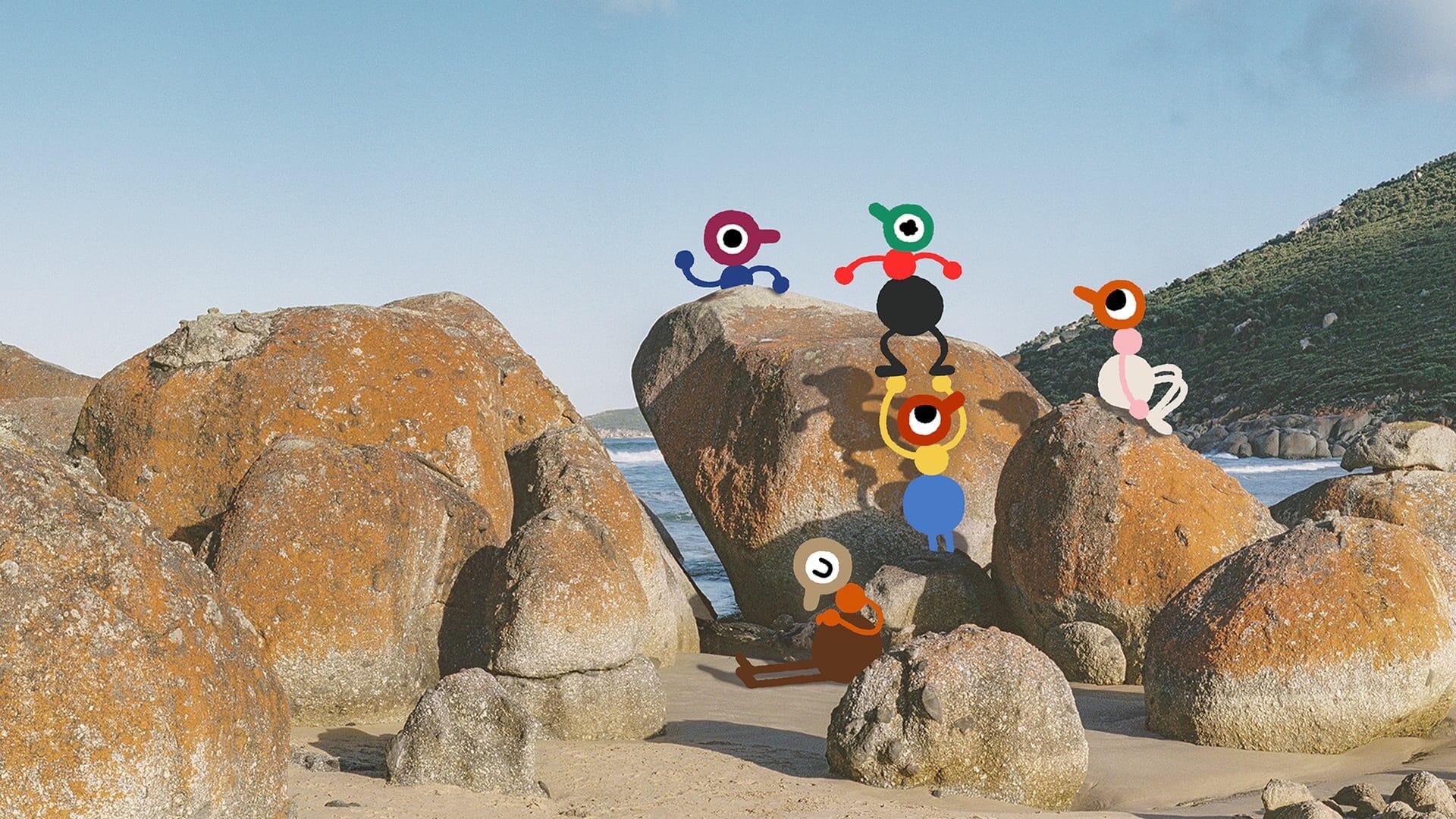
Big Walk pushes that sensibility further. Where Untitled Goose Game still offered tasks — a checklist of petty torments to inflict on a village — Big Walk strips even that scaffolding away. The experience is almost entirely phenomenological: two players moving through space, noticing things, sharing the act of being somewhere together. It is, in the most precise sense of the word, a walk.
What "Together" Actually Means
The co-op design question that Big Walk implicitly raises is one the industry rarely pauses to ask: what are players actually doing when they play together? The standard answer is coordination — complementary roles, shared objectives, tactical communication. But that answer smuggles in an assumption, which is that the point of togetherness is efficiency toward a goal. House House seems unconvinced.
There is a different tradition, mostly neglected in games but alive everywhere else — in cinema, in literature, in the experience of actual walks — that treats companionship not as a resource multiplier but as the thing itself. Walking with someone changes what you notice. It changes the pace of thought. The conversation that emerges from side-by-side movement is structurally different from the conversation that emerges from sitting face to face. Researchers have noted it; writers have always known it. House House has built a game around it.
That the studio chose co-op rather than solo is the critical decision here. A solitary walking game — Dear Esther (2012), What Remains of Edith Finch (2017) — slots comfortably into the "walking simulator" category, a term that was originally derisive and has since been rehabilitated into a modest genre. Big Walk refuses that refuge. It is explicitly, structurally about two people, which means it cannot be rationalized as introspection or environmental storytelling. It just wants you to bring someone.
The Contrast the Calendar Makes
Releasing on the same day as a combat-heavy action RPG and a dialogue-driven detective noir is either an accident or a provocation; with House House, it is hard to rule out either. But the juxtaposition illuminates something regardless of intent. The action RPG will ship with endgame content designed to extend engagement for months. The noir will reward careful attention to systemic logic and narrative architecture. Both are making arguments about what games should do to their players.
Big Walk makes the opposite argument: that a game can decline to do things to its players and still be worth playing. That shared presence — unharnessed, unprogressed, unrewarded — has a value that the industry's dominant economic model has systematically trained audiences to distrust.
Whether players show up for it is a separate question. But House House has asked it cleanly, without sentimentality, and in the form of a game that costs money and takes up space on a release calendar crowded with things trying much harder. That restraint is its own kind of statement. It is loud, in the way that quiet things sometimes are.