Game Freak has always existed in two registers simultaneously: the studio that makes Pokémon, and the studio that is Pokémon. For most of its commercial life, that distinction didn't matter. Now, with Beast of Reincarnation (2025), it does — and the game is only partially about what it puts on screen.
The Weight of a Single Franchise
To understand what Beast of Reincarnation represents, you have to understand what Game Freak has been, structurally, for the better part of three decades. The studio did not graduate into a Pokémon factory — it was gradually absorbed by one. Side projects like Tembo the Badass Elephant (2015) and Giga Wrecker Alt. (2019) were treated, by the industry and the press alike, as curiosities at best, footnotes at worst. They arrived and departed without reshaping the studio's public identity in any meaningful way. Game Freak remained the Pokémon Company's production arm in the eyes of the market, regardless of what it was actually building between mainline entries.
That dynamic created a specific kind of creative asymmetry. Every decision made inside a Game Freak title that wasn't Pokémon was implicitly measured against the franchise it wasn't. Giga Wrecker wasn't just a physics-based action game — it was a Game Freak game that wasn't Pokémon. The framing preceded the experience every time. Beast of Reincarnation is the first project that looks designed to break that framing rather than merely sidestep it.
Post-Apocalypse as Tonal Statement
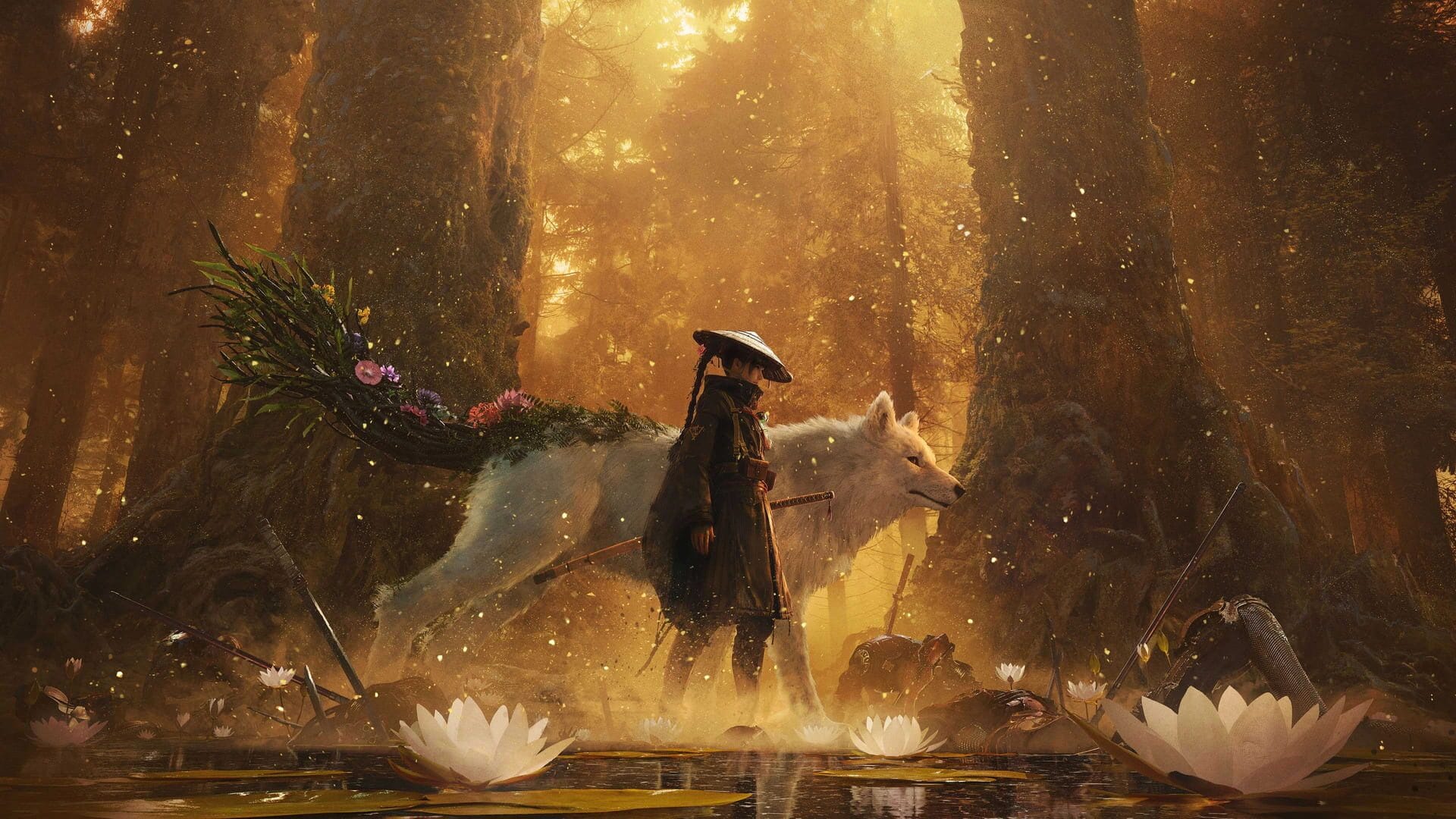
The setting is deliberate. A post-apocalyptic action RPG is not the natural next step for a studio known for creature-collecting adventures aimed at children and adults equally. It is a hard turn — tonally, mechanically, and commercially. The choice of a collapsed world, survival-adjacent systems, and action-forward combat isn't genre tourism. It is a studio insisting, through formal decisions, that it possesses a range it has never been permitted to demonstrate at scale.
What makes Beast of Reincarnation structurally interesting is that it doesn't hedge. The post-apocalyptic premise isn't softened with whimsy or retrofitted with creature-catching mechanics to ease the transition for a Pokémon-conditioned audience. Game Freak is not building a bridge back to its primary franchise. It is building something that requires the audience to meet it somewhere new.
That is a riskier proposition than it sounds. Studios with dominant IPs don't easily escape the gravitational pull of their own most profitable output. The audience follows the brand, and the brand follows the revenue, and the revenue follows the safest version of what already worked. Game Freak breaking that loop — if Beast of Reincarnation performs well enough to constitute a break — would be less a creative victory than an institutional one.
What "Finally" Actually Means
There is a temptation to frame this moment as liberation — the studio shaking off its constraints and finally expressing something authentic. That reading is too simple and probably too generous. Game Freak is not a studio in creative captivity. It chose, repeatedly, to anchor itself to Pokémon, and the returns from that choice funded whatever creative latitude it now exercises. Beast of Reincarnation is not the result of suppression finally ending. It is the result of a studio with enough accumulated security to absorb the risk of being wrong about what it can make.
That's a different, more honest story. And it's more interesting than the liberation narrative, because it places accountability where it belongs: not on The Pokémon Company as a constraint, but on Game Freak as an agent that is now, deliberately, choosing its own terms.
Whether the game itself justifies those terms is a question that remains open. Action RPG mechanics are crowded terrain, post-apocalyptic settings are well-worn, and critical goodwill toward a studio's identity shift does not substitute for design that earns its place in a saturated genre. Game Freak will be judged on what Beast of Reincarnation actually is — not on what releasing it represents.
But representation still matters. The studio that made Pokémon Red (1996) is releasing a post-apocalyptic action RPG without a single pocket monster in sight. The argument embedded in that fact is not about creative freedom. It is about institutional identity — about what Game Freak is when it removes the one thing everyone assumes it is. The answer to that question is now, finally, a game.