Nostalgia has always been a lie we tell ourselves about time. But the current wave cresting across TikTok feeds, Discord servers, and reposted Tumblr screenshots is a particular kind of dishonesty — one that deserves examination rather than celebration. The so-called "2016 revival" isn't a cultural homecoming. It's a symptom of a generation that finds the present genuinely uninhabitable and has chosen, as a coping mechanism, to aestheticize the last moment before everything got worse.
The Aesthetic Without the Memory
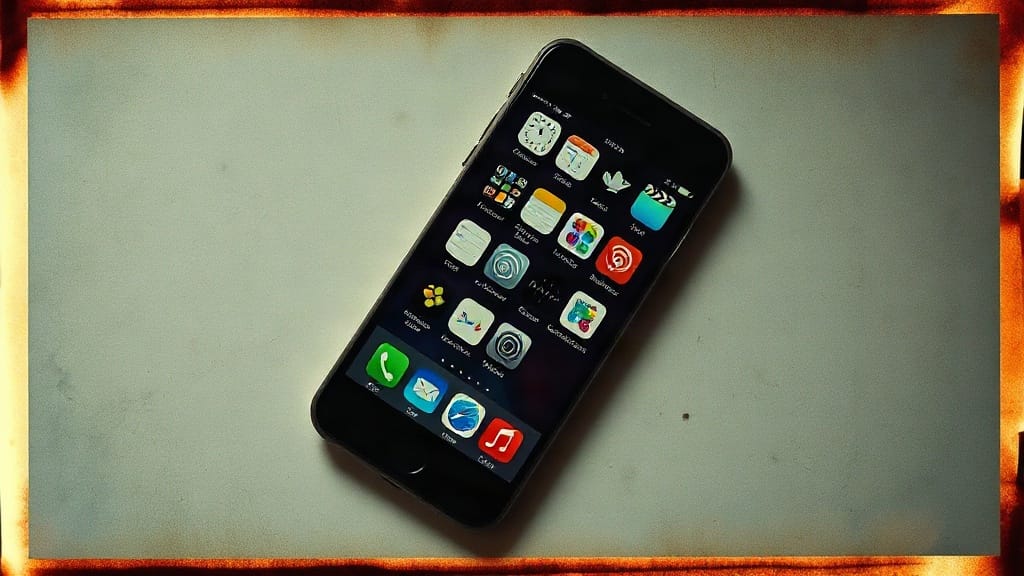
What's circulating isn't 2016 as it was lived. Nobody is reviving the ambient dread of that election cycle, the casual cruelty of early platform capitalism, or the grinding precarity that defined most young people's actual experience of that era. What's being recycled is the surface layer: dog-face Snapchat filters, the particular hue of an Instagram Valencia filter, Vine compilation formats, chunky pixel fonts, and the specific irony-sincerity tension of mid-2010s meme culture — the era of "loss.jpg" and "Dat Boi" and the brief, strange reign of the frog as political symbol.
The selectivity is the tell. Every nostalgia wave sanitizes its source material, but this one does it with unusual precision. The aesthetic being resurrected was already, in its own moment, largely a performance of coping. The internet of 2014–2017 was dense with absurdist humor precisely because the ground was shifting beneath an entire generation. Recycling its aesthetics now — without that original context — produces something hollowed out: a vibe in place of a reckoning.
Why 2016, and Why Now
The timing is not arbitrary. 2016 functions, culturally, as a kind of event horizon. Before it: a version of the internet and the world that still felt navigable, even if imperfectly. After it: a cascade — pandemic, algorithmic radicalization at scale, the collapse of institutional trust, an attention economy that finished what it started. For anyone between 20 and 30, that year marks the last timestamp before the accelerant was applied.
The nostalgia is therefore less about affection than about orientation. It says: we knew where we were then. The meme formats, the filter aesthetics, the references to now-dead platforms — they function as coordinates in a timeline that feels increasingly illegible. Pinning yourself to 2016 is a way of insisting that there was once a before, even if the before was also difficult. It's grief dressed as irony, which is — to be fair — an extremely 2016 thing to do.
The Meme Reset as Cultural Diagnosis
There's a structural dimension worth separating from the emotional one. Internet culture has been cycling through references faster than any previous media format in history, and by the early 2020s it had largely eaten itself — irony collapsing into meta-irony collapsing into sincerity collapsing back into irony with no stable floor. The "Great Meme Reset" being invoked in certain corners of online discourse is a recognition that the current format has run out of runway.
Returning to 2016-era aesthetics is, in that light, partly a formal reset — an attempt to find a grammar that still communicates. The dog-face filter isn't beloved because it was good. It's beloved because it was legible, because it existed in a moment when a shared visual language was still possible on platforms that hadn't yet been fully colonized by algorithmic monoculture. The nostalgia is for comprehensibility itself.
What the Mourning Actually Costs
The danger is not that people are looking backward. The danger is mistaking the look backward for a political or creative act when it is, more precisely, an avoidance of one. Aesthetic recycling is comfortable. It produces engagement, it generates community, and it requires nothing of its participants except recognition. I remember this is not the same statement as I understand what happened.
A generation that survived 2016 — that absorbed its actual political and cultural violence — deserves better than a revival of its wallpaper. The filters were never the point. The memes were always downstream of something harder to look at directly. If the revival has any honest function, it's as a prompt: not to return, but to trace the line from that moment to this one and name, with the clarity that distance sometimes provides, exactly where things broke and why.
The present is uncomfortable. That's a diagnosis, not a destination. Decorating it with Valencia-filtered throwbacks doesn't change the room — it just makes it harder to see the walls.