The story never made the history books. Mary and Martha Clarke — biracial Black twin sisters living in post-Reconstruction Marlin, Texas — passed for white, became gun-toting outlaws, and robbed their way through the 1890s to clear their mother's sharecropper debt and save her home. When members of Angelica Chéri's family told her stories about her great-great-aunts, two African American women who passed for white and were believed to have been outlaws in post-emancipation Texas, she became heir to what scholars call the African American oral storytelling tradition. Broadway, on November 8, 2026, finally made those stories public property.
Wanted: The Legend of the Sisters Clarke (2026) opened at the James Earl Jones Theatre to a crowd that included Vanessa Williams, Rachel Zegler, Jesse Eisenberg, Wendell Pierce, and LaChanze — a constellation of figures that announced, at minimum, that the American entertainment establishment had decided to show up. Whether that showing-up represents a structural shift or a seasonal gesture is the more interesting question.
Eleven Years in the Making
Chéri and her collaborator, composer Ross Baum, finished the project in their thesis year at NYU in 2015. From that moment, it went down a development track that would take more than a decade to reach its destination. The show won the 2018 Richard Rodgers Award and was developed at the NEXT Festival at Theater Latte Da, chosen from 170 submissions for the 2017 SigWorks Musical Theater Lab at the Signature Theatre in Arlington, Virginia. It received a sold-out world premiere at Virginia's Signature Theatre in 2020 and a subsequent run at the Paper Mill Playhouse in 2024, where it earned a New York Times Critic's Pick.
Over the past 12 years, Chéri and Baum honed their musical version of the Sisters Clarke — starting at the NAMT festival in 2018, premiering out of town at Arlington's Signature Theatre in 2020, bowing at the Paper Mill Playhouse in 2024 — all under the title Gun & Powder — before debuting on Broadway as Wanted. The title change is itself a small editorial statement: Gun & Powder framed the story as a Western genre exercise; Wanted locates the sisters inside a legal and social apparatus that criminalized their very survival.
The production is the first new musical to open of the 2026/2027 Broadway season. That distinction matters. Broadway's appetite for original musicals — as opposed to IP-driven adaptations and jukebox revivals — has been notoriously cautious since the pandemic reshaped the economics of risk. That a show rooted in Black family oral history, written by a Black woman, earned that seasonal slot is not incidental.
The Story the History Books Left Out
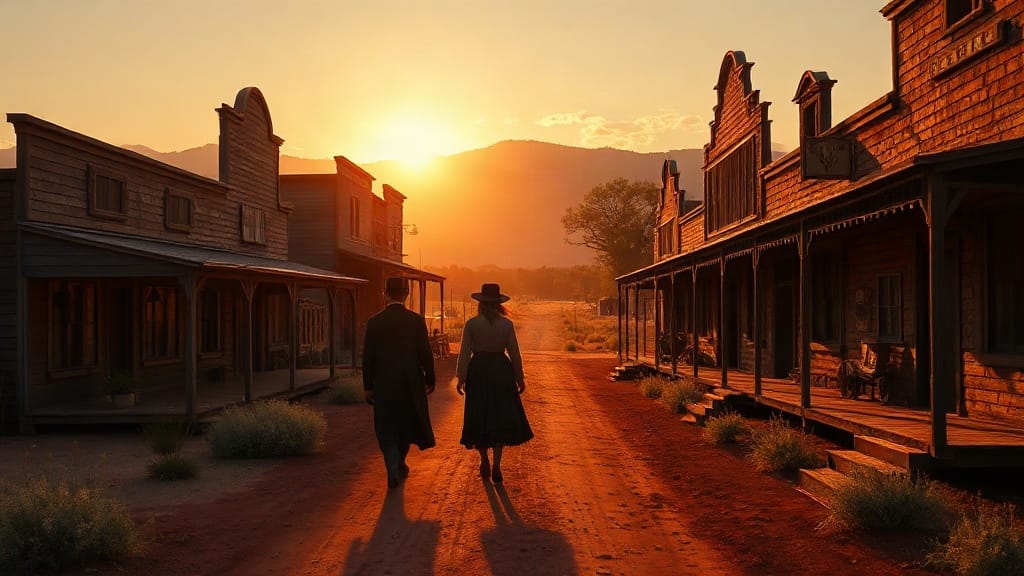
Mary and Martha Clarke are products of their mother's affair with a white Frenchman who abandoned them. Set in post-Reconstruction Marlin, Texas in 1893, the sisters must support their single mother, pay off their increasing debts to an abusive sharecropper boss, and buy the land they toiled on. They weaponize their lighter skin to pass in white society and operate as outlaws to rob from the wealthy.
Book writer and lyricist Chéri based the musical on the oral history of her own ancestors: the real Mary and Martha were her great-grandfather's sisters. The historical record for the Clarke sisters is thin — their existence preserved almost entirely through family transmission, which is precisely what gives the material its charge. The show is not a correction of received history so much as an insistence that the oral record counts as history. That argument is older than Broadway, but it rarely gets this kind of platform.
Chéri has said that even though the Clarke sisters were light-skinned Black women in real life, she and Baum considered casting darker-skinned women for the leads during the development process — a choice that would have shifted the visual language of passing entirely. That they ultimately did not is part of what makes the show's moral geometry complicated and worth attending to.
The Cast and the Creative Machine Behind It
The musical features a book and lyrics by Angelica Chéri, music by Ross Baum, and choreography by Chelsey Arce (Sweeney Todd, Harry Potter and the Cursed Child), with Obie winner and Tony nominee Stevie Walker-Webb directing. Walker-Webb previously directed Ain't No Mo' on Broadway. His presence signals a certain institutional seriousness: Walker-Webb is not a director Broadway reaches for when it wants safe product.
The musical stars Solea Pfeiffer (Hadestown, Gatsby: An American Myth) as Mary Clarke and Liisi LaFontaine (Moulin Rouge! The Musical, Dreamgirls) as Martha Clarke, with R&B legend Ledisi as Tallulah Clarke, the sisters' mother, and Bradley Jaden (Les Misérables: The Arena Concert Spectacular) as Jesse. Opening night marks LaFontaine's Broadway debut.
Melody A. Betts, Aaron Arnell Harrington, Jennie Harney-Fleming, Rayshun LaMarr, Hailey Thomas, and Harris Matthew Turner play the Kinfolk, described as a vibrant chorus of ancestors who help guide the Clarke sisters on their epic journey. The full design team includes scenic design by Beowulf Boritt, lighting design by Adam Honoré, costume design by Emilio Sosa, and sound design by Gareth Owen.
Pfeiffer has long been one of musical theatre's most criminally underutilised voices — her runs in Hadestown and the ART's Gatsby were proof of a talent that consistently outpaced the vehicles offered to her. LaFontaine arrives on Broadway with a West End pedigree and the kind of stage authority that cannot be developed in a workshop. Together, they anchor a show whose ambition exceeds its current narrative tidiness — multiple critics have noted that the book occasionally struggles to hold the weight of what the score promises. Though the narrative isn't particularly distinct, with the central plot largely focusing on the sisters finding love rather than their outlaw status or the true costs of passing, the show's vocal talent is beyond exceptional — Ledisi, LaFontaine, and Pfeiffer are all phenomenal.
What the Theatre Establishment Is Actually Being Asked
The question of readiness runs beneath all of this. Wanted did not appear because Broadway suddenly discovered the Clarke sisters. It appeared because Chéri and Baum spent eleven years refusing to let the material die in development, moving it through labs and regional theatres and name changes until the industry could no longer pretend the story wasn't ready. That is a different kind of arrival than a commission. It is a persistence that the theatre establishment did not create and cannot fully claim credit for.
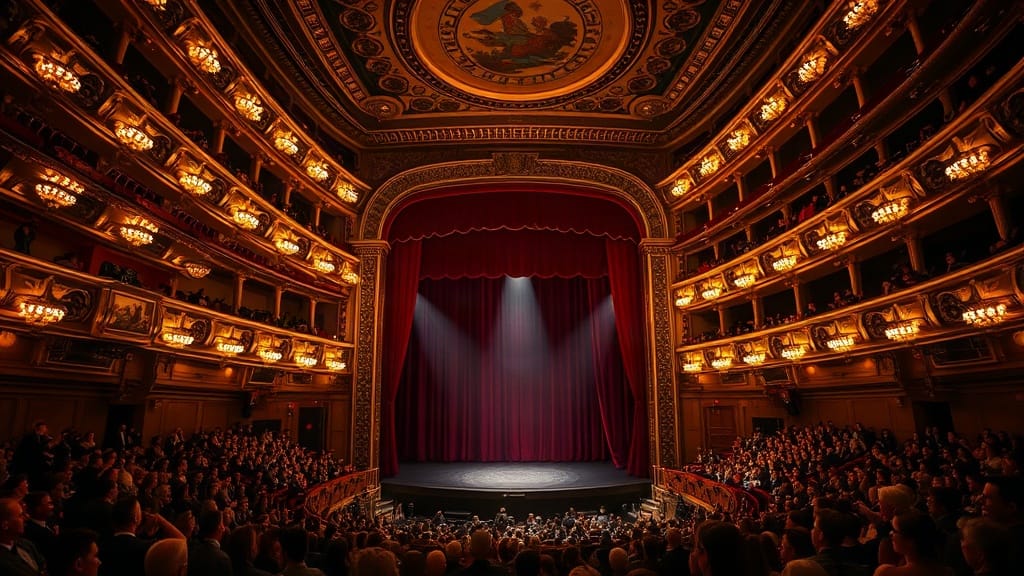
The opening-night crowd — celebrities in Western-inflected looks, a red carpet at the James Earl Jones Theatre — performs a kind of cultural legitimacy that is both meaningful and incomplete. Meaningful because visibility is not nothing, and the James Earl Jones Theatre name itself carries a specific weight in this context. Incomplete because the same establishment that warmly receives Wanted in November 2026 is the one that required it to spend years proving itself in rooms with smaller ceilings. The pattern is familiar across American cultural institutions: the work of Black artists is celebrated at the moment of arrival, with less examination of what delayed the journey.
The score, by most critical accounts, is where the show lives most fully. The songbook includes R&B, jazz, blues, folk, pop, and traditional show music — a genuinely hybrid sound that mirrors the double identity its heroines are forced to perform. Standout numbers include "Inheritance" and "Mary's Nightmare," backed by an orchestra led by Paul Byssainthe Jr. When the music is in control, the show does exactly what the best musicals do: it makes argument feel like feeling.
What Wanted represents structurally is an original Broadway musical — no source novel, no film IP, no catalogue of pre-cleared hits — built entirely from family memory and historical inference, centered on Black women navigating systems designed to erase them. Structural firsts in American cultural institutions are accumulating, and each one raises the same uncomfortable arithmetic: not how rare this is, but how long it took to stop being rare.
The show runs two hours and fifteen minutes with one intermission. The Clarke sisters waited a century and a half to get this platform. By that measure, two hours and fifteen minutes is nothing at all.