Kering announced on November 6, 2026 that Martine Rose is the new creative director of Balenciaga, effective November 16. The announcement came less than twenty-four hours after the house confirmed the departure of Pierpaolo Piccioli, who had occupied the role for under sixteen months. The sequence — exit confirmed Thursday, successor named Friday — left almost no gap for speculation, which is itself a signal. Kering was not searching. It already knew.
What the press release did not dwell on, but what the industry cannot ignore, is what this appointment represents structurally. Martine Rose is the first Black woman to lead Balenciaga in the house's 109-year history, and only the second Black woman to hold creative directorship at a major European luxury maison. The first was Grace Wales Bonner, appointed creative director of Hermès menswear in October 2025. That both women carry British-Jamaican heritage is not coincidence so much as evidence of a specific cultural formation — one rooted in London's diasporic subcultures — that has been quietly building the future of fashion for decades while the establishment looked elsewhere.
Who Rose Is, and Why It Matters That It's Her
Rose was born in Croydon in 1980 to a British-Jamaican family, and her creative vocabulary was shaped less by formal fashion education than by immersion in the sonic and sartorial codes of South London. The rave scene, reggae, football terraces, rude boys, skinheads — these were not references she later discovered in a library; they were the textures of her upbringing. After graduating from Middlesex University in 2002 and briefly co-founding the label LMNOP, she launched her eponymous brand in 2007, initially focused on shirting. It evolved into one of the most formally distinctive cult menswear labels in the world: exaggerated proportions, working-class iconography, an irreverent relationship with sportswear logos, and an almost anthropological attention to how communities actually dress.
Since founding her label, Rose developed a creative language rooted in subculture, music, identity, and the social codes of dress — a sentence that reads like a mission statement for what Balenciaga, at its most coherent, has always tried to embody. That overlap is not accidental. When Demna Gvasalia took the creative reins at Balenciaga in 2015, one of his first moves was to hire Rose as a menswear consultant, a position she held through 2018. During that period, her influence on the house's menswear silhouette — oversized, structurally skewed, subcultural without being cosplay — was tangible. She helped Balenciaga stage its debut standalone menswear show in 2016. She already understood the building before she was given the keys.
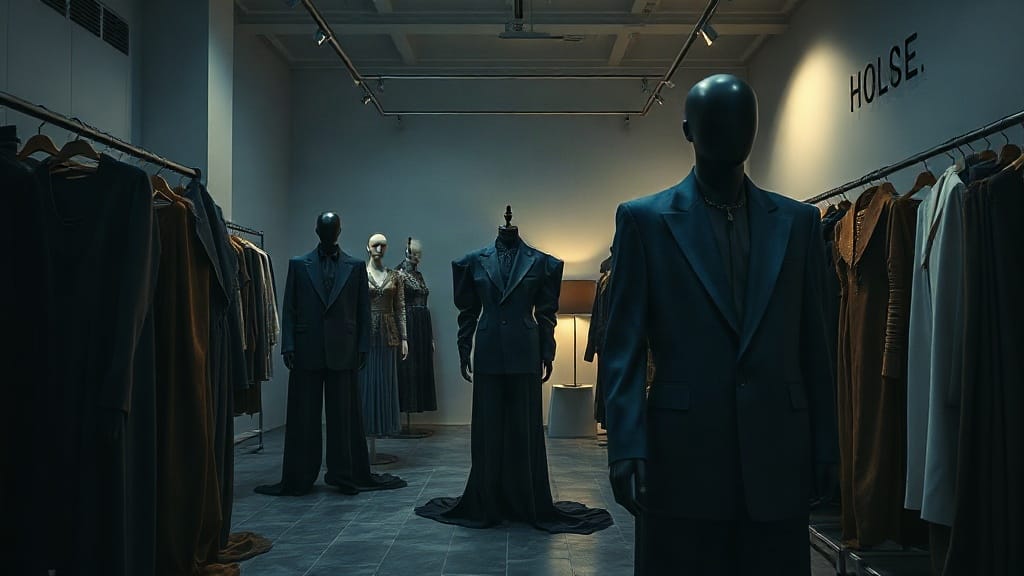
In 2023, Rose won British Menswear Designer of the Year. She showed at Pitti Uomo in Florence that same year. In January 2026, she presented her Autumn/Winter 2026 menswear collection. The trajectory was not lateral — it was a slow-burning ascent that the industry kept describing as "cult" precisely because it resisted the logic of spectacle. She showed at her kids' school, at a climbing gym, at a covered street market. In 2023, she was named the first guest creative director of Clarks, a collaboration that felt more like an extension of her practice than a commercial detour. None of it looked like a campaign for a major house appointment. All of it, in retrospect, was exactly that.
The Kering Context: Chaos With a Direction
To understand why this hire lands with the weight it does, the context inside Kering's creative portfolio matters. The group has been in a prolonged creative reshuffle — Vaccarello out at Saint Laurent, Seán McGirr out at Alexander McQueen, and now Piccioli's departure from Balenciaga — all within weeks of each other. Kering CEO Luca de Meo, who built his reputation as a turnaround operative, has been explicit that the ambition is to push Balenciaga back toward the avant-garde edge it occupied under Demna. Piccioli — a genuinely exceptional couturier, a 25-year veteran of Valentino — was never obviously the right fit for that mandate. His aesthetic is rooted in romance, in the softness of couture tradition. Balenciaga under its most commercially and critically potent iteration operates on subversion, on the deliberate discomfort of silhouette.
Rose operates on exactly that discomfort. But she brings a material difference: her subversion is not theoretical. It is autobiographical. It comes from actually belonging to the communities whose clothes she deconstructs. That specificity is what distinguishes her appointment from the kind of provocateur-for-hire move that luxury brands often make when they want to signal edginess without committing to genuine disruption. Balenciaga CEO Gianfranco Gianangeli said Rose's ability to "challenge convention, reinvent silhouettes and bring a completely new perspective" resonates with the innovation the house requires. That is corporate language. The more precise version is: Rose has been making Balenciaga-shaped clothes, with more authentic cultural underpinning, for nearly two decades.
The Historical Weight of "Second"
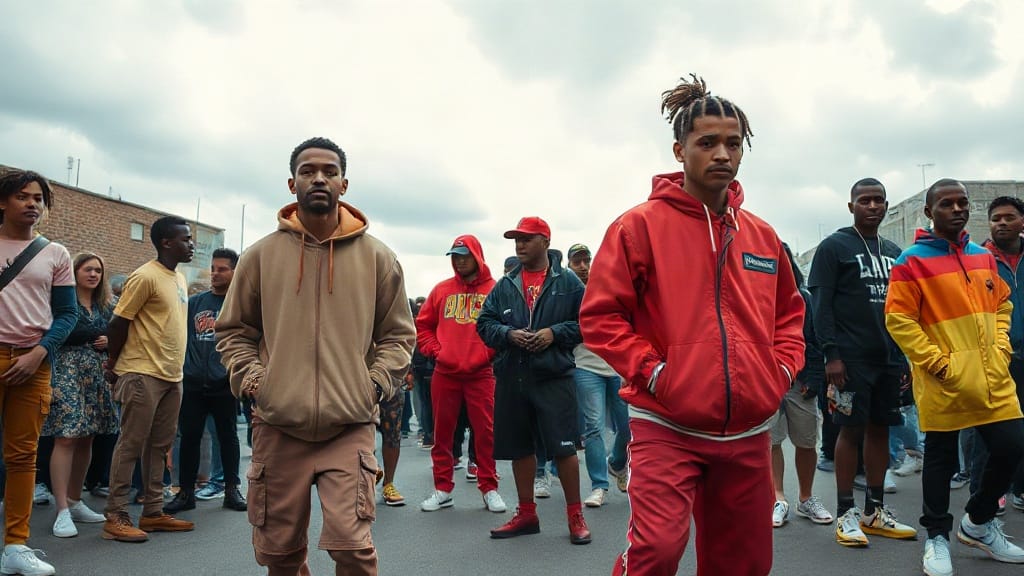
It is worth pausing on the number two. Rose's appointment makes her only the second Black woman to hold major creative leadership at a European luxury house, following Wales Bonner's historic appointment at Hermès in 2025. European luxury fashion, as an institutional structure, has been led overwhelmingly by white men for most of its history. The concentration of creative authority within a narrow demographic band is not a neutral aesthetic fact — it has had consequences for what gets considered aspirational, what silhouettes get canonized, what reference points get treated as universal. The entry of two Black British designers of Jamaican heritage into the most architecturally significant positions in that structure within thirteen months is a rupture worth naming accurately.
Wales Bonner's appointment at Hermès was historic and architecturally constrained — she leads menswear, a division, not a full house. Rose's mandate at Balenciaga appears to be the entire creative vision. Two British designers of Jamaican heritage are now helping reshape creative leadership at some of Europe's most prestigious fashion brands. The heritage is shared; the institutional contexts differ. What they share beyond biography is a specific intellectual method: treating subculture not as decoration but as the structural material of fashion itself. That approach, long marginalised in the European luxury hierarchy as "street" or "niche," is now seated at two of the most powerful creative desks in the industry.
This also connects to a broader argument about representation as a formal, not just symbolic, question — one being made simultaneously in other creative sectors. Rachel Scott's CFDA win earlier this year made a structurally analogous case in American fashion: that the people who have been building new creative languages from the outside are increasingly being recognised as the people who define the field from within.
What Happens Now
Rose takes her position on November 16. No debut collection date has been announced. The industry will watch closely not just for what she makes, but for what she keeps — which existing codes of the house she preserves, which she dismantles, and how she resolves the central tension in Balenciaga's recent history: a brand that became globally dominant through meme-level provocation but whose founder built one of the most architecturally rigorous bodies of work in twentieth-century fashion. Navigating that is not simply a styling problem. It is a philosophical one.
Rose has spent twenty years demonstrating that she understands the difference. The question now is whether the institution that has just handed her the keys has the patience to let that understanding operate at scale. For the first time in a long time, the creative appointment at Balenciaga feels less like a gamble and more like a reckoning with what the house has always, at its best, been trying to say.