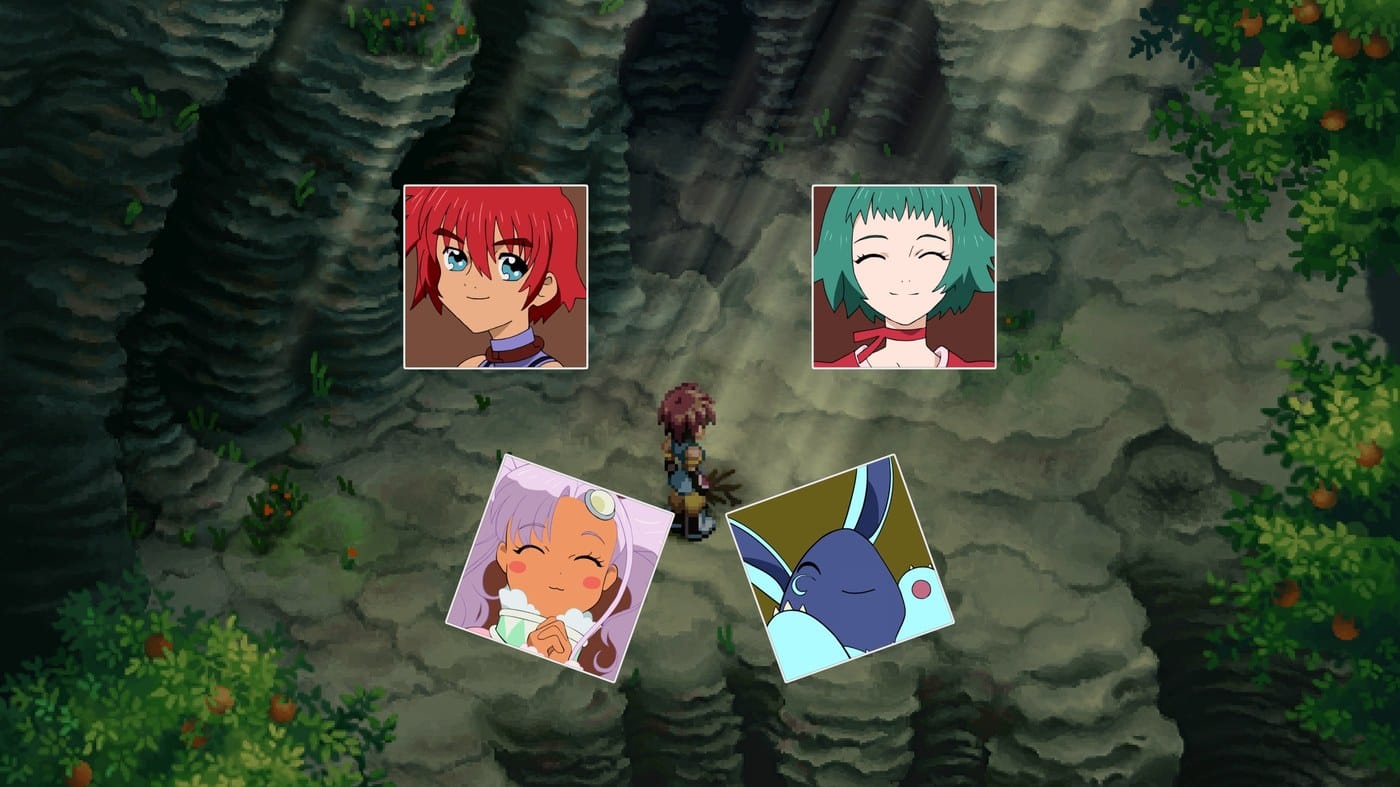
There is a specific kind of corporate confidence — or corporate anxiety — embedded in the decision to remaster a game without meaningfully changing it. Bandai Namco's release of Tales of Eternia Remastered (2025) today across six platforms is precisely that kind of move: a bet that the original 2000 PlayStation RPG is good enough to justify a second commercial life, provided it arrives in a cleaner package. Whether that bet pays out depends entirely on who you think is buying.
 Official trailer
The original Tales of Eternia (2000) — released in North America as Tales of Destiny II, a branding decision that aged about as well as the PlayStation's load times — was, by the standards of its moment, a competent and occasionally brilliant entry in the series. Its dual-world cosmology, the interplay between the worlds of Inferia and Celestia, gave it a structural ambition that few JRPGs of the era matched. The Linear Motion Battle System, already a franchise signature, was fluid enough to feel like action without demanding the reflexes it would later require. Reid Hershel and Farah Oersted are not the most psychologically complex protagonists in the franchise's history, but they are legible and warm in the way that early-2000s JRPG leads tended to be — archetypal without being hollow.
None of that has been fundamentally altered here. Tales of Eternia Remastered offers upscaled visuals, widescreen support, and a suite of quality-of-life adjustments: encounter rate toggles, accelerated movement, and the kind of save-anywhere convenience that erases the friction that, depending on your disposition, was either the original's greatest flaw or its most authentic texture. The anime cutscenes have been preserved in their original form, which is both an honest archival choice and a reminder that "remaster" is doing significant definitional work in this context.
This is not a remake. It is barely a reconstruction. It is, most accurately, a port with polish — and the question that launches alongside it today is whether that is enough.
The Remaster as Commercial Hypothesis
Bandai Namco has been running what amounts to an ongoing experiment with its legacy Tales catalog. Tales of Symphonia Remastered (2023) arrived to mixed reviews not because the original was unworthy of reappraisal, but because the remaster introduced new technical problems while failing to address the ones that time had already exposed. It sold modestly. It did not convert a meaningful new audience. It served, primarily, as a convenient re-entry point for players who remembered it fondly and wanted it on current hardware.
That is a real and legitimate market. It is simply a smaller and less forgiving one than the marketing language around these releases tends to suggest. The phrase "experience the classic for the first time or rediscover it" has appeared in promotional material for so many remasters across so many franchises that it has become a kind of liturgical incantation — repeated not because it describes an audience but because it describes an aspiration.
The honest framing is more specific: this is a product aimed at people who played Tales of Eternia on PlayStation in 2000, or on PSP in 2005 when it received a European release, and who want to play it again without hunting down aging hardware. That audience exists. It is not trivial. But it is also, by definition, composed of players who already know what they are buying — who are not being persuaded of the game's value so much as reminded of it.
The Problem of the Uninitiated
The harder question is what Tales of Eternia Remastered offers to someone who has never played it. The answer, in structural terms, is a 25-year-old JRPG whose pacing reflects the design assumptions of 2000: extended dungeon crawls, dialogue rhythms calibrated to a world without skip buttons, a narrative that takes several hours to establish meaningful stakes. The QoL additions soften some of these edges. They do not sand them flat.
This is not a criticism unique to this game. It applies, with varying intensity, to virtually every light-touch remaster of a PlayStation-era RPG. Final Fantasy VIII Remastered (2019), Grandia HD Collection (2019), Xenogears on modern storefronts — each of them arrived with the same implicit contract: the bones are original, the coat of paint is new, the patience required is yours to supply. Some players bring it. Many do not.
What distinguishes the Tales franchise in this context is that it has a substantial and vocal contemporary fanbase — players drawn in by Tales of Berseria (2016) or Tales of Arise (2021) who may have curiosity about the series' back catalog but no particular attachment to it. For these players, Tales of Eternia Remastered is an archaeological exercise. The combat lacks the mechanical density of the modern entries. The world-building, while conceptually interesting, is communicated through systems and pacing that feel like reading a primary source rather than an adaptation. The game asks them to meet it where it was made, rather than where they are now.
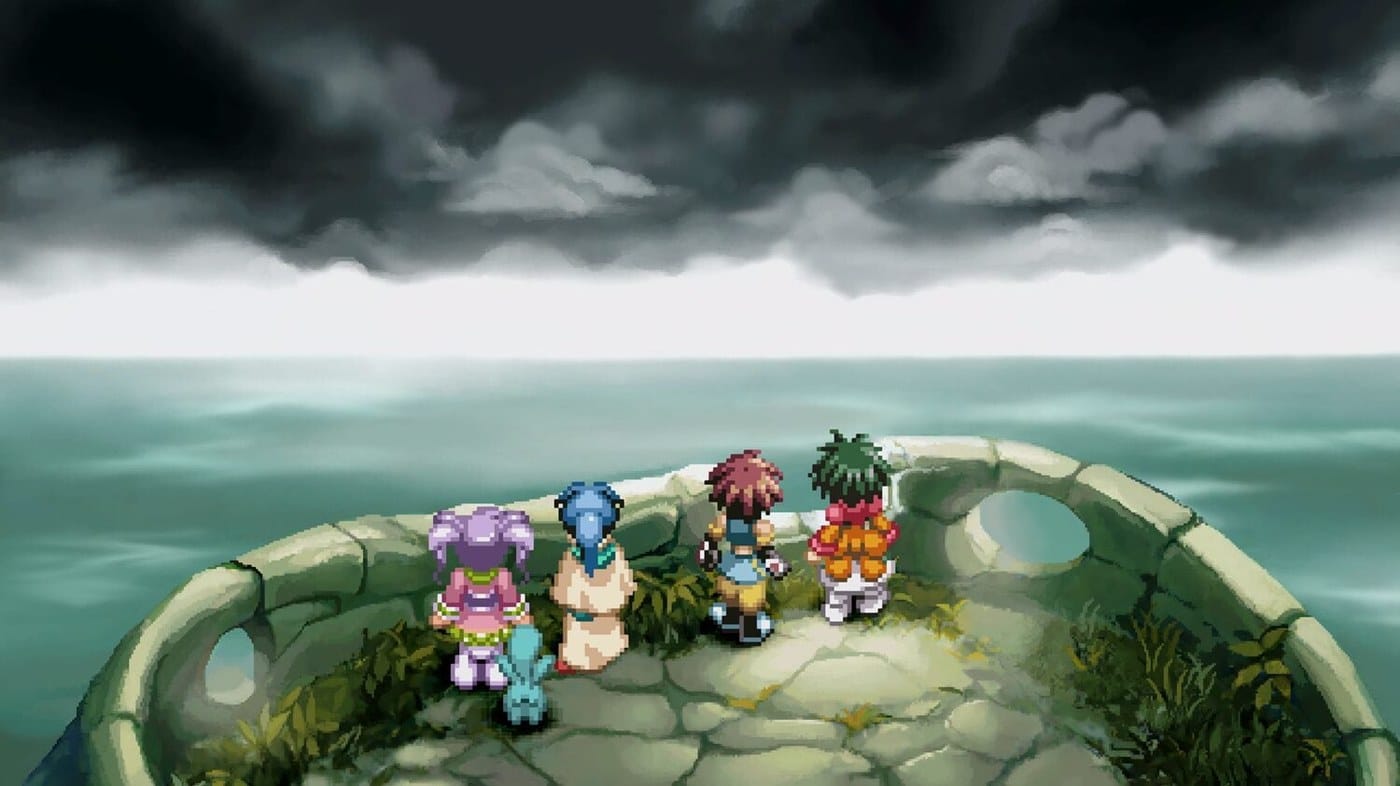
Some will. The franchise's history is full of players who traveled backward through it with genuine enthusiasm. But the remaster format — by refusing to modernize structure while promising modernized presentation — creates a specific kind of cognitive dissonance: the game looks like it belongs on current hardware, and then it behaves like it doesn't.
What a Light-Touch Remaster Actually Argues
There is a philosophical position embedded in the decision not to rebuild. It argues, implicitly, that the original design has integrity worth preserving — that adding a stamina mechanic or restructuring the narrative pacing would not improve the game so much as replace it with something else wearing its face. This is a defensible position. It is the position that governs museum restoration, critical editions, and the preservation wing of game culture.
The tension is that commercial releases are not museum installations. They are products competing for attention and money against games that were built with 2025 players in mind. A remaster that stakes its value entirely on the quality of the source material is, in effect, arguing that a 25-year-old design is strong enough to win that competition on its own terms. Sometimes it is. Tales of Eternia is a genuinely good game — its battle system holds up better than many of its contemporaries, and its dual-world structure gives it a narrative architecture that still feels considered. Whether that is sufficient is a question the sales data will answer more honestly than any review.
Bandai Namco's broader Tales remaster project is still finding its footing. Each release is simultaneously a product and a proof of concept — testing the market's appetite for legacy content against the cost of producing it. Tales of Eternia Remastered launching across six platforms simultaneously is itself a data-gathering exercise, an attempt to determine where this audience lives and how many of them there are.
The game deserves to find them. Whether the format chosen gives it the best chance of doing so is the question that will outlast today's launch window — and whose answer will shape how much of the Tales back catalog gets this treatment, and how carefully it gets treated, in the years that follow.