Three releases. Under two years. Three different studios, three different aesthetics, three different answers to the question of what Silent Hill actually is. When Silent Hill: Townfall — developed by No Code and published through Annapurna Interactive — launches today, it does so not as an isolated event but as the latest data point in one of the stranger IP management experiments in contemporary gaming. Konami is not reviving Silent Hill. Konami is stress-testing it.
 Official trailer
That distinction matters more than any individual review score.
The Architecture of the Bet
To understand what today's launch actually represents, it helps to map the territory Konami has constructed. Silent Hill 2 (2024), the Bloober Team remake, arrived first — a high-fidelity, third-person psychological horror game carrying the heaviest symbolic weight in the franchise's history. It performed well enough commercially and was received with cautious critical respect, though debate about its fidelity to Team Silent's original vision never fully quieted. Then came Silent Hill: Ascension (2023), the interactive streaming event from Behaviour Interactive that split audiences almost immediately, folding the franchise's mythology into a live, community-driven narrative format that felt genuinely experimental and, to many fans, genuinely wrong.
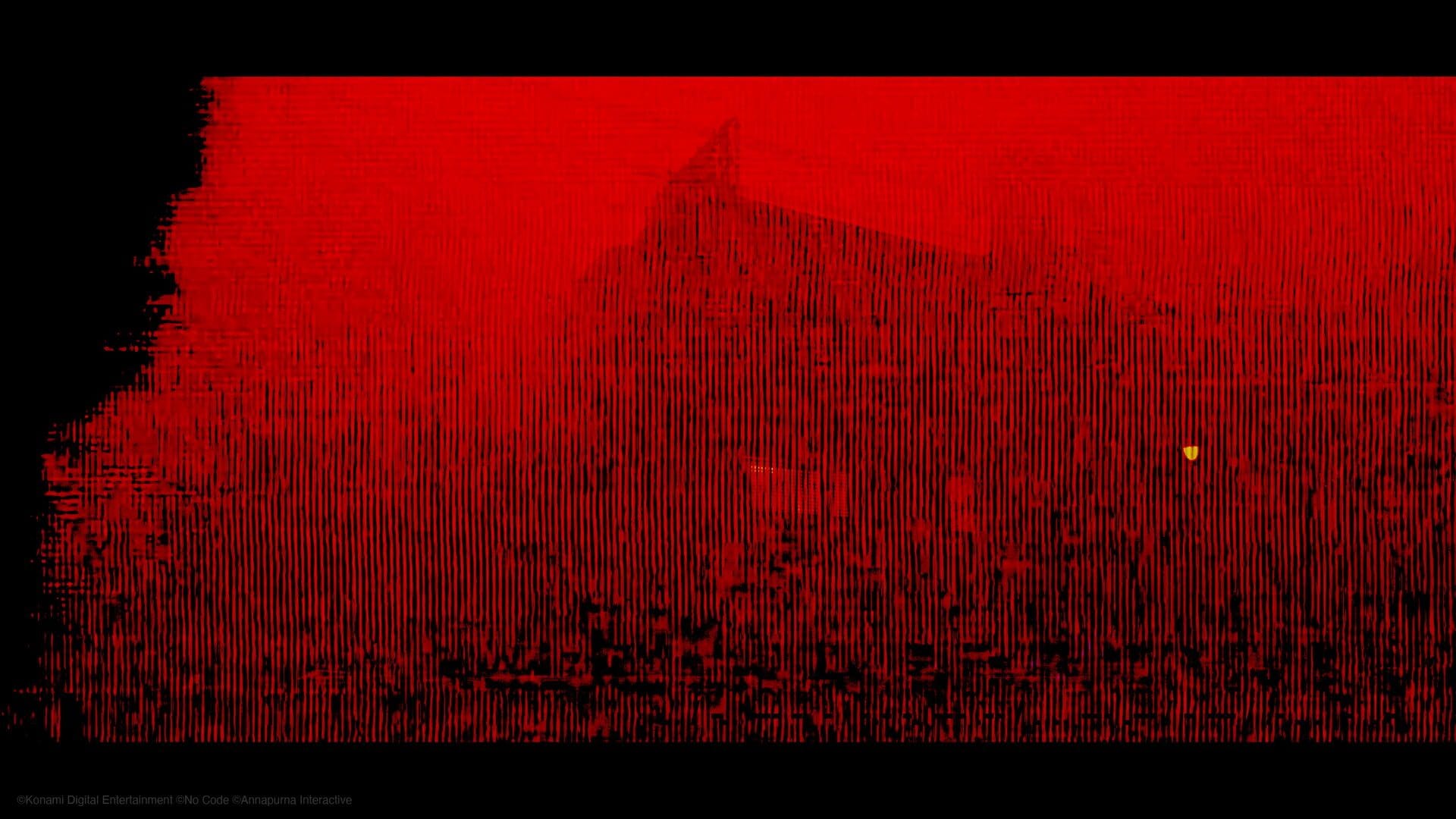
Now Townfall (2025) arrives from No Code — the Glasgow-based studio behind Stories Untold (2017) and Observation (2019) — with Annapurna Interactive serving as publisher. It is first-person. It is oblique. It is, by every visible indication, the most formally adventurous of the three releases, trading explicit monster encounters and fog-drenched streets for something closer to dread-as-atmosphere, horror as inference. The game communicates through degraded video feeds, fractured environments, and a deliberate withholding of legibility that feels more indebted to experimental indie horror than to the mainline series it nominally extends.
Each of these three releases represents a coherent creative vision in isolation. The problem is that they do not cohere with each other — and Konami seems either unconcerned by that, or is betting that incoherence is a feature rather than a defect.
What Silent Hill's Mythology Actually Requires
The original Team Silent games — particularly Silent Hill 2 (2001) — derived their power from a very specific and fragile set of design principles: horror as psychological projection, the town as a mirror of the protagonist's subconscious, monster design as embodied guilt. The fog was never atmosphere for atmosphere's sake. It was the externalization of repressed interiority. The monsters were not creatures; they were symptoms. That conceptual tightness is precisely what made the IP feel singular, and precisely what makes it so difficult to delegate.
When you hand Silent Hill to multiple studios simultaneously — studios with different philosophies, different technical vocabularies, different interpretations of what the name on the box actually promises — you are not curating a franchise. You are conducting a poll. Each release asks a slightly different version of the question "what is Silent Hill?" and returns a different answer to market. The cumulative effect is definitional erosion. Players arriving at Townfall with memories of Bloober's remake will find a game that feels almost categorically different. Players arriving from Ascension will find something different still.
This is not inherently fatal. The Resident Evil series has survived enormous aesthetic variance across its entries, from action-horror to survival horror to first-person psychological terror. But Resident Evil's identity was always more elastic — built around a shared universe of characters, lore, and a corporate conspiracy framework that could accommodate genre pivots without rupturing the core mythology. Silent Hill's identity is not elastic in that way. It is precise. It depends on a specific relationship between place and psyche that is genuinely difficult to replicate and almost impossible to franchise in the traditional sense.
No Code and the Annapurna Variable
Against that backdrop, the choice of No Code and Annapurna Interactive for Townfall reads as both the most promising and most precarious of Konami's licensing decisions. No Code has demonstrated, across two prior releases, an unusual facility for horror that operates through systems and inference rather than direct confrontation. Stories Untold weaponized the UI itself. Observation made the player complicit in what it feared. These are sophisticated, formally self-aware games, and they suggest a studio capable of finding something genuinely new inside the Silent Hill framework.
Annapurna's involvement adds another layer of credibility. The publisher has built a consistent record of protecting the formal integrity of unconventional projects — What Remains of Edith Finch (2017), Outer Wilds (2019), Neon White (2022) — and rarely publishes anything that feels made by committee. If any external partnership was going to produce a Silent Hill game that honored the IP's psychological architecture while finding new formal territory, this configuration had a reasonable chance of doing it.
Whether it has succeeded is a question today's launch will begin to answer. But even a successful Townfall does not resolve the larger structural problem Konami has engineered for itself. A good game can coexist with a bad strategy. The franchise-level damage from aesthetic incoherence accumulates regardless of individual quality, and it accumulates fastest in horror — a genre in which trust, expectation, and brand meaning are unusually load-bearing.
The Dilution Calculus
There is a version of this strategy that works. It requires Konami to be genuinely curatorial rather than merely permissive — to establish clear enough creative parameters that radically different developers can nonetheless produce releases that feel like they belong to the same imaginative universe. Marvel Studios, for all its formulaic limitations, understands this at a structural level. The variance in tone across its properties exists within an explicitly managed continuity. Konami has shown no comparable appetite for that kind of oversight, and the results are visible in the gap between how Townfall presents itself and how the Bloober remake presented itself eighteen months ago.
The alternative version of this strategy — the one that seems more likely, given the evidence — is that Konami is treating Silent Hill less as a mythology to steward and more as a brand to license, confident that name recognition will carry each new release across the threshold of commercial viability without requiring genuine creative coherence. This is not an uncommon approach to legacy IP in games. It is, however, particularly costly when the IP in question derived its original value precisely from coherence — from the feeling that every design decision, every visual choice, every audio cue was answering the same internal question.
What Townfall's launch day reveals, then, is not primarily a verdict on No Code's execution or Annapurna's curation. It reveals the terms on which Konami has decided to operate. Three releases in under two years, across formats and aesthetics with no visible through-line, suggests a strategy optimized for presence rather than meaning. The town is full of fog. Some of it is by design. The rest is just Konami covering its tracks.