There is a sentence that should be impossible to read without a quickening of the pulse: a new film, written by Quentin Tarantino and directed by David Fincher, opens in IMAX theaters on November 25. In a different era — 2006, even 2016 — that sentence would have detonated. Critics would be circling release dates months in advance. Discourse would be febrile. The pairing of two of American cinema's most meticulous stylists, one known for his labyrinthine, verbally electric screenplays and the other for his cold, precision-engineered visual grammar, would feel like an event horizon. Instead, The Further Mis-Adventures of Cliff Booth (2026) arrives into something closer to polite interest. The Film Stage places it ninth on its November preview list, noting that it is landing with "a peculiarly muted buzz." Ninth. That observation deserves to be held up and examined, because it is quietly damning — and not only of this particular film.
 Official trailer
How a Sequel That Isn't Quite a Sequel Got Made
The genealogy of the project is tangled, and the tangle itself is part of why the buzz is what it is. Once Upon a Time… in Hollywood (2019) was Tarantino's ninth film, and he has long committed to retiring from directing after his tenth. His initially announced tenth was The Movie Critic, a 1977-set period piece about a cynical film journalist writing for a pornographic magazine. Tarantino scrapped that project in April 2024, dropping it as his tenth and final. His stated reason was that it felt like a retread of his previous work. The Cliff Booth film, then, is not the triumphant capstone Tarantino had long promised his career would build toward — it is the script he handed off when his own retirement picture collapsed.
This is a 1977-set thriller that Tarantino was at one stage going to direct himself; instead, he shelved it until Cliff Booth actor Brad Pitt convinced his old colleague David Fincher to step in. Sony's Tom Rothman later confirmed the dynamic: "We were going to make the movie when Quentin was directing it, but he decided that he didn't want to do it and changed course. The only other person that he was comfortable directing his script was David Fincher, and David Fincher was exclusive to Netflix, so we were not going to stand in anybody's way." That last clause is the hinge. Fincher's exclusivity to Netflix — the terms of the three-picture deal he signed in 2020 — effectively delivered the film to the streamer, and with it, the film's whole release profile.
The Netflix Problem
To understand the muted anticipation around Cliff Booth, you have to understand what six years of Netflix exclusivity has done to Fincher's theatrical presence. Fincher enjoyed a long creative partnership with Netflix, starting with the company's seminal television series House of Cards and Mindhunter, before forging an exclusive partnership in 2020 and making three movies: Mank, The Killer, and the upcoming The Further Mis-Adventures of Cliff Booth. Part of what has worn on the relationship is that Mank and The Killer never received a robust theatrical rollout — Mank was released during the pandemic, and The Killer had only a short awards-qualifying run. Neither film is available on Blu-ray, and Fincher grew his cult following through exceptional home media releases.
The effect is measurable in cultural temperature. A director who once commanded the kind of sustained attention that turned Fight Club (1999), Zodiac (2007) and The Social Network (2010) into persistent reference points has, through circumstance as much as choice, spent his last two features disappearing into the platform. The Killer (2023) was precise and pleasurable and has already been largely forgotten. That is not entirely Fincher's fault — the Netflix content model metabolizes prestige films rapidly, cycling them out of conversation within weeks — but the cumulative effect has been a gradual erosion of the event-status that used to attach to his name. According to Bloomberg, Further Mis-Adventures will mark the final film Fincher will make for Netflix, completing a three-picture contract put into place in 2020. He is ending the deal, and the industry has noticed: Fincher joins a string of talent who have ended Netflix deals, including Noah Baumbach, who left for Warner Bros., Shawn Levy, who left for Disney, and Stranger Things creators Ross and Matt Duffer, who left for Paramount.
The Film Itself
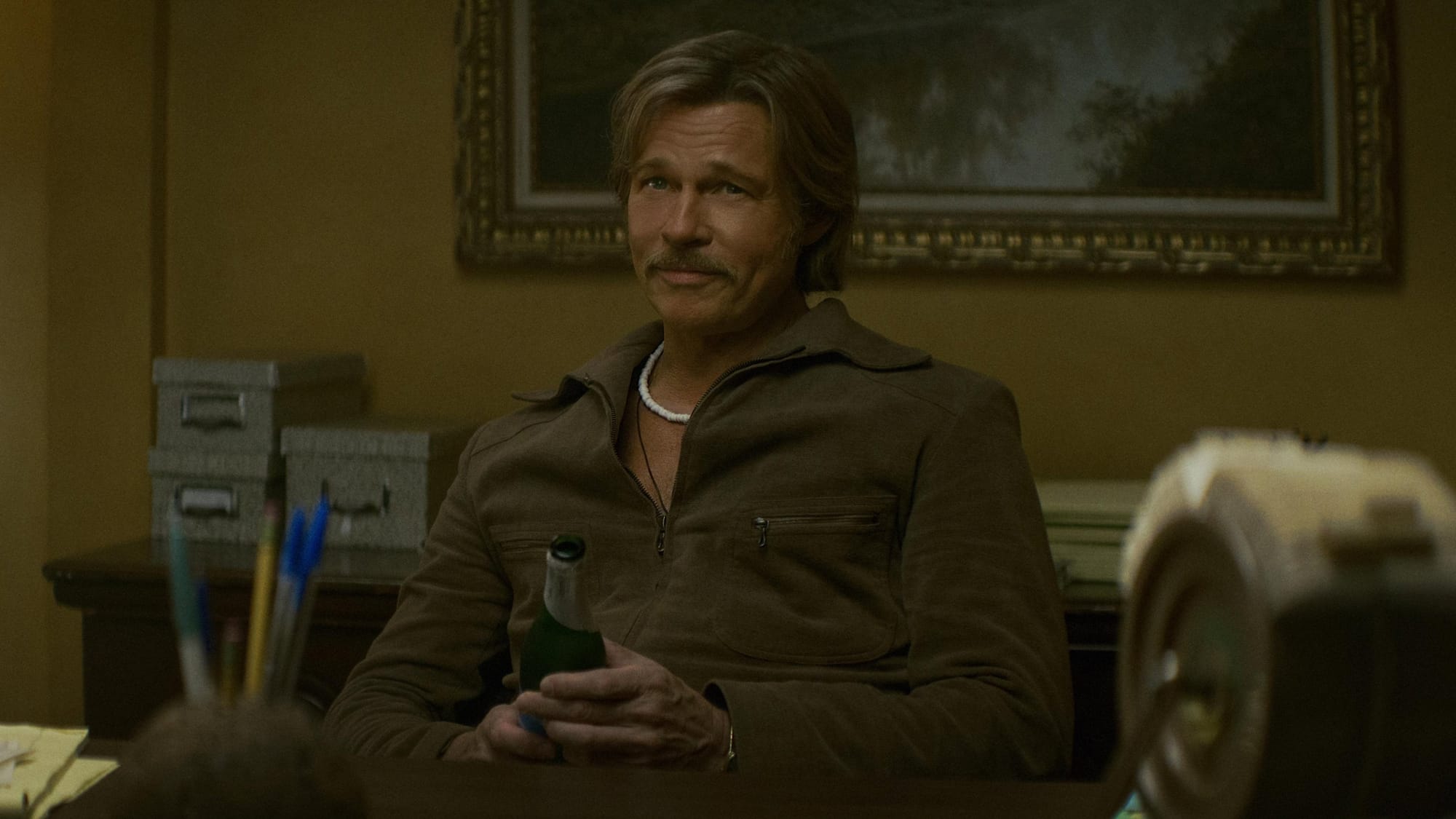
Produced by Tarantino, Ceán Chaffin, David Heyman, Stacey Sher, and Brad Pitt, the film is a standalone sequel and spin-off to Once Upon a Time… in Hollywood (2019), with Pitt and Timothy Olyphant reprising their respective roles as stunt double Cliff Booth and Western actor James Stacy. Set in 1977 Los Angeles, eight years after the events of the original, the film follows former stuntman Cliff Booth, who has become a Hollywood "studio fixer." Hollywood will always have problems, problems that can only be solved by someone with Cliff's unique — occasionally extralegal — abilities. When he's not earning his keep bartending or working as a projectionist, Cliff Booth solves situations for Hollywood's greats and, sometimes, its not-so-great.
The film also stars Peter Weller as Gus, Cliff's father, and features Elizabeth Debicki, Scott Caan, Carla Gugino, and Yahya Abdul-Mateen II in central roles. The casting is suggestive of serious intent — Debicki in particular brings a kind of watchful gravity that pairs well with the 1970s-Hollywood-noir register the premise implies. The decision to set the story in 1977 is precise. It is eight years since Cliff Booth encountered the Manson family in Tarantino's parallel history of 1969. In The Further Mis-Adventures of Cliff Booth, directed by Fincher from a new script by Tarantino, the fairytale is over. The alternate history of the original — in which the Manson family's killers were repelled, and Sharon Tate lived — recedes. What remains is a grittier Hollywood, a man running out of glamour, and Fincher's clinical eye for institutional rot.
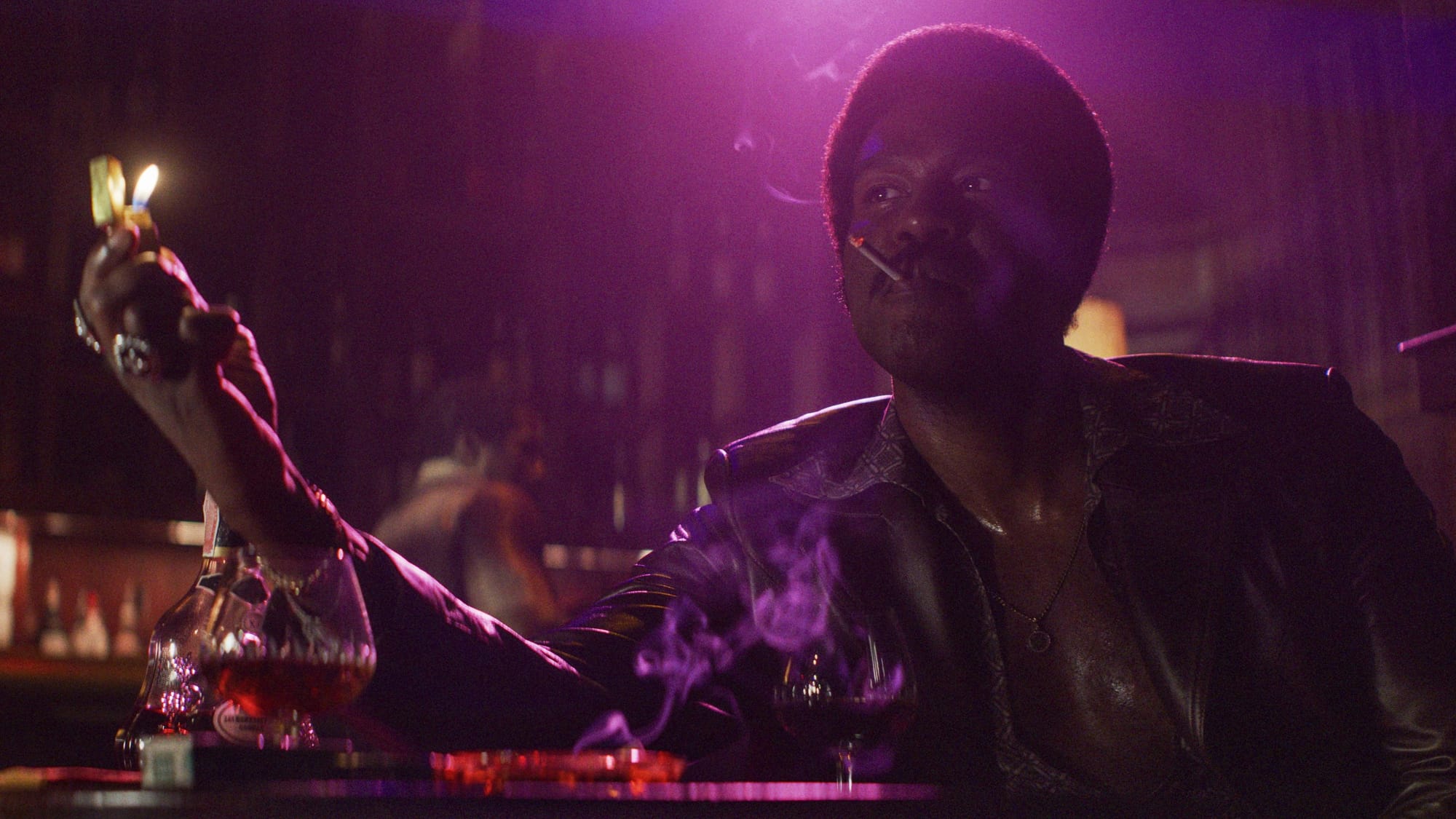
One production footnote is revealing: while directing the film, Fincher cut 40 pages out of Tarantino's original script. That is not a trim; it is an act of editorial surgery. In a joint interview, Fincher also revealed that one of the first big calls on the project was whether Tarantino's script should be a film or a series. These details sketch the outline of a Tarantino text that sprawled — perhaps beyond the demands of a single film — and a director whose instinct runs toward compression, control, and the ruthless excision of digression. The tension between those two sensibilities is, arguably, the most cinematically interesting thing about the collaboration. Whether the finished film resolves that tension productively or simply irons out the Tarantino-ness of it is the question that criticism will have to answer in a few weeks.
The Release Strategy as Its Own Argument
The film is scheduled to be released exclusively in IMAX — a first for Netflix — on November 25, 2026, for a two-week engagement, before becoming available to stream on Netflix on December 23. The IMAX window is a genuine concession, an acknowledgment that the film warrants theatrical breath. But a two-week exclusive window, followed by a streaming debut just in time for Christmas binge-watching, is not the same as a full theatrical run. It is a gesture toward cinema without fully committing to it — which is precisely the posture that has defined Netflix's relationship with prestige filmmaking since its earliest awards-season plays.
The structural irony is acute. Tarantino's whole career has been a love letter to the theatrical experience — to the darkened room, the communal response, the film as social event. The Cliff Booth project exists, in part, because his planned final film collapsed, and the alternative was a script that found its home at a streaming service. That is nobody's ideal outcome for a pairing of this magnitude. It is, however, a crystalline symptom of where the industry stands: one in which even a Tarantino-scripted, Fincher-directed film can arrive without the thunderclap it deserves, because the platform it lives on has trained audiences to expect everything and anticipate nothing.
Whether the film itself can override the conditions of its arrival is an open question. Fincher has done it before — The Social Network (2010) transcended its Facebook-drama premise to become a film about power and the betrayal of friendship, and it remains his most culturally durable work of the past two decades. If The Further Mis-Adventures of Cliff Booth is good enough, it will find its audience, carve out its conversation, and the muted buzz of early November will look like a historical footnote. If it merely executes its premise competently and disappears into the end of a six-year Netflix deal, it will confirm that the era of the filmmaker-as-event is not coming back — not even for pairings this rare. That is the genuine tension as November 25 approaches. Not whether the film is good, but whether, in 2026, good is still enough to be loud.