The story of Moonlight (2016) cannot be told without first accounting for the arithmetic. The production budget was $1.5 million. The worldwide gross would eventually reach approximately $65 million. The return on investment was more than forty times the cost. And the film won the Academy Award for Best Picture — the most coveted prize in the most watched awards ceremony in the world. By any rational measure, that is one of the most efficient deployments of capital in the modern history of American cinema. What makes the numbers extraordinary is not the ratio, though. It is what the ratio describes: a Black, queer, low-income coming-of-age story, shot over a few weeks in Liberty City, Miami, arriving without franchise infrastructure, without a star above the title, and without any of the conventional assurances the industry reaches for when it decides to anoint something. And it won anyway.
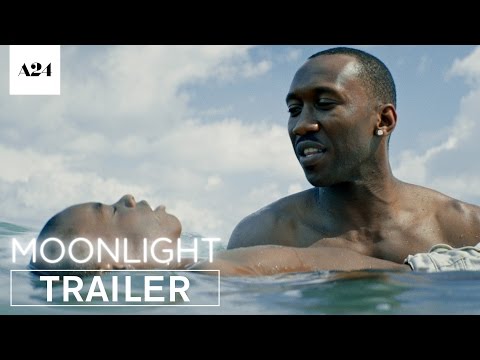 Official trailer
Ten years on, with A24 returning the film to theaters in a new 4K remastered cut on October 2, 2026, it is worth sitting with that fact long enough to understand what it actually cost the industry to arrive there — and what, in the decade since, has measurably changed. The 4K re-release is not merely a commercial anniversary event. It is a prompt for reckoning. The remaster was personally overseen by Jenkins, and the theatrical run includes an exclusive conversation featuring Jenkins, Oscar-nominated composer Nicholas Britell, and Oscar winner Mahershala Ali. That trio — director, musician, actor — constitutes, in a sense, the whole argument of the film made audible and visible again.
The Object Itself
Moonlight is based on Tarell Alvin McCraney's unpublished, semi-autobiographical play In Moonlight Black Boys Look Blue. Jenkins and McCraney grew up in the same Liberty City neighborhood in Miami — a biographical overlap that charged every frame of the film with a specificity rarely available to directors working from the outside of a community looking in. The film was shot in Miami beginning in 2015 and premiered at the 43rd Telluride Film Festival on September 2, 2016, before its limited theatrical release on October 21 of that year.
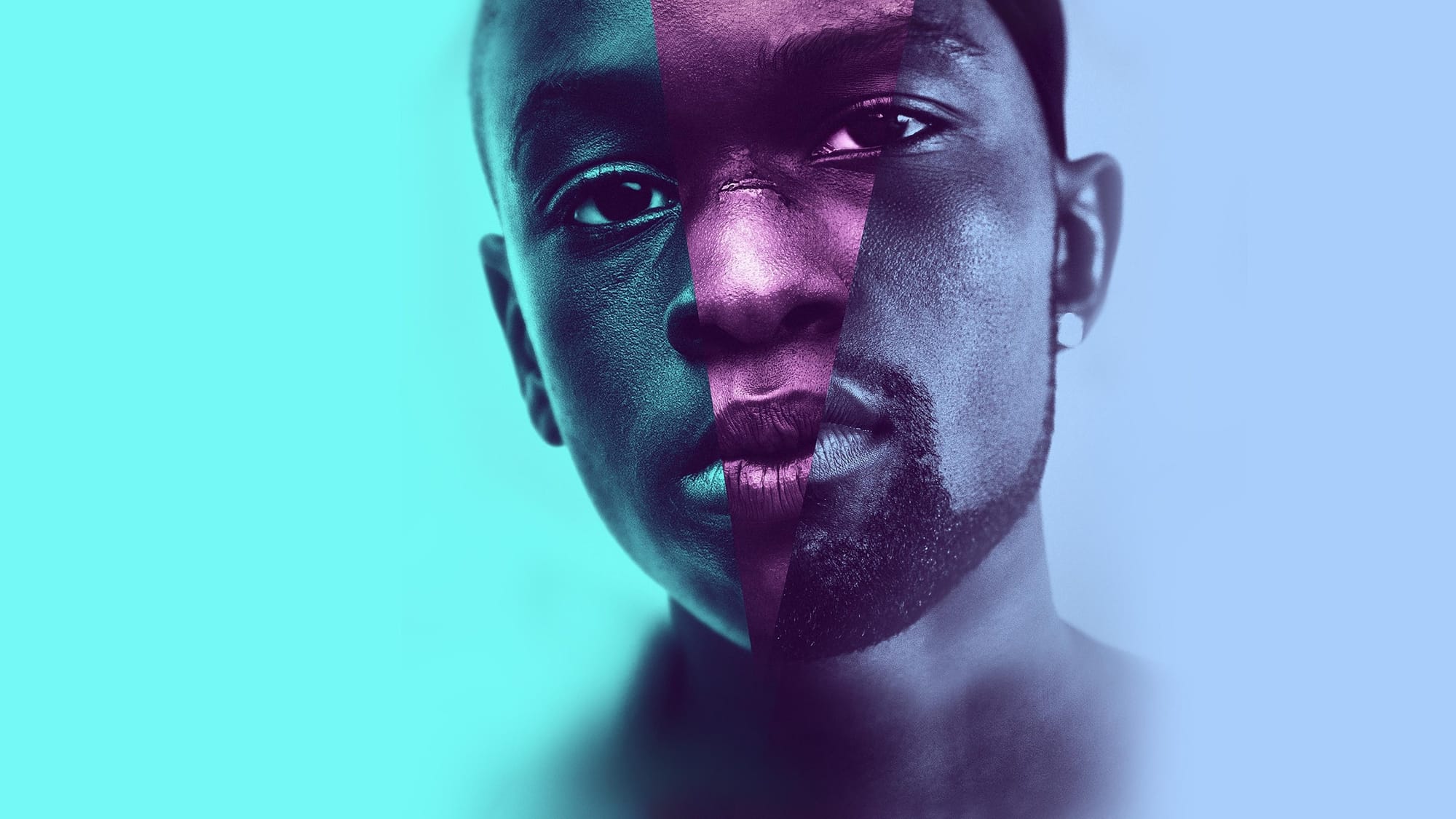
What Jenkins constructed is a triptych: three acts, three actors playing the same character — Chiron — at three pivotal moments in his life. In Act I, a near-mute elementary school child (Alex R. Hibbert) goes by the unsolicited nickname "Little." In Act II, Chiron (Ashton Sanders) navigates high school, mercilessly bullied for being different. In Act III, now going by "Black," a hardened Chiron (Trevante Rhodes) runs a drug ring in Atlanta, armoring his insecurities behind a performance of impenetrable masculinity. The structure is a formal choice as much as a narrative one. Jenkins has described his initial encounter with McCraney's play as a recognition: "It was 45 pages, non-linear and jumped back and forth. There was something about the triptych structure that resonated with me." The three-part form does something that a linear biography cannot — it insists on discontinuity, on the gaps between who we were and who we became, on the violence of forgetting and the terror of remembering.
The formal sophistication does not live only in structure. Cinematographer James Laxton uses color, framing, deep focus, and movement to lead into the film's editing while working with a precise sound design, which is often character-centric and complementary to the mood of each scene. Laxton's palette — the piercing pinks of a Miami sunset, the warm blues of the Atlantic at night — does not decorate the narrative. It diagnoses it. Color here is emotional weather. The camera lingers on Chiron's face with an almost clinical patience, as though the film refuses to look away from what the world keeps asking him to hide. Close-up shots of Chiron recur in similar style across all three acts, creating a visual rhyme that holds the three performances together as a single continuous consciousness.
The original score, composed by Nicholas Britell, applied a chopped-and-screwed technique — drawn from hip-hop remix culture — to orchestral music, producing what critics described as a "fluid, bass-heavy score." This is not merely an aesthetic novelty. The chopped-and-screwed method, which originated in Houston's Black music scenes and involves slowing down and pitching down recordings to create a warped, submerged sensation, carries its own cultural autobiography. Applying it to classical instrumentation was an act of translation between two worlds Chiron inhabits simultaneously: the baroque emotional terrain Jenkins describes wanting to capture, and the specific sonic geography of the Black American South. The result was a score that felt simultaneously ancient and contemporary, intimate and cosmic. Britell's collaboration with Jenkins, which began here, would prove to be one of the defining creative partnerships in prestige American film and television over the following decade.
What the Oscars Night Actually Meant
The 89th Academy Awards ceremony on February 26, 2017, would have been historically significant even without what happened at its end. Moonlight had been nominated for eight awards. It went on to win three Oscars from those eight nominations: Best Picture, Best Supporting Actor for Mahershala Ali, and Best Adapted Screenplay for Jenkins and McCraney. Ali's win was itself a landmark: he became the first Muslim actor to win an acting Oscar. The screenplay win honored two Black men from Miami writing about the world they grew up in. Any one of those facts, taken alone, would have been meaningful. Together, they constituted something closer to a reorientation.
But the envelope. The envelope is what this night is remembered for, and it matters to look at it squarely. For the first time in Oscars history, the wrong Best Picture winner was announced. La La Land was declared the winner and the acceptance speeches had already begun when the mix-up became clear and the true victor, Moonlight, was announced. Warren Beatty had been handed the wrong envelope — the one containing Emma Stone's Best Actress win for La La Land. He paused, visibly confused, then passed it to Faye Dunaway, who read the wrong title to the world. La La Land's team was midway through their acceptance speeches. The chaos that followed was live, global, and unprecedented.
La La Land producer Jordan Horowitz, upon taking the stage, realized that his film hadn't won Best Picture — Moonlight had — and announced the correction to the world. "This is not a joke," he said. "Moonlight has won Best Picture." The moment of correction, Horowitz holding up the actual card, became one of the most circulated images in the history of the ceremony. PricewaterhouseCoopers, which had handled Oscar balloting for decades, issued a formal apology. The academy launched an investigation. The two PwC accountants responsible for the envelopes were permanently barred from working the ceremony again.
What the debacle did, unintentionally, was give Moonlight's victory a mythological structure it might not otherwise have acquired so immediately. The film was, in that moment, the thing that had to be named twice. The first announcement belonged to the expected order: a glossy, big-budget Hollywood musical with a white star, up for a record-tying fourteen nominations, winning in a ceremony that two years earlier had been consumed by #OscarsSoWhite. Moonlight's big win came one year after the #OscarsSoWhite hashtag had been used thousands of times to criticize the Academy for nominating only white actors in 2016. The correction — the second naming — felt to many observers like something the culture had to actively choose, against inertia, against expectation, against the shape of the room.
The Weight of the First
Moonlight was not simply the first low-budget Best Picture winner in recent memory. It was, more precisely, the first film centered on a Black queer protagonist — played across three chapters by three Black men — to win the Academy's highest prize. It was the first LGBTQ Best Picture winner in the history of the Academy Awards. The films that preceded it in the queer canon — Brokeback Mountain (2005), Carol (2015) — had been nominated, acclaimed, and then passed over in ways that felt to many in the queer community less like artistic judgments and more like institutional reflexes. Many queer people felt that, even if Hollywood seemed willing to make films about their lives, a final door of acceptance had been slammed in the face of Brokeback Mountain and Carol. Moonlight's win kicked that door open and left it open.
The film also broke another kind of barrier that is less often stated plainly. One of Jenkins' most subtle yet striking creative decisions was the choice to keep the story entirely focused on the Black community, featuring no white cast members beyond extras. This is an almost audacious formal decision by mainstream Hollywood standards — not a provocation, but a commitment to a point of view. The film refuses to frame Chiron's interiority through white mediation. There is no white character to explain the neighborhood to the audience, no outsider's gaze through which the film grants the viewer permission to enter. Jenkins trusts the audience to find their way in. In the decade since its release, Moonlight has been cemented as a nuanced portrait of Black queer humanity. That cementing happened not by institutional decree but by the film's continued presence in conversation — in classrooms, in criticism, in the films that came after it.
Its footprints can be seen all over films like Nickel Boys, If I Go Will They Miss Me, and Waves — all films that use evocative imagery to tell grounded, Black-led stories. These aren't simply films that were green-lit because Moonlight made the business case; they are films that absorbed its visual grammar, its faith in ellipsis, its insistence that silence and stillness carry as much narrative weight as dialogue and event. Jenkins demonstrated that restraint at that level of craft was not a liability for awards or box office but a distinct advantage — an invitation to an audience that had been waiting for exactly this kind of intimacy.
What A24 Became Because of This Film
It is impossible to tell the story of Moonlight's legacy without telling the story of what it did to A24. It was also the first film that A24, the indie distributor that was still building a name for itself back in 2016, fully financed and produced itself. A24 had been operating since 2012, distributing prestige acquisitions like Spring Breakers (2012) and Ex Machina (2014). But Moonlight was different. It was the company's first fully self-financed and self-produced feature, and it won Best Picture. The validation was not merely symbolic — it restructured A24's identity from distributor to auteur studio, from taste-making acquisition machine to production entity willing to originate the most challenging material imaginable.
The decade that followed transformed A24 into the most critically discussed American studio of its era, associated with a specific brand of formally adventurous, culturally aware, emotionally difficult filmmaking. Moonlight did not create that brand alone — but it established the ceiling. It showed the company, the industry, and the audience what was possible when an independent studio fully backed a singular filmmaker's vision without hedging. The 4K re-release is, among other things, A24 acknowledging that this film remains the cornerstone of its cultural legacy — not Hereditary (2018), not Midsommar (2019), not even Everything Everywhere All at Once (2022). Moonlight first.
The 10th anniversary re-release also arrived at a particular cultural moment in Hollywood's ongoing conversation about representation. The streaming era has opened enormous space for stories that the theatrical industry historically undervalued, while simultaneously restructuring the economics in ways that make green-lighting a $1.5 million drama with no stars a different calculus than it was in 2015. At the same time, the backlash conversation — the recurring industry anxiety about whether "diverse" stories can open wide, whether certain audiences will show up, whether the awards attention translates to sustainable commercial infrastructure — has not quieted. Moonlight at ten is evidence in that argument. Its box office, however modest by blockbuster standards, was achieved without a franchise, without sequels, without a marketing budget proportionate to its cultural impact. It opened on four screens and earned roughly $400,000 in its first weekend. It earned $65 million in the end. When Barry Jenkins' Moonlight opened in four theaters in October 2016, it made just about $400,000 in its first weekend. It went on to gross over $65 million worldwide on a $1.5 million budget. The slope of that curve is its own argument against the gatekeeping logic that says intimate stories about marginalized subjects cannot find audiences.
The Craft as Political Act
It is tempting, and not entirely wrong, to describe Moonlight as a "political" film. But the description risks flattening what Jenkins actually did, which was not to make an argument about representation but to demonstrate the full imaginative weight of a consciousness that Hollywood had largely refused to treat as a subject. The difference matters. A political film makes a case; Moonlight builds a world. The world it builds happens to be one in which a Black gay man in Liberty City has an interior life dense enough to sustain a film, to hold the gaze of a wide audience, to win the most watched prize in world cinema. That is not a political statement. It is a correction to a category error that Hollywood had been making for decades.
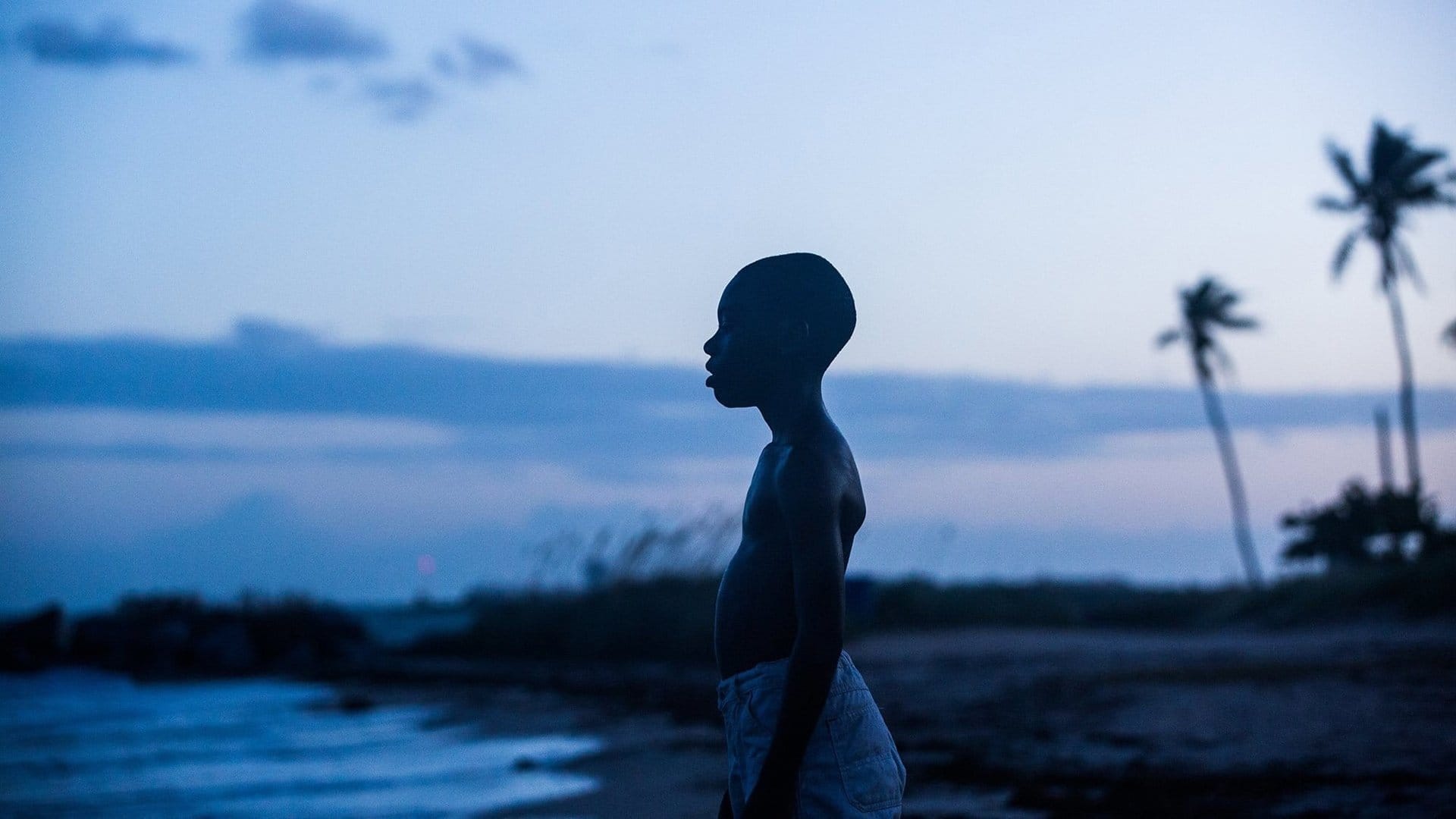
The craft that enabled this correction was not incidental. James Laxton's cinematography captured the landscape of silent faces rumbling with hidden emotion, and the emotional scale of Jenkins' screenplay is such that even within the most intimate moments, there are points where the enormity of its emotions seems overwhelming. The camera's patience with Chiron's face — its refusal to cut away, to deflect, to provide narrative relief — is itself a philosophical stance about whose inner life deserves sustained attention. That stance, sustained over 111 minutes, is the film's most radical act. The film appeared on over 180 critics' top-ten lists for 2016, including 65 first-place rankings — a measure of how completely the critical apparatus absorbed what Jenkins had built.
The editors, Nat Sanders and Joi McMillon — McMillon becoming the first Black woman to receive an Academy Award nomination in editing — shaped the film's rhythms with the same kind of emotional precision that Britell brought to the score. The elliptical structure between acts, the hard cuts that swallow years of Chiron's life whole, the long takes that refuse to let us off the hook of watching: these are not stylistic flourishes. They are the syntax of an argument about what film can do when it prioritizes interiority over event, sensation over information, texture over plot. The film's attention to sound design, cinematography, and editing to bring the audience wholly inside Chiron's experience is remarkable, as is the resilience the film's protagonist must develop to find a life and love beyond the adversity he faces.
Jenkins After the Lightning
Moonlight's success created a specific kind of pressure on Barry Jenkins: the pressure of having made a masterpiece early, and of being expected to either replicate or transcend it with every subsequent project. His follow-up, If Beale Street Could Talk (2018), adapted from James Baldwin's 1974 novel, was both acclaimed and, by the irrational mathematics of expectation, treated by some observers as a slight step down from the impossible standard. It earned Regina King an Academy Award for Best Supporting Actress. It was a profound film. It was not Moonlight. The comparison was always unfair — no film can be Moonlight except Moonlight — but it illustrated the double bind that the film's success created: Jenkins was now a director defined by a single high-water mark, evaluated against himself.
His subsequent work on the Amazon limited series The Underground Railroad (2021) — an adaptation of Colson Whitehead's Pulitzer Prize-winning novel — demonstrated the breadth of what he could do with form and history at a larger scale. The series expanded his visual language to encompass the full horror of American slavery while maintaining the same intimate attentiveness to Black interiority that defined Moonlight. It won multiple Emmy nominations and confirmed that his sensibility was not a one-film anomaly but a sustainable artistic method. It also confirmed that the streaming era had opened space for the kind of extended, formally ambitious Black storytelling that theatrical cinema had historically been reluctant to finance.
The 4K re-release, with the anniversary conversation featuring Jenkins, Ali, and Britell, is partly a commercial event and partly something more like a public act of remembering. These three artists made something together at a scale and cost that the industry had not historically associated with Best Picture ambitions. Their conversation, attached to the screenings, is an implicit invitation to think about what it meant then and what it means now — whether the decade between that October 2016 limited release and this October 2026 remaster constitutes genuine progress or a more complicated accounting.
What the Return Asks
When a film returns to theaters in a 4K remaster, the event is always about two things simultaneously: the film as it is now, sharpened and clarified; and the film as it was, freighted with everything that happened in its wake. Moonlight at ten is both a more legible object — the precision of a 4K remaster through James Laxton's cinematography must be extraordinary — and a more complex one. A decade of conversations about representation in Hollywood, about the economics of independent film, about whose stories get made and distributed and awarded, have accreted around it. The film now carries the weight of being an argument that it was not trying to make.
What Jenkins made was not a manifesto. He made a film about a boy who grows up in Liberty City, who is afraid, who is loved imperfectly, who loves imperfectly, who cannot say what he is for most of his life, and who finds, in the film's final image, something that might be a beginning. That is enough. That is more than enough. The fact that the industry required a Best Picture win, an envelope scandal, and a decade of critical reassessment to fully absorb what the film had done from the moment it opened on four screens in October 2016 — that is not the film's limitation. That is Hollywood's.
The fact that Moonlight's Best Picture win on Hollywood's biggest stage not only cemented its place in film history but helped the story reach more Black and queer people is a reminder that the institutional prize still carries weight precisely because of who it has historically excluded. When the excluded are finally named, the naming has a force that the ceremony cannot fully contain. This is what made the envelope scandal, beyond its operational farce, so resonant: the correction had to be made twice. Moonlight had to be named twice. Some part of that felt like the whole history of the film compressed into a single live moment.
The 4K remaster does not need the history to justify its existence. The film earns that on its own terms, every time — in the beach scene, in the diner, in the long held shot of Chiron's face in the dark, learning that he is not invisible, that someone has held the memory of him all this time. What the anniversary does, ten years on, is insist that we return. That we look again, more closely, at what it cost to make this film, what it cost to win, and what it cost — and continues to cost — to build an industry in which a $1.5 million drama about a Black queer boy from Miami is considered not just a viable commercial object but a civilizational one. That cost is still being paid. The film is still the receipt.
For more on cinema's relationship with institutional recognition, read our analysis of Glenn Close's Honorary Oscar and what it reveals about how the Academy recalibrates its own history. And for the question of what happens when legacy culture meets contemporary franchise logic, see our piece on LACMA's 15th Art+Film Gala and the case it made for shared discipline between cinema and visual art.