Twenty-five years ago today, on November 16, 2001, Harry Potter and the Philosopher's Stone opened in cinemas across Britain and, as Harry Potter and the Sorcerer's Stone, across the United States. It had premiered twelve days earlier at the Odeon Leicester Square in London. By the end of its first run it had taken $974 million worldwide, the biggest film of 2001 and, for a while, the second-highest-grossing film ever made.
A quarter of a century later, the numbers are the least interesting part of the story. What Chris Columbus's film really did was fix an image. For a generation of readers, Hogwarts now looks like Stuart Craig's sets, magic sounds like John Williams's celesta, and Harry, Ron and Hermione have the faces of three children cast in the summer of 2000. That image is so durable that, this Christmas, a new HBO series will have to compete with it. Before that happens, it is worth looking at how it was built.
A Faithful Bet
Warner Bros. had optioned the first four novels for around $1.3 million. The studio's choice of director was not a visionary but a craftsman. Chris Columbus was picked from a shortlist that included Steven Spielberg and Rob Reiner, largely on the strength of family hits such as Home Alone and Mrs. Doubtfire. Steve Kloves, the writer-director of The Fabulous Baker Boys, adapted the novel, and went on to write all but one of the eight films.
Their approach was fidelity. Rather than reinvent the book, the film set out to put it on screen as readers had imagined it, scene by scene, down to the jokes. Roger Ebert, who gave it four stars, put the result simply: "Chris Columbus' movie is an enchanting classic that does full justice to a story that was a daunting challenge." Other critics found it too literal, a careful illustration rather than a film with a voice of its own. That was the price of a movie made to reassure millions of readers that nothing they loved had been lost.
The other founding rule came from J.K. Rowling herself. She insisted that the cast be British and Irish. That ruled out American stars, including, according to accounts of the production, Robin Williams. It also gave the film its texture: a supporting company drawn from the British stage and screen, with Maggie Smith as McGonagall, Alan Rickman as Snape, Richard Harris as Dumbledore and Robbie Coltrane as Hagrid.
Finding Harry, Ron and Hermione
The hardest decision was the children. After a long search, Daniel Radcliffe, Rupert Grint and Emma Watson were confirmed on August 21, 2000. Columbus had wanted Radcliffe since seeing him in the BBC's David Copperfield, and his parents agreed to let him audition after the producer David Heyman and Kloves met the boy at a London theatre. Grint had sent in a homemade video of himself rapping after seeing a report on the open casting on the children's news programme Newsround. Watson was put forward by her theatre teacher in Oxford and went through more than five interviews.
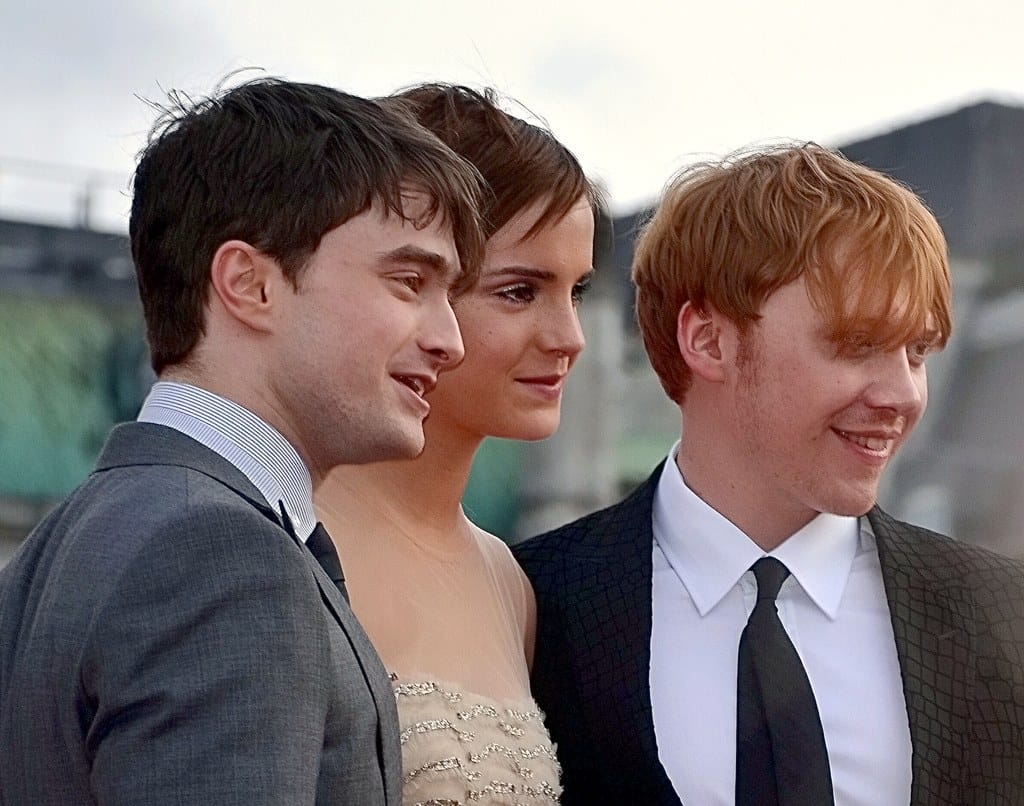
The bet was not just that they could carry one film, but that they could grow up on camera over a decade. They did, and the eight films became a rare record of three actors ageing in real time inside the same story. That continuity is something no reboot can buy.
Building Hogwarts
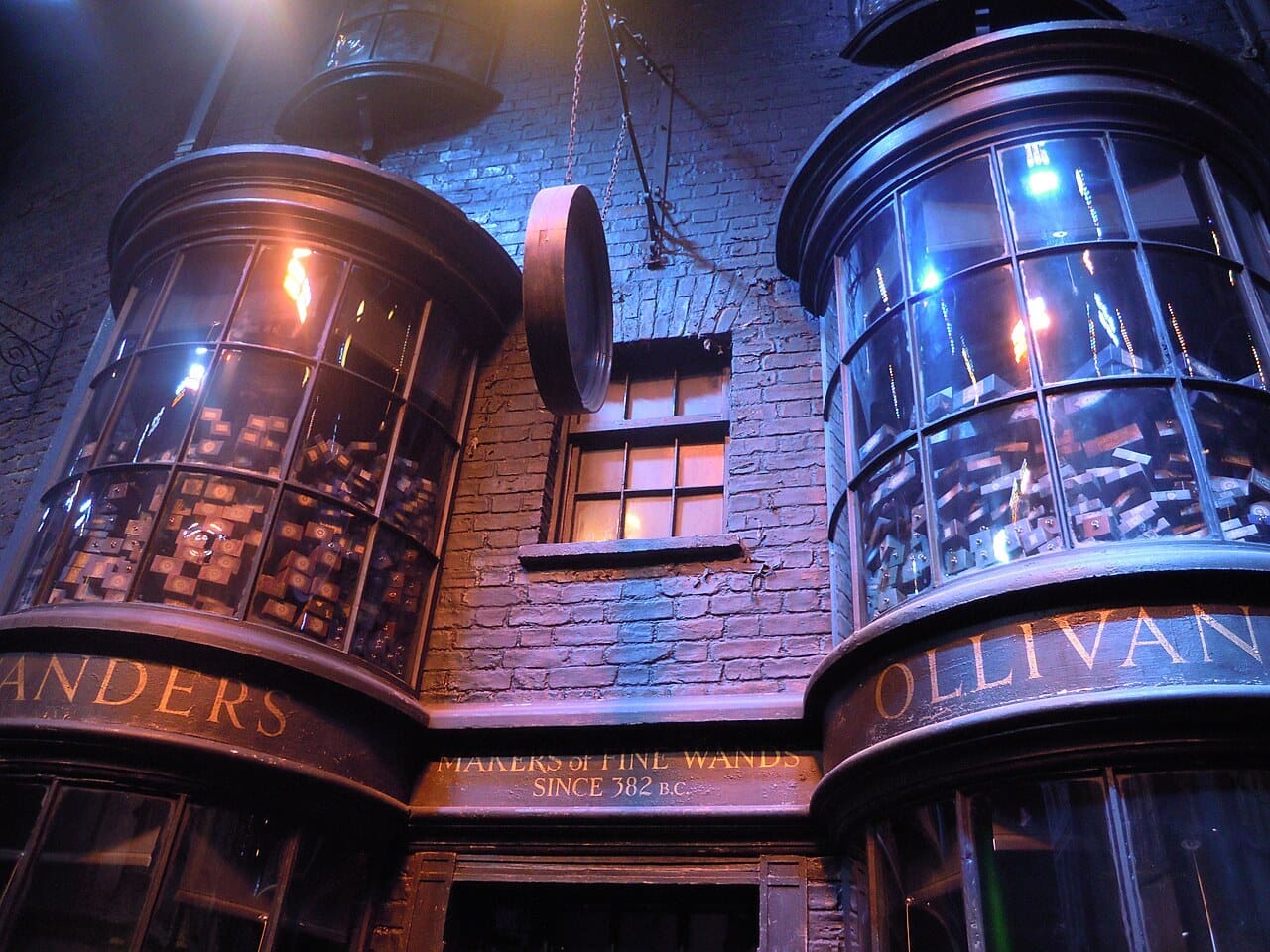
Principal photography began on September 29, 2000, at Leavesden Film Studios in Hertfordshire, and wrapped on March 23, 2001. The production designer was Stuart Craig, already a three-time Oscar winner for Gandhi, Dangerous Liaisons and The English Patient. Craig built the Great Hall at Leavesden and chose to construct Diagon Alley as a set rather than dress an existing street. For the exteriors and corridors, the film went on location: Alnwick Castle and Gloucester Cathedral stood in for Hogwarts, Goathland station in North Yorkshire became Hogsmeade station, and Australia House on the Strand became Gringotts bank.
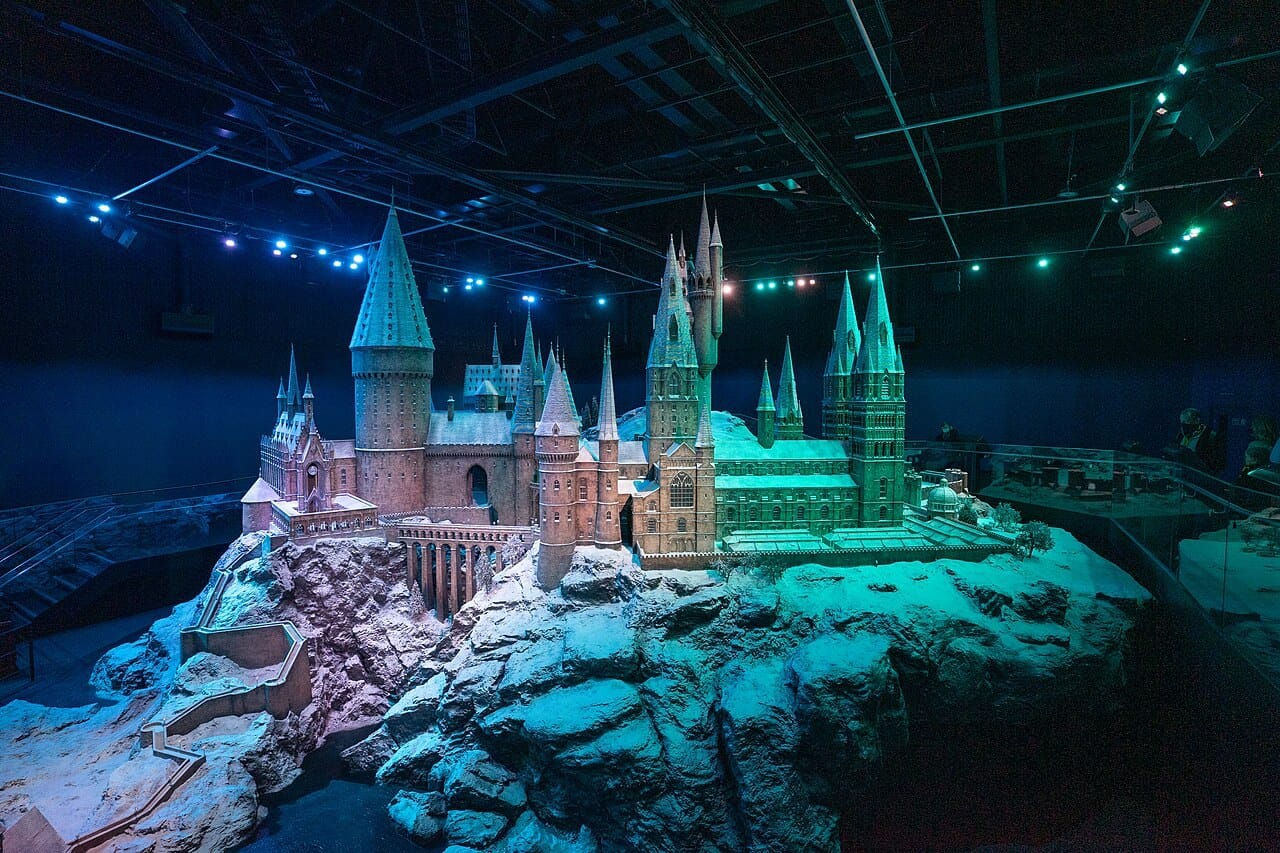
Craig would design all eight films, and his work earned Philosopher's Stone one of its three Oscar nominations, for art direction, alongside costume design and original score. He died in September 2025, aged 83. His Hogwarts outlived him in a literal way. In November 2010 Warner Bros. completed its purchase of Leavesden, and in March 2012 opened Warner Bros. Studio Tour London – The Making of Harry Potter on the site, with the Great Hall, Diagon Alley and the 1:24 scale model of the castle used for exterior shots on display.
Putting Magic on Screen
In 2001 the visual effects were the biggest risk. The film has nearly 600 effects shots, split across several companies: Sony Pictures Imageworks handled the Quidditch match and the troll in the girls' bathroom, Industrial Light & Magic created Voldemort's face on the back of Quirrell's head, and Rhythm & Hues animated the baby dragon Norbert. Some of the computer work now looks its age, especially the digital players in the Quidditch match. Ebert's question at the time was the same one every reader had: "Readers of the book will wonder how the movie visualizes the crucial game of Quidditch."
What has aged better is the restraint around the spells. Magic in Philosopher's Stone is mostly small: a feather lifted in a Charms lesson, a wand chosen at Ollivanders, a troll knocked out by its own club. The film treats "Wingardium Leviosa" as a lesson to be learned, not a firework, and that classroom idea of magic made the wizarding world feel practical rather than spectacular.
Twenty-five years later, the incantations are still the part everyone remembers. Try a few of them yourself.
Kynari · Interactive
Try a Spell
Pick an incantation, or tap anywhere in the dark to send a spark from the wand.
The Sound of Wonder
If the sets fixed the image, John Williams fixed the sound. His score opens on "Hedwig's Theme", whose melody is introduced on a solo celesta, a delicate, slightly eerie music-box sound that became shorthand for the whole franchise. Williams scored the first three films, and the theme survived every change of composer that followed. The score was nominated for the Oscar and lost to Howard Shore's The Lord of the Rings: The Fellowship of the Ring, released a month later.
The Template for the Franchise Era
The commercial result was immediate. The film made more than $90 million in its first weekend in North America, then a record, and set a British weekend record of £16.3 million including previews. Re-releases have since taken its total past $1 billion.
 Official trailer
More important was the model. Warner Bros. released eight films between 2001 and 2011, adapting seven novels and splitting the last into two parts, with the same core cast, the same production designer and the same studio base. Together they took more than $7 billion at the global box office. Years before Marvel Studios launched its shared universe with Iron Man in 2008, Harry Potter showed Hollywood what a studio-built franchise looked like: a long-term plan, a fixed creative team, annual or near-annual instalments and an audience that grew up with the product.
Twenty-Five Years On
Warner Bros. has spent 2026 marking the anniversary, including a one-week worldwide return to cinemas from August 27 to September 3 with 12 minutes of behind-the-scenes footage. The bigger event is still to come. On December 25, HBO will premiere its series Harry Potter and the Philosopher's Stone, the first season of a planned adaptation of all seven books, with Dominic McLaughlin as Harry, Arabella Stanton as Hermione and Alastair Stout as Ron, alongside John Lithgow as Dumbledore and Paapa Essiedu as Snape. Francesca Gardiner is the showrunner, Mark Mylod directs multiple episodes, and Rowling, whose public statements on gender identity have made her a divisive figure for part of the audience, is an executive producer. As we noted when the first footage arrived, the open question is whether the series is a reimagining or a repackaging.
The series has one argument the film never had: time. A season of television can include the scenes and characters Kloves had to cut. Its problem is the one this anniversary makes obvious. Hans Zimmer and his Bleeding Fingers collaborators Kara Talve and Anže Rozman are writing the score, and HBO has not confirmed whether Hedwig's Theme will be heard. The castle, the faces and the music of 2001 are not just memories; they are a reflex for millions of viewers. Columbus's film was criticised in 2001 for being too faithful to the book. Twenty-five years later, the real test for HBO is whether audiences will let it be faithful to anything other than the film.