There is a particular kind of institutional statement that gets mistaken for glamour. On November 7, 2026, the Los Angeles County Museum of Art held its 15th annual Art+Film Gala on the museum's grounds, co-chaired — as it has been since the event's inception — by LACMA trustee Eva Chow and Leonardo DiCaprio. The red carpet assembled Andrew Garfield, Anya Taylor-Joy, Quinta Brunson, Brittany Snow, and Nicole Kidman against the backdrop of Chris Burden's Urban Light installation. Rosé of Blackpink performed. The room glittered. And underneath all of it, LACMA made a rare, specific argument: that Vija Celmins and Denis Villeneuve share a frequency that most institutions lack the vocabulary to name.
The pairing of honorees at the Art+Film Gala is never arbitrary — it is, structurally, the whole point. The event exists to dissolve the false hierarchy between fine art and cinema, and to fund LACMA's initiative to make film more central to its curatorial programming. Past honorees have included David Hockney, Kehinde Wiley, Steven Spielberg, Martin Scorsese, and Ryan Coogler. Each pairing implies a thesis. The 2026 edition implies this one: that the most rigorous visual practice in contemporary painting and the most visually exacting sensibility in mainstream cinema are not adjacent — they are identical in method, different only in medium.
The Painter Who Earns Every Millimeter
Vija Celmins, born in Riga, Latvia in 1938, has spent more than five decades doing something that sounds straightforward and is, in practice, nearly inhuman. She makes photorealistic drawings and paintings of ocean surfaces, night skies, spider webs, and desert floors — rendered in gray, black, and white, nearly always at intimate scale, nearly always in graphite or charcoal, nearly always from photographs. The ocean series began in 1968, based on her own photographs of the Pacific taken near her studio in California. The night sky drawings followed. So did the spider webs, the desert grounds, the rocks. The subject matter rotates; the commitment does not.
What Celmins is actually doing is not reproduction. She describes her process as translation — turning one surface into another, introducing the fiction of the hand into the fact of the photograph. Each drawing is a record of time spent, a form of meditation that rejects speed as a value. Her Untitled (Big Sea) series earned critics' comparisons to Gerhard Richter. She has earned a MacArthur Fellowship, been inducted into the American Academy of Arts and Letters, and been the subject of major solo retrospectives at the Metropolitan Museum of Art, the San Francisco Museum of Modern Art, and the Centre Pompidou in Paris. She lives and works in New York. She continues at the same pace. That pace is the work.
The institutional recognition at LACMA means something specific for Celmins: her practice, which resists the speed of the contemporary art market, is being named as the pinnacle, not the exception. LACMA CEO Michael Govan framed the pairing in two separate lines, calling Celmins's "exacting renderings of the natural world" a blend of "realism and imagination" and describing Villeneuve's "meticulously crafted worlds" as giving his films "an unforgettable visual impact." The framing is diplomatic, but the underlying claim is accurate. Celmins does not build worlds — she rebuilds the surface of the world from scratch, square centimeter by square centimeter. That is a form of discipline that most artistic practices do not attempt.
The Director Who Controls the Frame at Every Scale
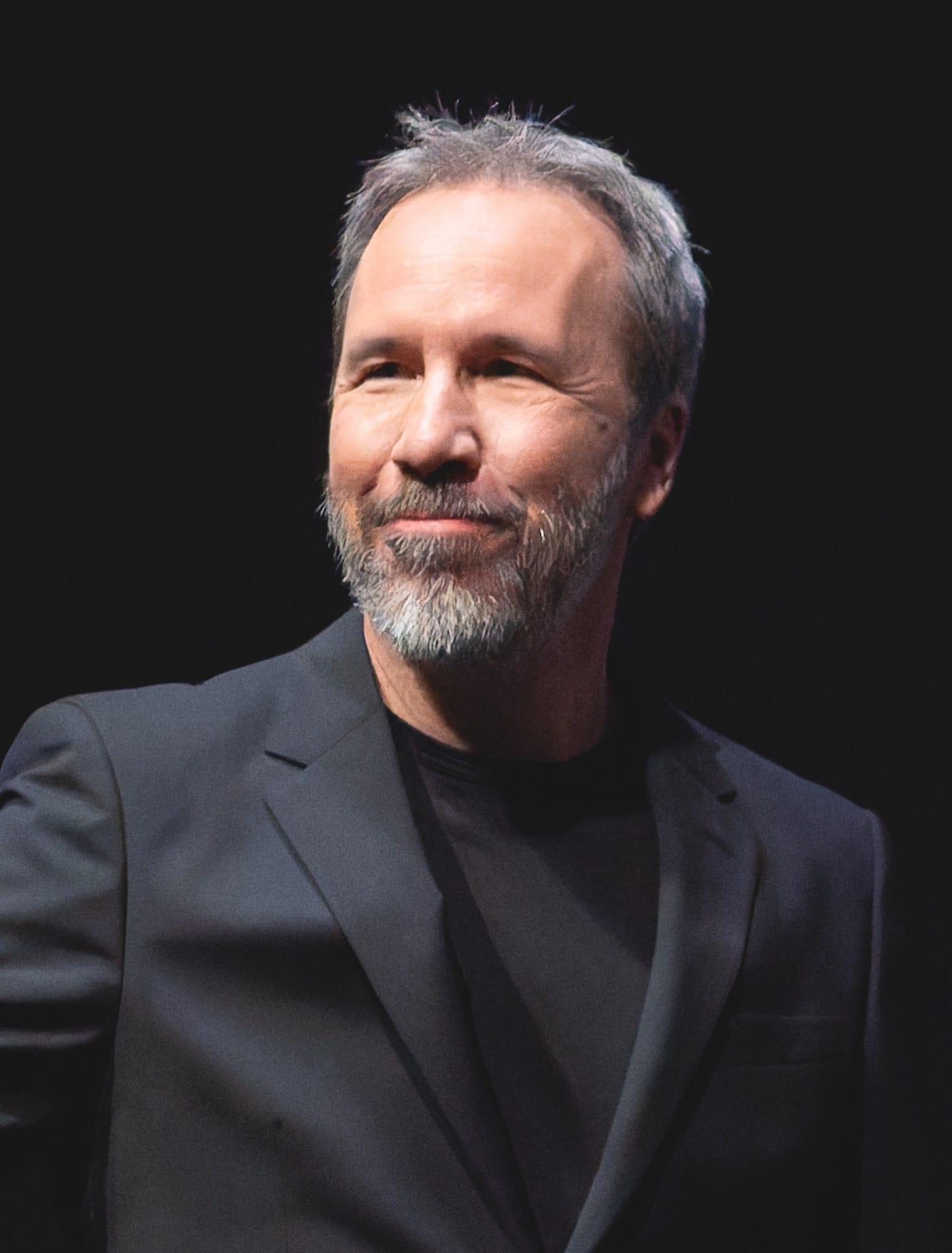
Denis Villeneuve arrived at LACMA at a moment of unusual professional saturation. His two-part adaptation of Frank Herbert's Dune — Dune (2021) and Dune: Part Two (2024) — grossed a combined total of more than $1 billion worldwide, with both films nominated for Best Picture at the Academy Awards. Dune: Part Three, which he directed, wrote, and produced, is scheduled for release on December 18, 2026. Amazon MGM Studios has also announced that he will direct the next James Bond film, the 26th installment in the franchise, after completing the Dune trilogy. The pipeline is extraordinary.
But the gala is not about the pipeline. What LACMA is honoring is the visual disposition behind the pipeline. Villeneuve, a French-Canadian filmmaker born in Trois-Rivières, Québec in 1967, has built a filmography — Incendies (2010), Prisoners (2013), Enemy (2013), Sicario (2015), Arrival (2016), Blade Runner 2049 (2017), and the Dune films — that is defined less by genre than by a consistent refusal to let any frame go unexamined. His films are slow by blockbuster standards; they treat visual information as primary rather than decorative. The landscapes in Dune are not backgrounds. They are arguments. They ask you to feel the weight and the scale before you understand the story.
That is Celmins's project, stated in a different vocabulary. Where Celmins removes the horizon line and forces you to sit inside an ocean surface with no exit, Villeneuve builds an Arrakeen desert that communicates the same quality of vastness-as-pressure. Both practices require the audience to submit to looking. Neither will explain itself to hurry things along.
The Gala as Cultural Instrument
The Art+Film Gala is a fundraiser — it is not incidental to note that the 2025 edition, which honored Mary Corse and Ryan Coogler with a performance by Doja Cat, drew nearly 600 guests and raised a record $6.5 million for the museum. The 2026 event, presented by Gucci with additional support from Audi, is structurally similar: proceeds fund exhibitions, acquisitions, educational programming, and screenings that explore the intersection of art and film. These numbers matter because they determine what LACMA can do with the argument it makes each November. The gala is not merely symbolic.

Rosé's presence as musical guest is the event's loudest signal that the argument is intended for a wide room. The Blackpink member — who has become a prominent global fashion figure through ambassadorships including Saint Laurent and Tiffany & Co. — brings a cultural register that neither Celmins nor Villeneuve naturally occupies. That is, precisely, the point. Eva Chow's statement that Rosé would "amplify the spirit of the evening with her incomparable talent and style" is the kind of phrasing that sounds like PR and operates as strategy. The Art+Film Gala requires crossover attention to do its cultural work. Charli XCX served that function in 2024. Rosé serves it in 2026.
The gala's formula — one visual artist, one filmmaker, one pop performer, Gucci as sponsor, DiCaprio as co-chair — has been refined over fifteen years into something that functions as a machine for collapsing category. It tells the fashion industry that art matters. It tells Hollywood that the museum is watching. It tells the art world that cinema belongs in the same sentence. And it tells everyone in the room that the person sitting next to them, regardless of their industry, is operating inside the same fundamental project: the construction of images that make people feel the weight of the world differently than they did before.
What the Pairing Actually Argues
The deepest claim LACMA is making with the Celmins-Villeneuve pairing is not about prestige. It is about method. Both practitioners share an almost pathological commitment to surface — to the idea that the first duty of a visual work is to be looked at, not explained. Celmins's ocean drawings do not carry a message about the ocean. They carry the experience of looking at the ocean's surface until looking itself becomes a form of knowledge. Villeneuve's films do not explain what the desert means. They place you inside the desert's scale until meaning arrives on its own terms.
This is a minority position in contemporary culture, which rewards speed, legibility, and narrative efficiency. The gala's institutional weight — fifteen years, Gucci, DiCaprio, a record-breaking fundraise — is being thrown behind the minority position. That is not glamour. That is an argument. And Rosé's performance, whatever its atmospheric function, made certain the culture industry was in the room to hear it. Villeneuve, meanwhile, moves toward Bond — a franchise that will test whether his discipline survives at the scale of global genre cinema. LACMA has, in its way, registered what is at stake. The museum is betting on the painter and the director before the box office has its final say. That is what a cultural institution is for.
For more on how prestige cinema and institutional attention converge, see our analysis of Batman and Lex Luthor competing for Bond. And on the broader question of how creative discipline is recognized — or misread — by industry, consider our piece on Rachel Scott's CFDA win as structural argument about American fashion.