Thirty years ago today, on November 15, 1996, Warner Bros. released Space Jam in American cinemas. On paper it was a strange product: a basketball player with no acting career, a cast of cartoon characters whose golden age was half a century behind them, and an alien theme park called Moron Mountain. The critics were split. The audience was not. The film topped the box office on its opening weekend and went on to gross about $230 million worldwide, the tenth biggest film of 1996 and, for more than two decades, the highest-grossing basketball film ever made.
But the numbers are not why Space Jam still matters. It matters because it was the moment Michael Jordan stopped being only an athlete and became a character: a figure who could stand next to Bugs Bunny and look like he belonged there. Three decades later, the Jordan of popular culture, the logo, the shoes, the documentaries, the films about his sneakers, still runs on the idea that this movie sold to a generation of children.
It started as a Super Bowl ad
The film began as advertising. On January 26, 1992, during Super Bowl XXVI, Nike aired "Hare Jordan", a commercial in which Bugs Bunny recruits Jordan to deal with a gang of bullies on a basketball court. The idea came from Jim Riswold, the Wieden+Kennedy creative director who had already paired Jordan with Spike Lee's character Mars Blackmon, and who picked Bugs because he was his childhood hero. A sequel, "Aerospace Jordan", in which the pair took on Marvin the Martian, followed at the 1993 Super Bowl.
Both spots were directed by Joe Pytka, a commercials and music video director, and their success changed how Warner Bros. saw its own rabbit. As Pytka later put it, the response "was a nice bit of research for Warner Bros. to understand that the Bugs character still had relevance and to tie it in with Michael." Jordan's agent, David Falk, who had turned down every previous film offer because he believed Jordan could only play himself, saw the obvious next step. Pytka would end up directing the feature too.
A plot borrowed from real life
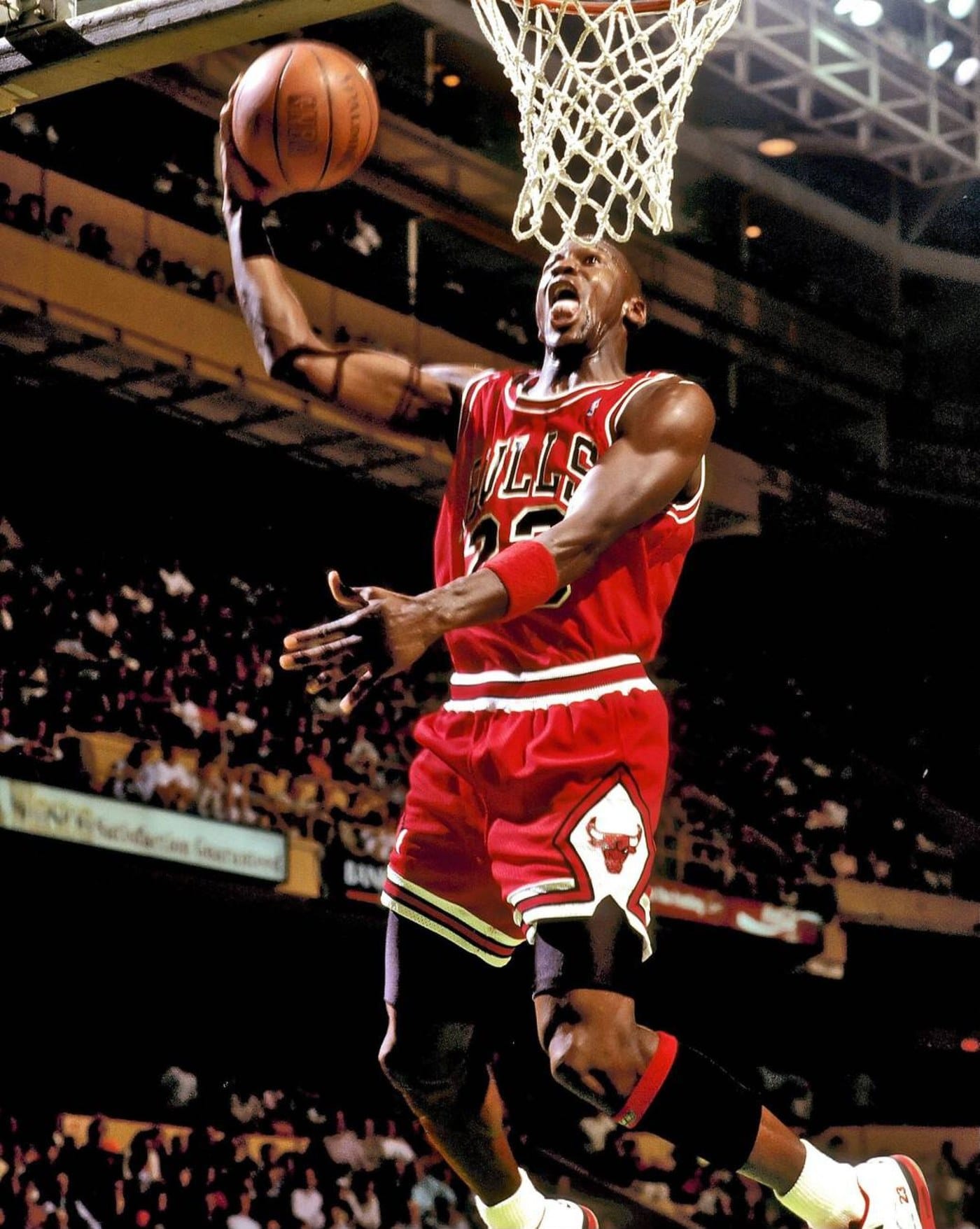
The project stalled almost immediately, because Jordan himself walked away. In October 1993, after three straight championships with the Chicago Bulls and the murder of his father, James, he retired from basketball and signed with the Chicago White Sox organisation. In 1994 he played a season of minor league baseball for the Birmingham Barons. On March 18, 1995, he announced his return to the NBA in a two-word press release: "I'm back."
Space Jam folds that story into its script almost without disguise. The film opens with a young Jordan telling his father he will play in the NBA, jumps to his retirement and his struggles at the plate, and ends with him deciding to return to the league. In between, the Looney Tunes pull him through a hole in a golf course to help them win a game against the Monstars, five alien invaders who have stolen the talent of Charles Barkley, Patrick Ewing, Shawn Bradley, Larry Johnson and Muggsy Bogues. Wayne Knight plays his hapless publicist, Stan Podolak. Bill Murray plays himself, and according to the production history only signed on after Jordan asked him personally.
The film was shot in the summer of 1995, and Jordan's comeback was built into the shoot. During filming he and visiting NBA players, Reggie Miller, Barkley and Ewing among them, played regular pick-up games with extras and college players. The man on screen was rehearsing the season he was about to play.
 Official trailer
A machine for selling things
Technically, Space Jam was ambitious. Around 52 minutes of hand-drawn animation, in the wilder style of Bob Clampett rather than Chuck Jones, were scanned and composited digitally with live action shot against blue screen. The film set a record for composited shots in a feature. Billy West voiced Bugs Bunny and Elmer Fudd, Dee Bradley Baker voiced Daffy Duck, and Danny DeVito was the only celebrity in the voice cast, as the alien boss Mr. Swackhammer.
Commercially, it was designed from the start as a merchandising engine. After Warner Bros. first turned it down, Falk took his pitch to the studio's consumer products chief. The franchise has since been estimated to have generated around $6 billion in revenue, from Happy Meals to Tune Squad jerseys. The soundtrack went six times platinum. Its biggest song, "I Believe I Can Fly", reached number two on the Billboard Hot 100 and won three Grammys; its writer and performer, R. Kelly, was later convicted of federal crimes, and the song is no longer easy to hear without that context. The Quad City DJ's title track, meanwhile, became a sports arena staple and a meme that never quite died.
Neither did the website. Built in 1996, the original Space Jam site, with its starfield background and animated GIFs, survived almost untouched for a quarter of a century, becoming one of the most famous artefacts of the early web. It is still online today.
The shoe in the film
The sneaker carried the same story. During the 1995 playoffs against the Orlando Magic, Jordan wore a black and purple-blue version of the Air Jordan XI, designed by Tinker Hatfield, and he wore it again in the film. Nike did not sell that colorway until 2000, and it has been known ever since as the "Space Jam". As Bleacher Report recounted ahead of its 2016 re-release, the shoe returned for the film's 20th anniversary in its original purple tones.
The film also arrived at the perfect moment. The 1995-96 Bulls had just won 72 games and the title, and Jordan would win two more championships in 1997 and 1998 to complete a second three-peat. The man in the cartoon was, at the same time, the best player in the world.
A New Legacy, and an old argument
Jordan never agreed to a sequel, and plans for a Space Jam 2 were dropped. It took until 2014 for Warner Bros. to announce one built around LeBron James, who said: "I've always loved Space Jam. It was one of my favorite movies growing up." Space Jam: A New Legacy, directed by Malcolm D. Lee, opened on July 16, 2021, in cinemas and on HBO Max on the same day, a pandemic-era release strategy. It grossed about $164 million against a reported $150 million budget, drew mostly negative reviews aimed at its plot and its parade of Warner Bros. brands, and won three Golden Raspberry Awards, including Worst Actor for James.
The voices had changed too: Jeff Bergman played Bugs Bunny, while Eric Bauza voiced Daffy Duck, Porky Pig, Elmer Fudd, Foghorn Leghorn and Marvin the Martian, part of the work we remembered in our tribute to Eric Bauza. Jordan himself appears only as a joke: Michael B. Jordan turns up as a case of mistaken identity.
 Official trailer
The sequel inevitably became another round of the debate that has followed James for his whole career. Unfair as criticism, revealing as culture. The 1996 film worked because its story was Jordan's real story, retirement, baseball, comeback, told at the peak of his fame. The 2021 film was a story about intellectual property, built inside a studio's catalogue. One made an athlete into a myth; the other used an athlete to sell a library.
Jordan, the character, in 2026
Thirty years on, the character Space Jam built is bigger than ever. In 2020, The Last Dance, the ESPN and Netflix docuseries about the Bulls' 1997-98 season, became a lockdown event and brought Jordan's career to viewers who had never seen him play. In 2023, Ben Affleck's Air made a hit drama out of the 1984 Nike deal, with Matt Damon as Sonny Vaccaro and Viola Davis as Deloris Jordan, and Jordan himself kept off screen, his face never shown. The legend no longer needs the man to appear.
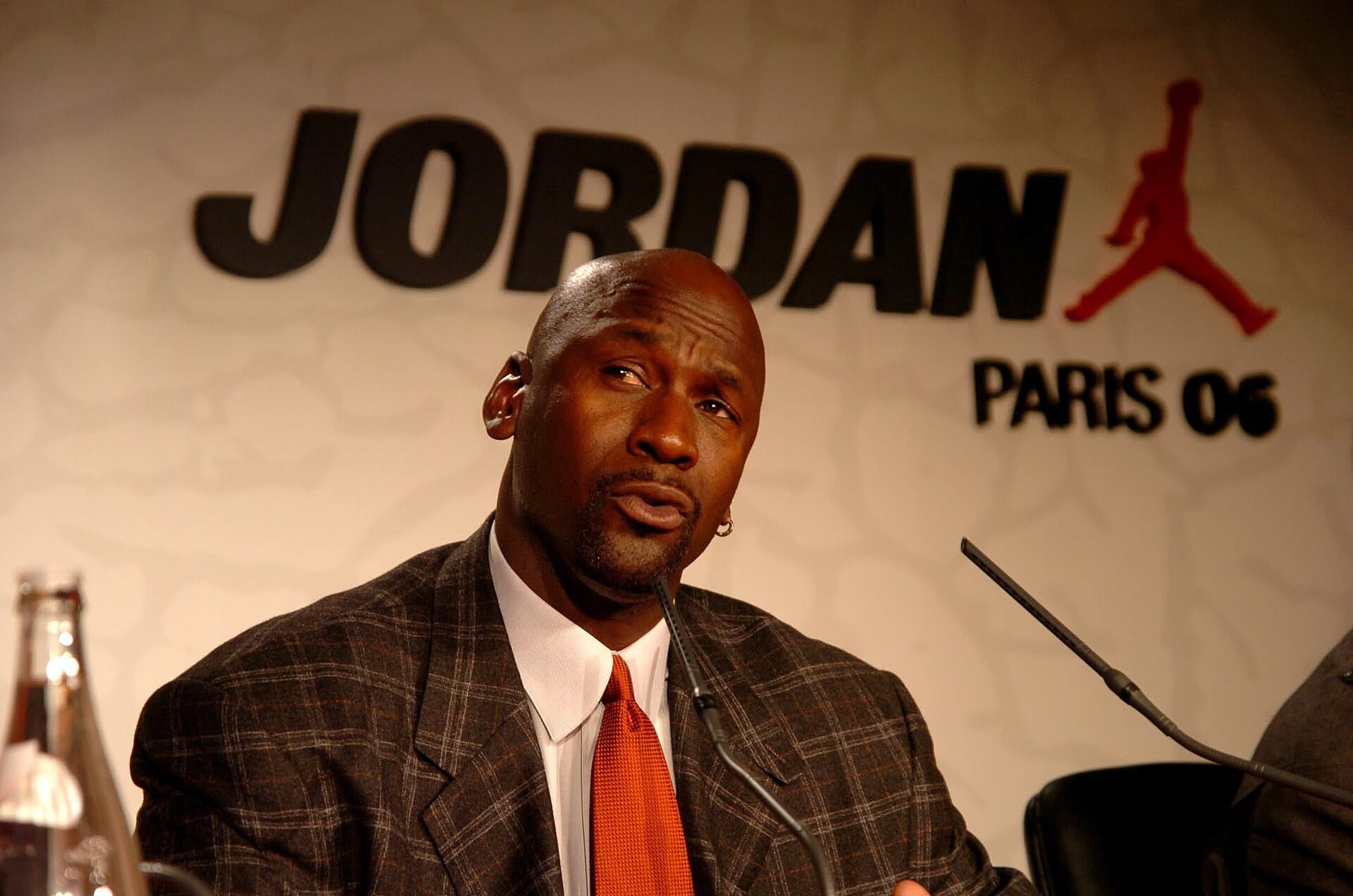
The business has grown with the myth. Jordan Brand, launched by Nike in 1997, reportedly reached around $7 billion in revenue in fiscal 2024. Jordan now co-owns the NASCAR Cup Series team 23XI Racing with driver Denny Hamlin, its name combining his number 23 and Hamlin's 11.
None of that came from Space Jam alone; it came from six championships and a sneaker deal. But Space Jam was the moment the cartoon version of Michael Jordan was born, the one that could fly, stretch his arm the length of a court and win with a buzzer beater. For a generation who were children in 1996, that is still the Jordan they see first.