The stage schedule for Jump Festa 2027 reads like a ledger. Shueisha has confirmed the full lineup for its annual end-of-year event, running December 19–20 at Makuhari Messe in Chiba, Japan — and the architecture of the program tells you exactly what the publisher believes, franchise by franchise, about the next twelve months of anime commerce.
 Official trailer
Jump Festa 2027 returns to Makuhari Messe on December 19–20, with an unprecedented lineup of 34 titles spread across three stages: Jump Super Stage, Jump Studio, and the newly introduced Jump Station Online. The tiered structure matters. The Super Stage is not merely the biggest room — it is the institutional ranking. What appears there is what Shueisha considers ready for prime-time commitment. What lands in the Studio or the online tier is either ascending or coasting.
The Super Stage as Portfolio Map
The Jump Super Stage lines up nine Weekly Shonen Jump titles — One Piece, Naruto, Haikyu!!, My Hero Academia, Demon Slayer: Kimetsu no Yaiba, Jujutsu Kaisen, Sakamoto Days, Akane-banashi, and Kagurabachi — alongside four from Jump+ (Spy x Family, Chainsaw Man, Dandadan, and Oblivion Battery) and two from Jump SQ. That is fifteen titles in two days, split between tested giants and the generation of properties Shueisha is actively betting on to replace them.
The two-day split is deliberate rather than logistical. Day 1, December 19, features Kagurabachi, Sakamoto Days, Jujutsu Kaisen, My Hero Academia, Naruto, and World Trigger. Day 2, December 20, brings Demon Slayer, Chainsaw Man, Dandadan, Haikyu!!, Spy x Family, and One Piece. Saturday front-loads the franchises with active anime production cycles and rising series making their Super Stage case; Sunday holds the properties whose next moves will shape the medium's commercial ceiling for the next two years.
Fifteen panels run across both days, closing out with a Naruto panel on Saturday night and an extended 50-minute One Piece finale on Sunday. The One Piece stage will feature all ten members of the core Japanese voice cast. An extended time slot and a full cast call is not standard practice. It signals that Shueisha expects to announce something with enough weight to justify the production cost of flying in a ten-person principal cast. With the Final Saga in progress, the mathematics point toward a release window, a theatrical announcement, or both.
Demon Slayer's Third Act Problem
Demon Slayer: Kimetsu no Yaiba (2019) anchors Sunday's Super Stage. The Demon Slayer main stage presentation is potentially meant to highlight the continuation of the Infinity Castle movie trilogy. The first Infinity Castle film demonstrated that the franchise could translate its television momentum into record theatrical performance. But the trilogy model carries structural risk: each installment is a promise that must be redeemed at greater scale than the last. Jump Festa 2027 is likely where Shueisha and ufotable confirm whether that promise is still on schedule.
Jujutsu Kaisen (2020) takes the Saturday slot with a cast call that includes Junya Enoki, Mikako Komatsu, Kazuya Nakai, and Daisuke Namikawa. The series ended its manga run in 2024, which means any anime announcement at this stage is about adaptation depth, not source material anxiety. Season 4 information is the dominant industry expectation.
Bleach at the Studio Stage: The Paradox of Conclusion
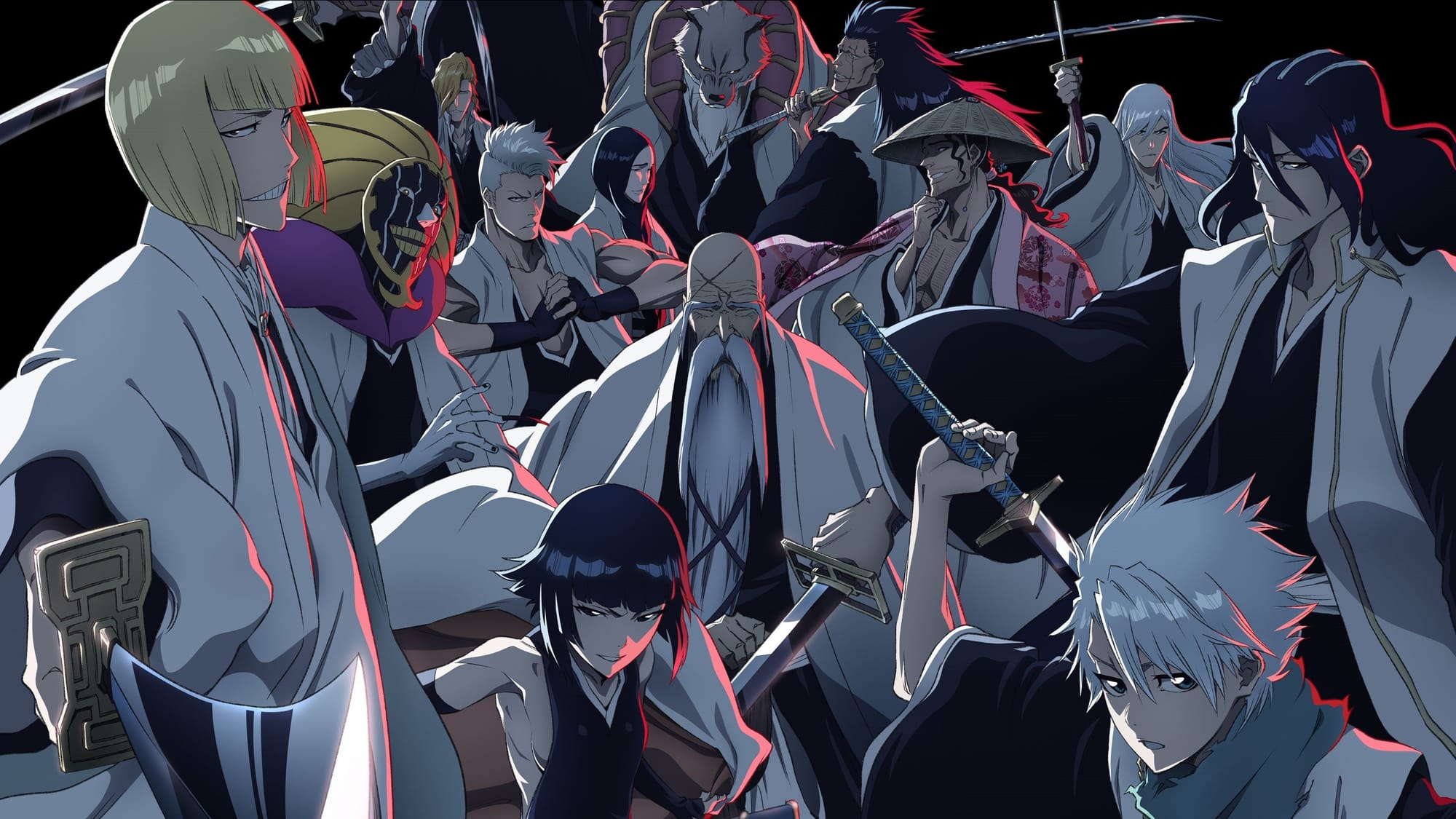
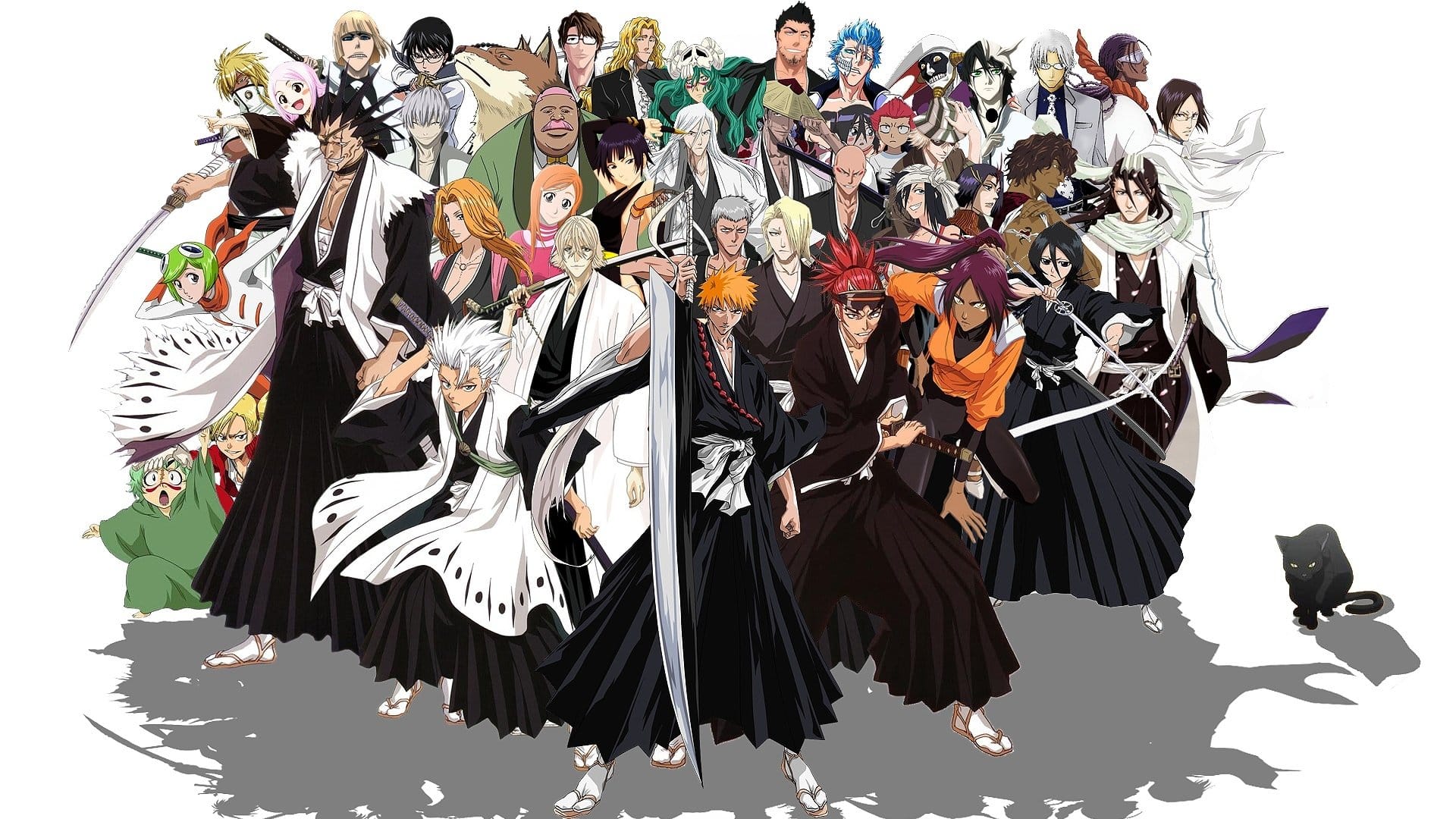
The most analytically interesting placement on the entire schedule is Bleach: Thousand-Year Blood War (2022) in the Jump Studio, not the Super Stage. The Bleach anime officially ended after a near 22-year run following the release of Bleach: Thousand-Year Blood War – The Calamity Episode 50, the final episode released on October 27, 2026, while the original Bleach anime debuted in 2004. The Thousand-Year Blood War arc aired across four parts totaling 50 episodes, starting with the first part in 2022, then The Separation in 2023, The Conflict in 2024, and The Calamity in 2026.
A franchise that just concluded its 22-year television run appearing on a secondary stage is not a demotion — it is a reorientation. As of October 27, 2026, no new Bleach anime has been announced, though rumors circulated in mid-October about a possible return as a manga covering the Hell Arc. The Jump Studio placement therefore functions as a holding pattern: Shueisha keeping the IP warm on stage while the next creative move is determined. The brand has enormous residual value. The question is what form that value takes when the story the anime was told to tell is now finished.
This placement also reveals something about how Shueisha weights completion versus continuation. The Super Stage is structurally a showcase for franchises with open narrative futures. Bleach, for now, does not have one on record.
Black Clover and the Final-Season Complication
The other franchise whose current status shapes the event's subtext is Black Clover (2017). A second season premiered in October 2026. On September 3, 2026, it was announced that Black Clover Season 2 would officially premiere on October 3, 2026, with a simultaneous release on Crunchyroll. Judgment Day, Black Clover's final arc, is now set to be covered in the upcoming installment. Official reports confirm that Black Clover Season 2 Cour 2 is titled "Final Season."
At Jump Festa 2027, Black Clover appears on the Jump Station Online — the third and most digitally accessible tier, built for broadcast rather than in-person ceremony. For a series deep in its final arc, this is consistent with where a franchise parks itself when the production priority is completion over expansion. The audience knows the destination; the stage simply has to confirm the arrival date. For further context on what a deliberately managed franchise conclusion looks like, see Kynari's analysis of how My Hero Academia has approached its own institutional close.
The Ascendant Tier
The Super Stage's most telling bets are its newer inclusions. Kagurabachi, which only began serialization in 2023, opens Saturday's program — its stage features six voice actors including Taihi Kimura as Chihiro, Tomokazu Seki as Kunishige, and Katsuyuki Konishi as Togo. An anime announcement is the near-certain purpose of that placement. Sakamoto Days (2025) similarly represents Shueisha validating the franchise's first anime season by giving it immediate Super Stage real estate. Dandadan (2024) and Akane-banashi round out the generational bet — newer properties Shueisha is treating as structurally equivalent to decade-old titles, at least for the purposes of one weekend.
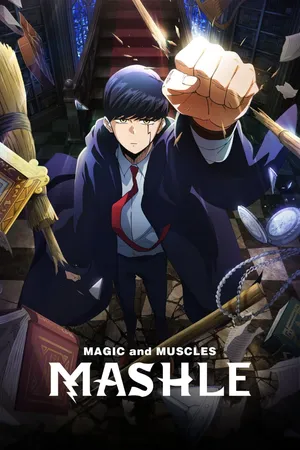
The Mashle: Magic and Muscles franchise, meanwhile, anchors the Jump Studio on Sunday, where it sits alongside Reborn!, Witch Watch, and Kaiju No. 8 — a tier populated by franchises with dedicated audiences but whose next production moves require demonstration rather than assumption.
What the Structure Argues
Jump Festa 2027 is the 28th edition of Shueisha's event, the weekend when the publisher of One Piece, Demon Slayer, and Jujutsu Kaisen concentrates its end-of-year announcements. Twenty-eight editions in, the format is institutionally stable enough that its structural choices are legible as editorial positions, not just scheduling logistics. The three-stage model is a taxonomy: Super Stage for active empires, Jump Studio for franchises in transition or renewal, Jump Station Online for series whose audience is global-digital rather than arena-physical.
What Jump Festa 2027 argues, taken as a whole document, is that anime's commercial peak is not consolidating around fewer properties — it is diversifying across a wider portfolio while maintaining a small set of irreplaceable anchors. One Piece and Demon Slayer hold the load-bearing positions. Everything around them is a hedge, a bet, or a succession candidate. The December weekend tells you which is which.