Tomorrow, November 6, Grotesqqque (2026) opens in Japanese theaters. No source manga. No franchise safety net. No pre-existing audience primed by years of weekly serialization. What CloverWorks is sending into multiplexes is an original, three-segment omnibus anime film from director Atsushi Nishigori — and the fact that it arrives having already screened at Fantasia, earned a U.S. premiere at the Japan Society in New York, and accumulated genuine critical attention is not a minor thing. It is a proof of concept for a structural bet the studio made four years ago.
 Official trailer
The JOEN Architecture
In May 2022, Sony media subsidiary Aniplex, its CloverWorks animation studio, Production I.G sister company Wit Studio, and publisher Shueisha jointly established a new company named JOEN. The stated objective was the planning and production of television anime series, anime films, and short clips — but the more structurally interesting ambition was embedded in JOEN's business logic. The company aimed to route production to "the best production lines and creators" across both CloverWorks and Wit Studio, rather than through a single company, and to provide a better business model enabling profits to be more effectively distributed among staff, creators, and those involved in the animation studio. The tagline the company adopted — "Supporting Creativity, Empowering Creators" — pointed at something the industry had long treated as rhetorical. JOEN was at least structurally attempting to institutionalize it.
CloverWorks producer Yūichi Fukushima and Wit Studio producer Tetsuya Nakatake serve as the representative directors of JOEN — both previously producers on the Spy × Family co-production between their respective studios, which made the professional trust between them already battle-tested. The company launched with an initial capital investment of 100 million yen. That is a modest number for a venture carrying this kind of institutional weight, which is precisely why the films it produces matter disproportionately. Grotesqqque is the first official venture from JOEN. Its theatrical performance in Japan will determine whether that framework gets its next serious assignment.
Nishigori's Profile, and What He's Carrying Into This
Atsushi Nishigori is known as the director of THE IDOLM@STER and DARLING in the FRANXX, character designer for Gurren Lagann, and the chief animation director behind EVANGELION: 3.0+1.0 THRICE UPON A TIME. That is an unusually wide pedigree — it covers moe idol fantasy, dystopian mecha, maximalist Trigger-era animation spectacle, and the most consequential theatrical anime event of the last decade. What connects those projects is a director who operates comfortably at the intersection of overwhelming visual sensation and deeply genre-conscious storytelling.
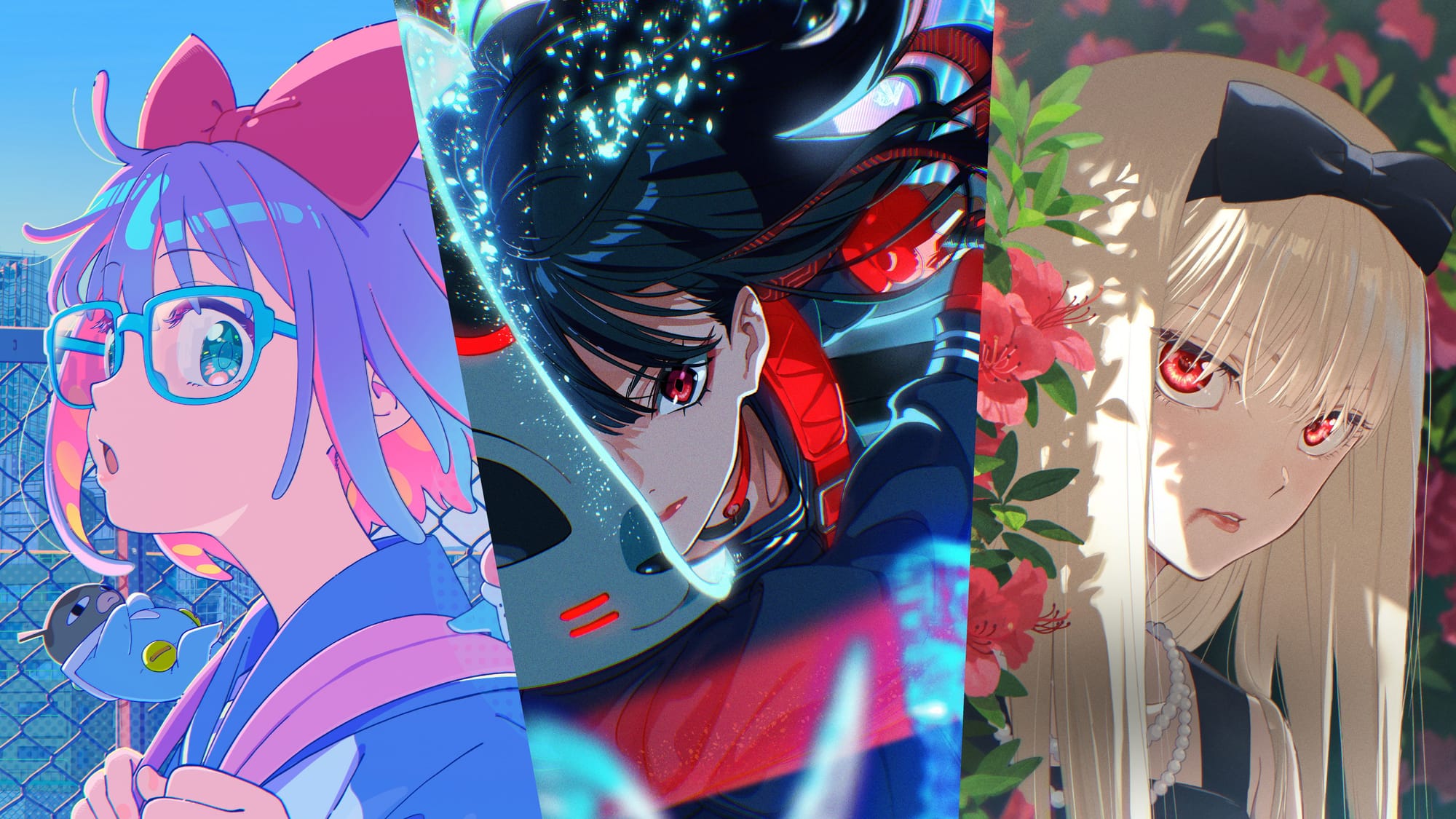
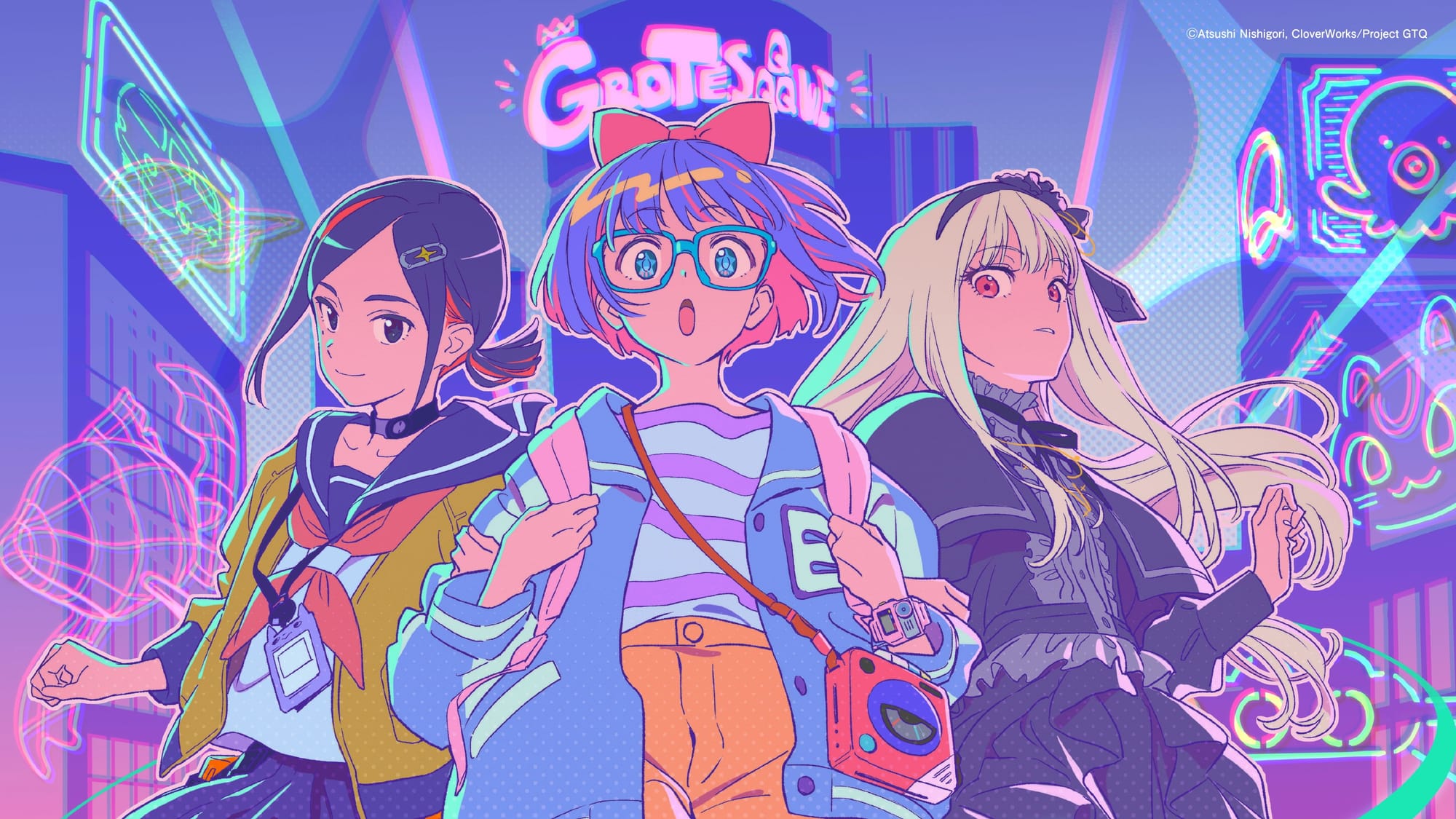
Grotesqqque is the purest expression of that sensibility because, for the first time, he owns the whole thing. Nishigori is directing the film and is also writing the screenplay and designing the characters. There is no adaptation buffer, no source author to satisfy, no IP committee structuring the creative ceiling. The film's three segments — "ÆLIENS," "4649Girl," and "Nocturn: En Cette Nuit Grotesque" — each operate under a distinct visual and tonal register, and that disjunction is not incidental. It is the point. At the U.S. premiere at New York's Japan Society, Nishigori himself warned the audience it might be hard to connect the different segments of this anthology feature. A director who front-loads that caveat is not hedging — he is telling you that coherence was never the ambition.
What the Three Segments Actually Do
"A(E)liens" follows an octopus-like extraterrestrial who takes the form of a human girl and struggles to make friends on Earth amid widespread distrust of aliens. The segment features a bright and cheery aesthetic, centered on an alien girl called Elie who comes to Earth as a goodwill ambassador, looking for "friends" while accompanied by a space bureau handler — her experience complicated by human distrust and the appearance of a hostile alien. The tonal register is closest to the maximalist visual pop that Nishigori's idol-anime work established; it arrives with the kinetic overload of someone who has nothing to prove and several things to detonate.
"Yoroshiku Girl" sets a massive all-gals virtual reality battle game against secrets about a missing idol. The segment's title is itself a layered pun: pronounced "Yoroshiku★Girl," it carries the literal meaning of "Evening Dew Heads to Its Death★Girl," playing on the fact that the numbers 4649 can be read in Japanese as "Yoroshiku" — meaning "Nice to Meet You." Genre literacy is load-bearing here, not decorative.
The closing segment is where the film pivots hardest. "Nocturne: Nuit Grotesque" marks a major shift in pace, losing the hyperactivity of the earlier segments; the soundtrack switches gears from J-pop to classical. It is the one part of Grotesqqque that the ANN review recommends safely to viewers not fully accustomed to Imaishi-esque hyperactive anime nonsense — and the overall film contains two great segments in very different styles, with its weakest still a stunning piece of animation. That is a critical response that maps almost perfectly onto what Nishigori appears to have intended: controlled excess followed by an earned exhale.
The music architecture reinforces this formal ambition at every level. An extraordinary 35 artists contributed to the film's score, spanning a wide range of musical genres. The band METALVERSE performs the opening theme "Shoot Shoot Shoot," while Haoto performs the ending theme with lyrics by momosu momosu. An original anime film that assembles 35 musical acts is not scoring a movie — it is constructing a pop-art argument about what anime as a medium can absorb.
The Festival Route as Strategy
The theatrical timeline for Grotesqqque is itself a statement. The film had its world premiere under the Animation Plus section of the 30th Fantasia International Film Festival in Montreal on July 24, 2026. The American premiere followed on October 8, with Japan Society hosting the screening in New York City and Nishigori in attendance. The film was also nominated for Best Animated Film at the Film Festival of Catalonia. Only then — after months of international festival exposure — does it open domestically tomorrow.
This is not how most anime theatrical releases are sequenced. The standard model is domestic premiere, then international rollout, then streaming rights sold quickly. The JOEN model for Grotesqqque inverts that logic: build critical legitimacy in Western festival contexts before the Japanese box office weighs in. It is the festival-first model that art cinema uses, applied to a maximalist Japanese animation feature with 35 contributing music acts and a gyaru VR battle royale as its second act. That incongruity is precisely what makes it interesting. The film was originally supposed to debut in 2025 before a delay was announced — which suggests the production took the time it needed rather than the time the release calendar demanded.
What Rides on Tomorrow
The domestic Japanese theatrical opening of Grotesqqque tomorrow is a data point for a question the industry has not yet answered: can JOEN's original-works mandate generate films that move tickets the way IP adaptations do, or does the festival-prestige route remain a niche lane regardless of pedigree? The anime industry hit ¥4.45 trillion in market value in 2025, with the majority of that revenue now coming from overseas — which means the international festival circuit that Grotesqqque has already navigated is not a curiosity. It is increasingly where the money lives.
CloverWorks is a studio whose theatrical ambitions extend well beyond any single title. But Grotesqqque is the one that carries the ideological argument — that original anime film, structured like a festival submission and deployed like a pop-art event, can be a sustainable mode of production rather than an expensive anomaly. Nishigori warned the Japan Society audience that the segments might not cohere. What he did not say, but what tomorrow will begin to answer, is whether that resistance to coherence is what audiences will come back for.