There is a specific kind of corporate silence that speaks louder than any press release. When Microsoft quietly stepped back from its earlier signals that Gears of War: E-Day (2026) might reach a broader platform footprint, no announcement accompanied the retreat. No blog post, no clarification, no framing. The game would launch on Xbox Series X|S and PC — and that would be that. The decision wasn't explained because explaining it would require Microsoft to articulate, publicly and precisely, something it has spent the better part of three years actively avoiding: what Xbox is actually for.
 Official trailer
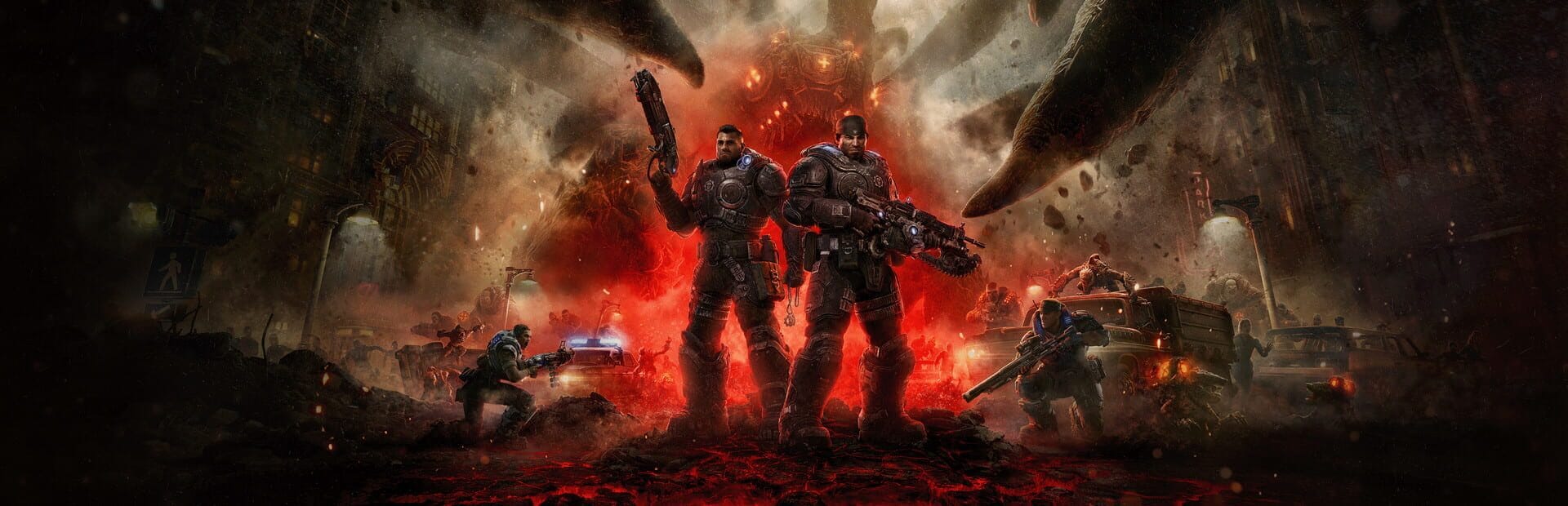
E-Day arrives tomorrow into that vacuum. It is a prequel to the original Gears of War (2006), depicting the first 26 hours of Emergence Day — the moment the Locust breached the surface and ended human civilization on Sera as anyone had known it. Marcus Fenix is young. Dom Santiago is alive. The horror is fresh. On paper, this is exactly the kind of foundational mythology that a franchise revival should excavate. The Gears universe has always had more texture than its cover-shooter mechanics suggested, and E-Day represents the most dramatically fertile ground in the entire lore. The Coalition, the studio shepherding the series since Gears of War 4 (2016), has demonstrated a genuine command of production craft. None of that is under serious dispute.
What is under dispute — and what E-Day's release crystallizes with uncomfortable clarity — is whether the exclusivity strategy surrounding it serves the game, the franchise, or anyone other than a platform business that no longer has a coherent answer to the question of why its platform should exist.
The Exclusivity Bargain, Revisited
Platform exclusivity has always been a transaction, not a philosophy. A publisher withholds a game from a competing platform to drive hardware sales, to build ecosystem loyalty, to give consumers a reason to choose one box over another. The logic was brutal but legible. In the original Xbox 360 era, Gears of War was precisely that kind of weapon — a graphical showpiece that made the console feel necessary, a cultural event that people bought hardware to access. The franchise was, for several years, one of the clearest arguments for why the Xbox 360 mattered.
That era is gone. Microsoft has spent the intervening years systematically dismantling the hardware exclusivity argument from the inside. Games go to PC day one. Xbox Game Pass puts them in a subscription library. Several titles that were announced as Xbox exclusives eventually landed on PlayStation — a reversal that, regardless of the specific business rationale in each case, trained consumers to wait rather than commit. The implicit message broadcast to the market, repeatedly, was: exclusivity is a temporary condition, not a principle.
So when E-Day is now positioned as a firm exclusive — after the opposite impression had been cultivated, however informally — the move reads less like a strategic conviction and more like a course correction made in a panic, without the infrastructure of consumer trust that might make it land with force. You cannot spend three years teaching your audience that exclusives are negotiable and then expect a single title to restore the psychological weight that exclusivity is supposed to carry.
What the Franchise Deserves Versus What the Platform Needs
This is where the analysis gets genuinely uncomfortable for anyone who cares about Gears of War as a piece of game design rather than a corporate asset. The franchise's cultural footprint is not what it was. The PlayStation 5 generation has been defined by a set of action and narrative experiences — God of War Ragnarök (2022), Spider-Man 2 (2023), Astro Bot (2024) — that have consolidated Sony's first-party identity with a clarity Microsoft has conspicuously failed to match. The Xbox Series generation, by contrast, has produced no single title that functions as a genuine cultural landmark, a game that people point to when asked why the hardware matters.
E-Day is being handed that burden whether it wants it or not. A prequel about the worst day in human history on Sera now has to simultaneously be a great game, a franchise revival, a platform justification, and a proof of concept for a first-party strategy that has publicly contradicted itself more times than most studios release games. That is an extraordinary amount of symbolic weight to place on what is, at its core, a third-person action game about chainsaw bayonets.
The cruel irony is that restricting E-Day to Xbox and PC may actually undermine the franchise's ability to rebuild cultural momentum. Gears of War was once a conversation — something people discussed at scale, across demographics, across social contexts. Exclusivity, in 2026, does not broaden that conversation. It narrows it. Every player who might have engaged with the series on another platform is instead handed a clean reason not to. In an era where cultural relevance is increasingly a function of reach rather than scarcity, platform walls function less like velvet ropes and more like sound dampeners.
The Identity Problem Has No Easy Villain
It would be satisfying, and wrong, to reduce this to a story of corporate incompetence. Microsoft's situation is structurally difficult. The Xbox hardware business has never achieved the market position that would make traditional exclusivity a reliable lever. Game Pass, whatever its long-term viability, created genuine consumer value while also complicating every downstream conversation about why individual games or platforms merit investment. The company is trying to run a subscription service, a cloud gaming platform, a hardware business, and a traditional game publishing operation simultaneously — and those four things have different, sometimes contradictory, definitions of what success looks like.

E-Day did not create this contradiction. It simply makes it visible. A prequel set on Emergence Day, a moment defined in the fiction by the sudden and catastrophic rupture of a world that thought it understood itself, arrives as an unusually apt metaphor for the platform releasing it. Something has emerged. What it is, exactly, Microsoft has not yet managed to say.
What Tomorrow Actually Measures
The metrics that will follow E-Day's launch will be parsed carefully by everyone with a stake in the outcome. Game Pass subscriber engagement numbers, if Microsoft chooses to share them. Review scores, which tell us about the game but nothing about the strategy. Social conversation volume, which will be real but bounded by the audience that exclusivity has already pre-selected. None of these data points will resolve the underlying question, because the underlying question is not one that a single game can answer.
The question is whether Microsoft has a first-party identity — a coherent, communicable reason for its platform's existence — that is strong enough to make exclusivity feel like an event rather than a restriction. Gears of War: E-Day is a good candidate to be a very good game. The Coalition's technical ambition is not in doubt, and the source material is rich. But a very good game released into a strategic vacuum doesn't fill the vacuum. It just gives you something to look at while you stand inside it.
Emergence Day, in the fiction, was the day everything changed and no one was prepared. The parallel writes itself. Whether Microsoft is finally prepared is the only question that matters more than the game itself.