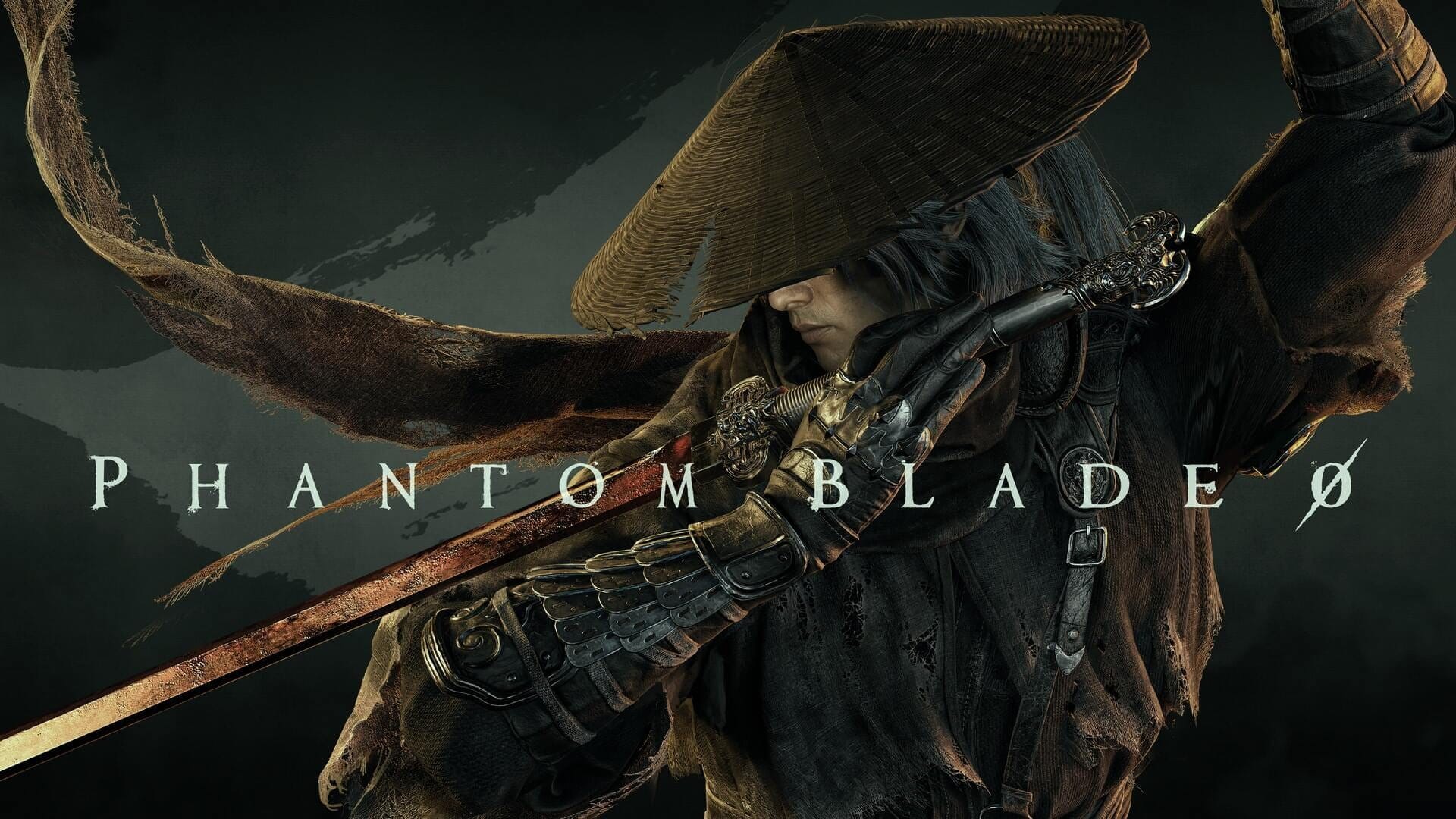
Phantom Blade Zero (2026) launched on October 29, and by November 2 — 72 hours later — S-GAME announced on the game's official X account that it had crossed four million copies sold across PS5 and PC. The number lands with a specific weight. Not because it matches or surpasses everything that came before it, but because it doesn't need to. For a studio whose entire prior output consisted of mobile titles built for the Chinese domestic market, four million premium copies in three days is the kind of figure that transforms the conversation from creative ambition into commercial proof.
 Official trailer
The only Chinese-developed action game that outsold it in the same window is Black Myth: Wukong (2024), which moved 10 million copies in its own first three days — a figure so anomalous that it sits alongside franchise juggernauts and sequel machines, not debut titles from studios building their first console game. Phantom Blade Zero landing at 40 percent of that benchmark, without an Xbox release and without the decades of cross-platform infrastructure that typically underpins a launch at this scale, is not a shortfall. It is a structural argument about what premium Chinese action games can sustain as a category, not just as a once-in-a-generation exception.
Steam as a Scoreboard
The concurrent player data on Steam provides a frame independent of publisher-announced sales figures. On launch day, October 29, the game peaked at 723,876 concurrent Steam players, placing it 15th in Steam's all-time rankings and ahead of established titles including Marvel Rivals and Apex Legends by peak concurrency. That figure kept climbing: by November 1, Steam statistics recorded a new all-time peak of 833,921 concurrent players — the highest peak for any single-player game released in 2026 on the platform. The count covers Steam only. PS5 players and the Epic Games Store audience sit entirely outside it, which means the total concurrent footprint across all platforms is meaningfully larger than any single chart reflects.
The trajectory matters as much as the peak. Phantom Blade Zero hit 595,000 concurrent Steam players within hours of unlock, crossed 700,000 before the first day closed, and then kept growing across the weekend rather than collapsing in the typical post-launch decay. That kind of retention curve is what separates a launch driven by hype from one driven by word-of-mouth reinforcement. It suggests players found the game worth recommending, not just worth buying on day one.
For context on how rare this territory is: Black Myth: Wukong's all-time Steam peak sits at 2,415,714 concurrent players, the second-highest in the platform's history behind only PUBG. Phantom Blade Zero lands at roughly a third of that figure, but Wukong was an outlier so extreme that it warps any comparison. The more instructive comparison is everything else — and against the rest of 2026's single-player catalogue, S-GAME has no competition.
What S-GAME Actually Built
The commercial result is inseparable from what the studio chose to make. S-GAME's founder and director Soulframe Liang described the project as a "spiritual rebirth" of his 2010 indie RPG Rainblood: Town of Death — a 2D title that existed exclusively in the Chinese market. The concept for what would become Phantom Blade Zero originated in 2017, but full-scale development only began in 2022, with the game first revealed during the PlayStation Showcase in May 2023. The studio's stated ambition was not merely to make a good action game, but to define a new genre identity — what Liang termed "kungfupunk," a fusion of classical wuxia mythology, steampunk machinery, folk horror, and the choreographic philosophy of martial arts cinema.
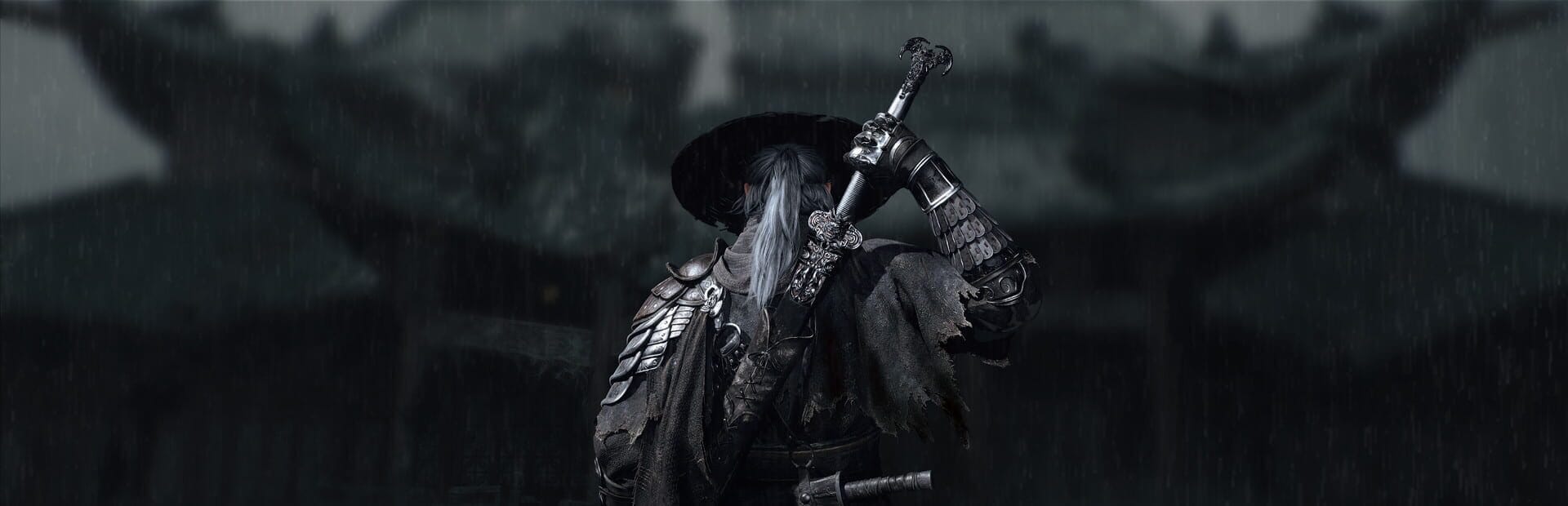
That last element was pursued with deliberate seriousness. Actor and martial arts filmmaker Donnie Yen served as a creative consultant from 2023, bringing three years of input into the game's underlying choreographic approach — not a licensing agreement or a cameo, but a sustained influence on how combat animations were developed. S-GAME also brought real martial artists into their motion capture pipeline. The game runs on Unreal Engine 5, and the visual result — a semi-open world built from interconnected handcrafted regions rather than one enormous seamless continent — reflects a studio that made structural decisions based on what the game required, not what the open-world template demanded.
The critical response validated that approach. As covered in our analysis of the game's 88 Metascore at launch, reviewers specifically identified the combat system and visual identity as genuinely distinct within a market flooded with action titles. Steam's overall user rating sits at "Very Positive." Early negative reviews cited difficulty balance and shader compilation issues — the kind of friction that reflects a demanding player base engaging closely, not a community writing the game off.
The Commercial Argument
The significance of four million copies in 72 hours extends beyond S-GAME's own trajectory. It lands in a specific industrial context: the sustained question of whether premium Chinese-developed games can achieve commercial traction in Western markets at scale, consistently, rather than as isolated phenomena. Black Myth: Wukong was the first credible proof of concept, but a single data point can always be dismissed as an anomaly — a perfect storm of mythology, marketing, and timing that couldn't be repeated. Phantom Blade Zero is the second data point. Two isn't a trend, but it is a pattern worth taking seriously.
Pre-release indicators were already strong. Analytics firm Alinea Analytics estimated approximately 850,000 digital pre-orders across Steam and PS5 before launch, with 62.5 percent of those originating from China, Taiwan, and Hong Kong. That geographic concentration reflects where the cultural resonance runs deepest — but the remaining 37.5 percent represents Western buyers who committed at full price before a single review was published, on the basis of trailers alone. Four million copies across all regions in three days means the Western audience expanded substantially post-launch, which is precisely the mechanism that turns a strong Chinese launch into a global commercial event.
S-GAME has confirmed that a physical PS5 edition is planned for 2027, including Standard, Deluxe, and Ultimate versions. The digital-only launch window means the current four million figure represents only the audience willing to buy digitally — a ceiling that will lift when physical copies enter retail. How much further the number climbs before the year ends will tell S-GAME, and the industry watching them, whether this is a ceiling or a floor.
What Comes Next
The pressure that comes with this kind of debut is structural rather than celebratory. Four million copies in three days creates expectations for post-launch support, DLC, and the studio's next project that a quieter launch would not have generated. S-GAME is no longer a mobile studio that made a promising console game — it is, by any reasonable commercial metric, a major developer whose next decision will be scrutinized accordingly.
The more interesting long-term question is what this does to the perception of the category itself. If premium Chinese action games can reliably open at four to ten million units across a three-day window, the calculus around investment, platform support, and Western publishing partnerships changes. The studios currently working inside China's growing console-adjacent development ecosystem are watching these numbers with the same attention as the analysts. S-GAME's benchmark is now their benchmark too — and that is its own kind of pressure, and its own kind of proof. For more on where high-budget action games are pushing in 2026, see our look at the impending arrival of Grand Theft Auto VI, the one release that could realistically reframe any conversation about launch-window sales before the year is out.