Enshrouded (2024) launched into Early Access in January of last year and promptly sold a million copies in its first week. Today, Keen Games stamps a 1.0 on it and calls it finished. The studio will hold a press release. Players who have been logging hundreds of hours since the beginning will celebrate. And somewhere underneath the celebration, a quieter and more unsettling question will go mostly unasked: what exactly has been declared complete, and does the declaration carry any weight at all?
 Official trailer
This is not a review of Enshrouded. The game has been played, critiqued, praised, and modded extensively by a community that formed its own relationship with it long before today. What 1.0 invites — demands, really — is a harder conversation about the survival genre's structural addiction to incompletion, and whether Early Access has quietly dismantled the idea of a finished game from the inside out.
The Early Access Bargain, Restated
Early Access was formalized by Steam in 2013 as a transparent mechanism: developers receive funding and feedback; players receive access to an unfinished product at a reduced price, with the explicit understanding that what they're buying is a promise. The bargain was honest, even elegant, in theory. In practice, it has calcified into something considerably stranger.
The survival and crafting genre has become the clearest expression of that strangeness. Rust (2018) spent nearly five years in Early Access. DayZ (2018) took four. Valheim (2021) launched into Early Access in February 2021, reached eleven million sales inside two months, and remains — as of this writing — without a 1.0 release date. Enshrouded's timeline of roughly twenty-three months from Early Access to full release is, by the genre's own metrics, almost admirably swift. And yet "admirably swift" at nearly two years still tells you something significant about how normalized the runway has become.
The question is not whether these games deserved more development time. Most of them did, and most of them used it. The question is what happens to player psychology — and to critical vocabulary — when a genre trains its audience to expect that no release is truly a release.
What Players Actually Bought in January 2024
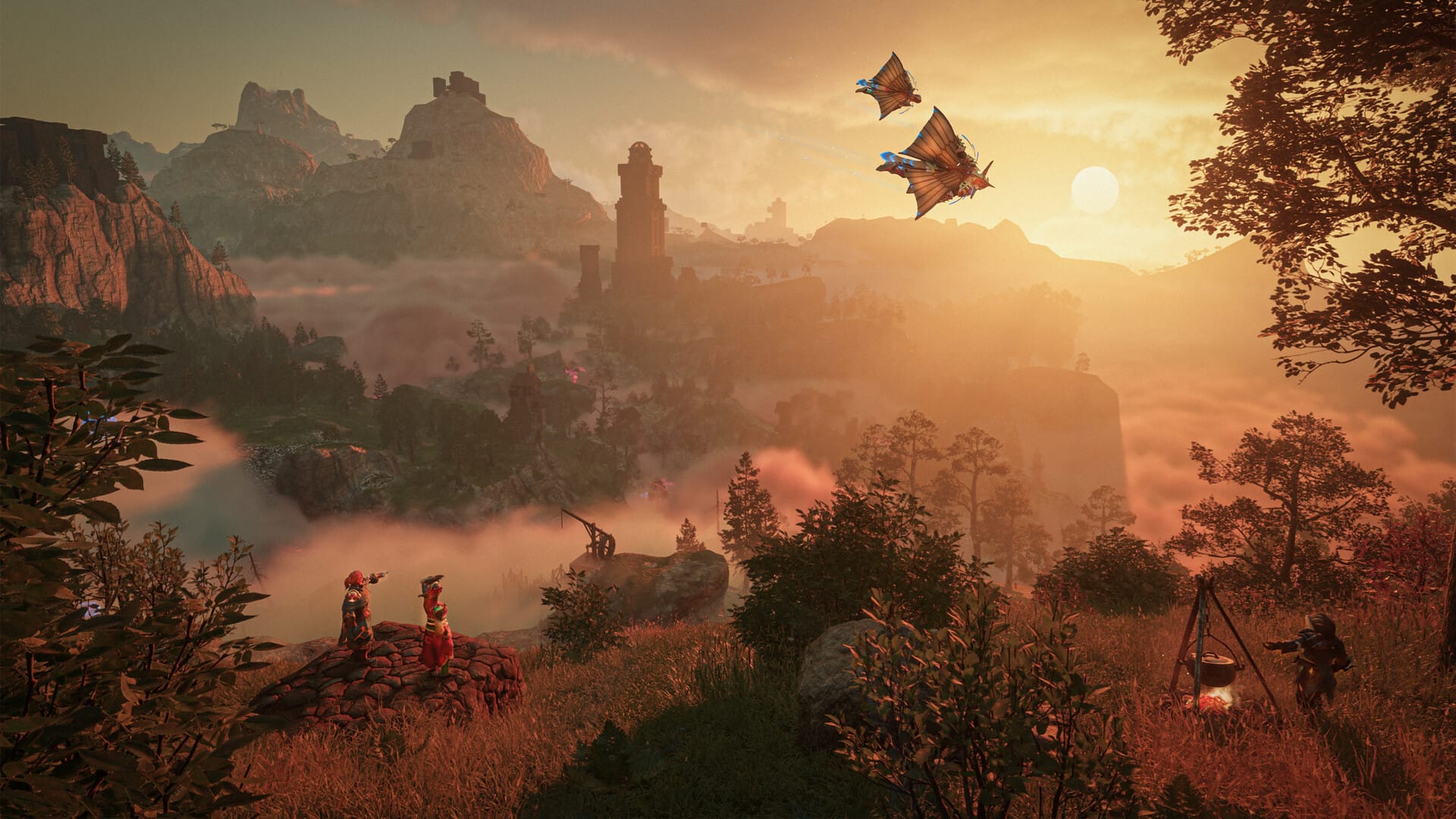
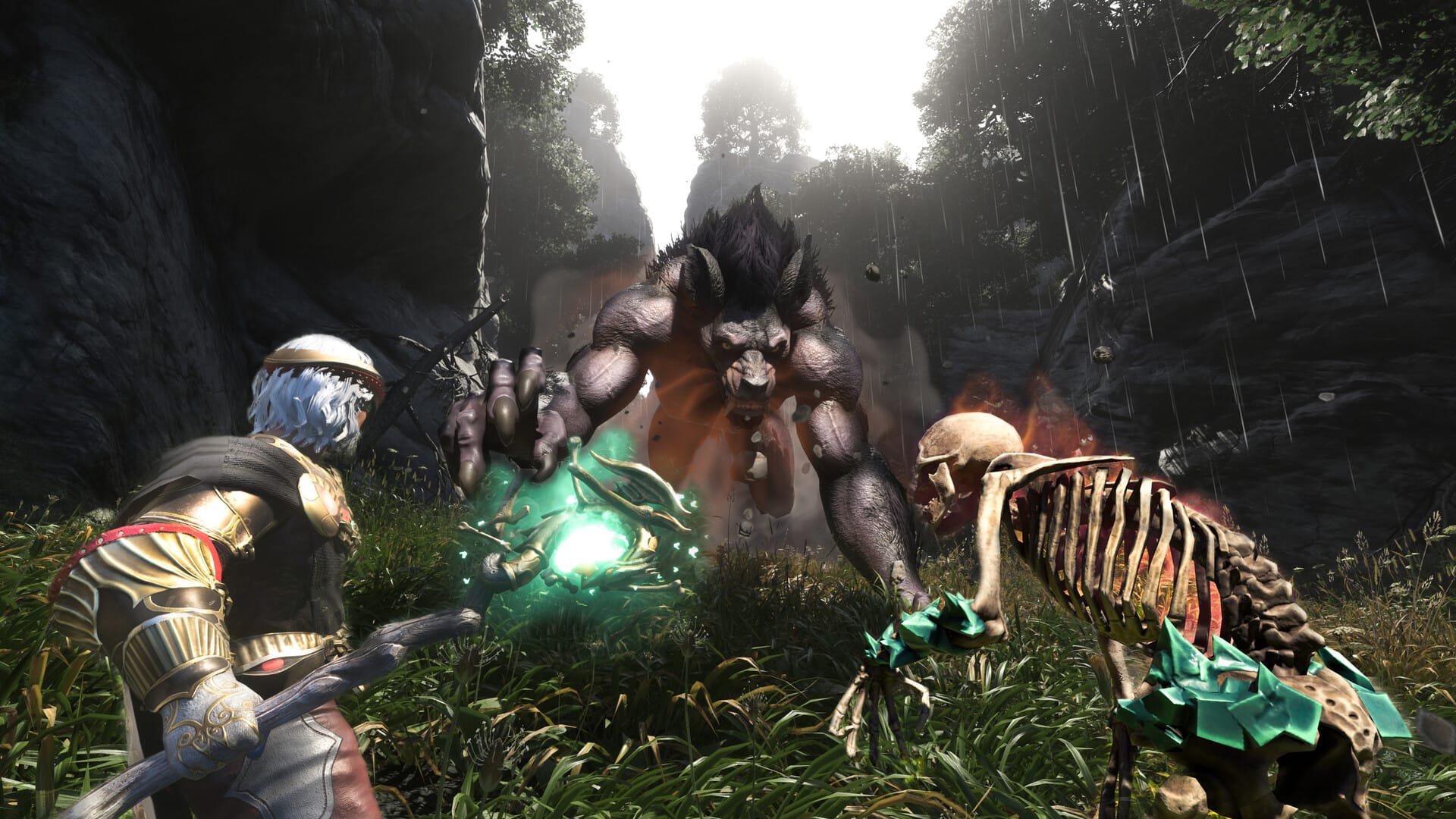
Enshrouded arrived in Early Access with a confident foundation: a voxel-based open world wrapped in a toxic fog called the Shroud, RPG progression layered over survival and building systems, and co-op support for up to sixteen players. The bones were visible and solid. What the Early Access period provided was flesh — additional biomes, expanded questlines, new crafting tiers, NPC systems, and the kind of balance iteration that only sustained player engagement can surface.
That process worked. The community stayed. The Steam reviews held overwhelmingly positive across the entire Early Access window, which is not a given in a genre where abandonment is a constant threat and studio silence is a recurring wound. Keen Games communicated regularly, shipped updates on a credible cadence, and did not disappear into the fog they built. By the standards of the genre, this is a success story.
But here is the structural problem that success does not resolve: a player who bought Enshrouded in January 2024 and played it for four hundred hours did not play an unfinished game. They played the game that existed. They formed attachment to its systems, built within its limitations, and developed expectations about what it was. Today's 1.0 is a different artifact — more complete, more polished, more intentional — arriving into a community that has already processed the earlier versions as definitive.
When completion is a moving target that players have been chasing in real time, the finish line does not feel like an arrival. It feels like a checkpoint retroactively labeled as the end.
The Genre That Made Incompletion into a Feature
Survival games occupy a peculiar cultural position because their mechanical identity — gather, build, survive, expand — mirrors the Early Access model almost too neatly. Both are premised on the idea that what you have now is provisional, that something better is always being constructed, that the present state is a scaffold rather than a structure. The genre and the distribution model share a philosophy of perpetual becoming.
This is not accidental. Studios greenlit survival titles in part because the genre's inherent replayability and community-driven content loops are compatible with long Early Access windows. Players don't bounce off an incomplete survival game the way they might bounce off an incomplete narrative RPG with a severed third act. The sandbox absorbs absence. Missing content becomes unexplored possibility rather than broken promise.
The result is a genre that has, collectively, deferred the concept of done almost out of existence. When No Man's Sky (2016) — not technically an Early Access title, but functionally one — released its foundational update years after launch and repositioned the entire game's reputation, it demonstrated that in this genre, the release date is optional information. The game that ships is not necessarily the game that will be evaluated.
Enshrouded's 1.0 does not escape this gravitational pull. Players will rightly ask whether post-launch updates are planned, whether paid DLC is coming, whether the roadmap beyond 1.0 resembles the roadmap before it. The answers to those questions will shape how the community understands what "finished" actually purchased them.
Why the Distinction Still Matters
None of this is an argument against Early Access as a mechanism, nor against Enshrouded specifically. Keen Games built something that sustained genuine enthusiasm over a long development window, and that is harder than it looks. The survival genre is littered with Early Access titles that took the funding and went silent, or that shipped 1.0 versions so attenuated from their promises that the label felt punitive.
But the version of "finished" that 1.0 used to signify — a closed creative statement, a work that could be evaluated in full, a line drawn under a specific artistic and mechanical intention — has been under sustained pressure from a model that treats release as the beginning of a conversation rather than the end of one. That pressure has consequences for how games are remembered, how studios are held accountable, and how critics and players develop the vocabulary to assess what they're actually playing.
If every game is permanently in process, then "finished" becomes a marketing category rather than a meaningful one. The 1.0 badge communicates to new buyers that the product is no longer provisional. It does not, in the survival genre, communicate that the development relationship between studio and community has concluded. Both things can be true simultaneously, and pretending otherwise serves no one.
The Version of Done That Survives
Enshrouded's 1.0 will be, for many players, exactly what they wanted: a larger, more complete, more stable version of a game they already loved. That is not a small thing. The craft is real. The community investment is real. The accumulated hours are real.
What is worth holding onto, even in celebration, is a critical clarity about what "finished" has come to mean in this corner of the industry. It means the studio has decided the foundation is solid enough to charge full price without apology. It means the scaffolding has been removed from the facade. It does not mean the building won't keep changing, that the studio considers its creative obligation discharged, or that the game you play in six months will be the game that shipped today.
That's not a condemnation. It's a description. And in a genre that has made an art form of blurring the line between process and product, description might be the most useful critical act available.
Enshrouded is done. Until it isn't.