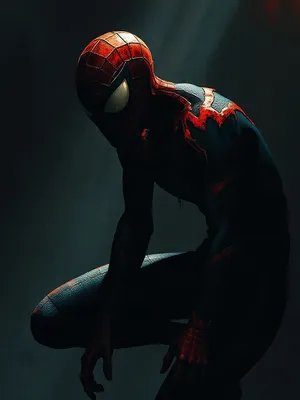
Avengers: Armageddon (2026) #5, written by Chip Zdarsky with art by Delio Diaz and Frank Alpizar, publishes today, October 21, as the finale of Marvel's five-issue summer event — and it immediately makes clear that the word "finale" is doing a lot of misleading work. The issue does not so much close the story as prime what comes next. Two sequences in particular have already cut through the noise: one involving David Colton's full, mechanistically explained induction into the Miracleman legacy, and another — quieter, more sinister, and far more loaded with two decades of fan memory — showing Tony Stark glimpsing a vision of Mephisto holding a broken Spider-Man.
These are not grace notes. They are structural coordinates for Zdarsky's incoming Avengers #1, which ships in November with art by Marco Checchetto. The event — Marvel's most overt attempt at the kind of transformative line-wide shakeup not seen since Avengers: Disassembled in 2004 — ends precisely where a new architecture begins.
The Miracleman Problem, Finally Addressed
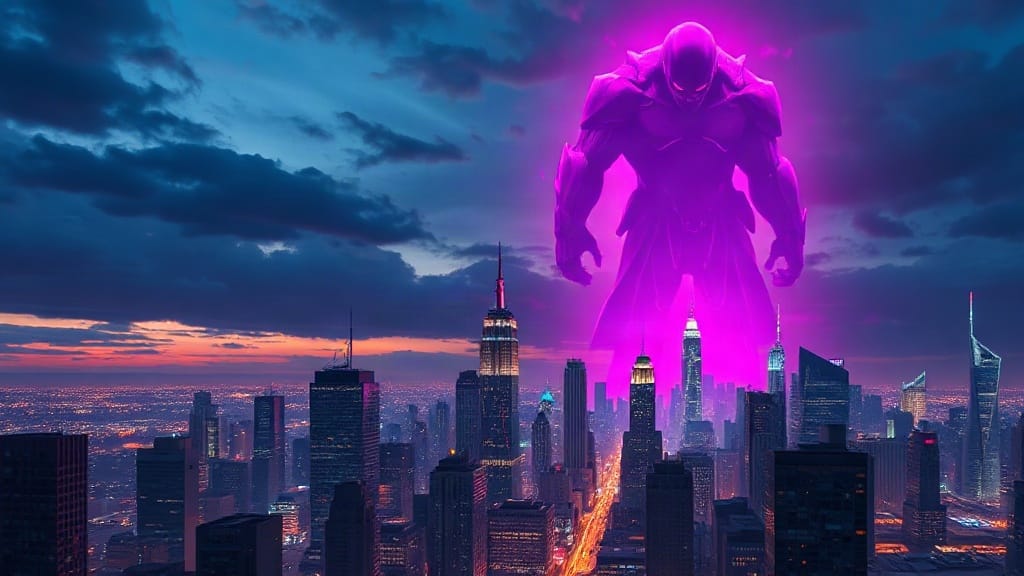
Miracleman's history in comics is among the most tangled in the medium. Created in 1954 by Mick Anglo as Marvelman, a British post-war substitute for the American Captain Marvel, the character was revived in 1982 by Alan Moore and artist Garry Leach in the UK anthology magazine Warrior, gaining immediate critical recognition for its psychological realism and its unflinching interrogation of what superhuman power would actually mean for human civilization. When Eclipse Comics began reprinting the series in the United States in 1985, Marvel's objection to the word "Marvel" in the title forced a name change — Marvelman became Miracleman — and the character spent decades in legal limbo, largely inaccessible, accruing mythology through scarcity. Marvel acquired the rights in 2009, but the character remained conspicuously off the board, a god without a parish.
The Moore run's central horror was always its logic: Miracleman ended with its protagonist effectively remaking the world, abolishing money, abolishing democracy, abolishing war — and the narrative treated this not as triumph but as something closer to an unanswerable question about the nature of benevolent totalitarianism. Moore's storyline ended in issue #16 with Miracleman and Miraclewoman effectively taking over the world, which Moore presented as the logical outcome of superhumans arising on Earth. The darkness of that ending — power exercised at civilizational scale, unchecked — is precisely the register Zdarsky is now importing into the 616.
Issue #5 confirms David Colton as Marvel's Miracleman, transformed via the Maker's Origin Box and the magic word Kimota. The issue ties his powers explicitly to Qys alien technology — including access to the Qys wardrobe of alternate superhuman bodies, a detail straight out of the Moore run. Editor Wil Moss had previously stated that "Dave Colton is a fascinating, complicated character, now much more so as he takes on the mantle of Miracleman," and Zdarsky has confirmed the reveal was planned from the beginning of the event. What the issue does now is less reveal than extrapolate: if David Colton has access to what the original Miracleman had access to, what does that mean for a Marvel Universe already destabilized by Doom's world conquest and the fallout from the Origin Boxes Miles Morales brought back from Earth-6160?
Previous issues saw Colton dispose of the world's nuclear arsenal — a move that echoes, deliberately, the original Miracleman's reshaping of geopolitics — and issue #5 presses that logic forward. If no nation possesses nuclear weapons, the only remaining weapons of mass destruction are the superheroes themselves. The world, as the issue's solicitation states, turns against them. That is the engine Zdarsky hands to himself: a new Avengers team operating in a world that no longer wants them, led by a figure with civilizational-scale power and unclear intentions.
One More Day's Long Shadow
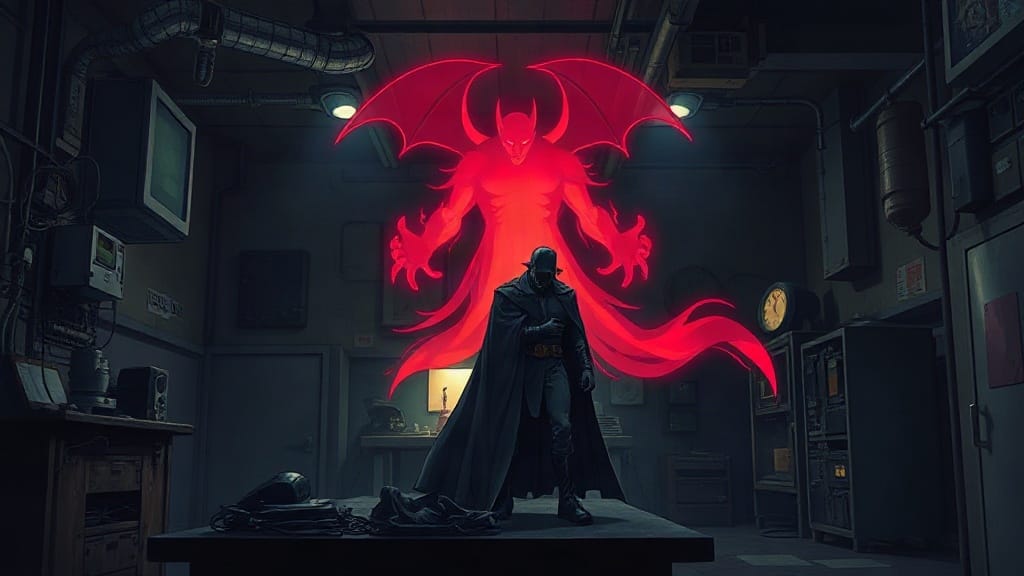
The second sequence is the one that will provoke the most sustained conversation. Avengers: Armageddon #5 shows Tony Stark using the same predictive machine that Doctor Doom deployed in One World Under Doom — a machine that famously could not account for Miracleman's presence. What Stark sees in it: Mephisto, holding the beaten and bloodied body of Spider-Man. The image lands like a compressed history lesson.
Spider-Man: One More Day (2007), written by J. Michael Straczynski and Joe Quesada, remains among the most contested editorial decisions in Marvel's publishing history. After Peter Parker's public unmasking in Civil War led to Aunt May being shot by a sniper, Peter and Mary Jane — having exhausted every medical and mystical option — accepted a deal from Mephisto: May's life in exchange for their marriage. The demon erased not just the marriage but the world's memory of Spider-Man's secret identity. Peter Parker accepted the deal, and Mephisto got what he wanted without conditions or consequences. Nearly twenty years later, the marriage has never been restored. The deal has never been undone. It remains an open wound in the character's continuity — one that a significant portion of Spider-Man's readership has never forgiven Marvel for inflicting.