There is a version of Alien vs. X-Men #1 that exists purely as a licensing exercise — two recognizable brands stapled together to generate a press cycle and shift first-issue numbers before the concept exhausts itself by issue three. That version is not hard to imagine. The comic industry has produced it before, many times, under many banners. What makes the series arriving this Wednesday, September 30, worth serious attention is the specific moment in which it lands, and what that moment reveals about the strategic logic now governing Marvel's relationship with the intellectual property it absorbed from Fox.
The question worth asking on New Comic Book Day is not simply whether the book is good. It is whether the conditions that produced it represent a durable editorial direction or a high-water mark for franchise collision that the market will punish within a year.
The Dust Has Settled — and Marvel Knows What It Has
When Disney's acquisition of 21st Century Fox closed in 2019, the immediate conversation centered on the Marvel Cinematic Universe: the Fantastic Four were coming home, mutants would eventually be reconciled with a continuity that had pretended they didn't exist for a decade, and the Alien franchise would sit quietly on a shelf while someone figured out what to do with it. Five years later, the shelf is being cleared with purpose. FX’s Alien: Romulus (2024) demonstrated that the property could generate both critical heat and genuine box office relevance without relying on the Ridley Scott prestige-drama framework that had calcified the series. Marvel's comics division watched that film land and drew the obvious conclusion.
What makes the Fox acquisition relevant to Alien vs. X-Men specifically is not just ownership — it is creative permission. For decades, the Alien property in comics lived at Dark Horse, where it was treated with a kind of custodial reverence that produced some excellent work but rarely permitted genuine formal experimentation. Marvel, now holding the license outright and having already run several Alien solo titles through its publishing line, is operating with the confidence of a studio that no longer needs to prove it deserves the IP. That confidence is precisely what makes a premise like this one possible to greenlight without an immediate defensive posture.

Franchise Fatigue and Its Discontents
The standard critical reflex when a crossover of this profile is announced is to reach for the language of fatigue — oversaturation, brand dilution, the cynical mathematics of putting two logos on a cover. That reflex has earned its credibility. The comics direct market has been burned by event crossover infrastructure so many times that skepticism is not irrational; it is the historically correct prior. Alien vs. Predator as a franchise demonstrates both the ceiling and the floor of the concept: it produced a genuinely influential 1989 Dark Horse comic run and then, across two theatrical films in the mid-2000s, became the definitive case study in how to strip a high-concept collision of all tension by misunderstanding what each half of the premise actually needs to function.
But fatigue is not a permanent condition, and the industry's appetite in 2024 and 2025 has shifted in ways that matter here. The success of Jonathan Hickman's House of X / Powers of X era demonstrated that readers were not tired of the X-Men — they were tired of a specific mode of X-Men storytelling. Similarly, the Alien property's recent resurgence suggests that what audiences had rejected was not the xenomorph itself but the creative exhaustion that had accumulated around it. When both franchises are operating from positions of renewed cultural legitimacy rather than defensive nostalgia, a crossover between them reads differently than it would have in 2007.
What the Premise Actually Demands
The structural challenge facing any creative team on Alien vs. X-Men is one of tonal register. The Alien franchise at its most effective operates as body horror with philosophical undertones — the xenomorph is terrifying not because it is powerful but because it is perfectly indifferent, a biological process with no interest in the meaning humans project onto it. The X-Men, by contrast, are a franchise built entirely on meaning: mutation as metaphor, identity as contested terrain, belonging as the central dramatic engine of nearly every story told within the universe since 1963.
These two registers are not obviously compatible, and the question of whether the creative team has found a genuine synthesis or simply alternated between them issue by issue will determine whether this series earns its premise. A crossover that uses the xenomorphs as a threat to be defeated by mutant powers is a wasted opportunity. A crossover that asks what it means for beings already defined by their biological difference from humanity to encounter a species that reduces all biological difference to the same outcome — a host — has the architecture of something genuinely unsettling.
The X-Men's mutation is, in the Marvel cosmology, the next stage of human evolution. The xenomorph's reproductive cycle is also a form of transformation, one that similarly does not ask for the host's consent. The thematic pressure point was always there. Whether the book presses on it with intent is the editorial judgment that separates a memorable run from a collectible first issue that gets bagged and forgotten.
Marvel's High-Concept Bet
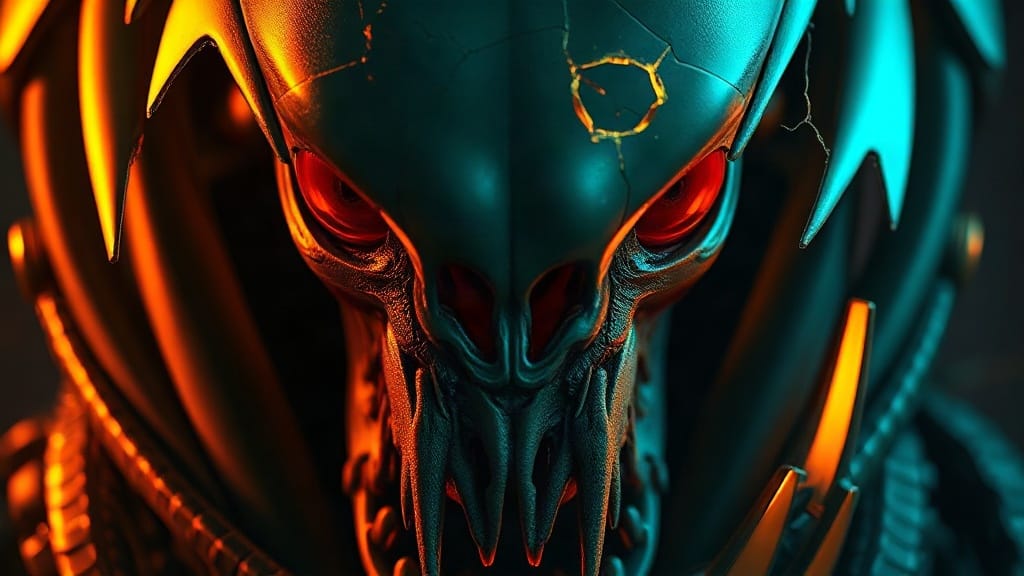
What Alien vs. X-Men #1 signals at the level of publishing strategy is that Marvel's comics division has made a deliberate calculation: the Fox-era IP acquisitions are most valuable not as isolated licensing streams but as combinatorial raw material. The Alien property alone can sustain a solo title. The X-Men alone can sustain an entire publishing line. But the moment you place them in the same narrative space, you generate a type of reader interest that neither can produce independently — the genuine uncertainty of a crossover that has never been done before and whose outcome cannot be predicted from either franchise's internal logic.
This is, in structural terms, what the direct market has always rewarded when executed with craft: the sense that something unprecedented is happening within familiar parameters. The parameters here are enormously familiar. The combination is not. That gap is the product. Whether it is a gap worth the cover price is what Wednesday will begin to answer.
The cynical read of Alien vs. X-Men #1 is always available. It will always be available for any high-concept crossover produced by a major publisher with shareholder obligations and quarterly sales targets. The more useful read is the one that takes the premise at its most ambitious and asks whether the creative execution rises to meet it. First issues establish architecture. The real verdict comes later. But the architecture chosen here — two franchises at the height of their contemporary relevance, placed in genuine thematic tension rather than simple conflict — is, at minimum, the right foundation to build on.
New Comic Book Day has produced marquee releases that turned out to be elaborate nothing. It has also produced first issues that redefined what a licensed property could do inside the comics medium. Alien vs. X-Men #1 is positioned, with more editorial intelligence than these announcements usually receive, to be the latter. Whether it gets there is the only conversation worth having this week.