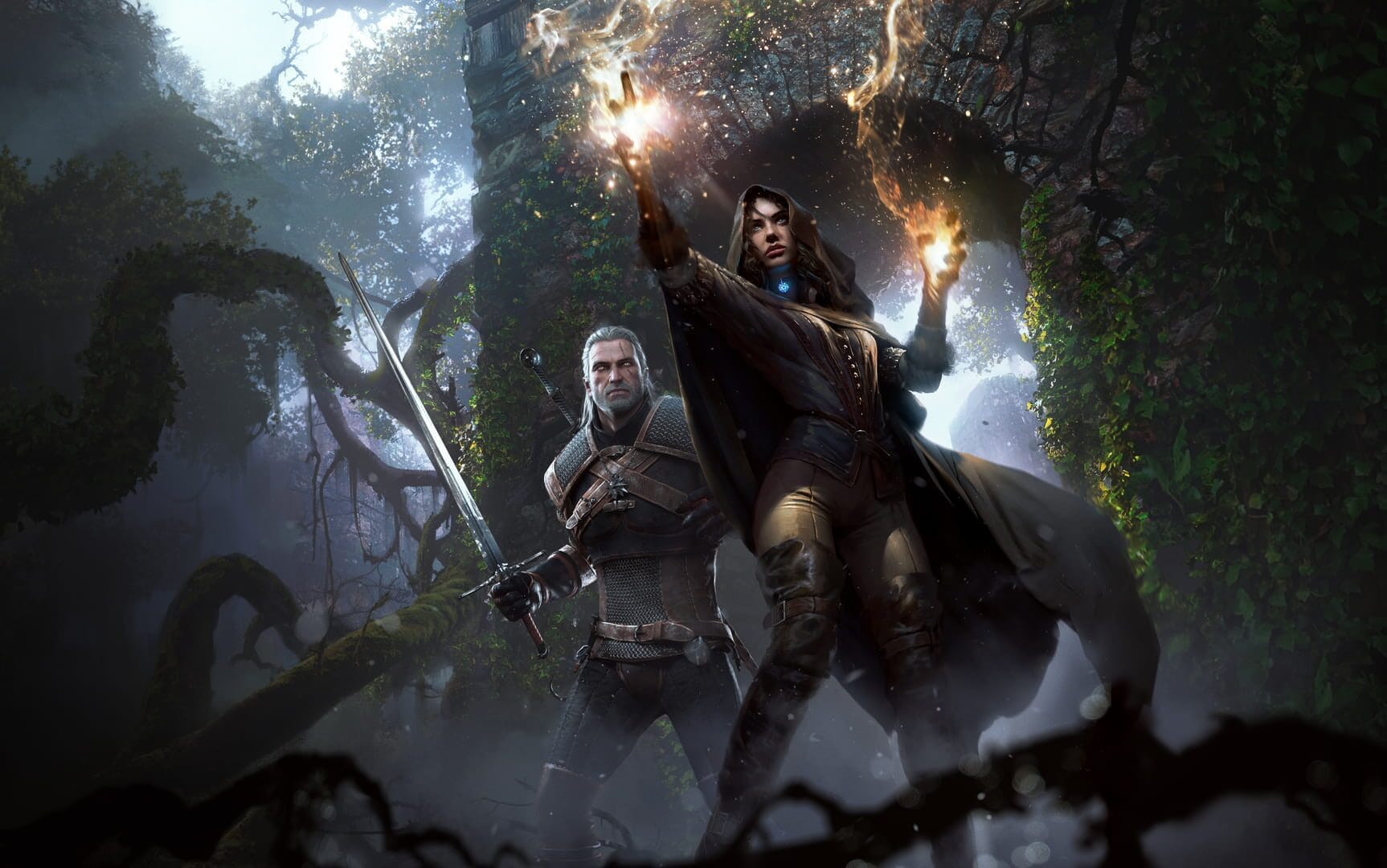
Tomorrow, every person who owns The Witcher 3: Wild Hunt (2015) gets the remastered version for free. No asterisk, no loyalty discount, no "complete edition" tier gating out the people who bought the base game at launch. PC, PS5, Xbox Series X|S, Nintendo Switch 2 — across every platform the upgrade touches, existing ownership is the only credential required. CD Projekt Red is not charging for it, as confirmed at the remaster’s reveal. That decision, quiet and logistically matter-of-fact in the way it was announced, is one of the most pointed commercial statements a major studio has made in years. Not because it is generous, exactly — but because of what it makes visible by contrast.
 Official trailer
The Economy of the Second Sale
The definitive edition has become one of the most reliable revenue mechanisms in the contemporary games industry. A title launches, earns its initial returns, and then — typically between twelve and thirty-six months later — reappears wearing a new coat: upscaled textures, a frame-rate target that the original hardware couldn't sustain, reworked lighting, perhaps a mode or two that were conspicuously absent at launch. It is sold again, usually at a reduced but non-trivial price, to an audience that includes a significant percentage of people who already paid for the first version. The pitch is implicitly that the original release was, in some sense, incomplete — and that completion now costs extra.
This structure has operated so consistently that it has stopped feeling like a choice and started feeling like gravity. The Last of Us Part I (2022), rebuilt from scratch for PS5, launched at full price for owners of a game they may have purchased twice already on PS3 and PS4. Ghost of Tsushima: Director's Cut (2021) charged PS4 owners an upgrade fee. Alan Wake Remastered (2021), NieR Replicant ver.1.22474487139... (2021), the litany of mid-generation refreshes that arrived on PS5 and Xbox Series hardware with premium price tags for returning customers — the pattern is so ingrained that when publishers deviate from it, the deviation reads as news. That says everything.
What CDPR Is Actually Saying
CD Projekt Red's position is not purely altruistic, and it would be intellectually dishonest to frame it as such. The studio has reputational debts that remain only partially settled. The launch of Cyberpunk 2077 (2020) was a catastrophe of overpromising and underdelivering that cost the company billions in market value and, more durably, cost it trust. The free next-gen upgrade that CDPR subsequently issued for Cyberpunk 2077 was part of a sustained remediation effort — a public accounting for what had gone wrong. The studio learned, through bruising experience, that its relationship with its audience was a long-term asset worth protecting more carefully than any individual release window revenue.

The Witcher 3 Remastered free upgrade lands in that same tradition, but the context has shifted. Cyberpunk 2077 needed goodwill restoration. The Witcher 3 doesn't need rehabilitation — it is already one of the most celebrated RPGs ever made, a game that has sold over 50 million copies and whose cultural footprint extends to a Netflix adaptation, merchandise, and a continued presence in active player counts nearly a decade on. Giving the remaster away here is not crisis management. It's positioning. CDPR is constructing an identity: the studio that does not re-monetize its back catalog at the expense of loyalty. In an industry where that identity is increasingly rare, it is also competitively valuable.
But the argument the decision makes is larger than any one studio's brand strategy. When a remaster is free, it forces a question that the paid model never has to answer: what, exactly, was the upgrade worth in isolation? Strip away the revenue rationale and you are left with the technical and artistic substance of the work itself. In most cases — not all, but most — what remains is optimization work, resolution passes, and lighting overhauls that reflect advances in hardware capability rather than genuine creative revisitation. That is meaningful work. It is not nothing. But it is also not, in most cases, a new product. It is closer to maintenance. And maintenance, historically, has not been something consumers expect to pay for separately.
The Platform Question
The Nintendo Switch 2 dimension of this launch deserves its own consideration. Bringing The Witcher 3 to Switch 2 is not a remaster in the conventional sense for that platform — it is a port navigating a significant hardware leap from the original Switch release (2019), which was itself an engineering achievement remarkable more for existing at all than for how it looked. Switch 2's capabilities allow for a version of the game that is, by portable standards, substantially closer to the PC and current-generation console experience. For Switch 2 owners who never held a previous copy, this is simply a purchase. For those who carried a Switch library into the new hardware generation, the free upgrade logic again applies — and again, in the context of a platform transition that publishers have historically treated as an opportunity to re-sell catalog titles at full price, it is a meaningful deviation from the norm.
Platform transitions are perhaps the most aggressive deployment of the second-sale economy. When PlayStation 4 libraries did not transfer to PlayStation 5 at no cost for upgraded versions, Sony effectively monetized the hardware upgrade itself. Microsoft's Smart Delivery program pushed back against that structure within the Xbox ecosystem, establishing cross-generational ownership as a default rather than a premium. CDPR's decision aligns with Smart Delivery's logic while extending it to PC and Switch 2 simultaneously — a genuinely cross-platform commitment that most publishers have not matched.
The Definitive Edition, Redefined
The phrase "definitive edition" has become almost satirically elastic. It is applied to remasters that are demonstrably superior to their originals and to cash-ins that are barely distinguishable from them. It is used to justify full purchase prices and deep-discount repackaging alike. What it has never reliably meant is: this is what the game should have been, and everyone who already believed in it gets it automatically.
That is what CDPR is proposing tomorrow. Not as a charity but as a definition — an implicit argument that the people who bought The Witcher 3 in 2015, who funded its development, who spread its reputation and sustained its sales tail across nearly a decade, have already paid for the right to experience it at its best available quality. The remaster is not a sequel, not a reimagining, not a new product in any meaningful sense. It is the same game, running better, on hardware that can now support what the original always intended to be.
Whether the rest of the industry takes that argument seriously is a different question. The incentive structures that produce paid remasters are not going to dissolve because one well-regarded studio chose otherwise. But the model is now demonstrated — documented, replicable, commercially survivable. CDPR will not collapse because it didn't charge ten or twenty dollars for a next-gen pass. What it will have is a player base that remembers. In an era where trust is the scarcest resource in the relationship between publishers and audiences, that memory is worth considerably more than the revenue the upgrade fee would have generated.
The remaster launches tomorrow. Every owner already has it. The industry has no good excuse for that still being unusual.