On September 9, 2026, Valheim (2021) exits Early Access. The announcement carries the ritual weight of a graduation ceremony — dignified, expected, slightly anticlimactic. Because Valheim already happened. It already mattered. The ten million copies sold in its first month, the office-empty Mondays, the collective obsession with longhouses and black forests — all of that occurred while the game was, technically, incomplete. The 1.0 launch is not a beginning. It is a verdict on what Early Access actually is.
The Phenomenon That Preceded Itself
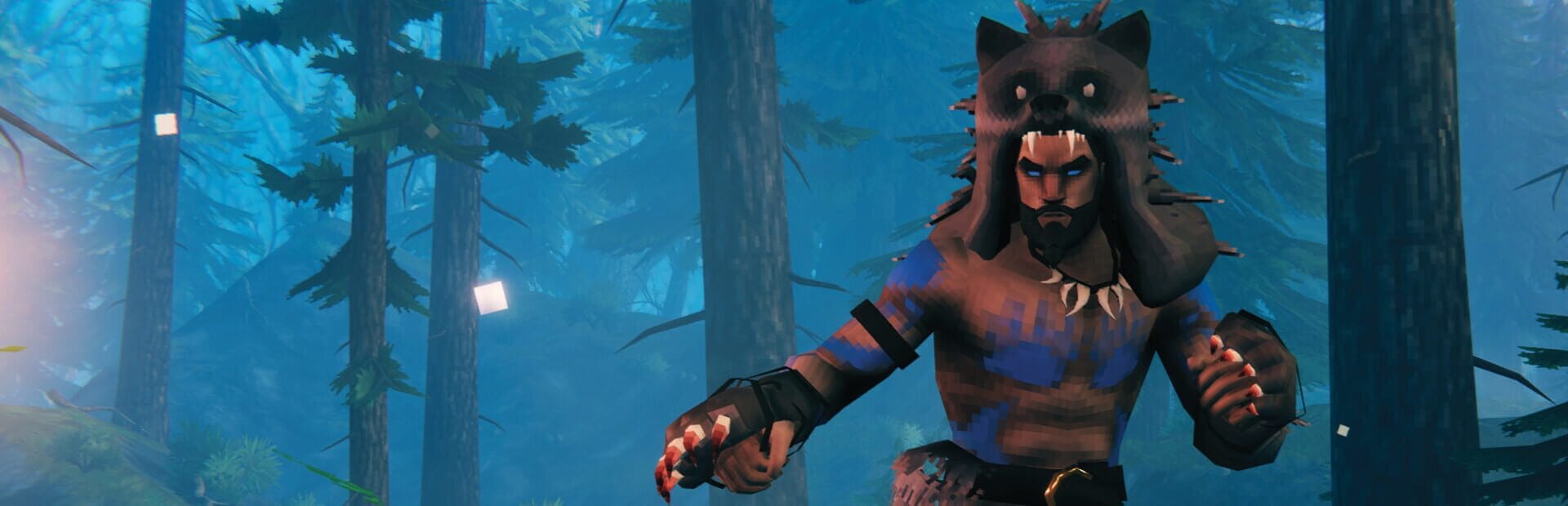
When Iron Gate released Valheim into Early Access in February 2021, the world was still partially locked down and starving for shared escapism. Those conditions helped, but they don't explain everything. Plenty of games launched into that same vacuum and dissolved. Valheim survived the moment because its design philosophy was unusually coherent for an unfinished product: a brutal, foggy, procedurally generated purgatory governed by Norse mythology, where the friction of survival felt intentional rather than placeholder. It wasn't rough around the edges — it was deliberately hard-edged. Players didn't tolerate the incompleteness; they often couldn't locate it.
That perceptual blurring is the central tension the 1.0 release now forces into the open. If a game is culturally complete — referenced, modded, streamed, theorized, argued over — does a formal version number change its meaning, or just its legal status?
The Early Access Bargain, Renegotiated
Early Access began as a funding mechanism dressed up as transparency. Players pay reduced prices for unfinished games; studios get runway. The implicit contract was always that 1.0 would arrive and deliver something meaningfully different — a richer, more resolved experience that justified the wait. That contract has been honored inconsistently across the industry. Some titles used Early Access as a lifeline and delivered (Hades in 2020 being the canonical example). Others used it as a permanent state, collecting revenue while development drifted.
Valheim occupied a stranger position: a game that outgrew its Early Access framing almost immediately, then spent five years trying to build beneath the weight of its own reputation. Each major update — Hearth and Home, Mistlands, Ashlands — arrived under the scrutiny reserved for full releases. The community celebrated and dissected them accordingly. Iron Gate was, in practice, operating as a live-service studio without the infrastructure or the pricing model of one. The 1.0 label, then, is partly administrative relief.
What Completion Actually Adds
The honest answer is: structure and finality. The 1.0 build closes the progression loop, adds the remaining biomes and boss encounters that were missing from the original roadmap, and delivers an ending — a narrative endpoint that Early Access, by definition, cannot provide. That last element is more significant than it sounds. An ending is an argument. It tells you what the game believed it was about all along. Valheim's combat with the Norse cosmological order, Odin's ambiguous stewardship, the purgatorial logic of dying and returning — all of it now resolves into something the player can evaluate as a complete statement rather than an ongoing draft.
This is not trivial. There is a difference between inhabiting a world and understanding what that world was saying. The 1.0 release grants players who held off — and there are millions of them — a game that knows where it ends. And it grants returning players the rarer experience of discovering whether a story they loved in fragments holds together as a whole.
The Cultural Cost of Getting There
What Valheim's trajectory reveals is something uncomfortable about how the industry has come to use Early Access: the model can hollow out a release. By the time 1.0 arrives, the discourse has already peaked, the content creators have moved on, the cultural moment has metabolized the game into nostalgia. The 1.0 launch of Valheim will not generate the seismic word-of-mouth of February 2021. It doesn't need to, financially — Iron Gate is not a studio in distress. But it does mean that the version of Valheim most people will encounter first, in perpetuity, will be the early, chaotic, legendary one. The finished game inherits a mythology built around the unfinished one.
That is either a burden or an extraordinary foundation, depending on whether 1.0 earns its own authority. If the ending is good — genuinely, structurally good — it recontextualizes everything that came before it. The purgatory gains a purpose. The grind acquires meaning. The longhouses become chapter one of something rather than the whole of it.
Five years is a long time to make a point. On September 9, 2026, we find out if Valheim had one.
 Official trailer