Today, at five in the afternoon, the doors of Harrogate Convention Centre close on the twentieth edition of Thought Bubble Comic Convention. No corporate sponsor owns that number. No media conglomerate built what's happening inside. The convention ends, as it always has, the way it began: on the terms of comics creators and the people who care about their work.
Thought Bubble was founded in Leeds in 2007 by comic artist Lisa Wood, working under the name Tula Lotay, with support from Nabil Homsi, director of comic book retailer Travelling Man. What they built first was absurdly modest: a one-day event in the basement of Leeds Town Hall, sparked by the conviction that comics deserved the same celebratory infrastructure that film and literature already had in Yorkshire. The first edition drew a couple of hundred people. The twentieth hosts over 600 comic-creating exhibitors and thousands of attendees across a two-day convention that is itself the culmination of a week-long festival running from the 9th to the 15th of November across Yorkshire.
That arc — basement of a town hall to internationally recognised institution — is not a marketing line. It is the actual shape of what happened. Thought Bubble Comics Art Festival (2007–present) expanded across Leeds over its first decade, filling Savile's Hall at Leeds Dock, taking over the Royal Armouries, and eventually occupying giant marquees on Millennium Square. By 2019, with attendance soaring into the tens of thousands and international creators flying in from around the globe, the weekend convention relocated to the Harrogate Convention Centre to accommodate its scale. The fringe festival — academic conferences, artist Q&As, LGBTQ+ book clubs, free comics distributed to young readers through Leeds Libraries — stayed rooted in Leeds, where it began.
That split geography is telling. Thought Bubble could have centralised, rationalised, branded the whole thing into one tidy package at a single venue. It chose not to. The week-long fringe in Leeds libraries, bars, and galleries is not a warm-up act for the Harrogate convention floor. It is the ideological spine of the festival — the proof that Thought Bubble's interest is in the ecosystem of comics culture, not just the marketplace.
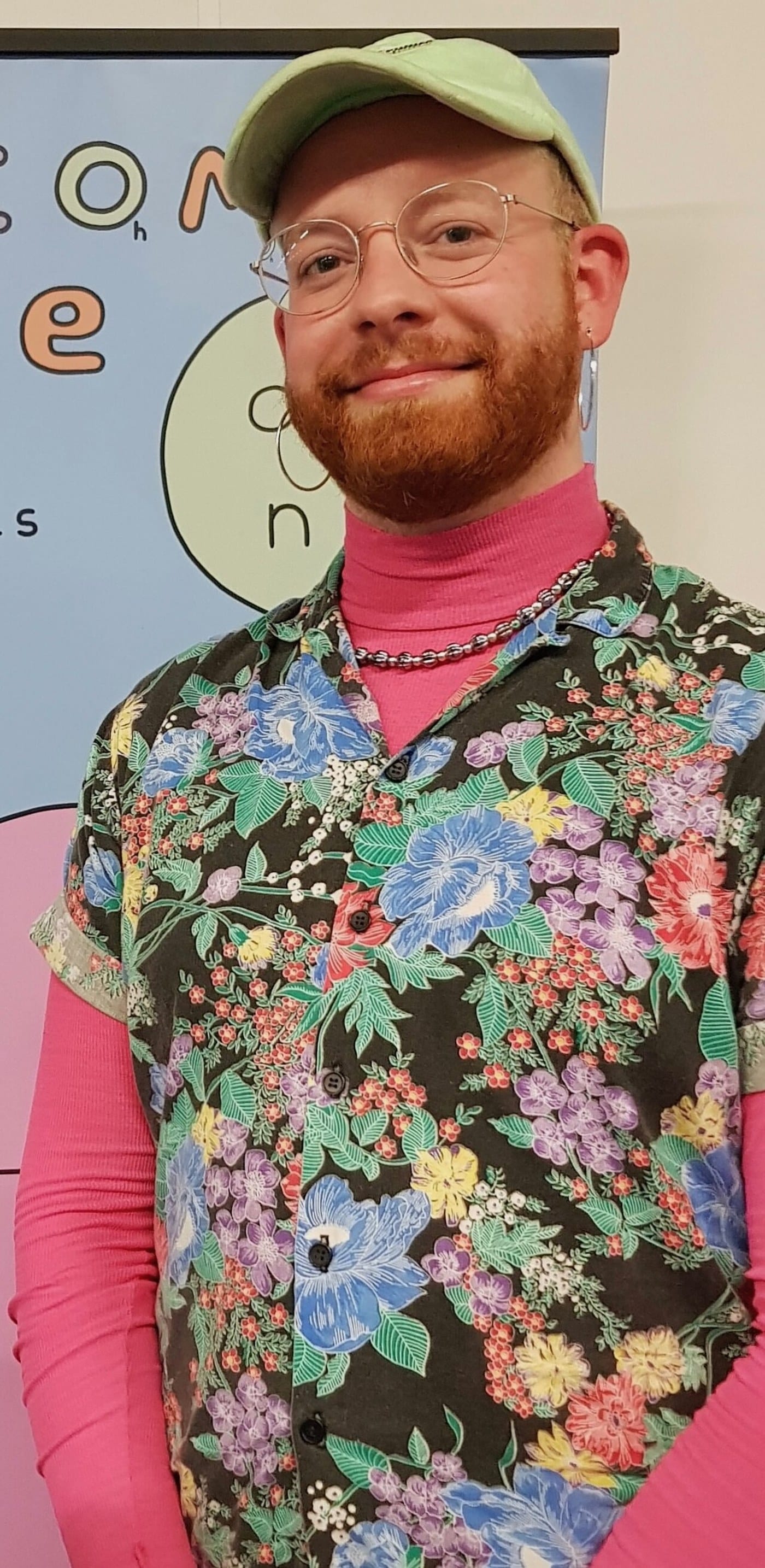
The 20th edition has leaned deliberately into retrospection and community density simultaneously. The guest roster built over multiple announcement waves reads like a cross-section of the global comics conversation at a particular, specific moment: Charlie Adlard, the artist behind The Walking Dead (2003–2019), tabling both days; Eisner Award-winning author and cartoonist Jeffrey Brown; Kate Beaton, the Canadian cartoonist whose Ducks: Two Years in the Oil Sands (2022) expanded what memoir comics could do; Matt Fraction, Becky Cloonan, Al Ewing, Jock, Jamie McKelvie, Emma Ríos, Simon Bisley, Martin Simmonds, Sean Phillips, Renée Nault, and Tula Lotay herself — the festival's co-founder, returning as a guest rather than a director, which is its own kind of full circle.
In 2022, Lotay announced she was stepping down as festival director to concentrate on her art career and family. The event did not collapse without her. That, too, is evidence of what two decades of institution-building produces: a structure that outlasts any single person's custodianship. Director Martha Julian and her team delivered this 20th edition. "We can't quite believe that this year will be our 20th festival," Julian said in an earlier statement. "It's just incredible to look back and see how we've grown in that time; from the one-day event in Leeds, to the week-long Yorkshire-wide celebration of comics we have become."
What Thought Bubble has consistently refused to become matters as much as what it is. Comics conventions in the United States and to a lesser extent the UK have, over the past two decades, increasingly become commercial spectacles — film studio preview events, IP licensing showcases, celebrity photograph queues — where comics are present but subordinate. Thought Bubble's design runs counter to that logic entirely. Its stated focus on comic artists and writers, specifically its support for small press, is structural rather than rhetorical. The convention floor is built around exhibitors who make work, not around IP holders who license it. That means a visitor can spend the whole of Sunday moving between a veteran like Adlard and a debut small press cartoonist from Leeds, and the architecture of the event treats those encounters as equivalent in value.
The 20th anniversary programming reinforced this dual commitment. A special retrospective video celebrating two decades of Thought Bubble, edited by videographer Kate Broughton, ran throughout the weekend at the nearby Mercer Art Gallery. On the Thursday before the convention, Kieron Gillen and Jamie McKelvie hosted a 20th-anniversary party for Phonogram (2006–2017) at Cold Bath Brewing Co in Harrogate — a comic that was itself partly shaped by the Leeds music and comics scene Thought Bubble emerged from, and whose anniversary at this event in this city carries the weight of a closed loop. A new UK publisher, Cosmic Lighthouse, chose the festival week to hold its launch event at Everyman Cinema in Harrogate, which is exactly the kind of ecosystem behaviour the festival cultivates: the convention as incubator, not just showcase.
The practical details of the 20th edition are worth stating plainly because they communicate scale without inflation. The two-day convention ran from 10am to 6pm Saturday and 10am to 5pm Sunday, with a full programme of panels, exhibitions, workshops, and signings, plus a dedicated kids' zone with free activities. Weekend tickets ranged from £25 to £42. Children under 12, registered carers, and senior citizens over 65 attended free. The mid-con party on Saturday night was at Mojo in Harrogate. These are not glamorous numbers. They are the numbers of a genuinely independent cultural institution that has decided affordability is a value, not an afterthought.
For readers of comics who follow the medium seriously, Thought Bubble occupies a particular position in the global calendar that is easy to understate if you are not in the room. This is where the UK's independent comics community meets itself, where creators workshop ideas with each other across the exhibition floor, where the conversation about what comics are and can be happens without the mediation of a panel moderator with a publicist in earshot. The fact that it has done this for twenty years, without losing its indie character to commercial pressure or its Yorkshire roots to London-centric gravity, is the actual achievement being marked today.
Fifteen years after Thought Bubble launched its annual anthology — a collection of original comics released in conjunction with the festival — and seven years after the convention settled into Harrogate, the event closes its 20th edition this afternoon. The next one will be its 21st. That continuation, unremarkable in its normalcy, is the whole point.
For anyone tracking where the energy in contemporary comics lives — not in IP pipelines or adaptation deals, but in the medium itself — Thought Bubble remains essential reading. It sits alongside the independent critical press, the small publishers pushing formal limits, and the ongoing conversation about what the art form owes its readers. On that last point, Kynari's coverage of Iron Maiden and Z2's genre comics anthology and the question of structural honesty in anniversary publishing both touch on the same terrain Thought Bubble navigates every November: who comics are for, and how seriously we take the making of them.