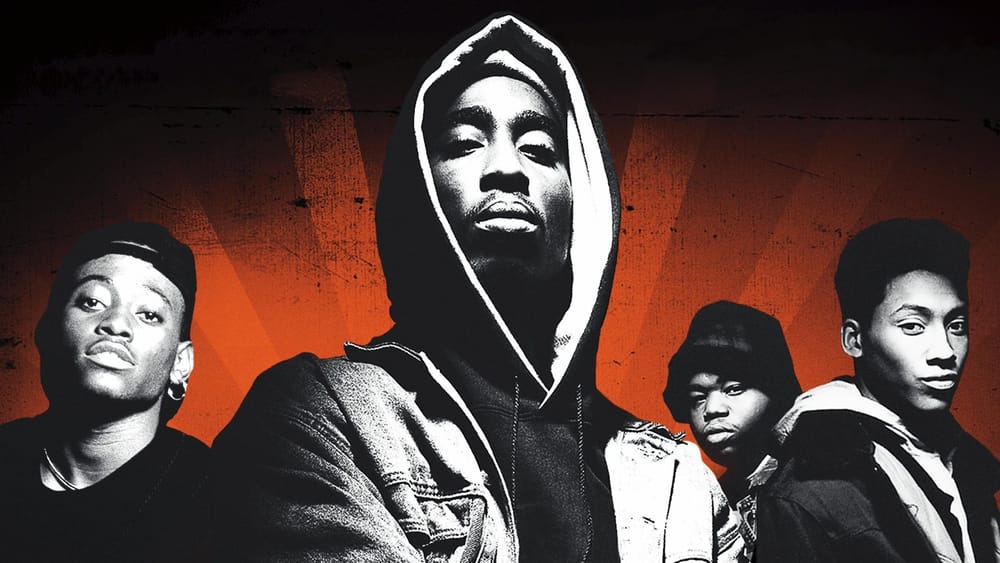
Tupac Amaru Shakur died at University Medical Center in Las Vegas on September 13, 1996, six days after a drive-by shooting left him with wounds his doctors could not stop. He was 25. His recording career, from 2Pacalypse Now in 1991 to the album he was still finishing at Death Row Records, had lasted five years. Thirty years later, that five-year window remains one of the most examined, most sampled, and most commercially enduring bodies of work in American music — Shakur has sold more than 75 million records worldwide, a figure that has kept climbing for three decades after the man himself stopped being able to add to the catalog.
That gap — five years of life against thirty years of legacy — is the actual subject of any honest retrospective. Most posthumous careers fade. Shakur's got louder.
A Poet Before He Was a Problem
The version of Shakur that dominates the popular memory — Death Row bandana, "Thug Life" tattooed across his stomach, the West Coast's most dangerous man — obscures how the work actually started. He was raised by Afeni Shakur, a former Black Panther Party member who represented herself in a 1971 conspiracy trial while pregnant with him and won. He trained at the Baltimore School for the Arts, studying acting and ballet before he ever rapped professionally. His early writing, later published as the poetry collection The Rose That Grew from Concrete, reads closer to Baltimore workshop verse than gangsta rap. Even at his most commercially aggressive, that duality never fully disappeared — "Dear Mama" and "Hail Mary" exist on the same discography as "Hit 'Em Up," and Shakur never treated that as a contradiction requiring resolution. It was the whole point.
The Feud That Defined an Era, and Ended Two Lives
The context that made Shakur's final two years so combustible is well documented and still genuinely disorienting to revisit: a November 1994 shooting in a Manhattan recording studio lobby, which Shakur survived and publicly blamed on Sean "Puffy" Combs and Christopher Wallace — The Notorious B.I.G. — despite no evidence either man was involved. That accusation, and Shakur's subsequent move to Suge Knight's Death Row Records, hardened an East Coast–West Coast rivalry that had previously been more marketing than war. Six months after Shakur's death, Wallace was killed in a nearly identical ambush-style shooting in Los Angeles. Neither murder has ever produced a definitive account of who ordered it — until, partially, one did.
In 2023, Las Vegas police arrested Duane "Keffe D" Davis, a former Southside Crips gang leader who had spent years describing his own alleged involvement in interviews and a memoir, treating the statute of limitations as protection that murder charges don't actually carry. In 2024, a jury convicted him of first-degree murder. It is the only conviction the case has ever produced, and it closes the loop on the "who" without fully explaining the "why" — the motive remains rooted in the same gang and industry tensions that defined the mid-1990s, rather than any single tidy answer. For a case that spent a quarter-century as hip-hop's most persistent open question, that's still the closest thing to resolution it has ever had.
The Actor Nobody Quite Reckons With
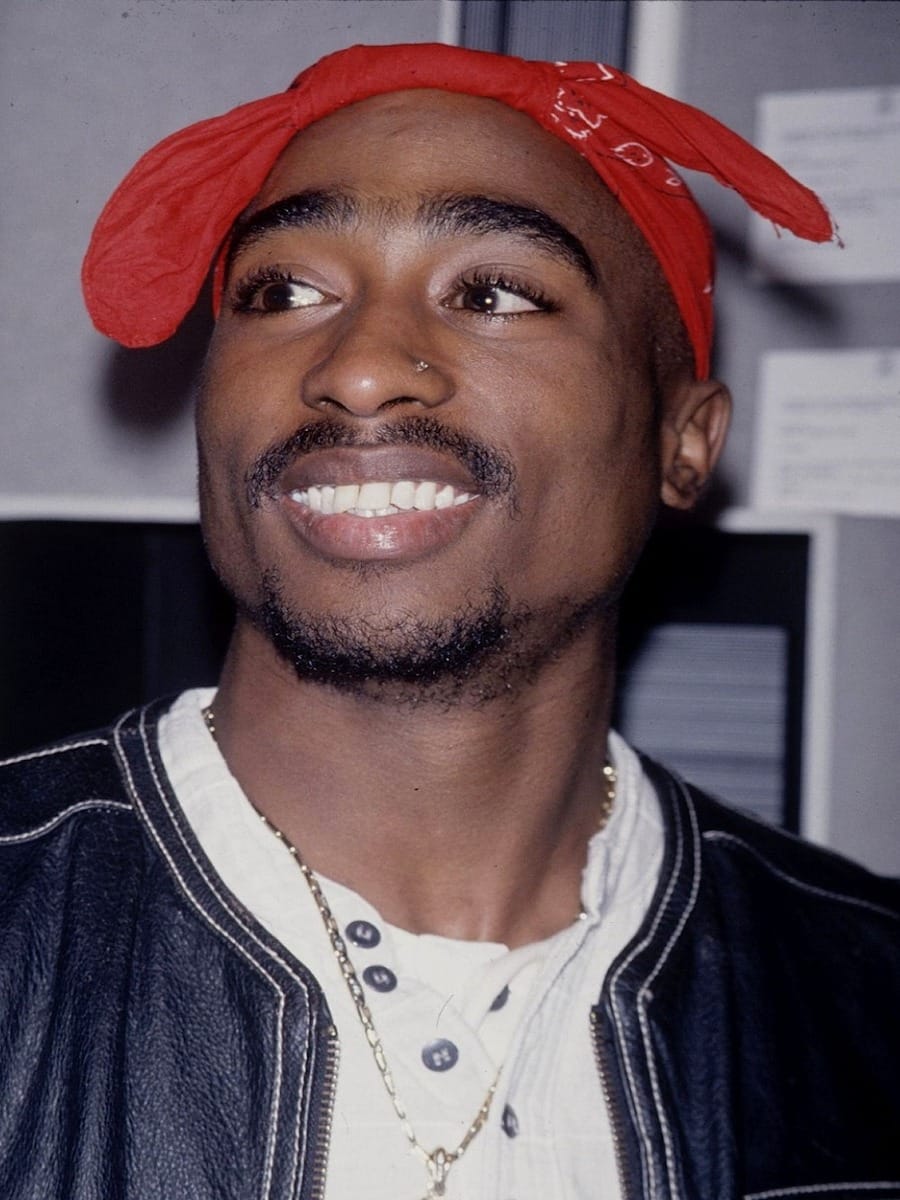
It's a measure of how thoroughly the music swallowed everything else that Shakur's film career rarely gets mentioned in the same breath as his discography, despite being genuinely accomplished on its own terms. His debut in Ernest Dickerson's Juice (1992), playing a magnetic, increasingly unstable crew leader named Bishop, remains one of the more unsettling breakout performances of early-'90s American cinema — critics at the time noted that Shakur, a first-time actor, was doing something more dangerous and more controlled than his more experienced co-stars. He followed it with Poetic Justice opposite Janet Jackson and Above the Rim, building a second career that, had he lived, plausibly could have run in parallel with the music rather than as a footnote to it. Instead it stopped at four films, one more posthumous release (Gridlock'd, which opened months after his death), and a permanent what-if.
A Second Career Made Entirely of Leftovers
What happened after 1996 has no real precedent in American recording history. Shakur left behind an enormous archive of unreleased material, and Death Row and later Amaru Entertainment turned it into a release schedule that has never really stopped: The Don Killuminati: The 7 Day Theory arrived two months after his death, followed by R U Still Down? (Remember Me), Still I Rise, Until the End of Time, Better Dayz, Loyal to the Game, and more — seven posthumous studio albums against seven released while he was alive. That's an unusual ratio for any artist, and it's produced the strange effect of a discography that is, numerically, still mostly about the four years after Shakur died rather than the five years before.
The most vivid demonstration of how far the posthumous career could stretch arrived in 2012, when Coachella staged a photorealistic hologram of Shakur performing "Hail Mary" and "2 of Amerikaz Most Wanted" alongside Snoop Dogg and Dr. Dre, sixteen years after his death, to a festival crowd that included people who hadn't been born when he died. It was technically astonishing and, depending who you asked, either a moving tribute or an uncomfortable preview of how digital resurrection might work for every dead celebrity going forward. Both readings are probably correct at once, which is very on-brand for an artist whose entire catalog lived in that same kind of unresolved tension.
What Actually Got Inherited
The influence is easiest to see in the rappers who followed and explicitly built on the specific thing Shakur did well: holding grief, rage, tenderness, and threat in the same verse without treating any of them as the "real" him. Kendrick Lamar has cited him directly and structured an entire posthumous "conversation" with Shakur into the closing track of To Pimp a Butterfly. J. Cole, Nas, and a generation of rappers who write about mothers and prison and politics in the same breath as flexing are working in a lane Shakur didn't invent alone, but did more than almost anyone to prove was commercially survivable at the highest level — sales figures, not just critical reappraisal, backed the idea that emotional range wasn't a liability in mainstream rap. That's a harder thing to build than a signature flow or a slang term, and it's the part of Shakur's inheritance that shows up in artists who never mention his name.
Thirty Years, Still Counting
None of this resolves the genuinely uncomfortable math at the center of Shakur's legacy: an artist dead at 25, with five years of recorded output, has now been gone for six times as long as he was actually making music, and the culture still hasn't finished processing him. That's not really a story about an unfulfilled career, though it's often told that way — Kynari has made a similar case before about what a career means once the person behind it can no longer add to it, and about how the entertainment industry keeps finding new ways to monetize a life story after the life is over. Shakur's version of that afterlife is just older, stranger, and more thoroughly tested than most. It's a story about how much can get said in a short amount of time when nothing is held back — and about an industry, and a fanbase, that has spent three decades proving it isn't done listening. Kynari's read on the anniversary: the five years still outweigh the thirty. That's the actual tribute.