Twenty-five years ago today, on November 2, 2001, Monsters, Inc. opened in American cinemas. It was Pixar's fourth feature, arriving after two Toy Story films and A Bug's Life, and it was the first the studio had built around a world that bore no relation to anything a child could pick up in a toy shop. It took $62.6 million in its opening weekend, at the time a record for an animated film, and went on to earn more than $575 million worldwide on a reported budget of $115 million.
The numbers explain why it became a franchise. They do not explain why it has lasted. Under the jokes and the fur, Monsters, Inc. is a film about a company town running out of power, an industry that harvests the fear of children, and a workforce that discovers its business model is built on a lie. It ends with the energy supply switched from screams to laughter. For a family comedy released seven weeks after September 11, that is a remarkably subversive idea, and it may be the most quietly radical premise Pixar has ever sold to a mass audience.
A lunch, a closet and a 30-year-old man
The idea was born in 1994 at a lunch attended by John Lasseter, Pete Docter, Andrew Stanton and Joe Ranft, as the studio was finishing Toy Story. The monster story fell to Docter. Development began in 1996 under the code name "Hidden City". His first version was very different: a 30-year-old man haunted by monsters he had drawn as a child, each one representing a fear he had never confronted.
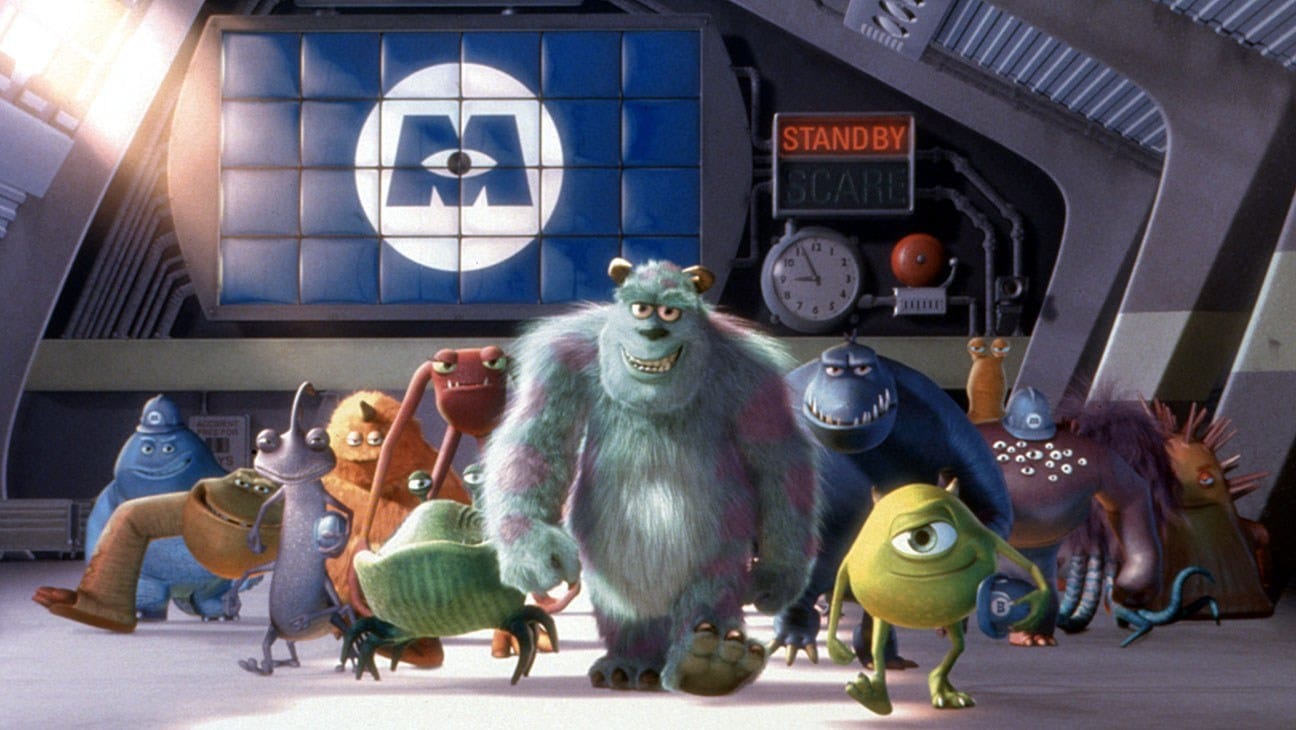
Over years of story work, that adult disappeared and the film found its real shape. The monsters stopped being metaphors living in one man's head and became workers with a city, shift work on a factory floor and a corporate hierarchy. Monstropolis runs on the screams of human children, collected by professional "scarers" who walk through closet doors at night. Docter directed, with Lee Unkrich and David Silverman as co-directors; Stanton and Daniel Gerson wrote the screenplay, and Darla K. Anderson produced.
The scream economy
Watch it again as an adult and the satire is hard to miss. Monsters, Inc. is a utility company facing a supply shortage, and its CEO, Henry J. Waternoose, responds the way executives in an extractive industry often do: by secretly backing a more efficient and more brutal method of extraction, a machine designed to pull screams directly from kidnapped children. The company's public message, that human children are toxic and that contact with them is lethal, turns out to be propaganda that keeps the workforce afraid of the very resource it depends on.
The solution the film offers is not to shut the plant down but to change what it runs on. Sulley discovers that laughter is far more powerful than fear, and the final scenes show the factory floor converted to a comedy operation, with the scare floor's former stars now telling jokes. The film never presses this as allegory, but its central argument, that an economy built on frightening people is both cruel and inefficient, and that a better source of energy was there all along, has aged better than almost anything else in the studio's early catalogue.
Two million hairs and a toddler with a microphone
The technical leap was Sulley himself. James P. "Sulley" Sullivan, voiced by John Goodman, was covered in 2,320,413 individually animated hairs, and nothing in Pixar's existing tools could make them behave. Fast movement caused the fur to catch and stretch. The studio set up a dedicated simulation department and wrote a new program, Fizt (short for "physics tool"), which let the fur react naturally every time Sulley moved. The same software controlled Boo's oversized T-shirt, another first for the studio. To render it all, Pixar's farm grew to 3,500 processors, against 1,400 for Toy Story 2 and 200 for the original Toy Story.
The film's other great achievement was low-tech. Boo, the toddler who wanders through a door into Monstropolis, was voiced by Mary Gibbs, the young daughter of Pixar story artist Rob Gibbs. She was too young to read a script, so the crew followed her around the office with a microphone and built her performance out of play. That is why Boo sounds like a real child rather than an actor playing one, and why the film's emotional centre, a hulking monster who is terrified of a little girl and then cannot bear to lose her, feels so unforced. She calls him "Kitty".
Billy Crystal, who had turned down the role of Buzz Lightyear and regretted it, accepted the part of Mike Wazowski, and his rapid-fire neurosis against Goodman's warmth gave Pixar one of its great double acts.
Oscar night, 2002
At the 74th Academy Awards in March 2002, the Academy handed out a statuette for Best Animated Feature for the first time. Monsters, Inc. was nominated alongside Shrek and Jimmy Neutron: Boy Genius, and lost to Shrek, DreamWorks' irreverent fairy-tale parody. The first verdict of the new category went to Pixar's great rival.
The film did win one Oscar. Randy Newman took Best Original Song for "If I Didn't Have You", the duet sung by Goodman and Crystal over the end credits, after fifteen previous nominations without a win. He opened his acceptance speech with "I don't want your pity," and thanked the music branch "for giving me so many chances to be humiliated", as reported at the time. The film was also nominated for its score and for sound editing.
 Official trailer
From prequel to theme park
The world proved too valuable to leave alone. Monsters, Inc. returned to cinemas in 3D in December 2012, a run-up to Monsters University, which opened on June 21, 2013. Directed by Dan Scanlon, the prequel sent Mike and Sulley back to college and earned around $743 million worldwide, more than the original. Its best idea was an honest one: that hard work does not guarantee the life you wanted.
Monsters at Work premiered on Disney+ on July 7, 2021, picking up the day after Waternoose's arrest and following the company's transition to laughter. A second season arrived in 2024. In the parks, Monsters, Inc. Mike & Sulley to the Rescue! opened at Disney California Adventure in 2006, the Monsters, Inc. Laugh Floor improv show replaced The Timekeeper at Magic Kingdom in 2007, and Monsters, Inc. Ride & Go Seek opened at Tokyo Disneyland in 2009.
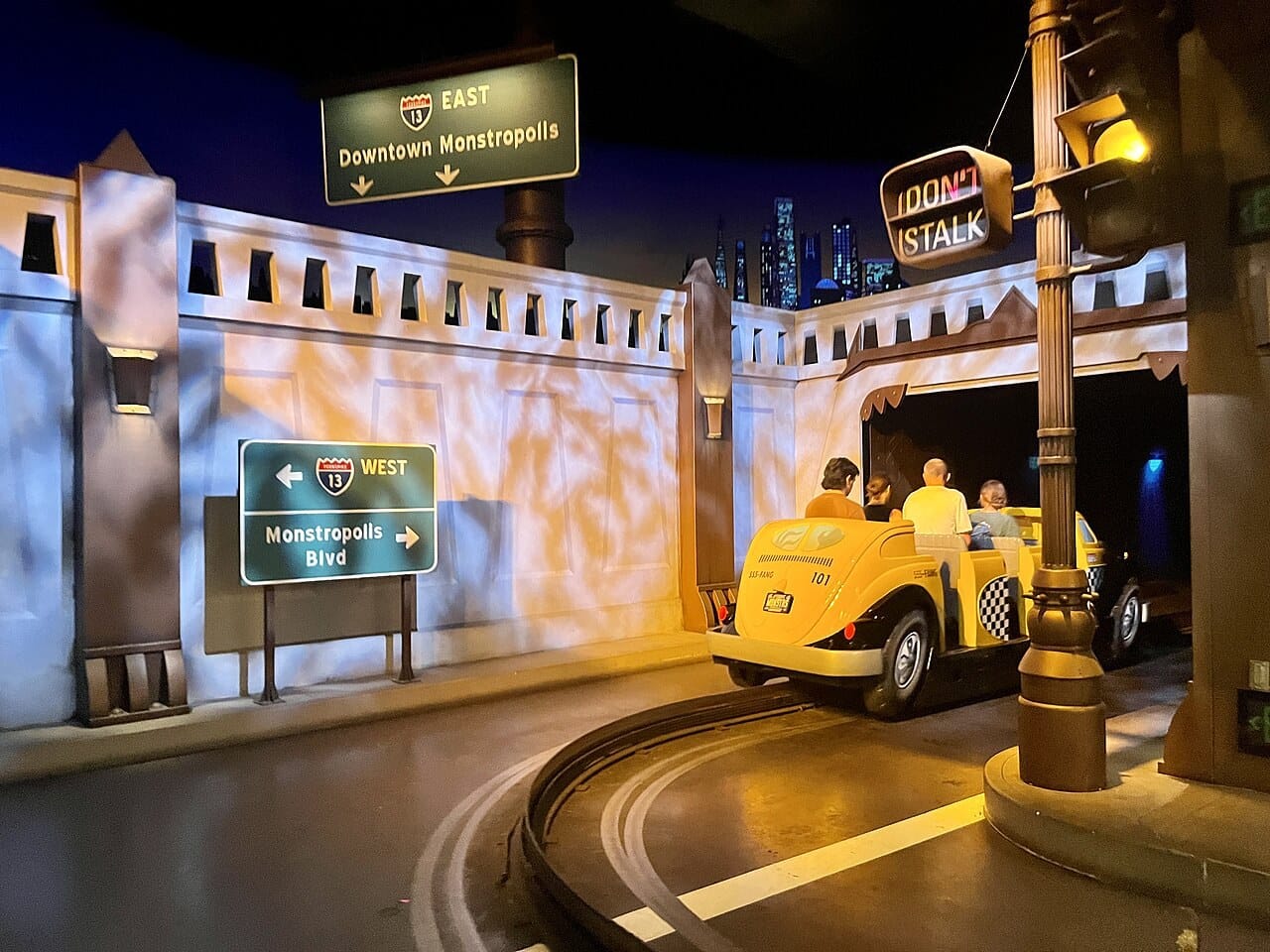
The biggest investment is still to come. At Disney's Hollywood Studios in Florida, Disney is building Monstropolis, a full themed land on the site of the former Muppets Courtyard, set in a city now powered by laughter. A first phase, with a theatre show, restaurants and a shop, is due in 2027; the headliner, the first suspended roller coaster in a Disney park, set inside the factory's door vault, has no announced opening date.
 Official trailer
Pete Docter's long road
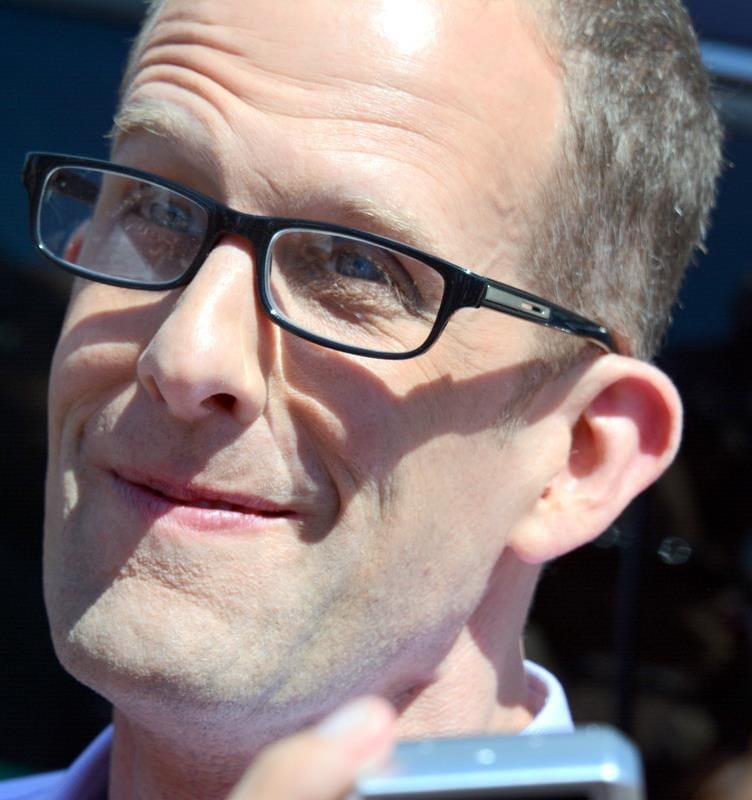
Monsters, Inc. was Docter's debut as a director, and it set the pattern for everything he made afterwards: high-concept worlds built to carry very simple feelings. He went on to direct Up (2009), Inside Out (2015) and Soul (2020), all three of which won the Oscar for Best Animated Feature, the award his first film missed. Since 2018 he has run Pixar as chief creative officer.
The studio he leads in 2026 is in a very different position from the one that released Monsters, Inc. In March, as Pixar released its original film Hoppers, Docter confirmed that Monsters, Inc. 3 is in early development, alongside Incredibles 3 and Coco 2. No director or release date has been announced. In July, Andrew Stanton's Toy Story 5 became the sixth Pixar film to pass $1 billion worldwide, according to Cartoon Brew. The sequel strategy works; the open question, as with the box-office penalty now facing original animation, is what it costs.
Why it still works
There is a certain irony in that. Monsters, Inc. was itself an original, a risky idea about a city of monsters that had no toy line and no source material, made by a first-time director. Its subject was a company so attached to an old, cruel business that it nearly destroyed itself rather than change.
Twenty-five years later, the film still plays as a comedy, a buddy movie and a technical milestone. But its most lasting achievement may be that it smuggled a genuinely subversive idea into the multiplex and made it feel like common sense: that you get more out of people by making them laugh than by making them afraid.