When Planet Zoo (2019) launched exclusively on PC, it was treated as a matter of common sense. Management simulations — deep, menu-heavy, mouse-dependent — lived on desktop computers. Consoles were for something else: action, spectacle, reflex. Frontier Developments made a game that let you micromanage animal habitats, track individual creature happiness metrics, and lay down custom path nodes with surgical precision. Of course it was PC-only. Where else would it go?
 Gameplay
That logic held for nearly seven years. Then Frontier announced Planet Zoo 2 (2026), and with it, simultaneous launches on PlayStation 5 and Xbox Series X/S alongside PC. The sequel arrives tomorrow, October 13th, and it marks the first time a mainline entry in the franchise has ever existed on a console. It is a quiet but meaningful inflection point — not just for Frontier, but for how the industry understands its own audience.
The Simulation Problem That Wasn't
For a long time, the industry operated on a set of tacit assumptions about controller users. They wanted shorter sessions. They preferred immediate feedback over systemic depth. They tolerated menus but not menu-within-menu architecture. Management sims — games where the act of playing is largely the act of reading, deciding, and waiting — were thought to be fundamentally misaligned with the console experience. The argument was cultural as much as technical.
The technical barriers were real, though. Navigating a complex UI built around cursor precision on a D-pad is genuinely painful when it hasn't been designed with that input in mind. Early console ports of PC management games left scars: clunky radial menus, imprecise camera controls, interfaces that looked transplanted rather than translated. Players who tried them remembered. Publishers who observed the sales remembered harder.
But the cultural assumption — that console players simply didn't want this kind of game — was always shakier than it appeared. It confused the absence of good ports with the absence of appetite. The question was never whether console players could enjoy deep simulation mechanics. The question was whether anyone had bothered to build a version of those mechanics that respected the platform it was running on.
What Changed Between 2019 and 2026
Several things shifted simultaneously, and their convergence made a console Planet Zoo not just viable but arguably overdue.
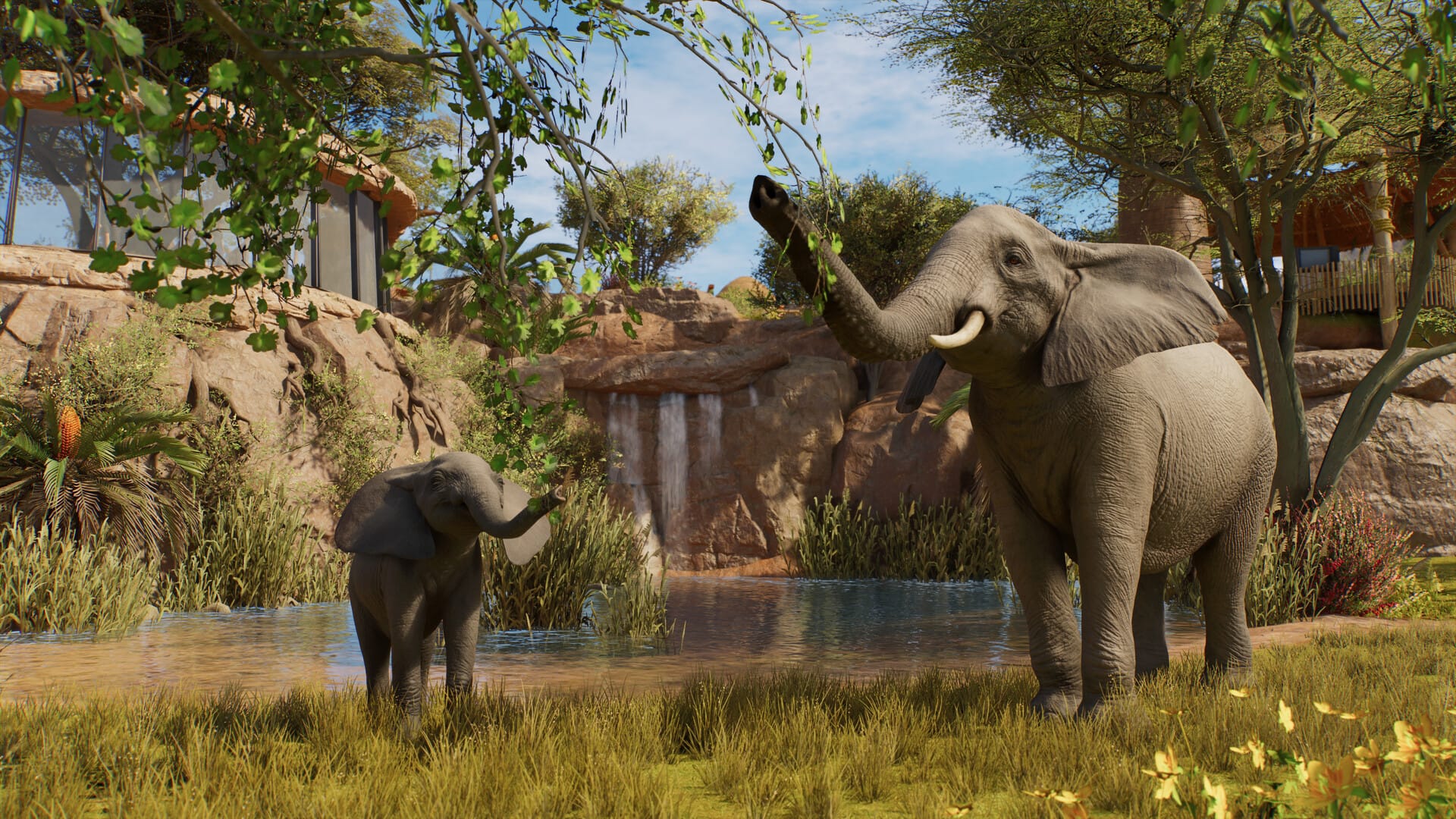
First, the success of games like Two Point Hospital (2018) and its sequel on consoles demonstrated that management games could thrive on PlayStation and Xbox when the interface was rebuilt thoughtfully — not just ported. Cities: Skylines (2015) had a rougher transition, but its console version still found a substantial audience that had simply never had access to a city-builder of that scope before. Each of these cases chipped away at the certainty that simulation and controller were fundamentally incompatible.
Second, the generational shift in who owns consoles has been dramatic. The PlayStation 5 and Xbox Series X/S demographic skews older than their predecessors did at launch. These are buyers who grew up with PC gaming as a parallel hobby, not a separate identity. The idea of a "console person" and a "PC person" as discrete human types has eroded. Players move fluidly between platforms depending on what they own, what's available on Game Pass or PlayStation Plus, and frankly, which device is closer to the couch that evening.
Third, and perhaps most importantly, the economics of simulation games changed. Planet Zoo's original PC release became a slow-burn commercial success, sustained by DLC packs and a dedicated modding community. But that model has a ceiling. Console markets are not supplements to PC simulation audiences — they are, in aggregate, substantially larger. Frontier would have been leaving significant revenue on the table indefinitely if it never crossed platforms. By the time Planet Zoo 2 was greenlit, the question of console support was probably less "should we?" and more "how do we do this without compromising the game?"
What Frontier Had to Solve
Frontier's engineering and design challenge with Planet Zoo 2 wasn't trivial. The original game is deeply cursor-driven: placing terrain, routing paths, adjusting habitat barriers, managing staff assignments — these all depend on spatial precision that a mouse provides almost effortlessly and a thumbstick approximates badly. The studio had to make choices about where to simplify, where to abstract, and where to trust players with complexity.
From what Frontier has shared ahead of launch, the console version doesn't strip the simulation down. Staff management, animal welfare tracking, financial planning, habitat customization — the systemic depth appears to be intact. What's changed is the interface layer: context-sensitive controls, a redesigned radial menu system, and camera behavior tuned for analogue sticks. These aren't cosmetic adjustments. Rebuilding input architecture for a game this layered is substantive design work, and it signals that Frontier treated the console version as a first-class product rather than an afterthought.
That distinction matters enormously. A management sim that has been genuinely designed for controller feels different from one that has been mapped onto it. Whether Planet Zoo 2 lands on the right side of that divide is something players will settle starting tomorrow. But the intent, at least, is evident.
The Myth That's Finally Dying
The broader significance here isn't really about zoos. It's about a categorization system that the games industry used for decades to explain audience behavior to itself — and that has become increasingly incoherent as the audience has evolved.
"Core" players were PC gamers, or dedicated console owners who bought expensive peripherals and played for hundreds of hours. "Casual" players were everyone else — mobile users, parents with Switch Lites, people who played The Sims but not "real" games. Simulation titles sat in an awkward middle category: undeniably complex and time-consuming, but associated with themes — theme parks, farms, animals, cities — that the industry's marketing instincts coded as soft. The genre existed in a strange ghetto of depth-without-prestige.
That framework has been collapsing in slow motion for years. Stardew Valley (2016) outsold countless "serious" titles across every platform it touched. Farm simulations became genuine lifestyle games with audiences measured in the tens of millions. Animal Crossing: New Horizons (2020) sold over forty million copies to people who apparently had no problem managing inventories, loan schedules, and island infrastructure on a handheld device. The idea that simulation depth was incompatible with console audiences wasn't disproven by one game. It was disproven systematically, title after title, year after year.
Planet Zoo 2's console launch is Frontier catching up to a reality the data has been announcing for some time. That it took until the sequel to get here reflects how durable industry assumptions are even when the evidence against them accumulates — not because publishers are irrational, but because platform launches carry risk, and risk tolerance is always slower than market movement.
What Tomorrow Tells Us
When Planet Zoo 2 goes live on October 13th across three platforms, the number that matters most won't be its opening-week sales figure. It will be the ratio of console purchases to PC purchases — and whether that ratio surprises anyone at Frontier. If console adoption is strong, it will validate not just this game but an entire category of PC-native experiences that have been waiting on the sideline of console storefronts. It will make the case for ports, remakes, and sequels of management titles that currently don't exist on PlayStation or Xbox at all.
If it underperforms, the industry's cautious instincts will feel vindicated for another cycle. But the conditions for success have probably never been better. The hardware is capable. The interface design appears genuinely considered. The audience is ready — it has been for years, largely without the games to prove it.
The distance between "core" and "casual" gaming has been shrinking for a decade. Planet Zoo 2 doesn't close that gap by itself. But it is one more piece of evidence that the gap, at this point, is mostly historical fiction.