Ten years is a long time to be quiet in an industry that measures relevance in quarters. When The Witness (2016) launched, Jonathan Blow was already one of the most argued-about designers in games: the creator of Braid (2008), a public critic of the medium's intellectual laziness, and a designer who built games to prove his point. The Witness asked players to learn a visual language with no tutorial and no mercy. Some converted. Many walked away.
 Official trailer
Order of the Sinking Star (2026), his first game since, launched on October 8 for PC, PlayStation 5 and Nintendo Switch 2. It is bigger, stranger and, by the early verdict of critics, kinder than anything he has made.
What the game is
Blow announced the game at The Game Awards in December 2025, after nearly a decade in development at his studio, Thekla. It is published by Arc Games. The player is Queen Effia, transported to a realm of magic, contraptions and monsters, and the adventure is built on more than a thousand hand-made puzzles. The trailer said a thousand; Blow has since put the count above 1,400, and has estimated that finishing the game at a normal pace takes around 250 hours, with more than 500 needed to solve everything. The story can be completed without solving every puzzle.
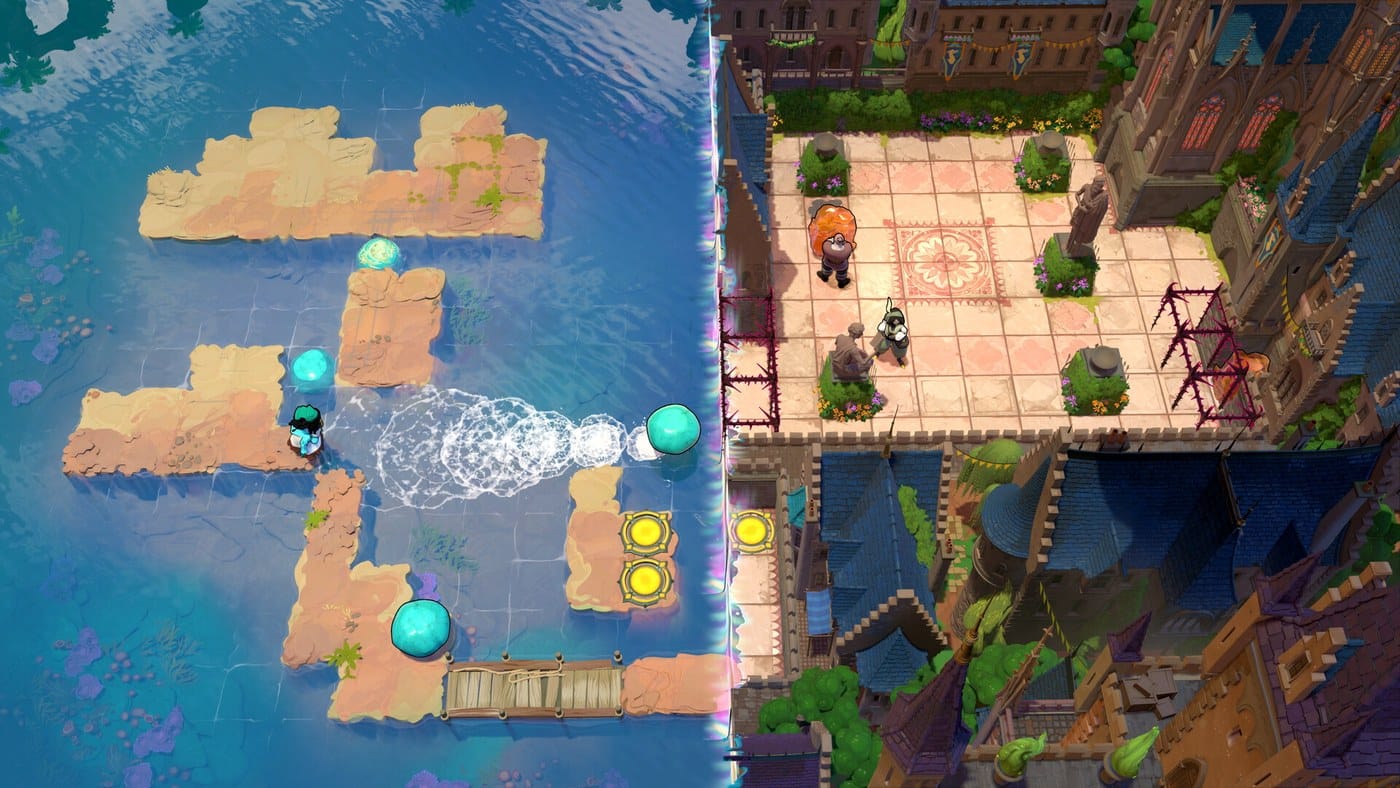
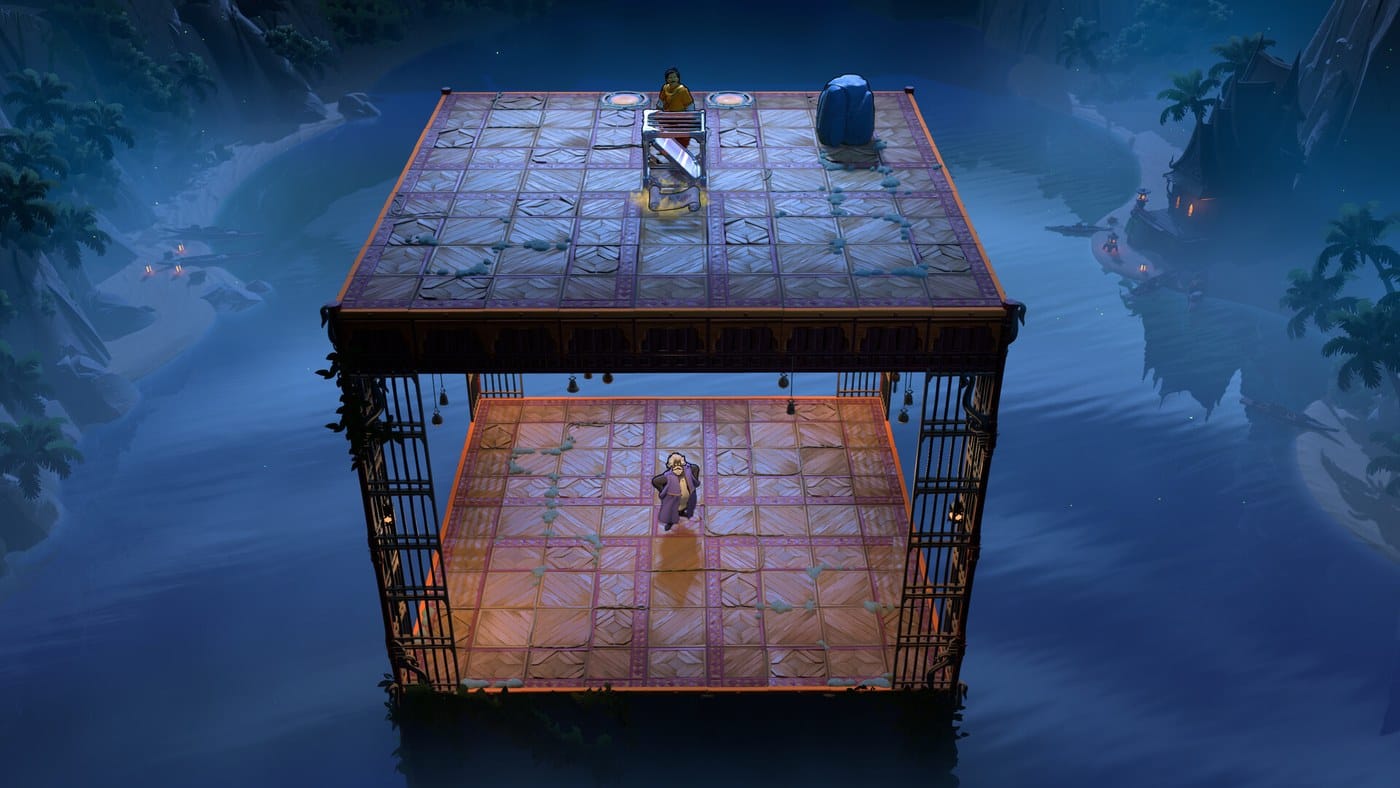
The most interesting decision is structural. Rather than design every mechanic himself, as he did on his previous games, Blow built the game out of four sets of Sokoban-style mechanics drawn from other designers' work, and brought several of those designers in to make levels: Alan Hazelden (Mirror Isles), Sean Barrett (Promesst), Jonah Ostroff (Heroes of Sokoban) and Patrick Traynor (Patrick's Parabox), among others, according to the game's development history. Because all four systems share a grid, they can be combined, and the game's long arc is about what happens when they collide. Early puzzles play on a flat plane; later ones move into 3D.
Blow, collaborating
That collaborative structure is a quiet revolution for a designer whose reputation rests on singular authorship. Braid and The Witness were legible as one mind's argument about how players think. Order of the Sinking Star is closer to a curated anthology: Blow as editor as much as author, assembling the best ideas of a small community of puzzle designers who themselves learned from Sokoban and from one another.
The game was also built on technology Thekla made itself, a programming language called Jai and an engine written in it. Blow has said he did not want to spend another decade programming in C++, and the studio plans to release both for free. Whatever one thinks of his public persona, that is a substantial contribution to the craft.
What critics are saying
The reviews are strong. The game holds a top-critic average of 83 on OpenCritic. The most enthusiastic reviews call it the most distinctive puzzle game their writers have played and, notably, more respectful of the player than The Witness; one called it Blow's most accessible game since Braid. The reservations are about scale. Some critics found that the sheer volume of puzzles, without tighter curation, produces stretches of frustration, and that the dialogue and story never give the player a hook beyond the promise of more puzzles.
That split is the right one to have about this game. A thousand puzzles is not a feature in the content-treadmill sense. It is a claim that a few simple systems are deep enough to sustain that many ideas without repeating themselves. Where critics disagree is whether every one of those ideas deserved to be in the final game.
A different landscape
The decade since The Witness changed the field around Blow. Return of the Obra Dinn (2018) and Outer Wilds (2019) proved that ideas-first games could be both rigorous and moving, and Patrick's Parabox (2022), whose designer worked on this game, showed how far a single recursive idea could go. Blow is no longer the lone voice arguing that games should demand thought. He is one of many, and Order of the Sinking Star seems to know it, which may be its most surprising quality.
It also lands in one of the busiest months in years, with console sales falling and prices at record highs as the industry waits for GTA VI. A 250-hour puzzle game is the opposite of that kind of event: slow, patient and in no hurry to be finished. For the audience it is made for, that is exactly the point.