The September 2026 release calendar is not the result of creative coincidence. It is the result of fear. Specifically, the industry-wide, boardroom-level fear of what happens when your game launches in the same fiscal quarter as Grand Theft Auto VI (2026). What you end up with is a month so dense with tentpole releases that it stops resembling a commercial strategy and starts resembling a pileup — and nowhere is that dynamic more legible than in the positioning of Marvel's Wolverine (2026), the Insomniac Games PS5 exclusive that is poised to be September's loudest arrival.
 Official trailer
The Gravity of One Title
Rockstar Games has not engineered this situation deliberately. They rarely need to. The gravitational pull of a new Grand Theft Auto entry is so well-documented at this point that publishers treat its release window the way sailors once treated certain coastlines — with reverence and wide berth. When Rockstar confirmed a late 2026 window, the industry did not respond by spreading risk across the year. It responded by clustering. Q4 became radioactive. September became the new November.
This is not an irrational calculation. The data from prior GTA cycles is unambiguous: titles launching in direct proximity to a Grand Theft Auto release suffer measurable sales suppression regardless of their quality. Publishers remember what happened to the competition when Grand Theft Auto V (2013) landed. They remember it the way you remember a fire. So they moved. All of them, more or less simultaneously, toward the same exit.
What Wolverine's Exclusivity Means in This Context
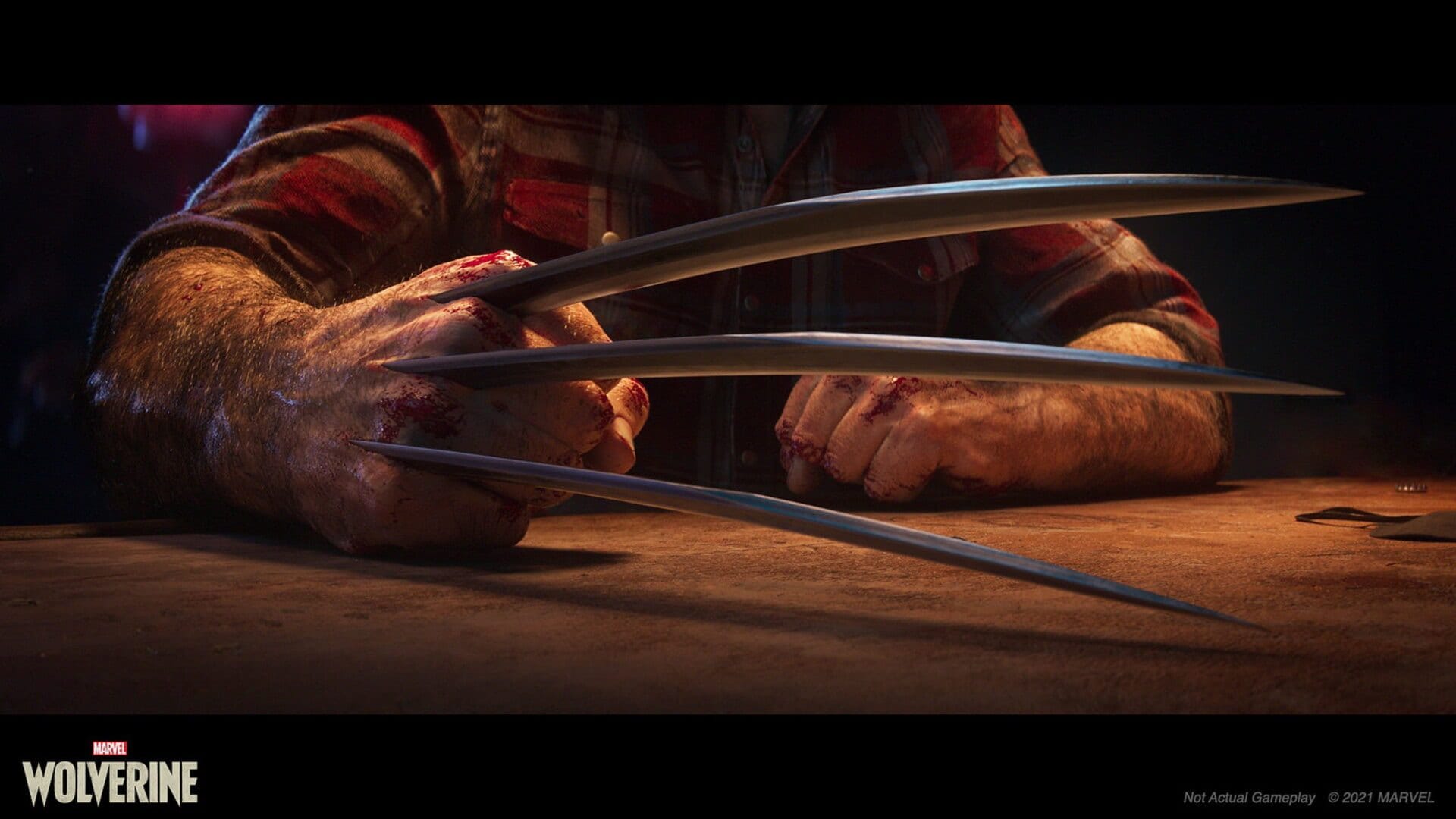
Marvel's Wolverine is a PS5 exclusive. That fact, unremarkable in isolation, becomes structurally significant when placed against the September context. Insomniac and Sony are not competing with the full market in September — they are competing within the PS5 ecosystem specifically, and they are doing so with a title that carries both Marvel IP momentum and the critical goodwill accumulated by Marvel's Spider-Man 2 (2023). The exclusivity functions as insulation. It narrows the competitive field and concentrates the addressable audience in a way that a multiplatform release would not.
But insulation is not immunity. A PS5-exclusive Wolverine title still competes for the same finite resource that every other September release is chasing: time. Player attention does not partition itself neatly by platform. A PS5 owner in September 2026 faces the same cognitive and economic pressure as any other player — a calendar full of legitimate claims on their hours and their wallets, all of them positioned there for the same reason, all of them trying to get out of GTA 6's way.
Scheduling as Industrial Symptom
What the September 2026 pile-up actually exposes is how thoroughly a single franchise has restructured the industry's relationship with its own calendar. This is not healthy market competition. Healthy competition distributes releases in ways that maximize audience reach and minimize cannibalization. What September 2026 represents is the opposite: a collective flinch, a defensive crouch that creates its own version of the problem it was meant to solve. Publishers fled a crowded November and built a crowded September instead.
There is something almost deterministic about it. Once the first major publisher moved to September, the calculus shifted for everyone else. To stay in October or early November was to risk being buried by GTA 6. To move earlier than September was to potentially leave commercial momentum on the table. September became the Schelling point — the coordinate every player converged on without coordination, simply because it was the most logical escape route available. And then it stopped being an escape route.
The Platform Bet Sony Is Making
Sony's decision to release Marvel's Wolverine into this window is, at its core, a bet that PS5 exclusivity plus Marvel brand recognition equals a release event powerful enough to cut through the noise of the most saturated gaming month in recent memory. It may well be correct. Insomniac has earned that trust. But the bet itself is telling. It suggests that even Sony — with one of the most reliable first-party pipelines in the business — felt the September window, for all its chaos, was preferable to the alternative.
That is what one title does to an entire industry's planning horizon. Grand Theft Auto VI has not yet shipped a single copy, and it has already reorganized the competitive landscape around its gravitational field. The September pile-up is not a release calendar. It is a weather pattern — and every publisher in it is reading the same forecast. Insomniac's own answer to that pressure is visible in the Comic-Con story trailer Kynari broke down in detail.