On October 27, 2026, the Los Angeles City Council voted unanimously on two measures that, in isolation, look like common sense: free permits for film crews of ten or fewer people, and access to city-owned parking lots, yards, and civic staging areas for $1 a day. Both motions were introduced by Councilmember Adrin Nazarian under the banner of his "Keep Hollywood Home" initiative. Both passed without objection. And neither, on its own, comes close to matching the scale of the crisis they were designed to address.
The optics of the vote were carefully managed. Nazarian, who chairs the Council's newly formed Ad Hoc Committee on Film, Entertainment and the Creative Industry, was flanked by production workers and union representatives. The symbolism — city government standing beside crew members, literally — was deliberate. But symbolism is cheap when the underlying data is this grim.
According to FilmLA's latest quarterly report, the number of on-location shoot days recorded in Los Angeles from June through September 2026 came in at just 4,171 — down 4.8% year-over-year and nearly 29% below the five-year average. That figure arrived less than a week before the Council vote, functioning as an emergency bulletin that the reforms were designed to answer. It did not make the reforms look proportionate to the emergency.
The free micro-shoot permit covers productions with crews of no more than ten people, handheld or lightweight equipment, and an on-street footprint of no more than half a sidewalk. Under the new ordinance, student filmmakers, documentary crews, and ultra-low-budget projects will be able to obtain permits without paying the standard fee. The city-property measure, separately, would make parking lots, civic structures, yards, and staging areas available for $1 a day — a sharp reduction from current Recreation and Parks Department rates that run to $450 a day for base camp access and between $100 and $300 a day for crew parking, depending on vehicle count.
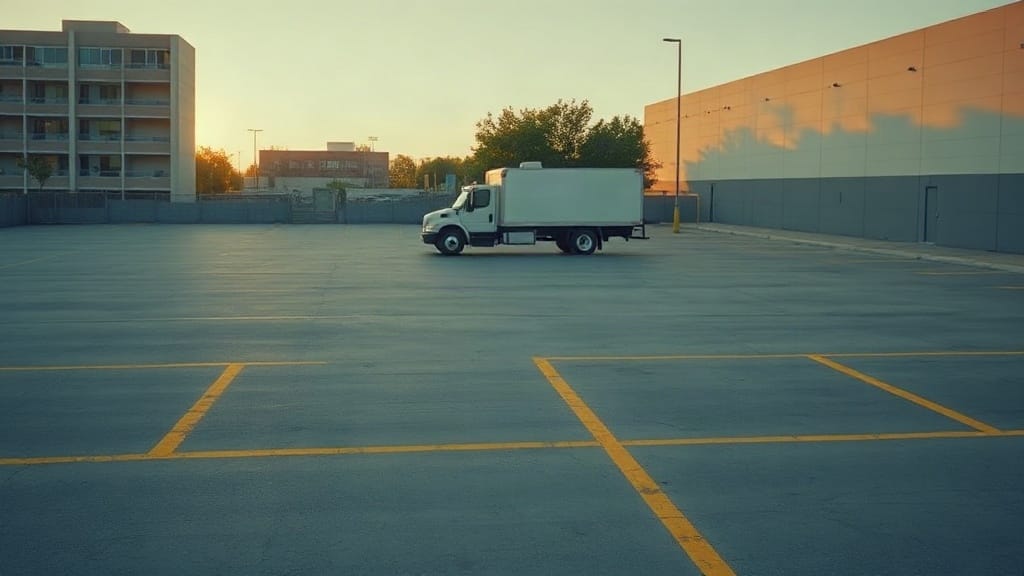
Those fees are real frictions for small productions. Eliminating them is not nothing. For a documentary crew of six spending three days in city-owned space, the savings could be material. But the productions generating the bulk of LA's economic output — scripted television series, mid-to-large-budget features, the kind of projects that sustain below-the-line workforces across multiple departments — are not priced out of Los Angeles by base-camp parking charges. They are priced out by the aggregate cost structure that competing jurisdictions, from Georgia to the United Kingdom to Canada, have spent two decades systematically undercutting.
The state of California moved on the larger lever last year. Governor Gavin Newsom signed Assembly Bill 132 on June 27, 2025, expanding the Film and Television Tax Credit Program — Program 4.0 — from $330 million to $750 million annually for five years, a more-than-125% increase in the annual cap. The legislation also raised the available credit per project from 20% to as high as 35% for Los Angeles-based expenditure, and made credits fully refundable beginning in the 2025-26 fiscal year. FilmLA CEO Denise Gutches acknowledged the tax credit's targeted effect on scripted production: "Where the tax credit applies, it's working to bring productions back to Los Angeles and put local crews to work." The qualifier buried in that sentence is "where the tax credit applies."
It does not apply to commercials. Commercial production fell nearly 16% in Q3 2026 compared to the same period in 2025 and sits more than 41% below its five-year average — a category that cannot access state subsidies and therefore has no artificial floor beneath its collapse. The tax credit's ineligibility for commercials is not an administrative oversight; it reflects a deliberate policy boundary. But it means a significant portion of production activity in LA is losing ground with no targeted relief in sight.
The trajectory of the broader slide is worth confronting directly. Los Angeles recorded just 19,694 shoot days across all of 2025 — the lowest figure observed outside of 2020, when pandemic shutdowns halted production entirely. That represented a 16% year-over-year drop from 2024, which was itself described as a historically low baseline. Television shoot days ended 2025 more than 50% below the five-year average. Feature production was 31% below. The trend line, in every subcategory, has been pointing in one direction since 2022.
Nazarian's broader "Keep Hollywood Home" initiative — launched in April 2025 — is more ambitious than what passed this week. Phase 2 of the plan, which remains in proposal form, would waive fees from the Recreation and Parks Department, Department of Transportation, and the Los Angeles Fire Department for productions with fewer than 50 crew members. It also calls for retention programs for post-production and visual effects companies, daily fee caps for productions shooting on certified LA soundstages, incentives for local businesses that host film crews, and a $2 million seed fund to help small and medium productions offset costs. Mayor Karen Bass separately issued an executive order in 2025 to streamline the city's permitting process, and seven earlier Nazarian motions to improve filming practices passed the full Council earlier this year.
The accumulation of these measures — executive orders, council motions, expanded tax credits, fee studies, ad hoc committees — creates an impression of policy momentum. It may even be genuine momentum. But the production numbers do not yet reflect it. Q3 2026's 4,171 shoot days fell 11% from the prior quarter, suggesting that even the modest uptick visible in early 2026 data is not holding.
The structural argument is not complicated. Los Angeles is competing against jurisdictions that offer 30% to 40% base incentives, lower labor costs, purpose-built studio infrastructure, and streamlined permitting regimes developed specifically to attract the productions LA built its identity on. A free permit for a ten-person crew is a gesture of goodwill toward the bottom of the market. It does not address the structural competition at the top, where the spend — and the jobs — actually live. As the legal and financial pressures accumulating around Hollywood's development ecosystem make clear, the industry's distress is systemic and multi-directional — not a permitting problem with a permitting solution.
What the Council vote does confirm is that Los Angeles is, at the civic level, taking the crisis more seriously than it was two years ago. The formation of a dedicated ad hoc committee, the unanimous votes, the public alignment with crew workers — these signal political will, if not yet policy firepower. The question is whether incremental measures accumulate into something structurally consequential before the production base atrophies further, or whether the gap between gesture and necessity simply widens. FilmLA's next quarterly report will provide the next answer. It is unlikely to be encouraging.