The awards season is over. The trophies have been distributed. The question now moving through a California federal court is whether any of that acclaim was built on stolen architecture.
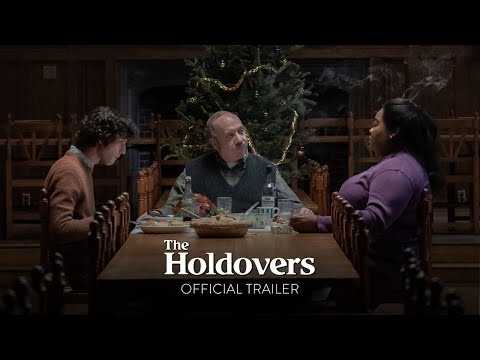 Official trailer
The Holdovers (2023) — Alexander Payne's warmly received boarding-school drama starring Paul Giamatti, Da'Vine Joy Randolph, and first-timer Dominic Sessa — earned five Academy Award nominations, including Best Original Screenplay, and grossed $46 million at the box office. It also earned Scottish screenwriter Simon Stephenson's quiet fury — a fury he first directed at the Writers Guild of America in January 2024, and has now converted into a federal copyright infringement lawsuit filed this week in California court.
The target is not just Payne. The suit names screenwriter David Hemingson, producer Mark Johnson, Miramax, Focus Features, and Universal Home Entertainment — essentially everyone who touched the project from development through distribution. At its centre is Stephenson's allegation that The Holdovers was lifted, scene by scene and habit by habit, from his unproduced 2013 screenplay "Frisco."
The Script That Circulated
Stephenson is not an obscure grievant. His credits include a story-by credit on Pixar's Luca, contributions to Paddington 2, and The Electrical Life of Louis Wain. He wrote "Frisco" between 2012 and 2013, drawing on his prior career as a pediatrician. The script tells the story of a dispirited doctor stuck caring for a precocious teenage patient — a cynical older figure, an unwilling younger one, an enforced proximity that strips both of their defences. Sound familiar? In 2013, "Frisco" landed on the Black List — the annual Hollywood survey of beloved unproduced screenplays — where it ranked third.
That ranking mattered. The Black List is, by design, a document of industry circulation. Scripts that land on it get read widely. Stephenson's lawsuit alleges that Payne read "Frisco" in 2013 specifically because Stephenson sought him out to direct it. An email from Stephenson's agency confirmed the script had been handed to Payne's producing partner Jim Burke over lunch. Payne reportedly liked it but passed. Then, in 2019, the script came around again — this time submitted to Payne on behalf of Netflix. He passed again.
Shortly after that second pass, the production timeline of The Holdovers begins. The Holdovers went into development in 2021, with filming commencing in Massachusetts in January 2022. Payne's stated origin story for the film has always credited Marcel Pagnol's obscure 1935 French film Merlusse — a boarding school story about a teacher left with students over the holidays — as his initial spark. He then brought in David Hemingson, whose boarding-school television pilot he had read, to write the screenplay. Hemingson has said his own prep-school experiences and family history shaped the material.
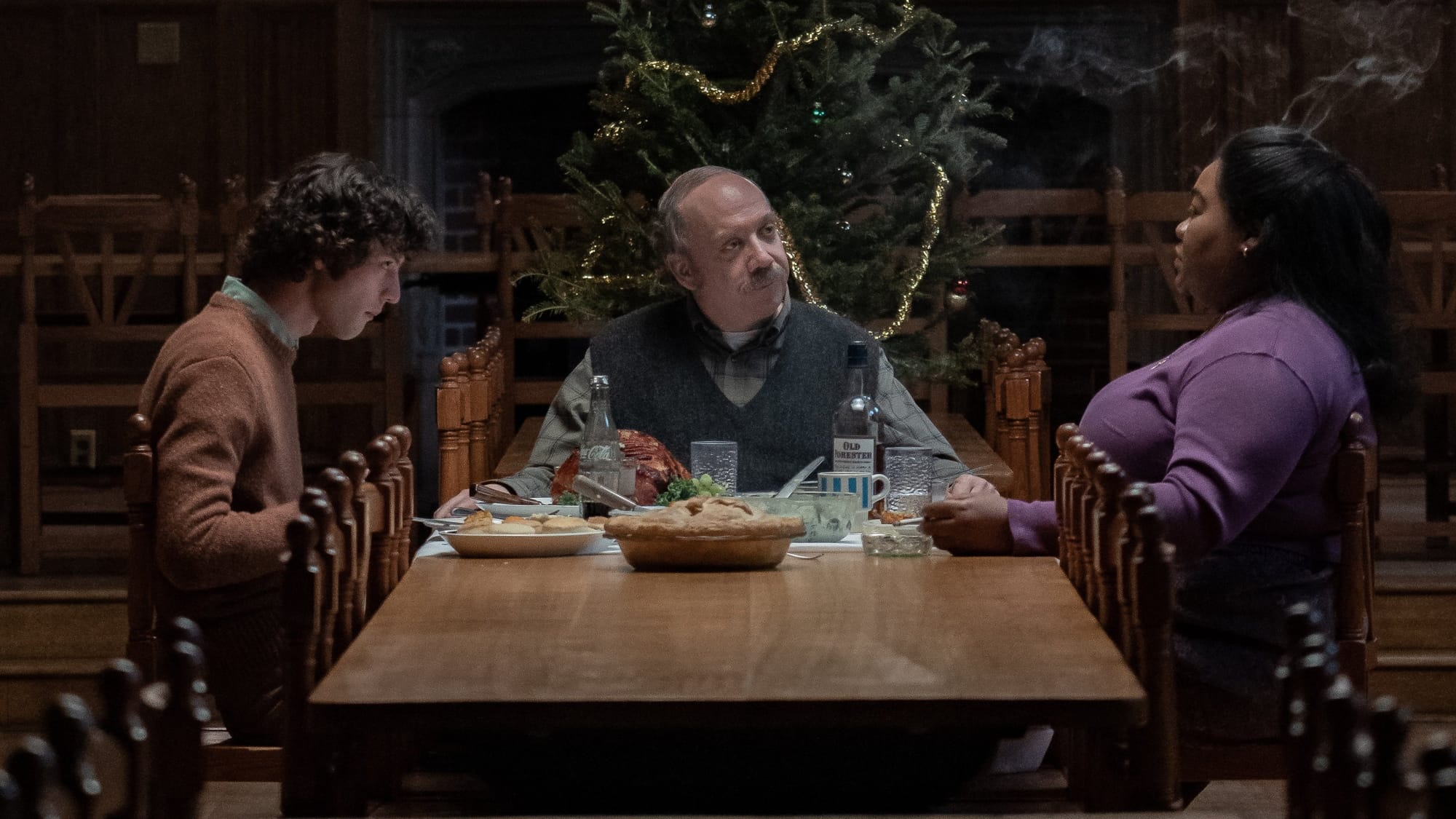
Stephenson's lawsuit does not dispute the Merlusse premise. His complaint argues that while Payne and Hemingson may have borrowed their premise from Merlusse, they took the architecture of their screenplay from "Frisco" — the characters, the structure, specific scenes, and the calibration of dialogue. The complaint identifies 46 distinct incidents allegedly transplanted from "Frisco" into The Holdovers.
The Forensic Detail
What gives the lawsuit its bite — and its notoriety among entertainment lawyers — is the specificity of the alleged evidence. Stephenson's legal team points to a May 2021 draft of The Holdovers in which the student character Angus travels "for a medical conference." That narrative beat, the complaint argues, belongs squarely to "Frisco's" plot logic, where the protagonist doctor attends a medical conference in San Francisco. Its presence in an early Hemingson draft, Stephenson's lawyers contend, is a residue of copying — a fragment of source material that was not fully scrubbed before the final script was locked.
There is also the matter of a stylistic fingerprint. Stephenson's lawyer Julia Cherlow flagged a shared screenwriting quirk: both "Frisco" and early drafts of The Holdovers used the term "Under Black" — a misnomer for the standard direction "Over Black" — consistently and incorrectly. As Cherlow argued, "a term used incorrectly, and consistently, is more telling than a preference: it is a habit particular to a writer, not a choice any writer might make." It is the kind of forensic detail that copyright cases are won and lost on — not thematic resemblance, which courts routinely dismiss, but the transfer of an idiosyncratic error.
Stephenson also submitted email exhibits suggesting Payne and associates received and acknowledged the "Frisco" screenplay at multiple points before production commenced. The suit contends that elements of "Frisco" reached the shooting script through Payne's own creative input to Hemingson during their collaboration.
The WGA Detour
This is not the first time these allegations have been aired. Stephenson brought his concerns to the Writers Guild of America in January 2024, on the eve of the Academy Awards, just as The Holdovers' awards campaign was at full velocity. The timing was not incidental — Stephenson was watching a Best Original Screenplay nomination accumulate prestige for a script he believes he wrote. The WGA, however, told Stephenson it could not adjudicate the matter because "Frisco" had been written on spec, meaning it was not a commissioned work under guild jurisdiction. He was referred to a lawyer. He found one. Now it is in court.
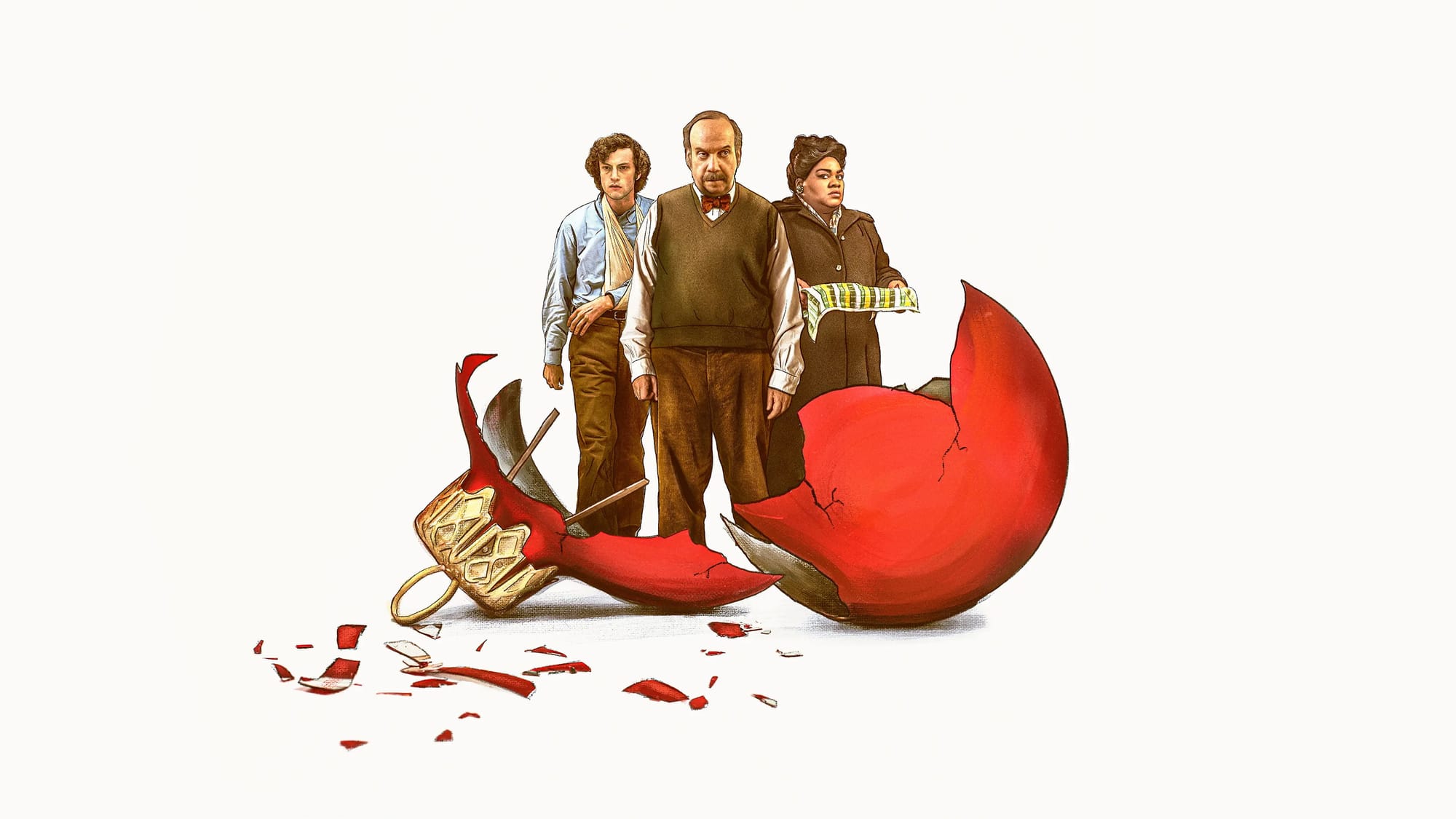
That WGA detour is itself a revealing data point about the structural gap in Hollywood's IP protections. There has been an uptick in copyright infringement accusations in recent years, driven partly by federal appeals courts cautioning lower courts against early dismissal of such claims. The legal environment has shifted — creators are being encouraged, implicitly, to file suit rather than absorb the loss. Stephenson's case joins a growing docket of spec-script-to-produced-film allegations, each one asking essentially the same question: what does Hollywood owe to the writers whose unproduced work circulated through its development ecosystem before a greenlit film emerged?
What the Outcome Would Mean
Payne's documented creative lineage — the Merlusse origin, Hemingson's prep-school biography, the television pilot that became the story's structural spine — provides a competing narrative that the defence will deploy extensively. The Black List's very function, circulating the best unproduced work to the industry's most powerful readers, creates exactly this problem: a script can be genuinely admired, passed on, and then — whether consciously or through the fog of creative absorption — influence the work that follows. Proving the link between reading and copying is the central evidentiary challenge in every case of this type.
But the specific evidence Stephenson appears to have assembled — timestamped emails, the medical conference scene in the 2021 draft, the shared "Under Black" error — moves this beyond the realm of thematic coincidence arguments that courts routinely dispatch. If those exhibits survive scrutiny, they constitute a documented chain of custody for a narrative. That chain is precisely what Hollywood's development process has historically been allowed to leave undocumented.
The industry's relationship to unproduced spec scripts has always been informal by design. Scripts are read, passed around, discussed, admired, and rejected. No log is kept. No receipt is signed. The Black List itself is an act of publicising scripts to exactly the people most positioned to use them. As studios face increasing scrutiny over how creative decisions are made and documented at every level, the Stephenson suit points toward a structural reform that the industry has avoided confronting: a formalised system for logging which scripts were read by which directors before a project entered development.
Whether Stephenson prevails or not, the lawsuit has already done one thing: it has put on the record, in a federal complaint, a detailed argument that the Black List does not just celebrate unproduced scripts — it exposes their authors to a specific and largely unprotected form of creative risk. As the economics of Hollywood IP continue to be tested in courtrooms and rights markets alike, the question of who owns the blueprint for a story — and what evidence must exist to prove it — is becoming the defining legal tension of the industry's current moment.
The case is in its earliest stage. No findings have been made. All allegations remain unproven. But the paper trail, if it holds, may be harder to dismiss than the awards season that preceded it.