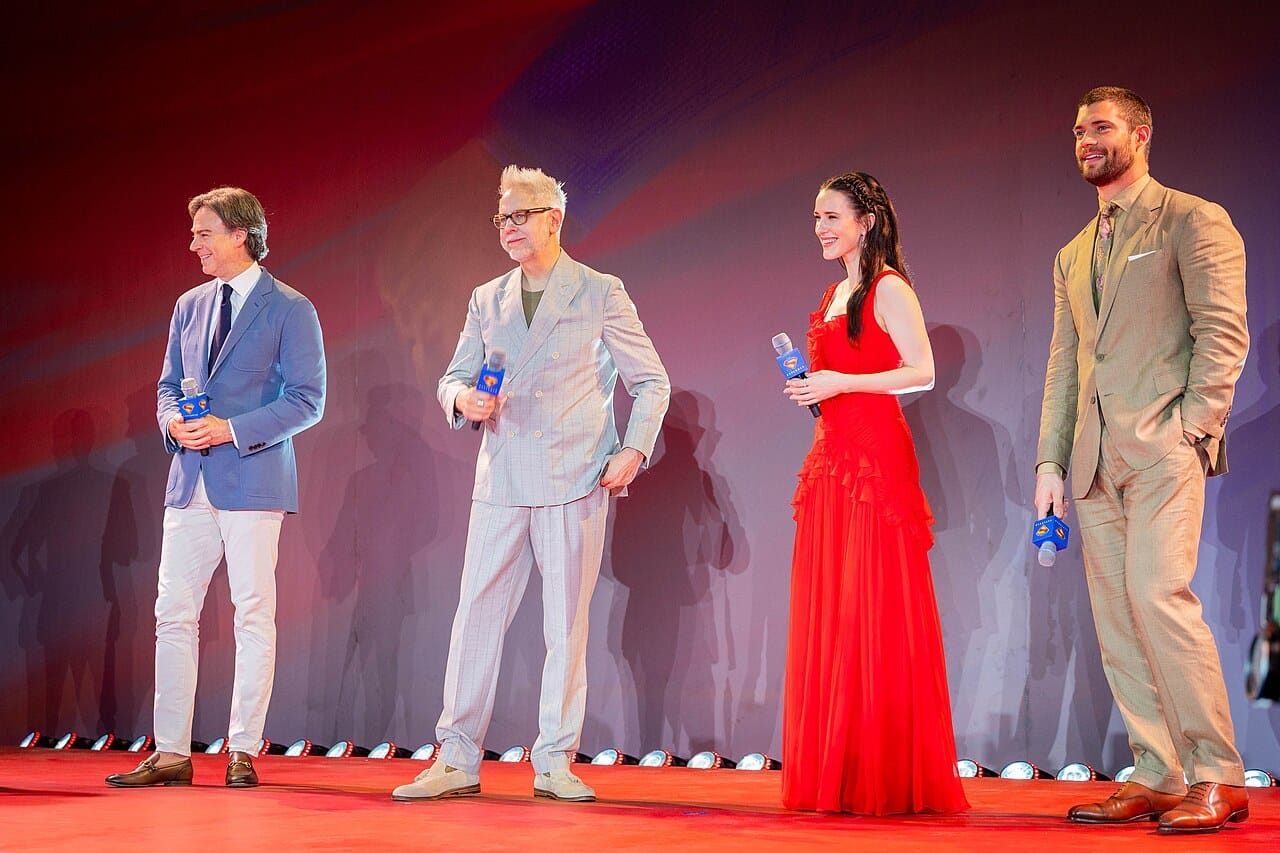
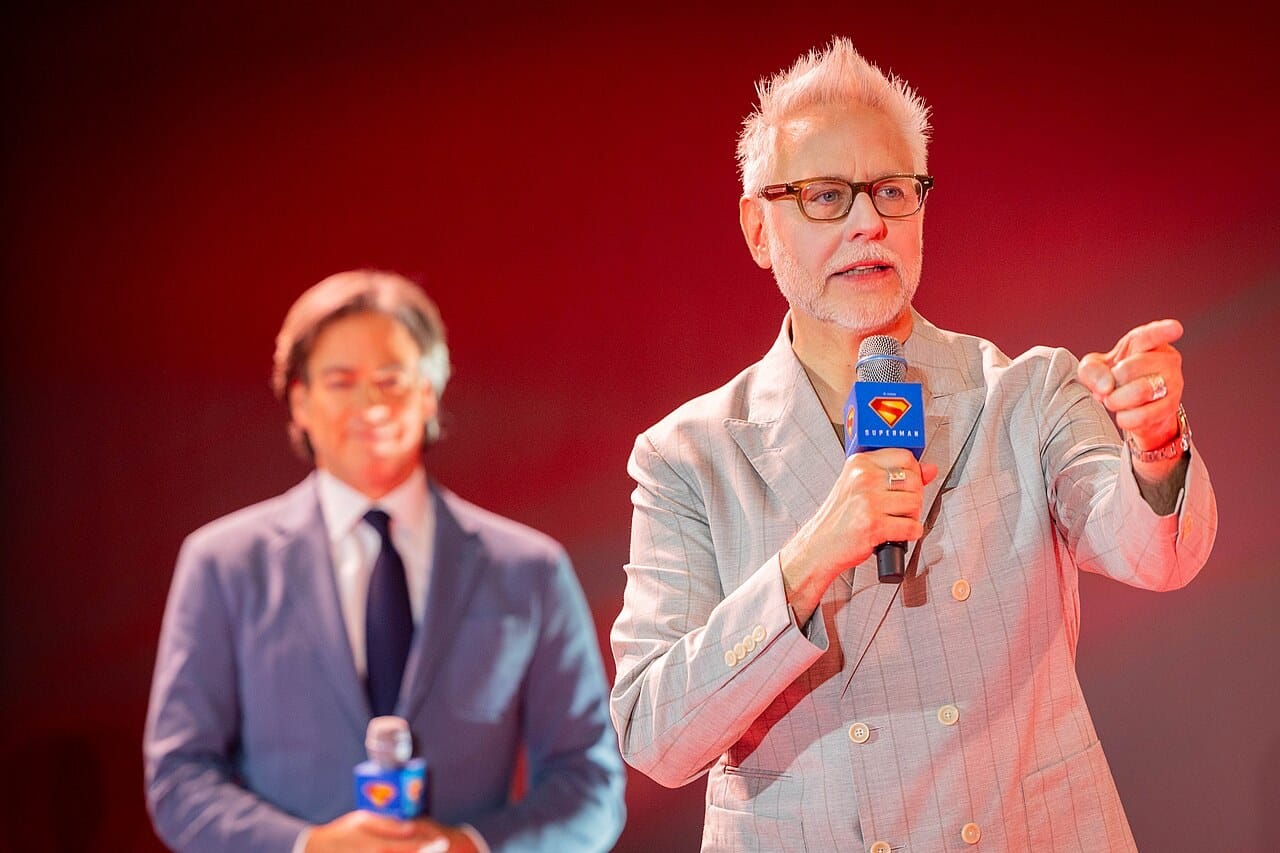
Four years after they were handed the keys to DC with a mandate to build something that could stand next to Marvel, James Gunn and Peter Safran no longer run DC Studios. On Monday, Skydance, the company formed when Paramount's $111 billion acquisition of Warner Bros. Discovery closed in October, announced that the pair are stepping down as co-chairmen and CEOs, effective December 1. Their replacement is Jeremy Latcham, a Marvel Studios veteran who helped launch the Marvel Cinematic Universe and who will now serve as DC's president and chief creative officer.
The official language is gentle: Gunn and Safran will "return full time to creative work", in Variety's words, and Gunn still has a Superman sequel to deliver. The trade's own headline was blunter, using the word "fired". Somewhere between those two framings sits the real question for anyone who has followed the DC Universe since Superman opened in July 2025: is this a course correction, or the start of another fall?
What was announced
The change comes as a surprise largely because of its timing. When the Paramount–Warner Bros. Discovery deal closed last month, Gunn and Safran were named as part of David Ellison's business leadership team at the newly renamed Skydance. Weeks later, they are out of the corner office.
Latcham will lead DC's film, television and animation slate, overseeing the creative pipeline along with production, talent and strategy. Unlike Gunn and Safran, who answered to the top of Warner Bros. Discovery, he will report to Dana Goldberg and Josh Greenstein, co-chairs of the Skydance Motion Picture Group. That reporting line matters. DC Studios was set up in 2022 as a semi-autonomous fiefdom; it now sits inside a larger film group.
The departing pair framed their tenure in terms of what they rebuilt. "Four years ago, we set out to unite DC under one creative vision," Gunn and Safran said in their statement. "In that time, we helped restore 'Superman' to the heart of DC, while opening new doors and telling new stories in film and television with 'Peacemaker,' 'Creature Commandos,' 'Lanterns' and 'Clayface.'" They closed by saying they were "excited to return to what drew us to this job in the first place, which is telling the stories we love, including the next chapter of Clark and Lex's journey in 'Man of Tomorrow.'"
Ellison and co-CEO Ynon Kreiz were equally careful: "We're grateful for their passion, contributions and commitment to this legendary brand."
The scorecard: one hit, one bomb, one modest bet
Judged purely on the box office, the Gunn–Safran era is a short and uneven ledger. Superman, the film that relaunched the shared universe in summer 2025, grossed $618 million worldwide, a result that read as a relative success rather than a triumph. It re-established David Corenswet's Clark Kent and Nicholas Hoult's Lex Luthor, and it was enough to greenlight the sequel.
The second theatrical chapter was a different story. Supergirl, starring Milly Alcock, arrived this summer and, according to Variety's figures, took $126 million against a $170 million production budget, a genuine bomb by any studio standard. We argued in our Supergirl review that the film had more ambition than its reception suggested, but ambition does not show up on a quarterly report.
 Official trailer
Clayface, the R-rated body-horror experiment released this autumn, made $109 million on a $44 million budget. As we noted when we looked at its opening and the mid-budget strategy behind it, it was the kind of smaller, director-driven swing a healthy franchise needs. Modest, but not a disaster. On streaming, Peacemaker and Lanterns extended the brand onto HBO Max, alongside the animated Creature Commandos, which opened the DCU before Superman did.
Put together, that is one solid launch, one expensive failure and a handful of credible television and mid-budget plays in roughly two years of releases. It is not the record of a collapsing studio. It is also not the runaway start a new owner looking for growth would want to inherit.
A familiar pattern of resets
What makes this news land heavily with fans is not one executive change, but the sense of repetition. DC has now restarted its screen strategy three times in little more than a decade.
Zack Snyder's Man of Steel in 2013 began what became known as the DCEU, a darker, more operatic universe that fractured after Justice League in 2017. Walter Hamada then took over DC Films in 2018 and moved away from a tightly connected universe towards standalone films, a period that produced hits such as Joker and The Batman alongside a pipeline that drifted. When Gunn and Safran were appointed by then–Warner Bros. Discovery CEO David Zaslav in 2022, the edict was to fashion a true rival to Marvel: one creative vision, one canon, film and television in lockstep.
Every reset carries a cost. Audiences who invested in one version of these characters are asked to start again, and each restart makes the next one easier to believe in. The DCU was pitched as the end of that cycle. Two years in, the cycle has turned again, even if this time the creative architect is staying in the building.
Who is Jeremy Latcham?
Latcham's resume explains why Skydance chose him. He joined Marvel Studios in 2004 and rose to senior vice president of production and development, working closely with Kevin Feige during the formative years of the MCU. He was associate producer on Iron Man, co-producer on Iron Man 2, and executive producer on The Avengers, Guardians of the Galaxy, Avengers: Age of Ultron and Spider-Man: Homecoming.
That last list contains a twist. Latcham was an executive producer on Guardians of the Galaxy, the film that made Gunn a blockbuster director. Gunn and Safran acknowledged as much: "We've shared a creative history with Jeremy going back to Marvel." After leaving Marvel in 2017, Latcham ran his own company, Latcham Pictures, producing Bad Times at the El Royale and Dungeons & Dragons: Honor Among Thieves, and most recently held an overall deal at Hasbro Entertainment.
In other words, Skydance has not hired an outsider to tear things down. It has hired a producer from the same school, one with deep experience building a shared universe from the ground up, and placed him inside a conventional studio hierarchy. "I've had the privilege to help bring some of the most celebrated superhero stories to life on the big screen, and I'm excited and honored for the opportunity to now lead DC Studios into its next era," Latcham said.
What is at risk
The immediate slate looks secure on paper. Superman: Man of Tomorrow, written and directed by Gunn, is due next summer, and Gunn's own statement confirms he intends to make it. Matt Reeves' The Batman: Part II, starring Robert Pattinson, is set for 2028 and has always operated somewhat apart from the DCU. On television, The People v. Gorilla Grodd, with Skyler Gisondo as Jimmy Olsen and Jimmy Tatro as Grodd, is slated for 2027.
The deeper risk is to the connective tissue. A shared universe depends on someone holding the long plan, the character arcs and casting choices that only pay off years later. With Gunn moving to a purely creative role, it is not yet clear who owns that plan, or whether Skydance wants one at all. Latcham's mandate, as described by Goldberg and Greenstein, is to steer every project "through the prism of the legions of fans who love and champion it", which is a familiar promise from every new regime.
So is this the fall of DC? Not yet. The studio still has its biggest character in active development with the filmmaker who revived him, a Batman sequel with its own momentum, and a new chief who knows how a cinematic universe is built. What it has lost is the thing it most needed: the appearance of stability. Man of Tomorrow was always going to be a test of the DCU. Now it is also a test of whether a franchise can change hands mid-sentence and keep its story going.