The number is out, and it is neither a vindication nor a verdict. Ebenezer (2026), Paramount's horror-inflected adaptation of Charles Dickens' A Christmas Carol directed by Ti West and starring Johnny Depp as Scrooge, opened to roughly $20 million domestically after pulling $6.7 million on opening day from 3,535 locations. Projections put the global tally between $38 million and $40 million once international receipts are counted. For a film produced for somewhere in the range of $38–40 million, that math is tight. For the conversation around Depp's industry standing, it is considerably more complicated.
 Official trailer
The last time Depp had a wide domestic release, it was 2018's Fantastic Beasts: The Crimes of Grindelwald, which opened to $62.2 million and went on to earn $655 million worldwide. That was a franchise entry in the Wizarding World, one of the most commercially reliable properties in modern cinema. Ebenezer is an original-ish production built on a 183-year-old novella — a riskier proposition by almost every metric. By that comparison, the new film earns less than half its predecessor's debut, a figure that rivals were already flagging as the ceiling rather than the floor. The question of whether $20 million constitutes a comeback depends entirely on what baseline you're measuring against.
In the intervening eight years, Depp worked outside the major studio system — appearing in Minamata (2020) and the French production Jeanne du Barry (2023) — but no major wide release existed on his résumé. Ebenezer marks a deliberate re-entry engineered by Paramount with a franchise-adjacent pedigree: the studio had been building toward this moment since Depp's surprise appearance at San Diego Comic-Con, where his method-actor entrance reportedly ignited the room. The machinery was set up for a comeback narrative. The opening weekend supplied a modest, qualified data point in its favor — not the exclamation mark the studio wanted, but not the humiliation skeptics may have anticipated.
West Brings the Gothic, Stops Short of the Grotesque
Ti West arriving at a Dickens adaptation is not as strange a pairing as it might appear. West, whose reputation was forged across X (2022), Pearl (2022), and MaXXXine (2024), has spoken about being a lifelong devotee of the Dickens tale, and the horror community has always known that A Christmas Carol is structurally a ghost story. The screenplay by Nathaniel Halpern — who built his reputation on cerebral genre television — frames Scrooge's encounters with the three spirits through a genuinely unsettling Gothic lens, particularly during the Ghost of Christmas Yet to Come sequence, which reviewers across the board identified as the film's most formally daring passage.

The problem, as a split critical consensus makes clear, is that the film's PG-13 rating and Dickens' own insistently redemptive arc act as governors on West's instincts. Ebenezer arrives styled like a Hammer production — evocative production design, gas-lit Victorian interiors, shadow-heavy cinematography — but it is unwilling to follow that aesthetic to its logical conclusion. Variety described West as "the indie-rooted genre classicist" responsible for the horror styling, while noting the film "stops some way short of being an outright horror film." The result is a movie that appeals to two audiences without fully satisfying either: horror fans expecting dread, and holiday audiences expecting warmth. It offers approximations of both.
The ensemble assembled around Depp is a genuine argument for the project's ambition. Ian McKellen plays Jacob Marley. Andrea Riseborough is the Ghost of Christmas Past. Tramell Tillman — a name that carries real television cultural capital following Severance — appears as the Ghost of Christmas Present. Rupert Grint, Daisy Ridley, and Sam Claflin round out a cast that skews British and that signals the film's production base: the picture shot in Dublin and London in early 2026. This is not a film that cut corners on casting.
The Critical Fracture and the Audience Override
Critical reception landed where pre-release tracking suggested it might: in genuinely ambivalent territory. On Rotten Tomatoes, 52% of critics' reviews are positive, with an average rating of 5.5 out of 10; Metacritic places it at 46 out of 100, indicating "mixed or average" reviews. The Rotten Tomatoes consensus, which praises the production design and Depp's energy while faulting the film for playing it safe, accurately captures the fault line: this is a film that is technically competent and aesthetically committed, but that generates no genuine surprise.
What the critical aggregate cannot capture — and what Paramount will be watching very carefully in the coming weeks — is the audience response. CinemaScore gave the film an A-, while PostTrak audiences gave it 4.5 out of five stars, with 63% saying they would definitely recommend it. An A- CinemaScore for a film sitting at 52% on the Tomatometer is a notable gap. It suggests that whatever critics found reductive or dramatically inert, general audiences experienced as satisfying. That gap — between critical consensus and crowd enthusiasm — is the precise terrain where Ebenezer's future will be decided. Films with strong word-of-mouth and holiday-friendly themes can compound over weeks. The audience demographic skewed 52% female, with women over 25 as the largest single segment at 41% — a base that tends to revisit films it loves and to recommend them actively.
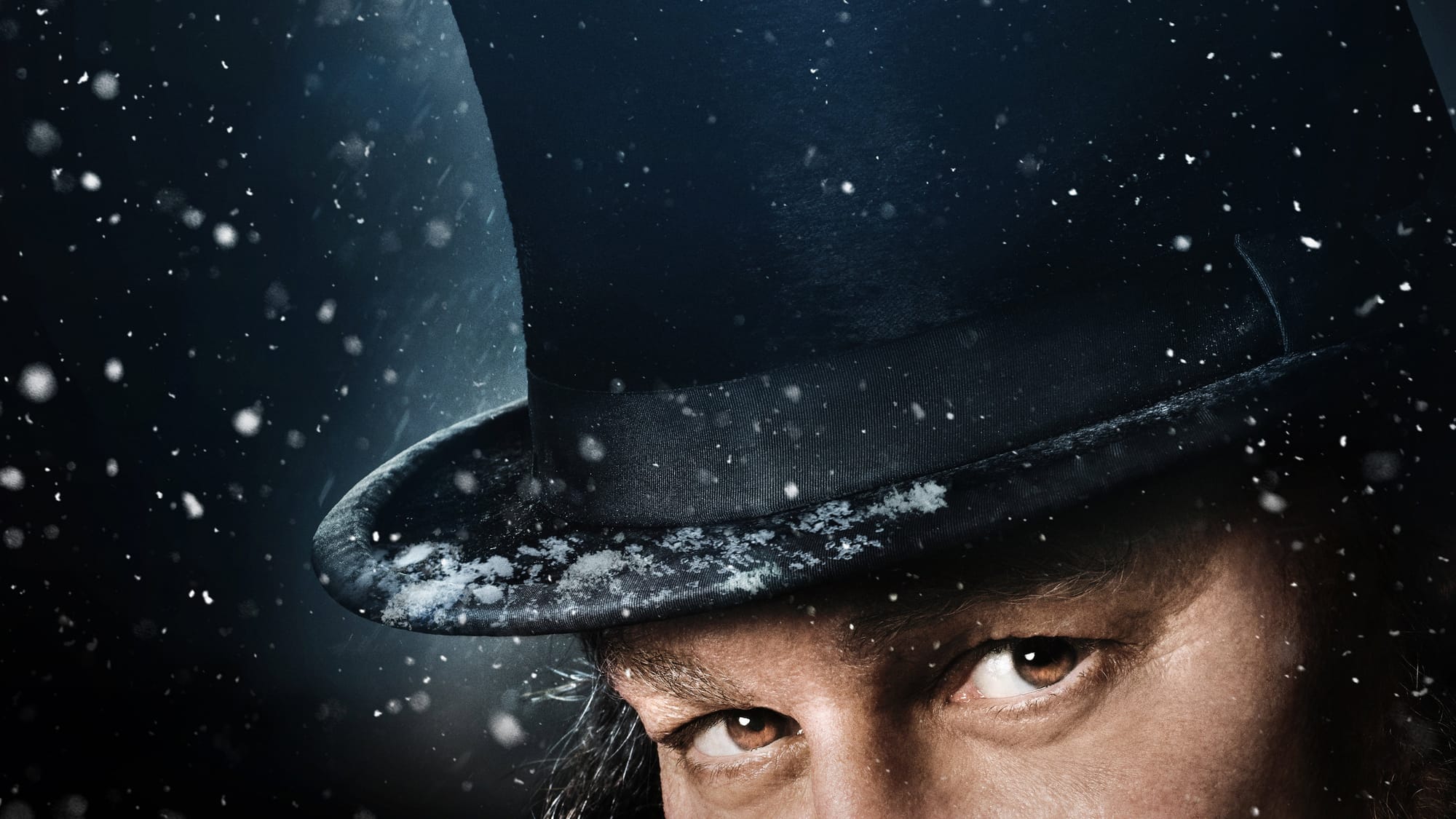
The demographic profile also points to something worth naming directly: Depp's audience, the fans who followed him across the tabloid years, the trial coverage, and the subsequent reclamation narrative, showed up. The goodwill around his return is real. What remains genuinely unresolved is whether it is transferable — whether it attaches to him or to the specific emotional context of a comeback story. If those audiences return for his next film, whatever it is, the data point becomes meaningful. If Ebenezer performs like a cause rather than a preference, its legs will tell that story faster than any opening weekend number can.
Modest Is Not the Same as Marginal
It is tempting, and not entirely wrong, to contextualize $20 million as a disappointment for a Depp vehicle. His peak franchise work — the Pirates of the Caribbean series, the Tim Burton collaborations, even ensemble entries like Murder on the Orient Express (2017), which opened to $28.7 million — existed in a different commercial register. But those were different films for a different version of his career. By comparison to Depp's non-sequel, non-franchise output, Ebenezer's opening is relatively solid — his 2015 vehicle Mortdecai opened to $4.2 million domestically, and even with the franchise halo of Fantastic Beasts stripped away, Ebenezer's performance holds up as a legitimate mid-budget opener.
What Paramount needed from this film was not a blockbuster; it needed a data point that justified further investment in Depp's presence at the studio level. With a production budget reported at over $40 million and theater owners keeping roughly half of ticket sales, the domestic number alone leaves the film in uncertain profitability territory without strong international performance and home video revenue. The global $38–40 million opening helps, but legs — the multiplier produced by word-of-mouth over the remaining holiday corridor — are what turns a film like this from a qualified opening into a genuine argument for Depp's commercial viability.
The more structurally interesting parallel here may be the broader state of mid-budget prestige films with star-driven concepts. This is exactly the kind of production that the streaming era was supposed to have made impossible — a studio betting $40 million on a character actor, a genre director, and a 19th-century ghost story, with a theatrical release in mid-November. That it exists, and that it performed as modestly but authentically as it did, is its own counterargument to the thesis that theatrical can only support event cinema. As we've tracked in related holiday box office contests — including Godzilla Minus Zero's second-weekend battle against Ebenezer — mid-budget theatrical remains contested but viable ground.
West's film is not the definitive statement anyone wanted it to be — not a career resurrection, not a cautionary tale, not a genre breakthrough. It is a carefully constructed, atmospherically accomplished, dramatically cautious piece of commercial filmmaking that arrives at a moment when every piece of Johnny Depp's box office data is being read like a financial instrument. That the instrument returned a modest positive signal is, against the gravity of the last eight years, something. What it means for Depp's sustained bankability will depend on a film he hasn't made yet. This one bought him the right to make it. For now, that is the more important number.