Two prizes at two of Europe's most closely watched festivals, separated by five months and the full arc of a festival year. That is the 2026 record of I See Buildings Fall Like Lightning, Clio Barnard's fifth feature and the most decorated British film of the circuit so far. On 24 October, the Rome Film Fest awarded it Best Film in the Progressive Cinema competition — the festival's main competitive section — confirming what Cannes audiences had already voted with their feet back in May.
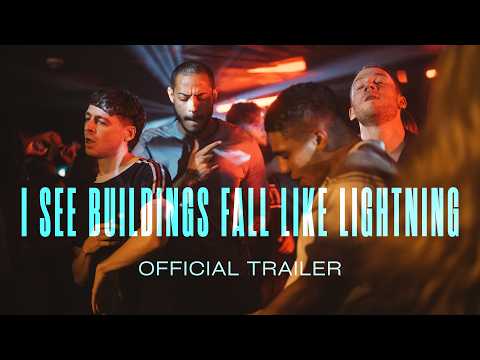 Official trailer
The film arrived in Rome after world-premiering at Cannes' Directors' Fortnight on 20 May 2026. It won the People's Choice Award at that independent Cannes sidebar, which wraps annually after the main festival's closing weekend. That prize is not a minor honour: the People's Choice Award launched in 2024 and awards the winning filmmaker a €7,500 prize supported by the Fondation Chantal Akerman. More to the point, it is voted on entirely by the audiences who attended the screenings — a democratic signal of how the film lands in a room, rather than how it reads on a screener. The Rome jury's verdict, delivered five months later by a panel chaired by Polish director Jan Komasa, doubles down on that signal with institutional authority.
What the Film Is
Barnard's Birmingham-set drama centres on a group of childhood friends on the cusp of their 30th birthdays who are forced to confront a life where their hopes and dreams haven't materialised. Adapted from Keiran Goddard's novel by screenwriter Enda Walsh, it follows five childhood friends from Birmingham — one of them, Rian, having left the city and made his fortune in London — whose return brings secrets within the group back to the surface. The five — Patrick, Shiv, Rian, Oli and Conor — came up together in a tower block in Birmingham and now find themselves on increasingly divergent, and for most of them increasingly constrained, paths to the future.
The film features an ensemble cast led by Anthony Boyle, Joe Cole, Jay Lycurgo, Daryl McCormack, and Lola Petticrew. At Rome, Boyle shared the Best Actor prize for his role in the film alongside Paolo Pierobon, who was recognised for the Italian noir drama Brianza. It is a joint award, but it matters: Boyle carries much of the film's emotional infrastructure, playing Patrick, the friend whose choices anchor the group's disintegration.
Barnard depicts the five as a "community" of sorts, but one ultimately broken by the UK's dire prospects for working-class life in 2026, including its current housing crisis. The film is, at its structural core, a reckoning with what English urban planning promised and failed to deliver. English cities — in the south, but especially in the north — are typically landscapes of grey, unprepossessing tower blocks, largely constructed at the end of the 1960s, and Barnard cannily invokes them as emblems of a time of particular hope, social progress and community. The title itself carries that same double register: buildings as shelter, buildings as the structures of aspiration — and lightning as the indifferent force that undoes both.

The Rome Competition in Full
Rome Film Fest ran from October 13 to 25, with its Progressive Cinema international competition comprising 18 titles, including Barnard's film and US filmmaker Tim Blake Nelson's The Life and Deaths of Wilson Shedd. The top prize in the Progressive Cinema competition went to I See Buildings Fall Like Lightning by Clio Barnard, named Best Film by a jury chaired by Polish director Jan Komasa. The Jury Grand Prix went to Tim Blake Nelson for The Life and Deaths of Wilson Shedd, while Best Screenplay was awarded to Abia Castillo, Diego Rabasa, and Diego Luna for Ceniza en la boca.
Best Director went to Rafiki Fariala for Congo Boy, which also bagged an Audience Award shared with Kasia Smutniak's documentary Mustang. The Best First Film award was handed to Lisa Forslund's Clementine Orange, with a special mention going to Lorenzo Ferro and Lucas A. Vignale's Argentinian film The River Train. Two joint awards and several references to the youth protests currently taking place in various European countries distinguished the awards ceremony hosted by the 21st edition of Rome Film Fest, held at the Auditorium Parco della Musica. The edition recorded close to 120,000 admissions and hosted 527 screenings across four Auditorium screens and 13 cinemas across the city.
The Barnard Lineage
The victory is more legible when read against the shape of Barnard's career. The film is Barnard's fifth feature, after Ali & Ava played Directors' Fortnight in 2021 and The Selfish Giant won the Europa Cinemas Label in 2013. That sophomore feature launched at Directors' Fortnight at Cannes and won the British Film of the Year at the London Critics Circle Film Awards, along with a host of other festival prizes. The new film also marks the UK filmmaker's return to feature films after a foray into television, with Apple TV+'s The Essex Serpent and BBC's Sherwood.
Barnard is known for filming Bradford and the North of England, as well as for her deeply human characters and the limitations they face. With I See Buildings Fall Like Lightning, she heads to Birmingham for the first time. That geographical shift is also a thematic one. Her Bradford films — The Arbor (2010), The Selfish Giant (2013), Ali & Ava (2021) — were rooted in a city she knew from the inside. Birmingham is more exposed territory, which may account for why the adaptation leans so heavily on Walsh's dialogue: a playwright's ear compensating for a director still calibrating her distance. Critics have likened Barnard's realist yet lyrical work to that of Ken Loach — a comparison that is both accurate and limiting. Where Loach's social realism tends toward the declarative, Barnard's instinct is for the quietly devastated, the private grief that sits inside collective failure.

This is Clio Barnard's first feature in five years. Five years is long enough for an audience to wonder whether a director has found their rhythm or lost it. The Cannes audience answered that question in May. Jan Komasa's jury answered it again in October. What is striking is not just that the film won, but that it won twice by entirely different mechanisms — popular vote and jury deliberation — in competitions with different mandates, on opposite sides of the summer. That is not festival luck. That is a film doing something that genuinely works across the full range of people who watch it.
What Comes Next
Curzon distributes the film in the UK and Ireland. A French release is scheduled for December 16, 2026, distributed by Pyramide. The broader international rollout will now carry the weight of two major festival endorsements, which changes the conversation with exhibitors in territories where Barnard's name does not yet open doors by itself.
There is also a question the Rome result raises about the festival circuit more broadly. The Progressive Cinema section — with its name deliberately signalling political orientation — is not a neutral aesthetic competition. It tends to attract films that foreground class, geography, and systemic constraint. That Barnard's film swept the top prize in such a section, while also winning a populist audience vote at Cannes months before, suggests something rarer than critical correctness: genuine reach. The film operates in the idiom of British social realism without being imprisoned by it. It has the emotional temperature of something that matters to the people who recognise themselves in it — and enough formal control to matter to the people who don't.
Whether the awards translate into box-office traction in the UK — where mid-budget prestige films have faced a punishing theatrical environment in 2026 — remains the harder question. Festival prizes, as the year has repeatedly demonstrated, do not automatically convert into viable theatrical runs. But I See Buildings Fall Like Lightning has now done something more durable: it has arrived at audiences in Cannes and Rome and moved both of them, separately, on their own terms. That double verdict is Clio Barnard's strongest claim yet to the front rank of working European directors. It is also, with this film's political temperature and the protests that marked Rome's closing ceremony, the right film at the right moment — which is not something the festival calendar manufactures on purpose.
For a broader picture of how 2026's festival season has rewarded uncompromising political cinema elsewhere on the circuit, see Kynari's coverage of Loznitsa's Imperium taking the top prize at the BFI London Film Festival's 70th edition.