The announcement arrived on November 1, 2026, alongside a teaser visual of two sisters in the back seat of a car with a guitar case between them. Bocchi the Rock! The Movie: Starry Footprints was officially announced for a 2027 theatrical premiere, with its focus placed squarely on Seika Ijichi, the older sister of drummer Nijika Ijichi. Nothing in that image features Hitori Gotoh. That absence is the whole point.
 Official trailer
When a beloved anime franchise announces a theatrical release, the reflexive assumption is a compilation film — recycled footage, reorganized, sold back to devoted fans who already own the Blu-rays. Following the first season's success, Bocchi the Rock! (2022) received two anime feature-length films that compiled the events of the series. Those worked. The two films together earned 1.23 billion yen (approximately $8.3 million USD) on 817,000 admissions at the Japanese box office. Bocchi the Rock! Re:, the first compilation film, opened in Japan and ranked at number one at the Japanese box office in its debut weekend, selling 140,000 tickets and earning over 218 million yen in its first three days. The audience had proven it would show up. CloverWorks could have done it again. Instead, they chose something harder.
Bocchi the Rock! The Movie: Starry Footprints is an original theatrical prequel — not a recap, not a bridge episode dressed up with a theatrical budget. The film adapts "Hoshi ni Tamukeru Ai no Hana," a special story from the end of the manga's fifth volume that serves as a prologue focused entirely around Nijika Ijichi's older sister Seika. Set before the formation of Kessoku Band, the film sheds light on Seika and Nijika's relationship and the events that led to the establishment of STARRY, the live music venue Seika manages. To anyone who watched the television series, STARRY is furniture — the basement stage where the band plays, Seika's domain, the ambient fact of the story. This film proposes that the furniture has a soul worth examining at feature length.
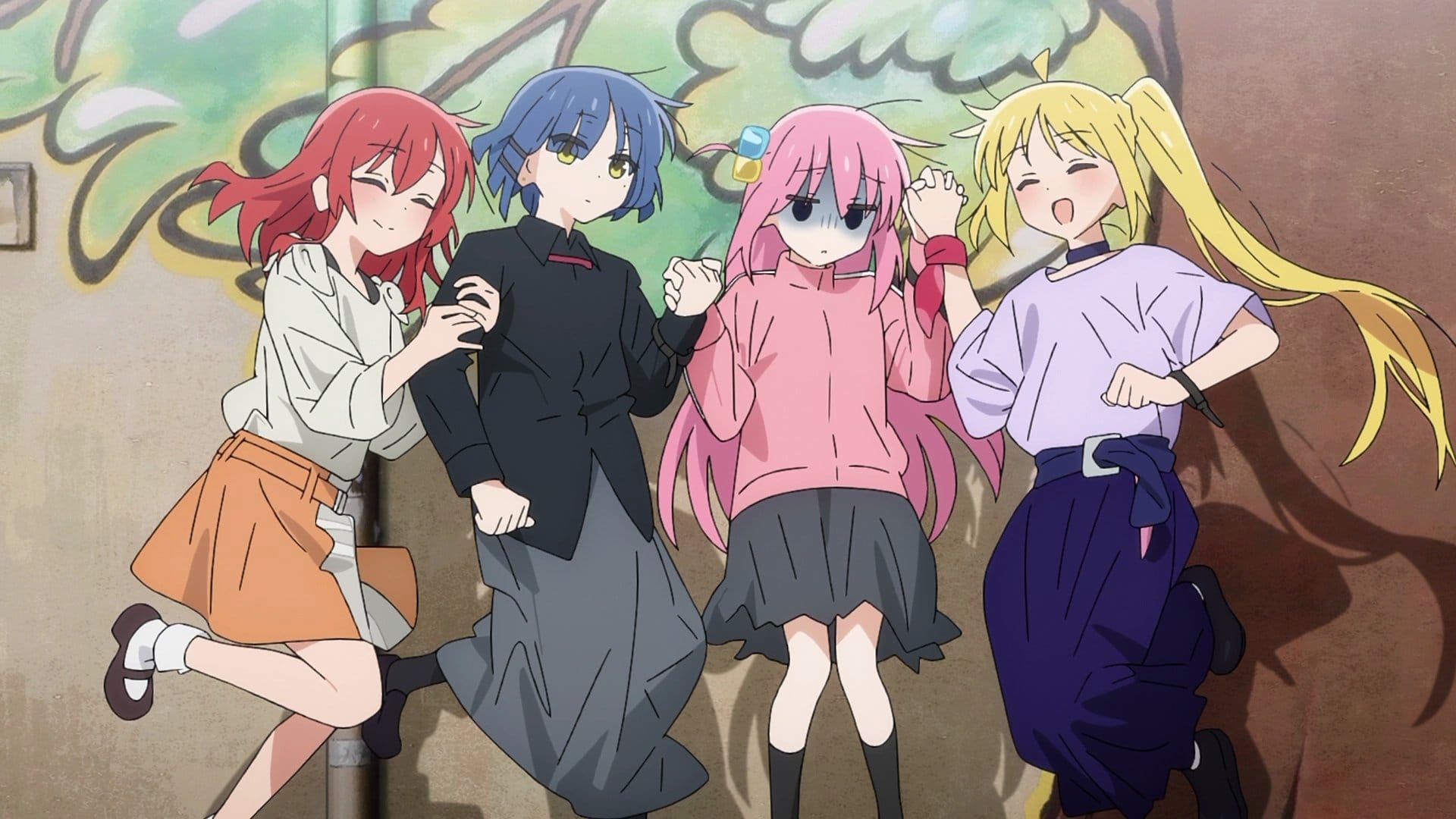
The character logic supports that ambition. After their mother's death, Seika aims to fulfil her mother's wish for her to reconcile with Nijika. Seeing Nijika's passion for music, she quits her band and works for eight years to open a live house. That is a compressed tragedy — an eight-year arc of sacrifice, sibling estrangement, and deferred grief — summarized in the television series as backstory and never dramatized. The teaser highlights Nijika and Seika sitting side by side with tagline copy reading, "This is the story of a sisters' dream beginning from a 'farewell' prior to the formation of Kessoku Band," previewing the full emotional architecture of that period. The TV series gave viewers a window into who the sisters are now. The film will show who they became and what it cost.
The production staff assembled for this is not a reduced unit running out the clock on a franchise. Shin Wakabayashi directs at CloverWorks, while Erika Yoshida writes the screenplay and Yukiko Horiguchi designs the characters. Yoshida wrote the original series. Horiguchi — whose credits include K-ON! — returning for character design on a film centered on characters she originally defined is a signal about the seriousness of the project's intentions. The main cast confirms Maaya Uchida as Seika Ijichi and Sayumi Suzushiro as Nijika, meaning the vocal performances that established these characters will carry the dramatic weight of dramatizing who they were before the story the audience knows.
What makes the structural choice notable is the timing. Season 2 production continues alongside the film, with the production promising more "Bocchi time." Season 2 animation producer Shota Umehara confirmed that "Season 2 is well underway, with the scripts and storyboards nearing completion and animation production also progressing." That means CloverWorks is simultaneously producing a theatrical prequel focused on secondary characters and a full television season centered on the protagonist — two separate narrative tracks requiring two separate creative commitments. That is not how a studio manages a franchise it is winding down. It is how a studio manages a franchise it believes has structural depth left to mine.
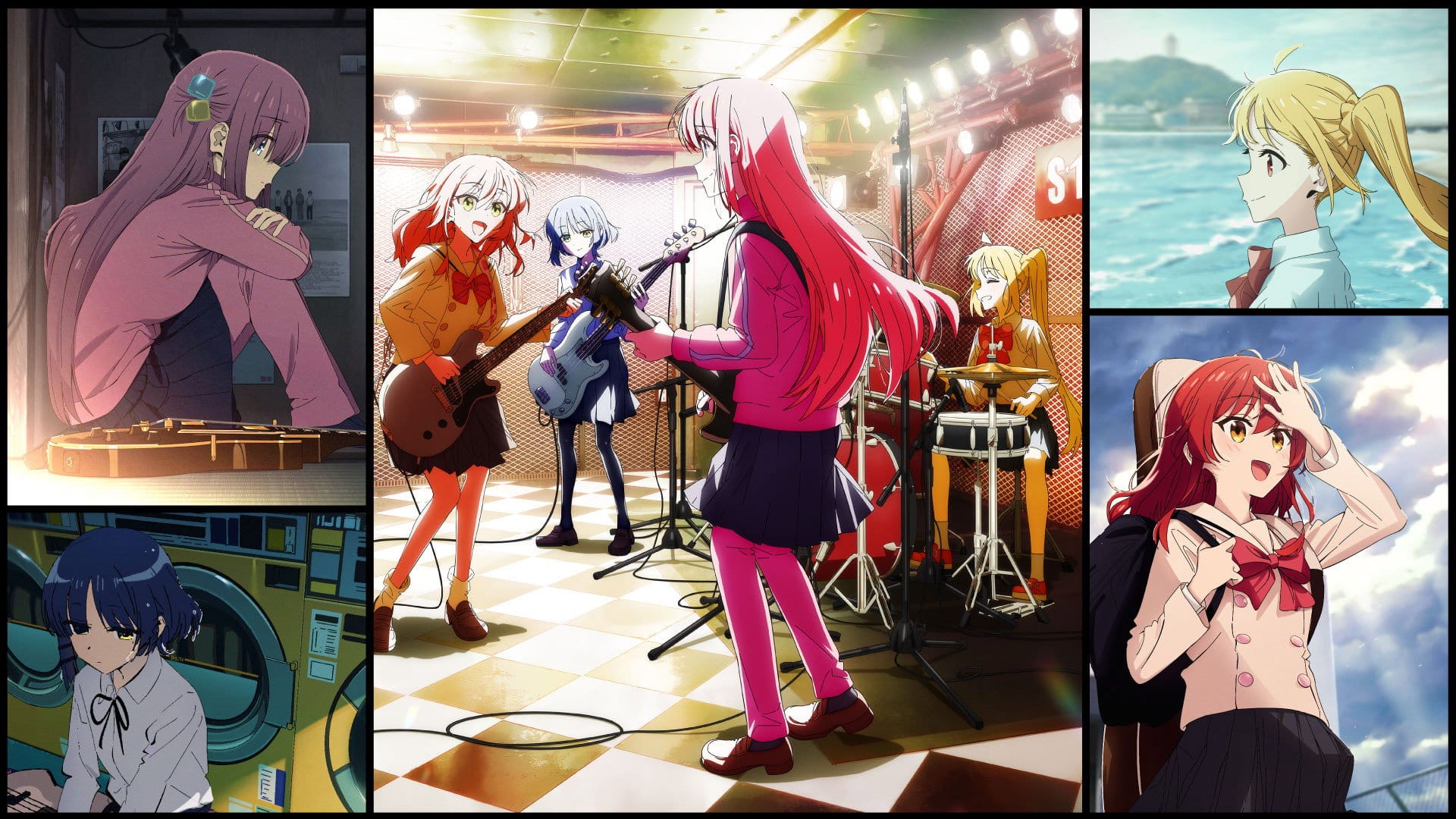
Season 2 was first announced at the "We Will B" concert in Tokyo on February 15, 2025, and has been in production since. Yūsuke Yamamoto, who served as assistant director for the first season, takes over as director for Season 2 at CloverWorks. The prequel film, then, runs parallel to Season 2 under a different director — Wakabayashi — with a deliberately different focal point. The franchise is not being managed as a single linear product. It is being expanded laterally, with different entry points drawing different emotional responses from an audience that already knows how the main story resolves.
This is worth distinguishing from the conventional anime theatrical model. The compilation films for Bocchi the Rock! were commercially shrewd but narratively inert — they retold Season 1 for audiences who wanted to relive it on a large screen, with some minor new animation and original musical sequences added to justify the theatrical presentation. They worked because despite its initially quiet release, Bocchi the Rock! ended up being one of the biggest critical and financial hits of 2022, generating an audience devoted enough to pay for content they had already consumed. Starry Footprints is asking that same audience to invest in a story they have never seen, centered on characters they care about only adjacently, set in a time period that predates everything they watched. That is a harder pitch. It is also, structurally, the more interesting one.
The closest analogue in anime is not the compilation film tradition but the franchise-expanding prequel — the theatrical work that uses the goodwill of a successful series to fund stories the television format couldn't accommodate. Those films succeed when the source material supports them and fail when they expose the absence of anything left to say. The prequel reportedly focuses on a story from a special chapter in the manga's fifth volume, which means the source material exists and was always there, waiting for the right format. A twenty-minute OVA would have flattened it. A compilation film couldn't contain it. A theatrical prequel is the only format that justifies the scope of what that chapter actually dramatizes — an eight-year separation, a mother's death, the construction of a live house as an act of love and atonement.
CloverWorks has been navigating a complicated few years in terms of franchise management, as covered in Kynari's analysis of the studio's theatrical anthology gambit with Grotesqqque. Starry Footprints represents a different kind of risk: not original IP but subordinate characters from an established franchise, elevated to full theatrical treatment ahead of Season 2's release. The film positions the Ijichi sisters as the narrative architecture beneath Kessoku Band — the foundation the main story was always built on. If it works, it will deepen the emotional stakes of Season 2 before a single episode airs. If it doesn't, it will read as a miscalculation of what the audience actually wanted. That tension is what makes it worth watching closely. This is a franchise making a formal argument that it has more story to tell — and betting a theatrical release on the claim.