Tetsuya Chiba died on October 22, 2026, in a Tokyo hospital, killed by myelodysplastic syndrome — a cancer of the bone marrow — at the age of 87. Anime News Network and The Japan Times both confirmed the death when Kodansha made its public statement on October 27 — five days after the fact. That gap is not unusual in Japanese publishing culture, where families exercise tight control over grief, and where a private funeral is considered far more dignified than a media event. But the gap still registers as a kind of suspended breath. The industry held still for nearly a week before it was ready to say the word aloud.
 Official trailer
Chiba's wife, Yukiko, served as chief mourner at the private family funeral, and the family declined separate condolence visits or money. Shogakukan, which published his later work, announced the death through its manga portal Big Comic BROS.NET on the same day as Kodansha. Both statements leaned on the same register: seventy years at the vanguard of the medium, a warm perspective on humanity, a desire for peace embedded in every page. These are phrases that could apply to a dozen postwar artists. What they cannot quite capture is the specific technical achievement of what Chiba did inside a boxing ring, panel by panel, for five years between 1968 and 1973.
The Ring as Literary Space
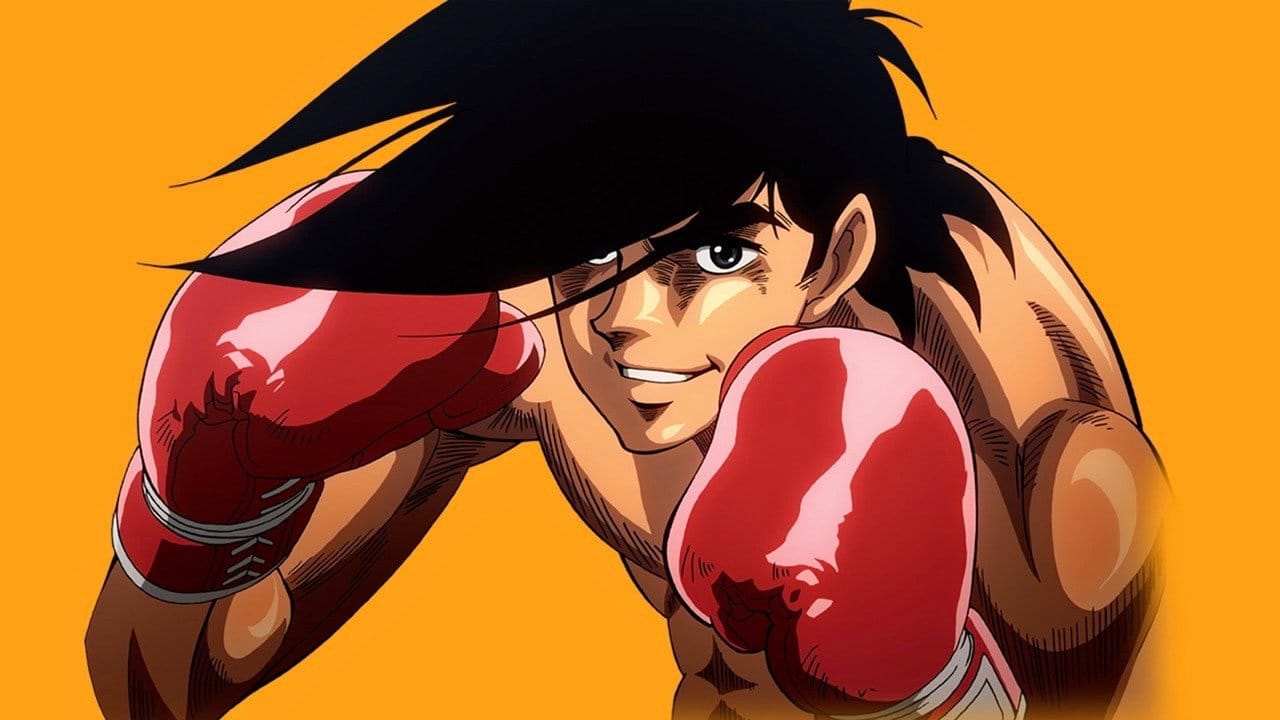
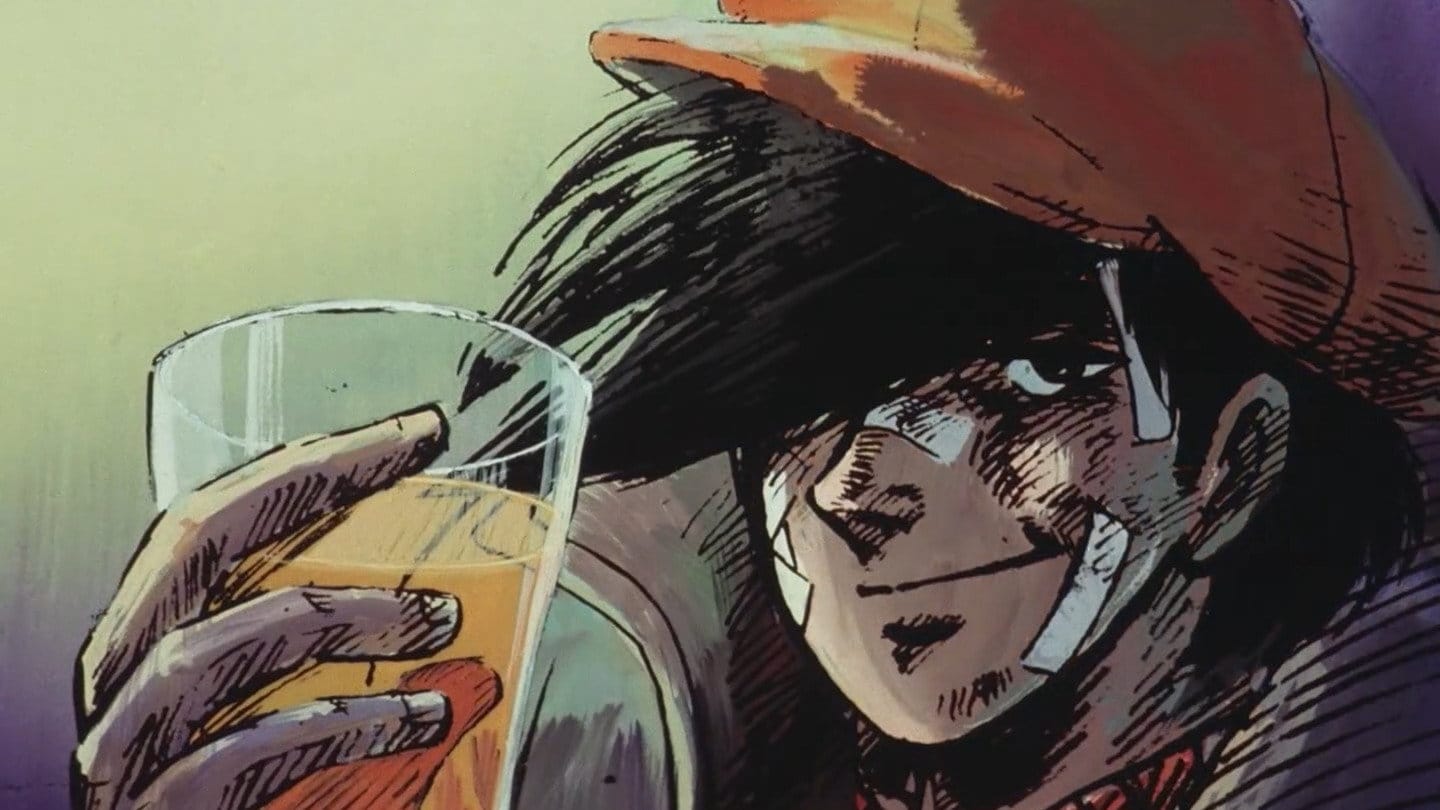
Ashita no Joe (1968) — written by Asao Takamori and illustrated by Chiba — was serialized in Kodansha's Weekly Shōnen Magazine from January 1, 1968, to May 13, 1973, and collected into twenty tankōbon volumes. Its protagonist is Joe Yabuki, a juvenile delinquent who discovers boxing in a reformatory and fights his way out of the Tokyo slums. In synopsis, the premise sounds like a dozen other shōnen arcs. What made it irreducible was Chiba's visual intelligence. He did not draw boxing matches as action sequences. He drew them as psychological confrontations — bodies torqued under stress, faces distorted by impact into something between agony and ecstasy, sweat rendered not as a sheen but as evidence of metabolic collapse.
Before Chiba, sports manga relied heavily on superhuman feats and moral binaries simple enough to resolve by the final bell. Chiba introduced protagonists who deteriorated — physically, emotionally, existentially — under the weight of competition. Joe does not triumph in any tidy sense. He burns. The series is structured around an accelerating consumption: the longer Joe boxes, the more of himself he spends, until the final panel leaves him emptied out, white as ash, and smiling. Whether he is alive or dead in that final image has been debated for five decades. Chiba drew the ending at the last minute; he has never resolved the ambiguity directly, and Takamori's 1979 biography stated that Joe died while Chiba has consistently refused to confirm it. The ending is the work. It is the point at which sports manga became something more serious than sports.
A Funeral for a Fictional Man
The most cited measure of Ashita no Joe's cultural penetration is an event from 1970. When Joe's rival, Toru Rikiishi, died in the narrative, the social response crossed the boundary between fiction and ritual. A full Buddhist funeral service was held — with incense, sutras, a portrait of the character at the altar, and a posthumous name conferred by a Buddhist priest — for a man who had only ever existed in ink. The event was staged by countercultural poet and avant-garde theater director Shuji Terayama, who used the eulogy as political theater, reading Rikiishi as Japan's radical left crushed by the establishment. Seven hundred people attended on a weekday afternoon: high schoolers, office workers, civil servants. The demographic spread was the point. Ashita no Joe did not belong to a single class of reader. It belonged to postwar Japan as a condition.
That resonance was inseparable from Chiba's visual language. The working-class texture of the Doya-chō slums, the specific weight of Joe's exhaustion, the way Chiba rendered a corner man's face while watching his fighter absorb punishment — these were not generic signifiers of hardship. They were observed, detailed, and precisely weighted. Chiba had grown up in wartime, spending much of his early childhood in what is now northeastern China after his family relocated there, and returning to Japan only in 1946. The harrowing experiences of those years, and the violence he witnessed at the war's close, filtered into his work as an anti-war sensibility and a sustained attention to people enduring things beyond their control.
Seventy Years, One Continuous Argument
Chiba debuted professionally in 1956, at seventeen, while still in high school — with a rental manga volume, the format that predated the mass-market magazine industry. He began serializing in magazines in 1958, initially in shōjo publications, before pivoting to shōnen in the early 1960s. By the time Ashita no Joe launched, he had already established range: he could draw for girls with the same fluency he brought to boys' stories, and that cross-genre training showed in Joe's emotional register, which was far more interior than contemporary shōnen norms permitted.
After Ashita no Joe concluded in 1973, Chiba continued building a catalogue of sports-themed works that constituted, in aggregate, the founding library of the genre. Ore wa Teppei took on kendo; Notari Matsutarō moved into sumo; Ashita Tenki ni Naare put a teenage golfer at its centre. In each case the formal argument was the same: sports as the arena where character is revealed under maximum duress, where class and body and will collide. He was described by critics as "the biggest contributor to the rise of sports manga" — a descriptor that undersells it, because what Chiba contributed was not just popularity but legitimacy. He made the genre something that could be taken seriously.
In 1980, Kodansha formalized that acknowledgment by establishing the Tetsuya Chiba Award — a newcomer prize for seinen manga — with Chiba personally participating in final judging for 46 years, reading manuscripts and guiding emerging creators through the craft. In 2022, he was nominated to the Japan Art Academy as one of its first two manga artists, alongside Yoshiharu Tsuge. He was also chair of the Japan Cartoonists Association. Each of these institutions represents the same argument made in a different register: that manga is not a lesser form, that its practitioners deserve the same structural recognition given to novelists and film directors and painters.
The Order of Culture and What It Meant
In October 2024, the Japanese government confirmed that argument decisively. Chiba became the first manga creator in history to receive the Order of Culture — an honor awarded to those who have made outstanding contributions to the development of Japanese culture. In a blog post responding to the announcement, Chiba stated that he felt a great sense of responsibility as a representative of the industry, and that he hoped the creative work of all manga creators had been recognized with the award. The humility was characteristic. He was 85 at the time of the honor, had already undergone heart surgery in January 2022, and had noted eye surgery in 2024. He understood what the recognition meant not for himself but for a medium that had spent decades fighting for legitimacy in institutional Japan.
Two years later he was gone. Ashita no Joe: Fighting for Tomorrow had received its first official English-language release in December 2024, meaning the work finally crossed into an Anglophone market in the same year its creator received the nation's highest cultural honor — a coincidence of timing so perfect it reads like a closing argument. His autobiographical essay manga Hinemosu Notari Nikki, which had been running in Big Comic since December 2015, was placed on hiatus on September 25 due to poor health. He was still working. He kept working until he couldn't.
This is, in its own way, the most characteristic thing about Tetsuya Chiba. Not the awards or the institutional recognition or the five-day announcement gap — but the seventy years of consecutive effort, from a seventeen-year-old in high school drawing rental manga in 1956 to an eighty-seven-year-old putting his autobiographical strip on hiatus a month before he died. The line between those two points is not a career. It is a vocation. The boxing ring he built in ink, panel by panel, was never just about boxing. It was about what it costs to keep going. Japanese creative industries have grown accustomed to these delayed announcements, each gap its own measure of private grief. The loss of animators and artists who built the medium's foundations is accumulating faster than the industry can publicly process it. Chiba's five days of silence felt, in that context, like the minimum necessary before anyone could find the right words — and even then, they weren't quite right. Words for this kind of work never are.