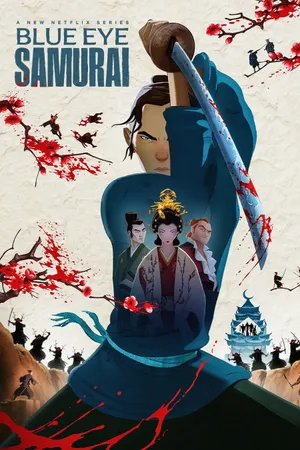
The Western has always been mythology pretending to be history. What LeSean Thomas does with Bass x Machina (2026) is strip away the pretense entirely — then rebuild the myth around a man the genre spent over a century pretending didn't exist. Netflix drops all six episodes today, and the question that surrounds the series is the same one that has dogged every ambitious adult animation project on the platform since Blue Eye Samurai (2023) raised the stakes: can a show that refuses to be categorised on familiar terms survive long enough to matter?
 Official trailer
The answer, based on early critical response, is a qualified but firm yes.
The Man Behind the Machine
Born into slavery in 1838 in Arkansas, Bass Reeves's journey to becoming the first Black Deputy U.S. Marshal west of the Mississippi is a story of courage and perseverance. He became free after the Civil War, worked as a farmer, scout and tracker before becoming a deputy US marshal in 1875 — serving the federal court for the Western District of Arkansas, which held jurisdiction over Indian Territory in present-day Oklahoma, and spent 32 years pursuing fugitives across the region. As deputy marshal, Bass is said to have arrested more than 3,000 people and killed 14 outlaws, all without sustaining a single gun wound. He is also, by most scholarly accounts, the closest real-world antecedent to a fictional character the American entertainment industry spent decades whitewashing: Reeves was a real-life Black cowboy who one historian has proposed may have inspired the Lone Ranger — a theory first asserted in the 2006 book Black Gun, Silver Star: The Life and Legend of Frontier Marshal Bass Reeves.
That erasure is the silent engine underneath everything Thomas has built. This series is his third animated project with Netflix after 2019's Cannon Busters and 2021's Yasuke. The show looks similar in tone and appeal to Yasuke; both shows take Black figures from true history and remix them into fantastic genre-inspired worlds. But where Yasuke imported its historical subject into Japanese anime conventions wholesale, Bass x Machina plants its flag on home territory — the American West — and proceeds to detonate it.
The Construction of an Alternate Frontier
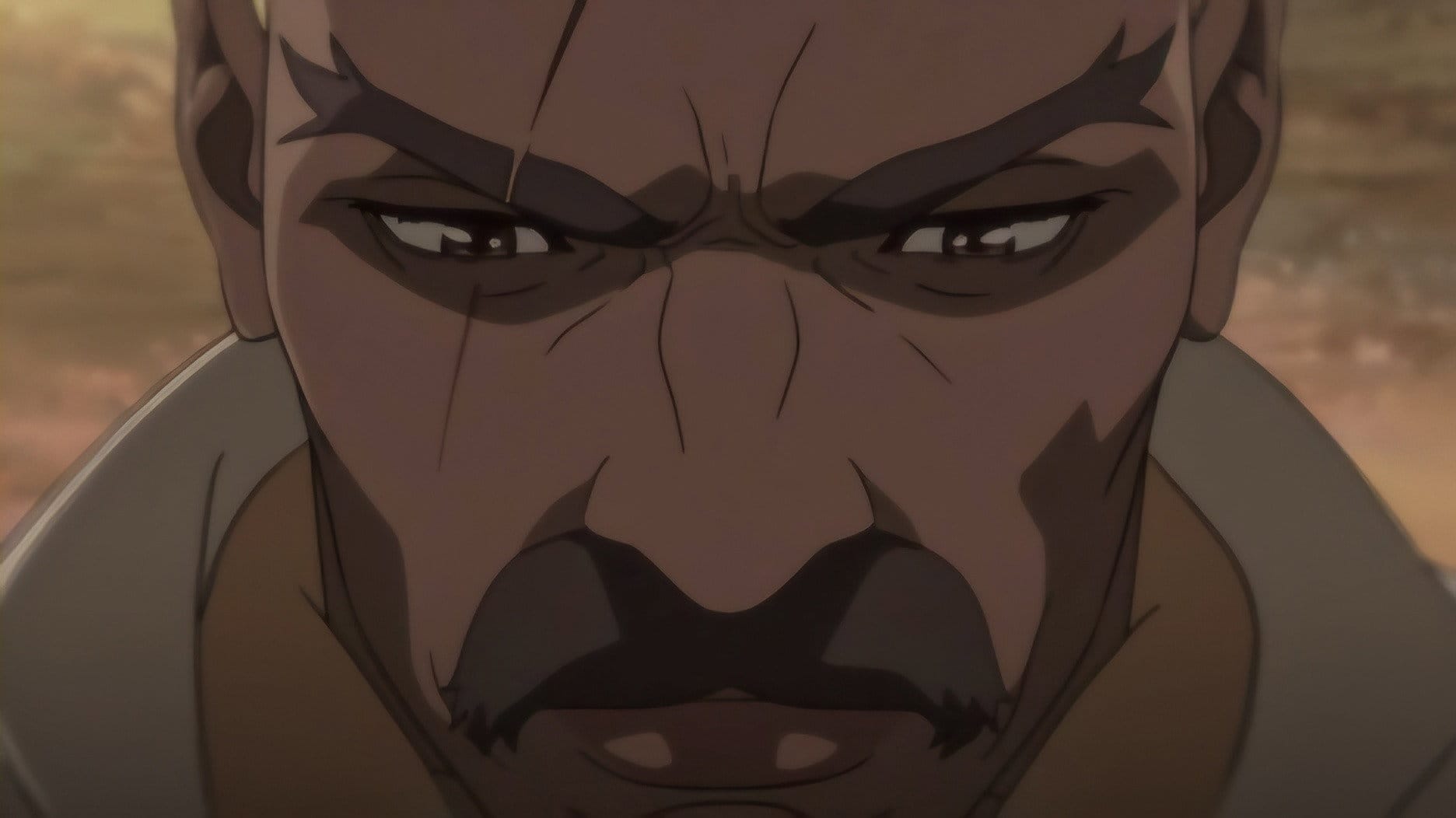
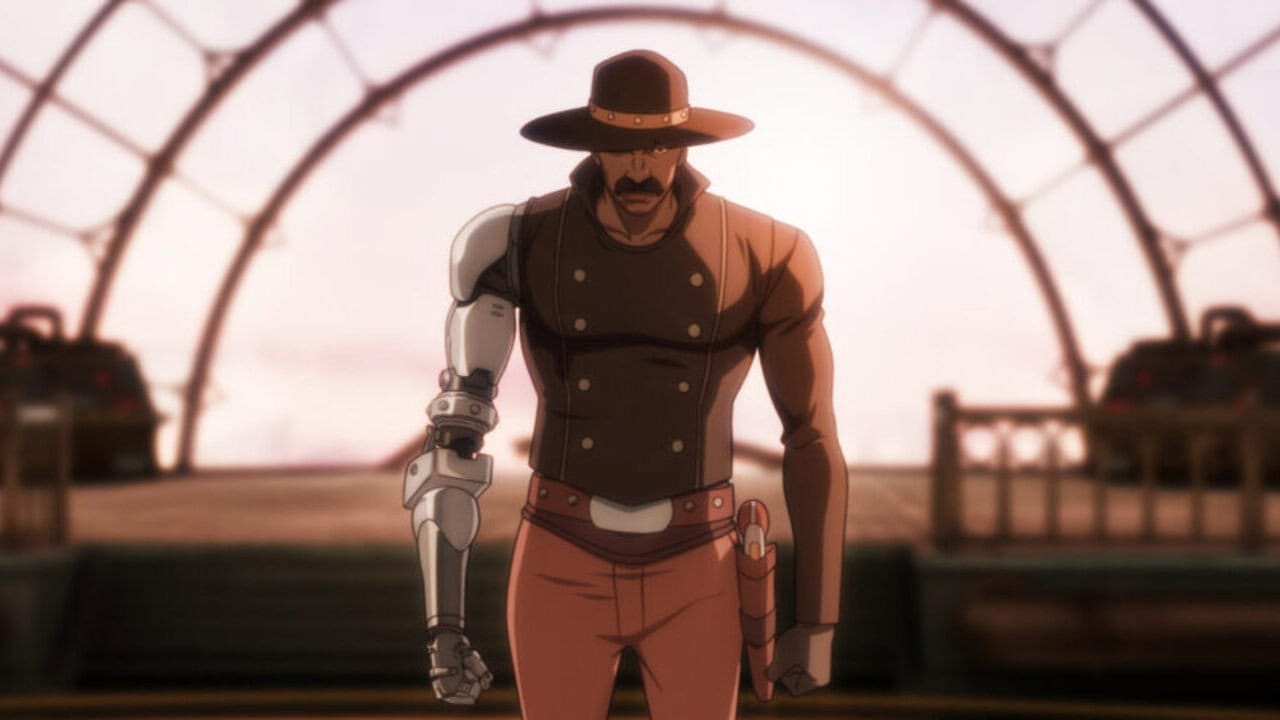
The series is an adult animated steampunk Western created by LeSean Thomas for Netflix, with Brian Tyree Henry voicing the titular Bass Reeves. The show images Reeves as a former soldier who loses his arm during the war and replaces it with a powerful cybernetic limb. This steampunk-ified version of the Old West is filled with bull-shaped mechanical suits, goop-shooting guns, women who control lightning and other creations brought to life with anime-inspired style. But even a world where Bass can shoot lasers out of his left appendage isn't free from the harsh constraints of prejudice.
When Bass signs on for one last bounty job and reluctantly sets off into the Badlands with a precocious child — Dana Starr (Tati Gabrielle), an aspiring engineer in search of her missing uncle — in tow, the series freely trades in established tropes of Western storytelling. The road-trip structure is familiar. What Thomas and co-writer Chad Handley do inside it is not. Where the writing really soars is in the thematic conversations around cycles of violence and racial identity; even with its more fantastical trappings, the show never lets viewers forget just how cruel and indifferent white people were towards people of color in the era.
Animation is handled by Studio Mir, the South Korean studio known for its work on popular animated productions such as The Legend of Korra, Voltron: Legendary Defender and Devil May Cry. The results are immediately visible. It's a marvel to behold, with the animators putting an impressive level of detail into environments while also choreographing magnificent action scenes — Bass x Machina's biggest strength is that no aspect of the visual or narrative storytelling has been left unattended. The fights mix old-fashioned western shootouts with steampunk tech, and the animation grows even more exciting when mechs enter the scene.
The Genre Question Netflix Can't Avoid
There is a classification problem that the industry has not yet resolved, and Bass x Machina sits directly in the middle of it. Polygon described the series as a "replacement" for fans of Blue Eye Samurai while blending "Western and Eastern animation tropes," and using Bass as a cyborg to "explore real racial injustice." The series recalls Blue Eye Samurai, another Netflix animated series that transposes modern views of race and representation onto a much-mythologized past era. The comparison is apt structurally, but it also reveals the bind: both shows get filed under anime adjacent — a term that functions less as a genre descriptor than as a marketing placeholder for adult animation that isn't South Park and isn't made in Japan.
Brian Tyree Henry shared how history has rarely featured a Black protagonist in the steampunk genre, how Reeves inspired the beloved fictional hero the Lone Ranger, and how the show is the first Black western anime ever made. That claim is hard to fact-check and easy to dispute on definitional grounds. It is also, in the context of what the series actually attempts, the least interesting thing about it. The more pressing argument is the one Anime News Network's Reuben Baron articulated: the series "takes a similar steampunk mecha approach to history as Yasuke" but feels "less burdened by importance and questions of historical representation" — which, given how freighted Yasuke felt under the weight of its own significance, reads as genuine praise.
Reeves' existence and the recent Civil War are about all Bass x Machina borrows from actual history. Everything else is invention. The show earns that licence because it understands what it is displacing. A character who was erased from the mythology he likely helped create — recycled as a masked white man on a silver horse — gets restored not through documentary fidelity but through the full force of genre imagination. The steampunk arm is not a distraction from Bass Reeves's story. It is the argument.
The Cast Holds
The voice acting performances in Bass x Machina are brilliant, especially Henry's performance as Bass. Henry is an executive producer as well as the lead voice, and the dual investment shows in the texture of a performance that Screen Rant rates at a 9 out of 10, calling the series "an enthralling blend of Westerns and anime." Janelle Monáe was tapped for the series theme song, while the full cast includes Tati Gabrielle, Cree Summer, Chaske Spencer, Starletta DuPois and Currie Graham. The series ups the badass quotient with figures like Etta (Starletta DuPois), a Native inventor who arms her hideout with electrified fruit trees. Secondary characters in this genre frequently exist only to expand the world. Here, they expand the argument.
The one consistent critical reservation concerns the episode count. The series is a stylish, thoughtful animated western with great action and a moving lead performance, but six short episodes leave a few characters underdeveloped. As the show goes into its back half, Thomas and Handley's concepts ultimately can't help but feel like they're overcrowding each other. It is a real constraint. Six episodes is a pitch, not a statement. Whether Netflix reads the response as an invitation to expand or a reason to close the file is, at this moment, entirely open. No return has been announced.
What the Test Actually Is
The editorial question hanging over Bass x Machina is not whether it is anime. It is whether a show this formally ambitious — Korean-animated, Black-led, historically grounded, generically unclassifiable — can find the audience it deserves inside a streaming ecosystem that still structures discovery around familiar categories. This is the same problem that confronted Blue Eye Samurai, and that show's renewal suggests the algorithm can occasionally be outrun by word of mouth. The critical consensus forming around Bass x Machina is warm enough and specific enough that the conversation should sustain itself through the week.
Ultimately, Bass x Machina is a thought-provoking story about the choices people make in the face of injustice, and whether they will succumb and perpetuate the violence of the past or rise above to break the cycle. That is a theme that has driven the Western as a form since its inception. What Thomas has done is find the man who was already living it — and give him his arm back. The anime industry's ongoing global expansion, which reached ¥4.45 trillion in 2025 with 57 percent of revenue coming from overseas markets, has created the commercial conditions under which a show like this can be greenlit. Whether those conditions also sustain it through to a second season is the next question. For now, all six episodes are on Netflix, and the argument is there to be engaged with.
The Western was always a genre about who gets to claim the land, the law, and the story. Bass x Machina makes a case — in steampunk, in anime-inflected animation, in Brian Tyree Henry's voice — that the man who should have claimed all three was written out a century ago. Genre fiction, at its best, has always been where the debts history refuses to pay get settled. This is that, and it is worth six episodes of your time to find out why.