There was no countdown. No leaks. On the morning of October 31, Nintendo simply posted a nine-minute Direct to YouTube and let it run. Shigeru Miyamoto appeared against a backdrop of clovers and distant Pikmin chants and made an announcement that, on its surface, sounded charmingly silly: November 1 is now, officially, Pikmin Day.
 Official trailer
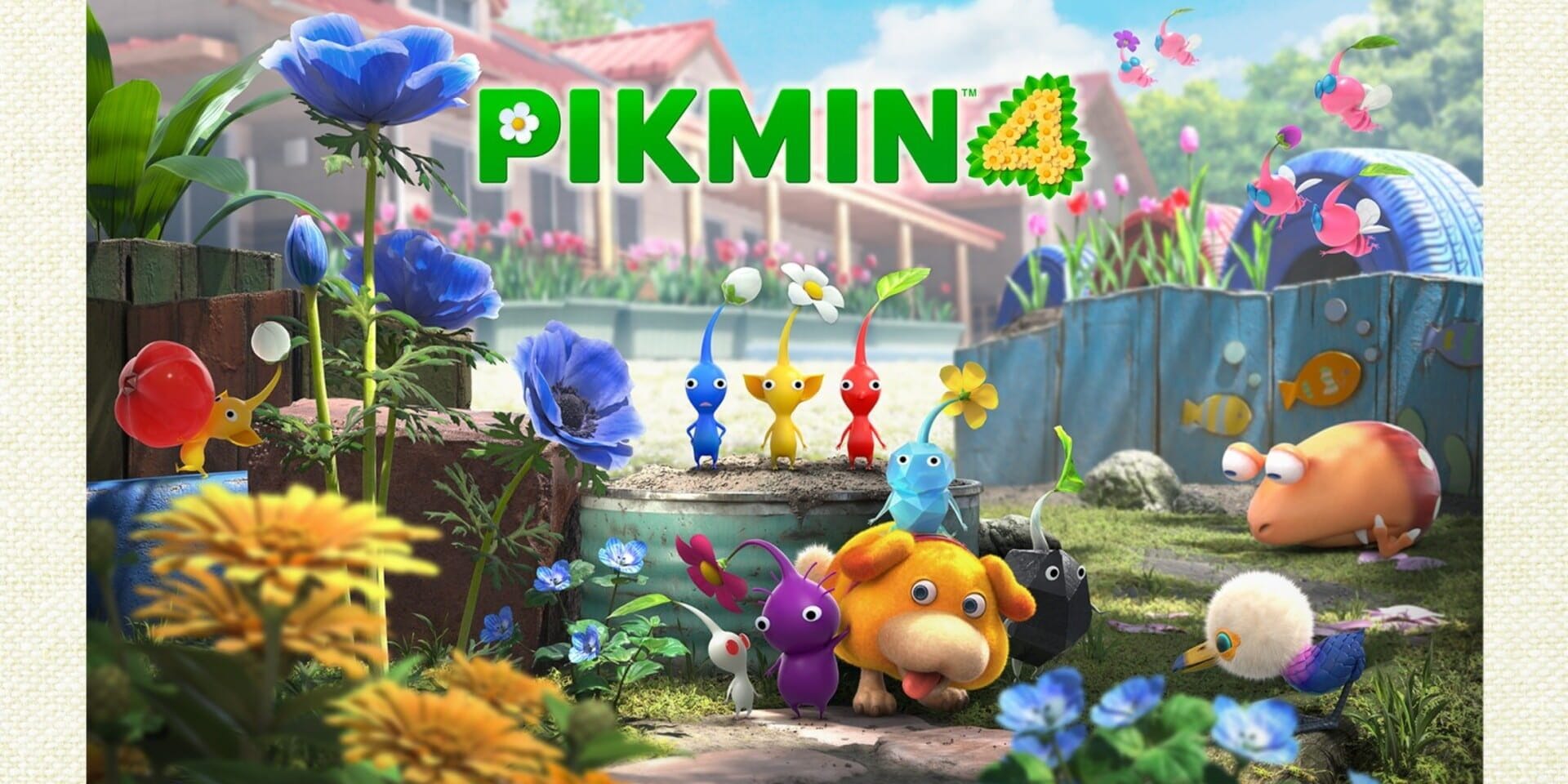
The reasoning is Miyamoto at his most precise-whimsical. Three Pikmin standing shoulder to shoulder — one Red, one Blue, one Yellow — resemble the numerals 1, 1, and 1. Arrange those against a dot and you get 11.1, the date in Japanese notation for November 1. "Starting this year, we're going to start calling November 1st Pikmin Day," he said. It is the kind of logic that Nintendo deploys with total sincerity and that, by some alchemy specific to the company, lands without irony. But the move is not merely charming. It is deliberate. And it tells you something about how Nintendo now thinks about its mid-tier IP.
The Holiday Is the Strategy
Nintendo did not declare a Pikmin Day because it had a blockbuster to announce. No new game was revealed in the Direct — a fact that was noted by every outlet that covered it, and that Nintendo appeared entirely unbothered by. The Direct's job was not to launch something. Its job was to establish a recurring cultural moment around a franchise that, for most of its existence, has been Nintendo's most underserved property.
Pikmin (2001) debuted on the GameCube at a time when the console itself was fighting for relevance against the PlayStation 2 and the original Xbox. The first game sold around 1.6 million copies worldwide — respectable for a new IP on a struggling platform, but nowhere near the numbers that Mario or Zelda commanded. Pikmin 2 (2004) followed to critical admiration and similarly modest commercial results. A decade-long gap separated it from Pikmin 3 (2013). The Switch era was kinder: Pikmin 3 Deluxe (2020) sold over 2.4 million copies, and Pikmin 4 (2023) became the best-selling entry in the series, moving over 3.4 million units. The franchise has now crossed 13 million copies lifetime — real numbers, but still a fraction of Nintendo's flagship properties.
That context matters. A company that viewed Pikmin as a niche concern would not invest in canonising an annual holiday, producing a free playable demo, spinning up an animated short series, and scheduling a live-stream showcase all in the same week. That is the infrastructure of a franchise Nintendo intends to grow systematically, not one it releases occasionally and hopes finds its audience.
The Demo Is the On-Ramp
The most concrete announcement in the Direct was also the most strategically transparent. Pikmin 4: Nintendo Switch 2 Edition + Dandori Academy launches on November 12, 2026. A free demo arrives on November 2, ten days ahead of the full release. The demo covers the opening Sunspeckled Terrace area and two Dandori Academy stages, and — crucially — save data carries over to the full game.
That last detail is not administrative housekeeping. It is a calculated conversion funnel. Nintendo is not offering a demo in the classic sense of a promotional slice that resets when you buy the product. It is offering a free first session of the game, explicitly designed to lower the barrier to purchase by removing the friction of starting over. For a franchise whose audience remains smaller than Nintendo would like, this is a sound mechanic. You get someone genuinely invested in their Pikmin, their Dandori scores, their progress — and then you ask them if they want to keep going. Most will.
The Switch 2 edition itself adds meaningful features beyond the hardware bump. Voice commands let players direct the dog companion Oatchi through the system's built-in microphone. Dandori Academy introduces a new competitive mode with weekly online stages, leaderboards, and three difficulty levels — 72 stages to be released over time, with Friday-through-Sunday examinations that give the mode a live-service rhythm without the monetisation that phrase usually implies.
Hello! Pikmin and the Long Game
The animated component is where the strategic picture sharpens most clearly. The Direct premiered the first episode of Hello! Pikmin, a new short film series produced by Nintendo Pictures — the studio Nintendo acquired from Dynamo Pictures in 2022, a company previously known for its work on the 2014 Pikmin Short Movies. Episode 01, titled "Frog," features a Red Pikmin evading a hungry frog using a baseball as cover. A second episode was scheduled for November 1. From December onward, new shorts arrive monthly through the Nintendo Today! app and Nintendo's social channels.
Monthly. That word is doing significant work. Nintendo is not releasing a one-off promotional film. It is building a content cadence — a regular reason for an audience to think about Pikmin even in months when there is no game to sell them. This is textbook IP stewardship, the kind that Disney applies to its smaller properties and that the games industry has historically been poor at sustaining. Pikmin has a visual identity that translates naturally to animation: small creatures navigating an indifferent giant world, comedy and pathos in equal measure, no dialogue required. The shorts format suits it precisely because the franchise's emotional core is entirely nonverbal.
Miyamoto was explicit about his intent. "Going forward, I want people to know more about Pikmin," he said during the broadcast. He invited Japanese actress Fuka Koshiba — who had crocheted Pikmin hats after failing to win them from a claw machine — to serve as a franchise ambassador, a move that speaks to how Nintendo now thinks about Pikmin: not as a product that markets itself at launch, but as a character universe that needs advocates, context, and ongoing visibility.
What This Signals Beyond Pikmin
The Pikmin Day move is worth watching as a template. Nintendo has always maintained a cleaner IP portfolio than its competitors, but its track record on smaller franchises has been inconsistent. F-Zero is dormant. Star Fox has been mishandled for a decade. Metroid, after years of neglect, needed Dread (2021) to re-establish its relevance. Pikmin never quite fell that far — Pikmin Bloom (2021) kept the mobile audience engaged, and Pikmin 4's commercial success bought the franchise real goodwill. But it has never had the kind of sustained cultural presence that Nintendo's giants do.
An annual holiday changes the equation. It is a simple mechanism — just a date on a calendar — but it creates a recurring obligation to do something with the property, and recurring obligations are how sustained fan communities get built. Pokémon Day on February 27 is the obvious precedent: what began as an anniversary marker became a platform for announcements, merchandise drops, and community events that now generate genuine news cycles. Nintendo appears to be engineering the same structure for Pikmin, at a smaller scale but with comparable intentionality.
The Pikmin Bloom update — Secret Caves, arriving winter 2026 — rounds out the ecosystem. Mobile keeps casual players warm between console releases. The shorts feed discovery and affection. The Switch 2 demo converts the curious into owners. The holiday gives all of it a calendar anchor. None of these elements is radical individually. Together, they represent a coherent, patient plan for a franchise Nintendo clearly believes has more cultural surface area than it has yet claimed.
No new game was announced. That is the point. Nintendo is not asking you to be excited about a product. It is asking you to care about a world. The Direct's real announcement was not a date or a demo — it was a commitment. And as far as Nintendo's smaller franchises go, that is the rarest thing of all.
For more on Pikmin's place in Nintendo history, read our feature Pikmin Turns 25: The Loneliest Game Nintendo Ever Made. For context on Nintendo's broader Switch 2 strategy, see our coverage of the Nintendo Indie World October 2026 showcase.