A hundred years ago today, on Halloween 1926, Harry Houdini died in a hospital bed in Detroit. He was 52. The man who had escaped from handcuffs, straitjackets, milk cans, packing crates thrown into rivers and a glass tank of water while hanging upside down could not escape a burst appendix. That he died on Halloween, the one night of the year devoted to spirits, was the kind of coincidence he would have spent the rest of his life exposing as meaningless, if he had had one.
A century later he is still the most famous magician who ever lived, and his name has become a word: in English, to "do a Houdini" is to get out of something no one else could. Detroit, where he performed nineteen times and where he died, has spent the week marking the centenary. Magicians across the world are staging escapes in his honour. The real question is why a vaudeville performer who stopped working in 1926 still feels so modern. The answer is that Houdini did not just invent a new kind of act. He invented a new kind of celebrity.
From Erik Weisz to Harry Houdini
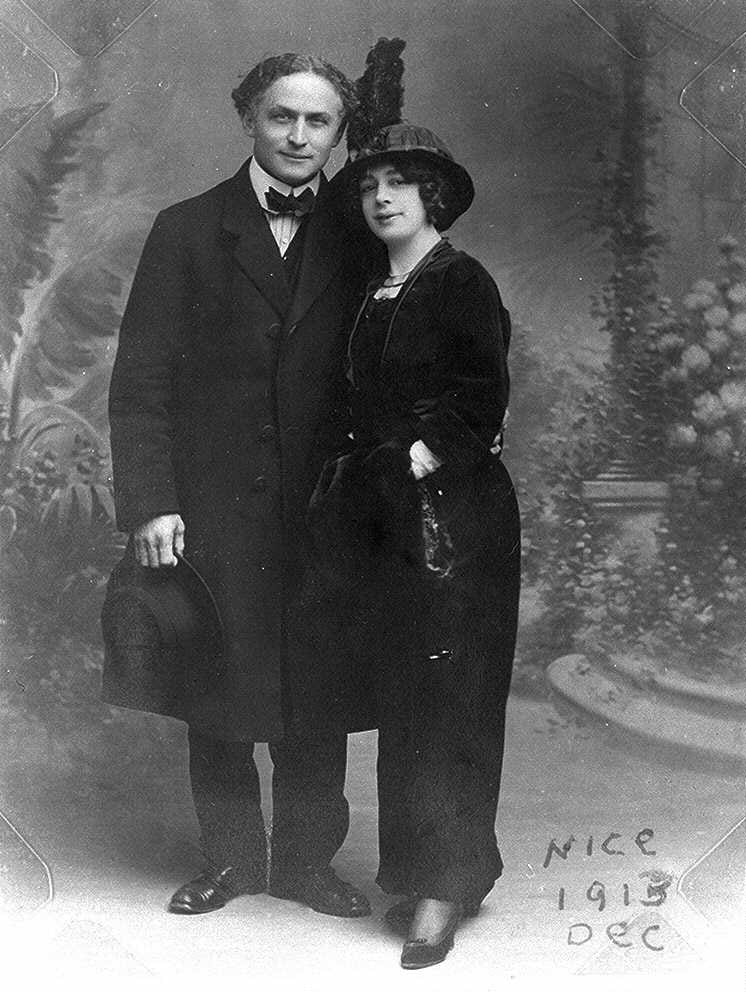
He was born Erik Weisz in Budapest on March 24, 1874, the son of a rabbi. In 1878 the family emigrated to the United States and settled in Appleton, Wisconsin, where the name became Ehrich Weiss. The family was poor, and the boy worked from childhood: as a newspaper seller, a shoeshine, a trapeze performer in a neighbourhood circus. At sixteen he read the memoirs of the great French conjuror Jean-Eugène Robert-Houdin and borrowed his name. "Harry" came from the family nickname "Ehri".
For most of the 1890s he struggled, performing card tricks in dime museums and sideshows. In 1894 he married Wilhelmina Beatrice Rahner, known as Bess, who became his stage partner for the rest of his life. Their signature illusion, Metamorphosis, in which the two swapped places inside a locked and roped trunk in a matter of seconds, was the first sign of what would make him famous: the drama of getting out.
The Handcuff King
The breakthrough came in 1899, when the vaudeville manager Martin Beck saw him in Saint Paul, Minnesota, and told him to drop the card tricks and concentrate on escapes. Beck booked him on the Orpheum circuit and in 1900 sent him to Europe, where Houdini turned a stage act into a public event. In each city he challenged the local police to lock him up in their own handcuffs and their own cells, and invited the press to watch. He always got out. Newspapers called him "the Handcuff King", and Houdini understood before almost anyone that the newspaper story was as important as the trick.
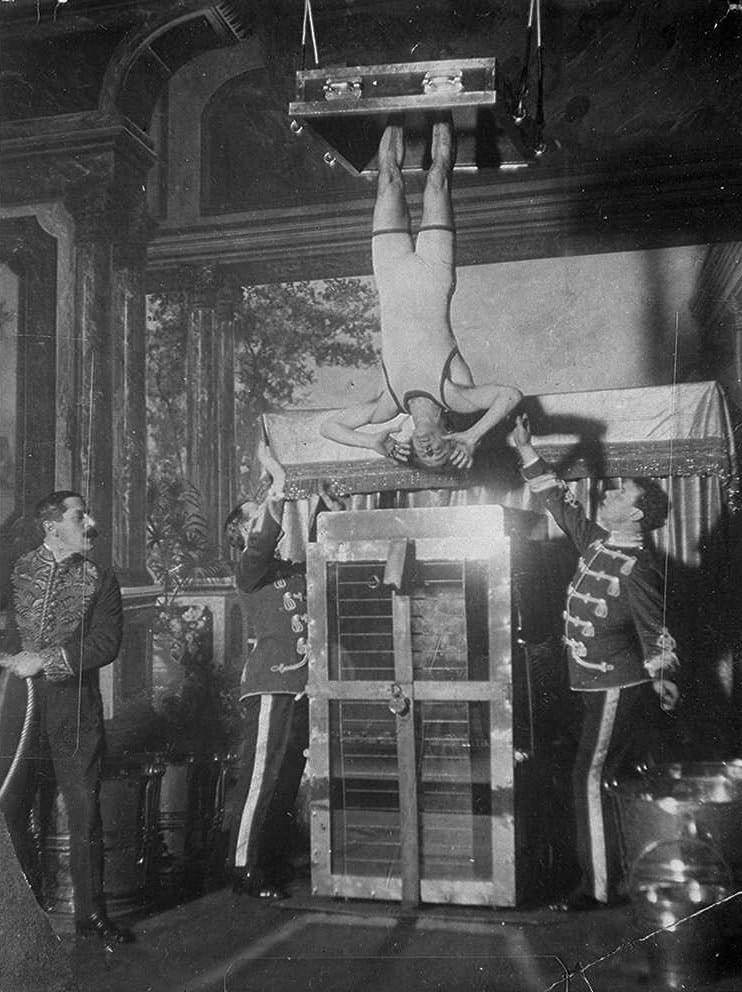
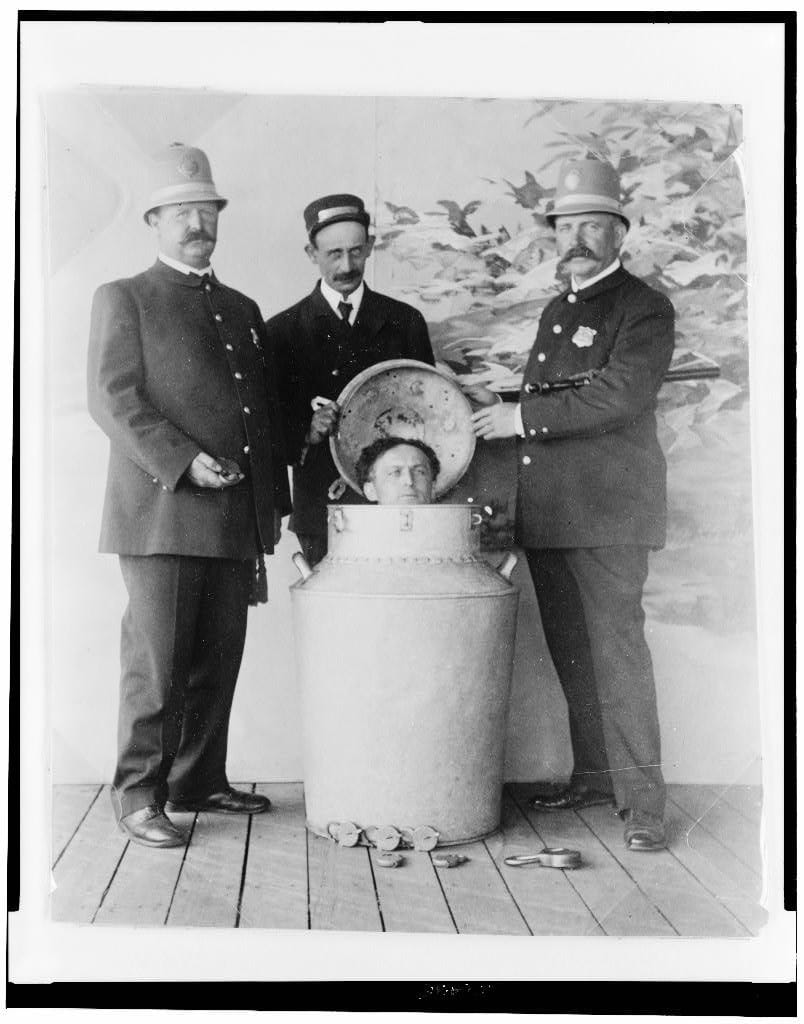
When imitators flooded the market, he raised the stakes. In 1908 he introduced the Milk Can Escape, in which he was locked inside an oversized milk can filled with water, with a simple slogan on the posters: "Failure means a drowning death." In 1912 he unveiled his masterpiece, the Chinese Water Torture Cell, first performed in public at the Circus Busch in Berlin that September: Houdini lowered upside down into a glass-fronted tank of water, his feet locked in stocks, while an assistant stood by with an axe. Outdoors, he jumped manacled from bridges and was nailed into crates and dropped into New York Harbor. He even hung upside down in a straitjacket from tall buildings above crowds of thousands.
He was restless in other directions too. In March 1910 he flew a Voisin biplane at Diggers Rest, near Melbourne, one of the first powered flights in Australia. In January 1918 he made a full-grown elephant, Jennie, vanish on the stage of the New York Hippodrome, the largest theatre in the city.
Hollywood's First Action Hero
Houdini saw early that film could spread his legend further than any tour. After appearing in a short film of his Paris escapes in 1909, he starred in the 15-episode serial The Master Mystery (1918–19) and the feature The Grim Game (1919), followed by Terror Island (1920), The Man from Beyond (1922) and Haldane of the Secret Service (1923), the last two made by his own production company. The plots existed to get him into trouble so that he could get out of it. The films were not great, and they did not make money, and in 1923 he gave up the business. But the formula, a star who performs his own impossible stunts and turns every film into proof of his body, is one Hollywood has never abandoned, from Buster Keaton to Jackie Chan to Tom Cruise.
The Magician Who Hunted Ghosts
The cause that consumed his last years began with grief. His mother, Cecilia, died in 1913, and Houdini, who adored her, went looking for a way to reach her. Spiritualism was booming after the First World War, as millions of bereaved families turned to mediums and séances. What Houdini found instead were performers using the same methods he used on stage, presented not as entertainment but as proof of life after death, and charging grieving people for it. That, to him, was the unforgivable trick.
He turned his skills against them. He attended séances in disguise, exposed fraudulent mediums in public demonstrations, and in 1924 sat on a Scientific American committee investigating Mina Crandon, the Boston medium known as "Margery", whose claims he denounced. That year he published A Magician Among the Spirits, and in 1926 he testified before Congress in support of a bill to ban fortune-telling for money in Washington, D.C. The crusade cost him one of his most famous friendships. Arthur Conan Doyle, the creator of Sherlock Holmes, was a devoted spiritualist, and the two men's public quarrel turned them from friends into enemies.
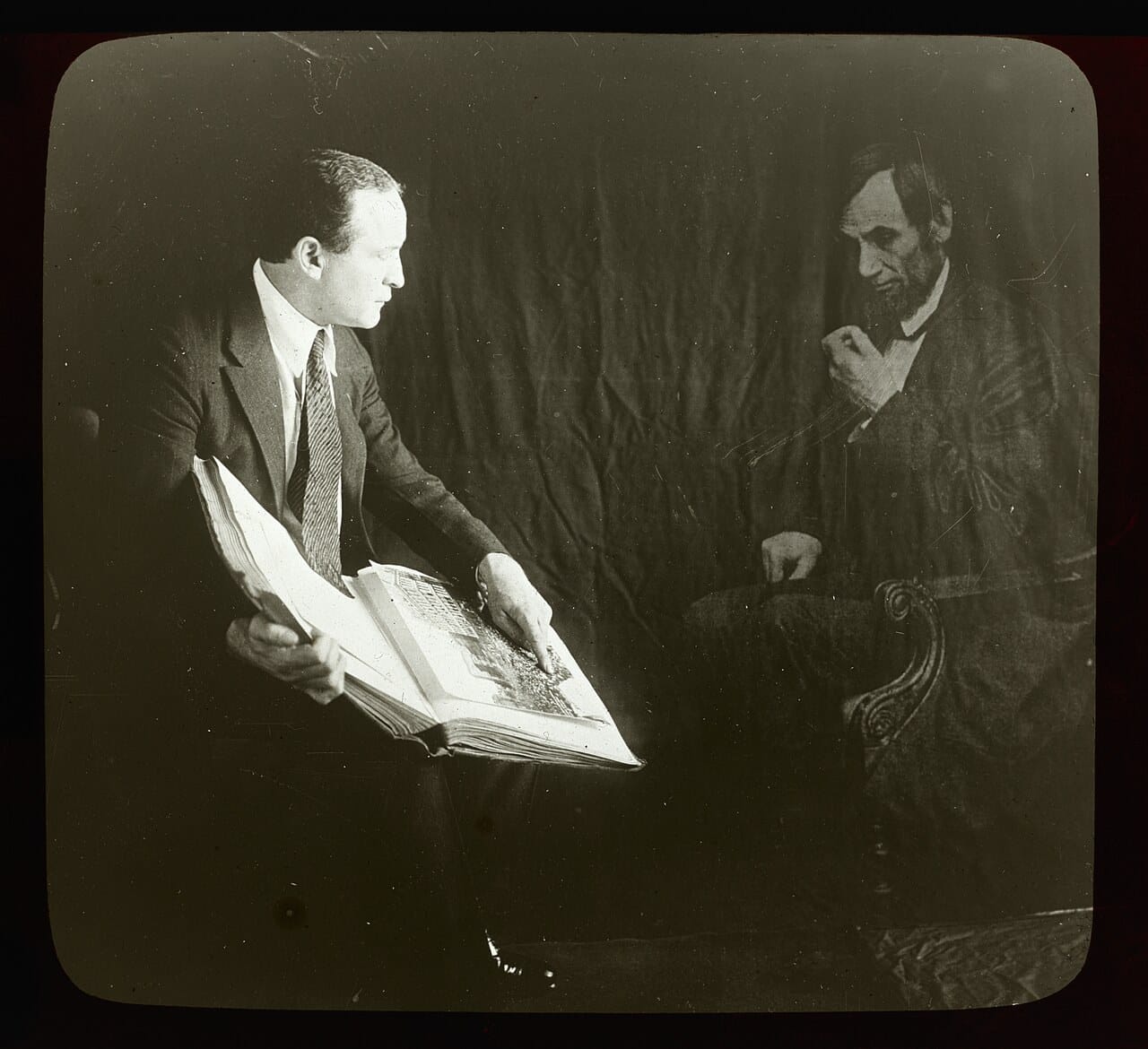
His method was simple: show people how it is done. So here is a small test in that spirit. Try the trick below, and then let Houdini's rule apply.
Kynari · A trick for Houdini
The Vanishing Card
Look at these six cards. Choose one, but don't click it and don't say it out loud. Just remember it. Concentrate on your card.
How it's done. Look again at the first six cards and the five that came back. Not one of the five was in the first group. The faces are the same kind and the colours are mixed in the same way, so your memory accepts them as "the same cards, minus mine". But every card changed, so whichever one you picked was always going to vanish.
Magicians call this the Princess Card Trick, a principle from Houdini's own era. It works because you remember one card closely and the rest only vaguely. The fraudulent mediums Houdini exposed used the same weakness. They gave a vague impression, and people's memories filled in the rest. Houdini's rule: once you know how it's done, nobody can sell it to you as a miracle.
Halloween, 1926
His death became the last and strangest Houdini story. On October 22, 1926, in his dressing room at the Princess Theatre in Montreal, a McGill University student named Jocelyn Gordon Whitehead asked whether it was true that Houdini could take any punch to the stomach, and struck him several times before he was ready. Houdini, already in pain, kept working. On October 24 he performed at the Garrick Theater in Detroit with a fever of 104°F, and was taken afterwards to Grace Hospital. He died there on October 31 of peritonitis. Whether the blows caused the appendicitis or simply hid it is still debated.
Before he died, he and Bess had agreed on a secret code. If it were possible to speak from beyond the grave, he would find a way to send her two words: "Rosabelle, believe", after the song that had been their favourite. For ten years Bess held a séance every Halloween. No message ever came. In 1936, on the roof of the Knickerbocker Hotel in Hollywood, she held the last official séance and put out the candle she had kept burning beside his photograph. "Ten years is long enough to wait for any man," she is said to have explained. Houdini's final escape act had been the one he set out to prove impossible, and it was.
The Legacy
On screen, Houdini has been played by Tony Curtis in Houdini (1953), opposite Janet Leigh as Bess; by Paul Michael Glaser, Johnathon Schaech and Guy Pearce; and by Adrien Brody in the History miniseries Houdini (2014). In 2016 the series Houdini & Doyle turned his feud with Conan Doyle into a crime-solving partnership. Every magician who performs for cameras rather than theatres, from David Copperfield's televised illusions to David Blaine's endurance stunts, works in the shape he made.
But his deepest legacy may be the scepticism. Houdini was a professional deceiver who believed deception had limits: it was acceptable on a stage, with an audience that had bought a ticket to be fooled, and contemptible everywhere else. In an age of deepfakes and viral hoaxes, the man who spent his life showing that the eye can be fooled, and then teaching people how, has never looked more relevant. A hundred years after he died, he is still asking the same question of everything that seems impossible: how is it done?