Two years is a long time to run on a teaser. Mahō Shōjo ni Akogarete (Gushing Over Magical Girls, 2024) received its Season 2 greenlight at an anniversary event in October 2024, then went quiet — no premiere window, no visual, no confirmed staff. That silence ended on November 14, 2026, when Kadokawa released a birthday celebration video for lead character Magia Baiser and embedded inside it everything the fandom had been waiting for: a 2027 broadcast window, an "ultra teaser visual," a returning full cast, and confirmed returning staff. The delivery mechanism was characteristically on-brand — sentimental packaging wrapped around industrial-grade production news.
 Official trailer
What the Announcement Actually Confirmed
Kadokawa revealed that the second season of the anime based on Akihiro Ononaka's Gushing Over Magical Girls manga will debut in 2027, under the title Mahō Shōjo ni Akogarete Season 2. Beyond the year itself, Kadokawa also revealed an "ultra teaser visual" and confirmed the new season's returning cast and staff — including co-directors Masato Suzuki and Atsushi Ōtsuki, both returning to helm the anime at Asahi Production.
The full returning voice cast spans both factions of the show's central conflict. Fuka Izumi returns as Utena Hiiragi / Magia Baiser, Misato Fukuen as Venalita, Aoi Koga as Kiwi Araga / Leopard, Shiori Sugiura as Korisu Morino / Nero Alice, Yuka Aisaka as Matama Akoya / Loco Musica, Minami Tsuda as Nemo Anemo / Leberblume, Kaori Maeda as Haruka Hanabishi / Magia Magenta, Mayuko Kazama as Sayo Minakami / Magia Azul, and Misaki Ikeda as Kaoruko Tenkawa / Magia Sulfur. The ensemble is intact, which matters more than it might appear: ensemble-driven ecchi comedies rely heavily on established vocal chemistry, and the absence of a single key performer can destabilize an entire comedic register.
The Studio Question: Asahi Production's Quiet Consistency
Asahi Production is not a name that tends to appear on hype reels. The studio is a Japanese animation company established on June 1, 1973, founded initially as a specialized shooting studio and PR movie company. Over decades, it built its infrastructure providing animation services for works such as One Piece and JoJo's Bizarre Adventure. The studio's history is defined by craft-at-volume work — the kind of technical foundation that makes it capable of handling a highly stylized property without reinventing its own pipeline mid-production.
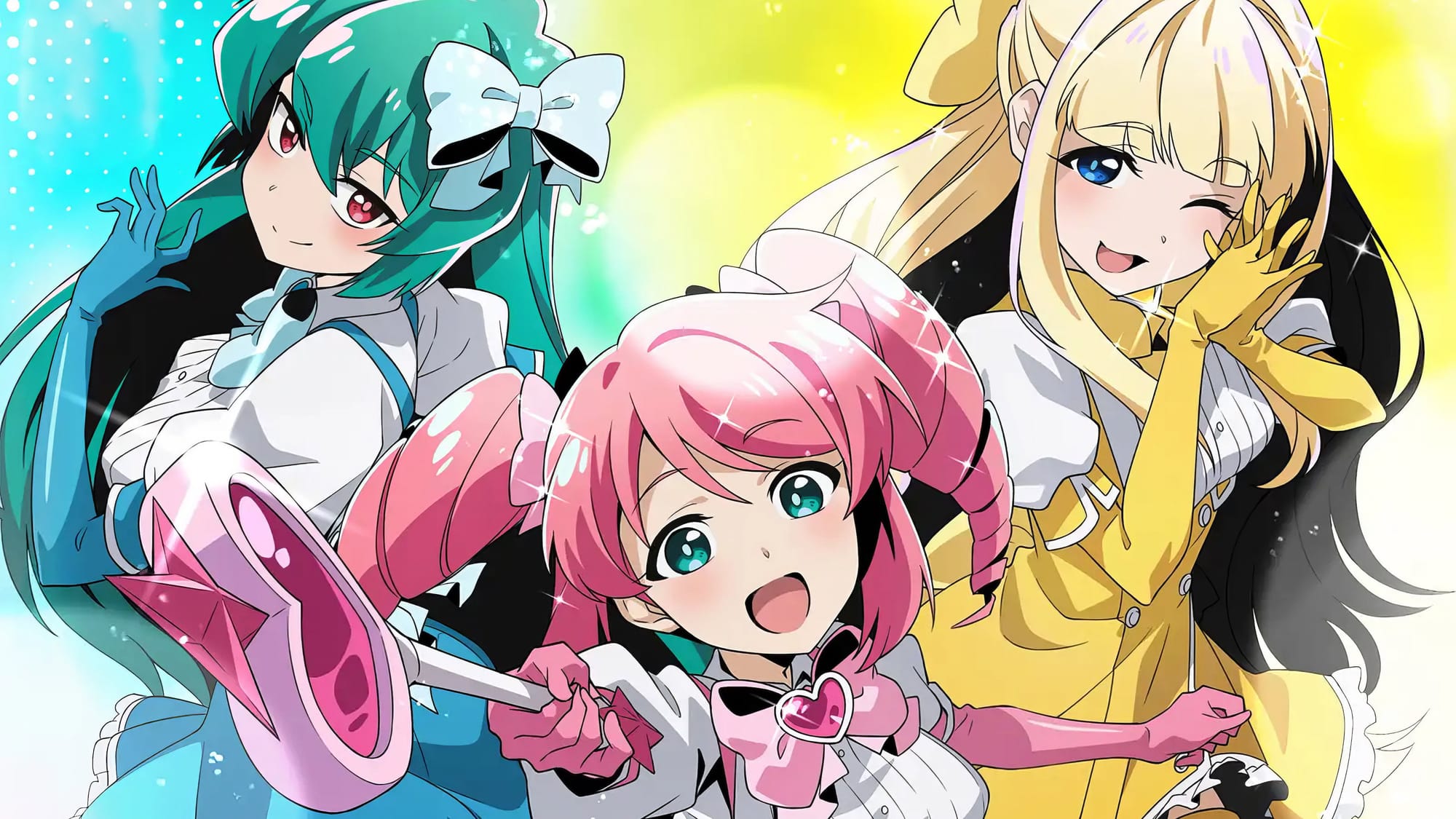
What made Asahi Production's handling of Season 1 notable was not spectacle but precision. The show's visual language — the exaggerated reaction shots, the deliberate choreography of power dynamics between Enormita and Tres Magia — required a studio that could sustain a tonal tightrope across thirteen episodes. The anime has three distinct versions: a TV broadcast version, a "gushing" streaming version, and an "ultra-gushing" version on Blu-ray Disc and DVD. Managing three simultaneous editorial cuts of a single cour without degrading the core product is not a trivial logistical undertaking, and the studio delivered. Its confirmed return for Season 2 signals that the production committee has no interest in gambling on a new studio relationship when the existing one has proven both functional and discreet.
The Manga's Road Back: Why 2027 Is Not Arbitrary
The gap between greenlight and confirmed premiere is explicable primarily through the source material's own turbulent timeline. Ononaka launched the manga in Takeshobo's Manga Life Storia magazine in 2019; after the magazine ceased publication in July 2019, the manga moved to the Storia Dash website. The serialization history since the anime adaptation has been equally unstable. The manga went on hiatus in March 2024 due to Ononaka's health, and resumed serialization in October 2025 on Takeshobo's Takecomi! website; the 13th volume was published in Japan on September 16, 2026.
That resumption date — October 2025 — is the key data point. A second season announcement made in October 2024 would have been premature without sufficient runway in the source material. The manga has more than 3 million copies in circulation worldwide, including digital copies sold — a figure that confirms commercial viability — but copies in circulation do not translate to animatable chapters if the manga itself is on medical hiatus. The October 2025 resumption effectively restarted the pipeline. A 2027 premiere, roughly two years post-resumption, reflects a production committee that correctly prioritized buffer over speed.
The manga is currently serialized on Takeshobo's web manga platform, TakeComi!, with 13 volumes published so far. With the manga now actively running again and volume 13 already in readers' hands, the material base for a second season is solid. The question for production is never simply whether enough chapters exist — it is whether serialization will keep pace with the production schedule. The 2027 window suggests the committee has modeled that pacing with enough cushion to avoid the kind of mid-adaptation crisis that has plagued other properties running against tight manga timelines.
The Show Itself: Why It Earned a Second Season
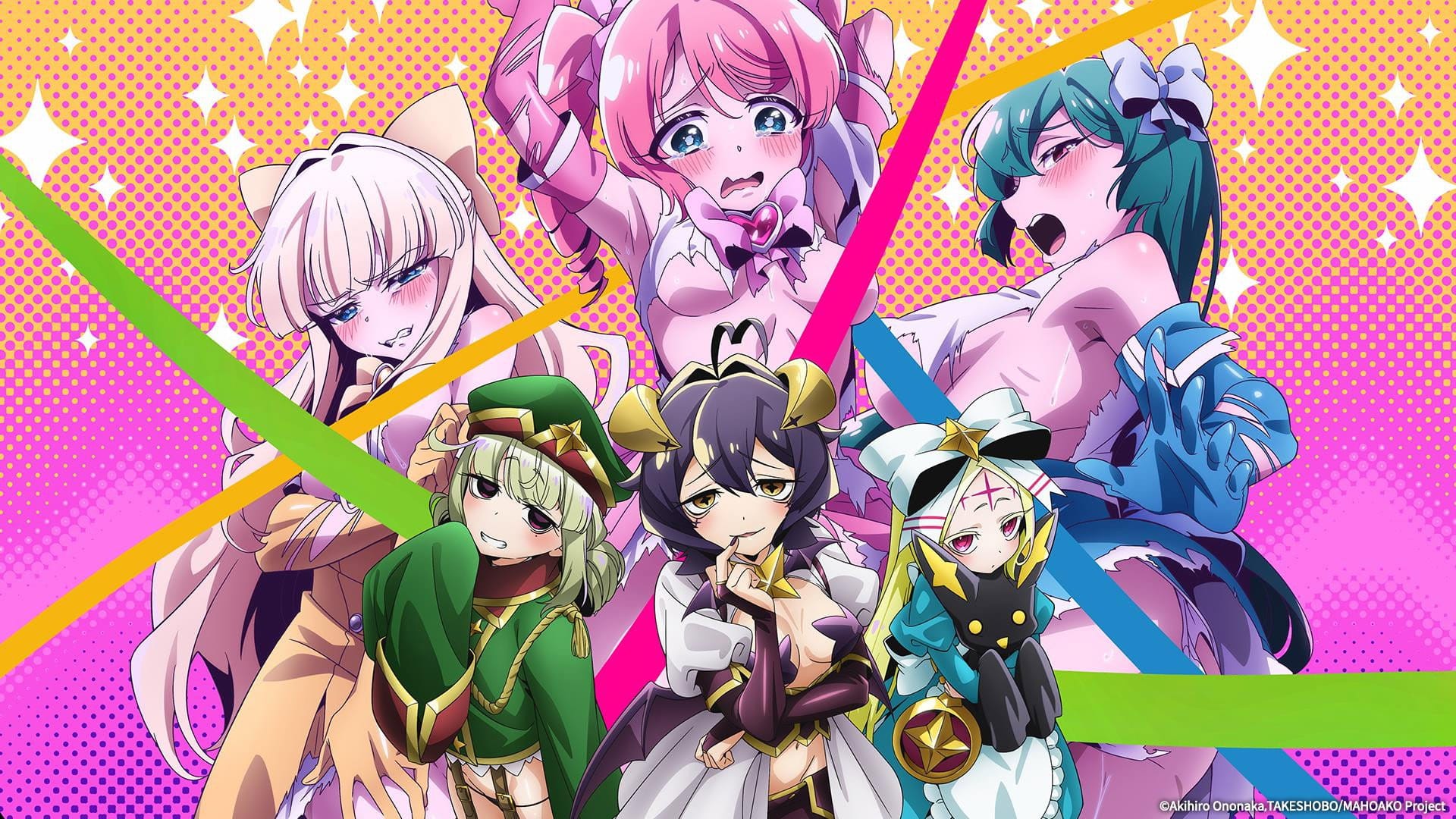
The first season debuted on the AT-X channel in January 2024, and the series also aired on Tokyo MX, BS11, Sun TV, and KBS Kyoto. Its premise — Hiragi Utena is a major fangirl of the magical girls protecting her city who leaps at the chance to join their ranks, but once she transforms, she discovers she is a villain who enjoys being a magical-girl-tormenting sadist instead — read on paper as a niche provocation dressed up in genre clothing. What the adaptation revealed was something more structurally interesting: a genuinely functional comedic inversion of the magical girl form, with enough internal logic to sustain its satirical premise without collapsing into self-parody.
The genre it inhabits is narrow but not inconsequential. The magical girl as a site of deconstruction has a long editorial pedigree in anime — from Puella Magi Madoka Magica (2011)'s nihilism to Magical Girl Raising Project (2016)'s battle-royale brutalism. Gushing Over Magical Girls occupies a different register entirely: its darkness is comedic and explicitly erotic rather than existential, which positioned it as a genre outlier but also as one with a devoted and commercially active audience. The announcement has already generated significant fan engagement, consistent with a property that has maintained community investment throughout its production gap.
This is not dissimilar to what happened with Mashle Season 3's path to its January 2027 premiere — a property that consolidated its fanbase during an extended wait and leveraged renewed source material momentum to push through production. In both cases, the pattern is the same: a first season that outperforms cautious expectations, a greenlight that arrives before the infrastructure is fully ready, and a final announcement that bundles everything into a single, credible commitment.
What Remains Unknown
A 2027 broadcast window without a quarter is not a premiere date — it is a fiscal year. The announcement tells fans when to expect news, not when to clear their calendar. The specific broadcast slot within 2027, the streaming arrangement for international audiences (HIDIVE held Season 1 rights), and whether the tiered distribution model — TV cut, streaming cut, Blu-ray cut — will be retained are all still open questions. Given that the multi-version structure was a commercially meaningful differentiator for Season 1, its continuation in Season 2 would be the logical default, but it has not been confirmed.
What has been confirmed is enough to close the chapter on uncertainty. The source material is running. The studio is locked. The cast is returning. The directors are returning. Kadokawa's choice to frame the announcement inside a character birthday video was not a marketing accident — it was a signal that the franchise's promotional machinery is operational again, running on the same register of affectionate absurdity that defined the show itself. Season 2 is real. The wait now is merely logistical.