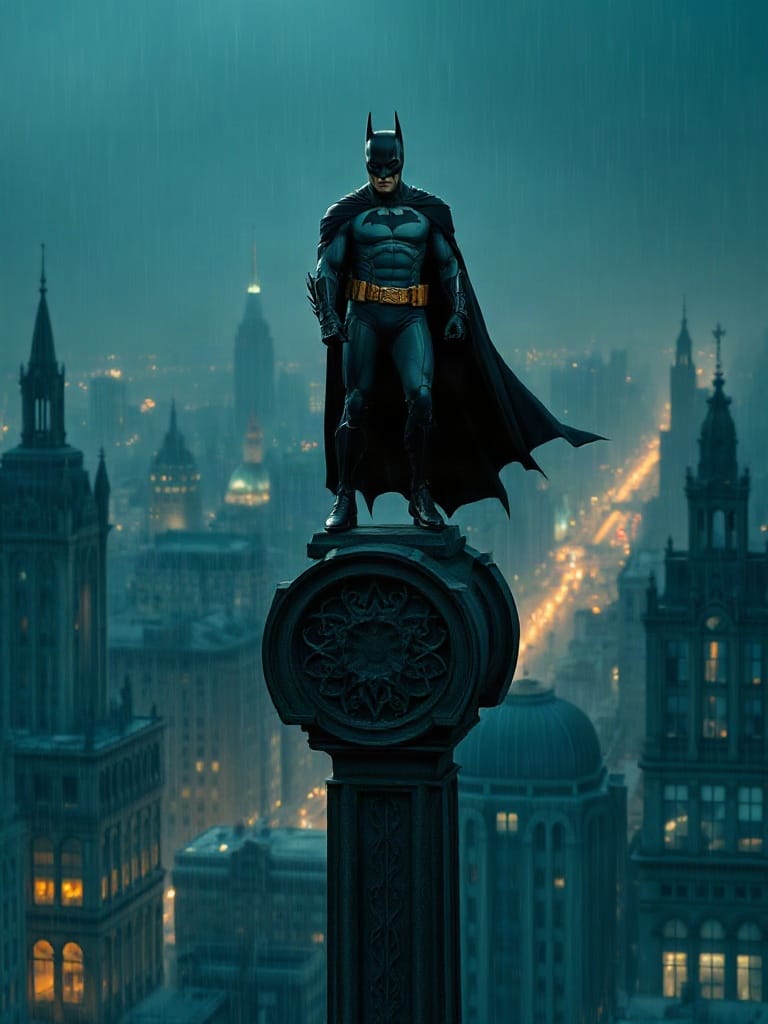
Batman Day does not sneak up on the comics industry anymore. It arrives like a fiscal quarter — announced months in advance, surrounded by product, and followed closely by a sales report. This Saturday, DC Comics marks its annual celebration of its most commercially reliable character with a week that has been, by any honest measure, engineered around the occasion rather than merely adjacent to it. Batman of Two Worlds #1 drops alongside a Batman Bad Seeds crossover one-shot that has already claimed a disproportionate share of this week's new releases. The holiday, first introduced in 2014 as a fairly modest retailer incentive program, has become something structurally different: a publishing synchronisation mechanism that bends DC's release calendar to its gravitational pull for weeks in either direction.
That transformation deserves more scrutiny than it typically receives.
The Anatomy of a Manufactured Moment
When DC and Warner Bros. launched Batman Day as an official annual event, the stated intention was straightforward — celebrate the character's enduring cultural legacy, drive foot traffic to comic book stores, and give retailers a promotional hook. Free comics, variant covers, in-store signings. Nothing unusual for an industry that had been running Free Comic Book Day since 2002. Batman Day felt like a logical extension of that model, applied to a single franchise instead of the medium at large.
What it has become is considerably more calculated. Over the intervening years, DC's publishing teams have shifted from simply releasing Batman-adjacent material near the holiday to actively architecting narrative events that require Batman Day as their anchor point. The crossover is no longer incidental to the celebration — the crossover is the celebration, dressed in anniversary language. Batman Bad Seeds, this year's iteration of that strategy, is not a story that happens to coincide with Batman Day. It is a story whose release architecture — multiple one-shots, tie-in issues spread across titles, a dedicated crossover installment landing on the holiday itself — makes the holiday legible as an industrial event rather than a cultural one.
This is not an accusation of cynicism so much as an observation about mechanism. DC is not doing anything that Marvel hasn't done with its own anniversary properties, or that Disney hasn't done with Star Wars Day. The difference is that Batman Day has managed to maintain the appearance of organic celebration while becoming something far more structural beneath the surface.
Batman of Two Worlds #1 and the Prestige Anchor
Batman of Two Worlds #1 functions as this year's prestige anchor — the release designed to carry the weight of significance, to give critics and readers something to evaluate beyond variant cover counts. The premise engages directly with DC's multiverse architecture, positioning Batman across parallel realities in a way that is both conceptually ambitious and commercially prudent. A multiverse story starring Batman on Batman Day is, in the language of franchise management, essentially risk-free. It signals ambition without abandoning the safety of the most recognizable IP in DC's stable.
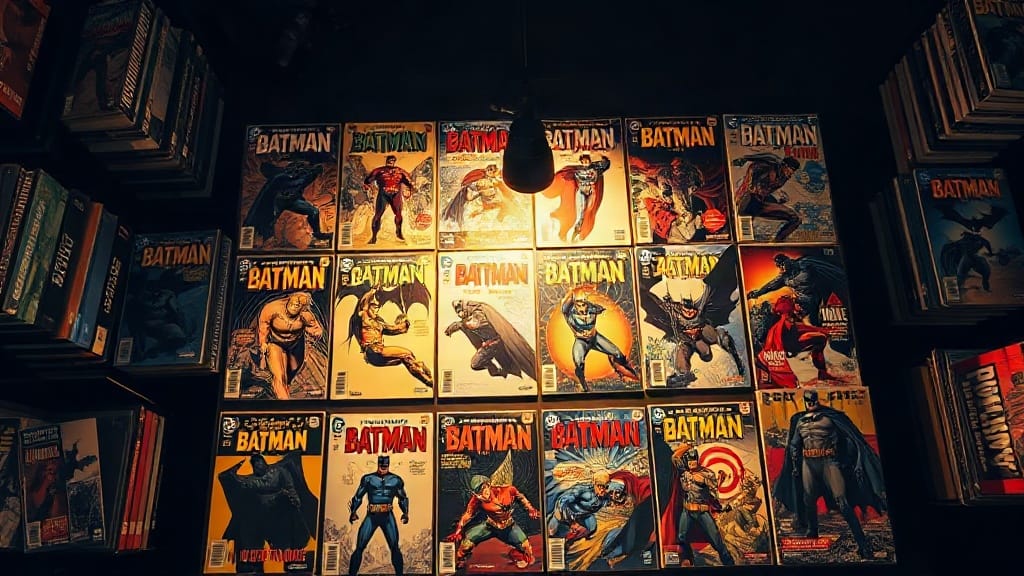
What makes the choice interesting is the implicit acknowledgment it contains. By building a dedicated prestige one-shot around the holiday, DC is treating Batman Day as a platform substantial enough to carry original narrative weight — not just reprints, not just variant covers of existing issues, but a new story designed to matter. That represents a genuine evolution from the holiday's origins. The question is whether the story earns that positioning on its own terms or whether the occasion is doing the heavy lifting, lending artificial significance to material that would otherwise occupy a quieter release slot.
The honest answer will only emerge once readers have the issue in hand. But the structural fact — that DC felt confident commissioning and scheduling a multiverse-spanning Batman story specifically for this date — tells us something about how the publisher now perceives the holiday's cultural authority.
The Bad Seeds Colonisation Problem
The more revealing data point, though, is not the prestige one-shot. It's the breadth of the Batman Bad Seeds crossover's footprint across this week's release slate. When a crossover event structures itself so that multiple titles converge on a single calendar week, the effect on the new releases list is less like a celebration and more like an occupation. Other DC titles — and certainly any independent books competing for reader attention and retailer shelf space during the same window — exist this week in the shadow of the Bat-signal whether they want to or not.
This is franchise synchronisation in its most visible form. The crossover creates a gravitational field around the holiday that pulls purchasing decisions, retailer ordering patterns, and editorial coverage toward a single IP node. Readers with limited weekly budgets make choices. Retailers with limited display space make choices. Comics journalists and critics make choices about what to cover. Batman Day, by anchoring a crossover, doesn't just celebrate Batman — it reorganises the week's commercial ecosystem around Batman.
None of this is accidental. Event comics have always been engineered to maximize market presence. What Batman Day adds is a legitimizing cultural frame that makes the commercial engineering feel like commemoration. The crossover isn't colonizing the release calendar; it's honoring a legacy. The distinction, in practice, is largely rhetorical.
What the Holiday Has Stopped Being
The original Batman Day impulse — to simply celebrate the character, to bring new readers into shops, to acknowledge the cultural longevity of a figure who has been in continuous publication since 1939 — has not disappeared entirely. Free comics still get distributed. Retailers still run events. The character still has genuine, non-commercially-mediated meaning for enormous numbers of readers across generations. That is real, and it should not be collapsed into cynicism about the publishing apparatus surrounding it.
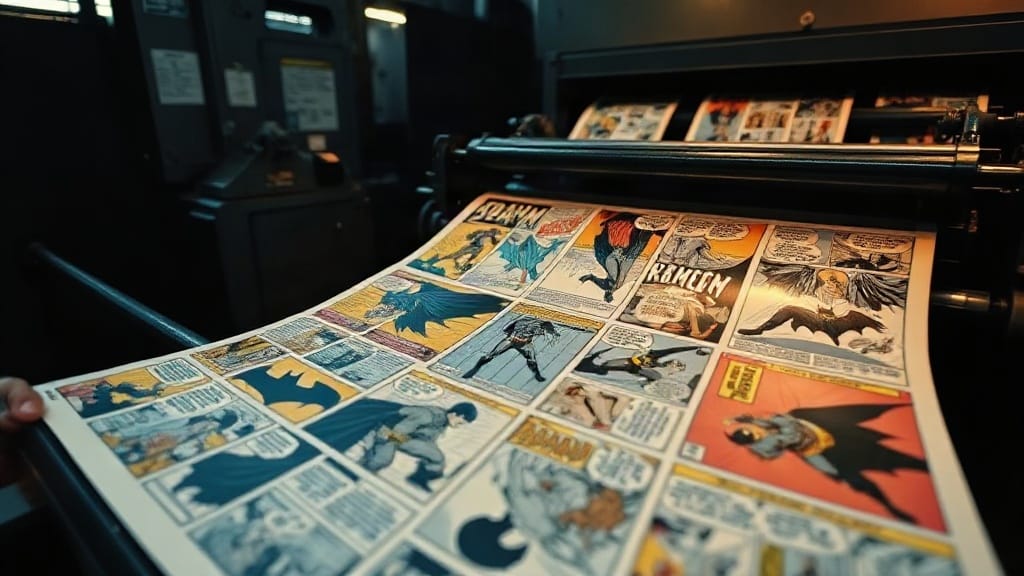
But the holiday's center of gravity has shifted. Batman Day in 2026 is not primarily organized around the reader's relationship to Batman. It is organized around DC's need to synchronize narrative threads, maximize the commercial impact of crossover events, and use the cultural authority of a beloved character to provide cover for what is, fundamentally, a franchise scheduling operation. The celebration is genuine at the edges. At the core, it is infrastructure.
That distinction matters because it shapes what readers can reasonably expect from the event. Walking into Batman Day hoping for a quiet, reverential acknowledgment of the character's history is walking into the wrong room. The room that exists is louder, more crowded, and considerably more interested in next month's sales figures than in the 1939 Bob Kane byline.
The Larger DC Pattern
Batman Day 2026 is also a window into how DC now conceives of its publishing calendar more broadly. The move toward anchor-event publishing — where specific dates carry crossover weight and reshape surrounding release strategies — reflects lessons absorbed from both Marvel's event model and from the entertainment industry's embrace of tentpole release windows. The logic is coherent: concentrate attention, maximize impact, reduce the noise of a fragmented market by forcing convergence.
The risk is equally coherent. When every significant date becomes a franchise synchronisation mechanism, the calendar stops feeling like a sequence of stories and starts feeling like a sequence of campaigns. Readers who have been with Batman for decades are sophisticated enough to recognize the difference, even when they choose to participate anyway. The holiday works, commercially. It works well enough that DC will run the same architecture next year, probably with a larger crossover footprint and a more aggressively positioned prestige title.
Batman Day is not going to become less industrial. It is going to become more so, incrementally, because the mechanism has proven effective. That is worth naming clearly, three days out, as the Bat-signal goes up over the new releases list and the week's other comics quietly compete for whatever attention remains.