The 78th Emmy Awards did not produce a surprise. They produced a diagnosis. When Widow's Bay (2024) walked away with six statuettes — including Outstanding Comedy Series and Lead Actor for Matthew Rhys — and when Rhys stepped to the podium for a second time that same evening to accept a second Lead Actor award in a second category, the room's applause contained something more complicated than admiration. It contained recognition. The television industry was watching itself in a mirror it had been avoiding for years.
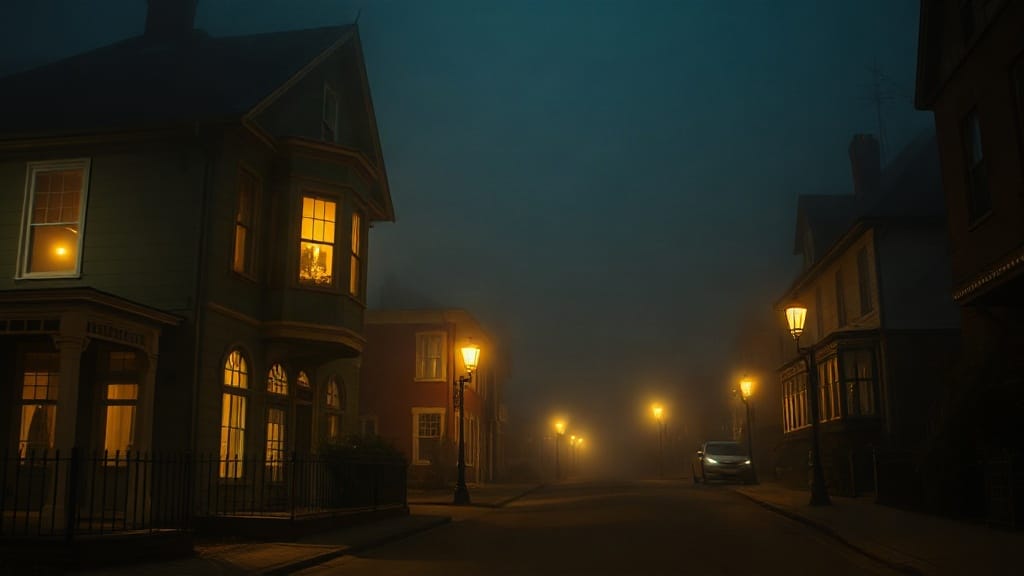
Rhys is now the first actor in Emmy history to win in all three lead performance categories: drama, comedy, and limited series. Two of those wins arrived in a single night, both for Widow's Bay — a horror-comedy from Apple TV+ in which he plays, depending on the episode, either a grieving widower investigating his wife's disappearance in a coastal town or something considerably less categorizable. The show's tonal architecture is the point. It does not ask permission to be funny and terrifying inside the same scene. The Academy, it turns out, didn't ask it to choose either.
The Category Problem That Wasn't
Before the ceremony, the loudest conversation in awards circles concerned eligibility. Apple TV+ submitted Widow's Bay in the comedy field. Critics cried strategy. The show runs forty-two minutes per episode, contains sequences of genuine psychological horror, and features a death count that would embarrass most dramas. Submitting it as a comedy felt, to some observers, like a procedural maneuver — the kind of category arbitrage that *The Bear* pioneered and that the Television Academy has never quite resolved how to police.
But the arbitrage framing misses something structural. Widow's Bay is not pretending to be a comedy to game a less competitive field. It is a comedy in the same way that M*A*S*H (1972) was a comedy — which is to say, it uses comedic rhythm as the primary instrument through which it delivers unbearable things. The jokes in Widow's Bay do not relieve the tension. They are the tension. Rhys's performance is built entirely around this paradox: a man whose grief has become so extreme it has crossed some membrane into absurdity, and who is aware, at some level, that it has. That awareness — played almost entirely in stillness — is what won him both awards.
The Academy's decision to honor the show in both categories simultaneously is less a loophole exploit and more an honest acknowledgment that the category system itself is a legacy artifact from an era when genre was a reliable container. It no longer is.
Where Prestige Relocated
For roughly a decade, prestige television had a recognizable address: the prestige drama. Slow, novelistic, morally complex, geographically specific, often period-set. The Sopranos (1999) built the neighborhood. Mad Men (2007) renovated it. Succession (2018) threw the last great party there before the building was quietly condemned. The Emmy record of that era reflects a medium that understood seriousness as synonymous with dramatic form.
What happened next was not a genre revolution so much as a genre migration. Horror, science fiction, dark comedy, and supernatural thriller did not storm the prestige gates — they simply started building the kind of television that prestige had always claimed to value: layered characters, moral ambiguity, formal ambition, things that rewarded attention. The gates became irrelevant. Widow's Bay did not arrive as a genre insurgent. It arrived as a show that had already absorbed and metabolized the prestige tradition and was using it to do something the tradition hadn't quite managed: be genuinely frightening and genuinely funny at the same time, without sacrificing either.
The six Emmy sweep is the Academy catching up to an audience that had already moved. Horror-comedies, elevated supernatural series, and genre-adjacent limited runs have dominated streaming viewership metrics for three consecutive years. The critical establishment followed eighteen months behind. Awards bodies are now following the critics. The lag is shortening. That is what the Widow's Bay night actually measured.
The Rhys Variable
It would be convenient to frame Matthew Rhys as the vessel through which this shift became visible, and leave it there. That framing is half-right. His historic trifecta — drama win for The Americans (2013) in 2018, limited series win for Perry Mason (2020) in 2021, and now the double for Widow's Bay — does trace an unusually precise map of the medium's formal evolution. From literary spy drama to prestige legal revival to horror-comedy. If you wanted to draw a line through fifteen years of television's shifting center of gravity, you could use Rhys's Emmy shelf as a ruler.
But the more precise point is this: Rhys won twice on the same night because he built two genuinely distinct performances inside the same show. His dramatic submission — the scenes of investigation, of loss, of slow psychological unraveling — and his comedic submission — the moments where grief tips into something grotesque and almost slapstick — are not two halves of one performance. They are two complete performances that happen to share a body and a name. The fact that a single actor could win in both categories for work in a single series does not say something exceptional about Rhys. It says something exceptional about what Widow's Bay is demanding of its performers, and by extension, what a certain strain of contemporary television is demanding of the very concept of genre.
The Diagnostic Reading
Awards ceremonies are poor predictors and decent thermometers. They do not tell us where television is going. They tell us where it has already been, institutionally lagged by roughly two years. Read that way, the 78th Emmys are confirming what showrunners, streaming acquisition executives, and audiences have understood since at least 2022: that genre is no longer a modifier applied to television. It is television's native language.
The prestige drama is not dead. It has simply stopped being the only dialect in which serious work can be conducted. Widow's Bay sweeping a ceremony that, a decade ago, would have struggled to nominate it is not a disruption of the Emmy tradition. It is the Emmy tradition updating its definition of what "serious" means — and finding, somewhat to its own surprise, that serious and scary and funny were never as far apart as the category system implied.
Matthew Rhys will return the awards to a shelf somewhere. The more durable object the night produced is a visible watermark on the medium: this is the level at which genre work is now operating, this is the audience it has earned, and these are the institutions — slowly, always slowly — beginning to say so out loud.