Tonight, HBO's The Gilded Age (2022) returns for its fourth season, premiering at 9 p.m. ET/PT, and if you want a single data point to explain why this matters beyond the usual prestige-TV churn, consider what happened at the Season 4 premiere in New York City last week. Rebecca Hall and Morgan Spector — real-world couple, fictional antagonists — arrived coordinated in Maison Margiela Fall 2026, his look rendered in Bianchetto-painted tailoring, her dress built from tapestry appliqué and black satin draping. The line between the show's costume department and contemporary high fashion, never especially thick, had essentially dissolved. The show they were promoting had become a direct brief for the clothes on their backs.
 Official trailer
That collapse of distance is the defining quality of The Gilded Age in 2026. The show began its life in January 2022 as Julian Fellowes' attempt to give the Downton Abbey (2010) treatment to 1880s New York — old money versus new money, Fifth Avenue as a battlefield, corsets as armour. It was handsome and soapy and somewhat underseen. What it has become, four seasons in, is something more culturally load-bearing: a live reference document for the opulence aesthetic that has been washing through fashion for the better part of two years.
Gold emerged as the season's defining metallic across Fall/Winter 2026 runways, moving beyond accent hardware into full, head-to-toe statement dressing. Schiaparelli, Cult Gaia, and Mugler leaned into embossed and pleated metallics that explicitly referenced the ostentation of the Gilded Age. Gucci anchored the trend with Hollywood-glamour gowns; editors called gilded metallics one of the season's clearest colour stories. At the 2026 Oscars, the phenomenon was visible in real time: Law Roach in a long jacket with Baroque detailing, Audrey Nuna in an asymmetrical ballgown with a regal collar, gold as the evening's dominant grammar. The show did not cause any of this, but it is the most precise fictional articulation of the impulse — which means that every time a stylist reaches for the ornate, the show's aesthetic logic is somewhere in the room.
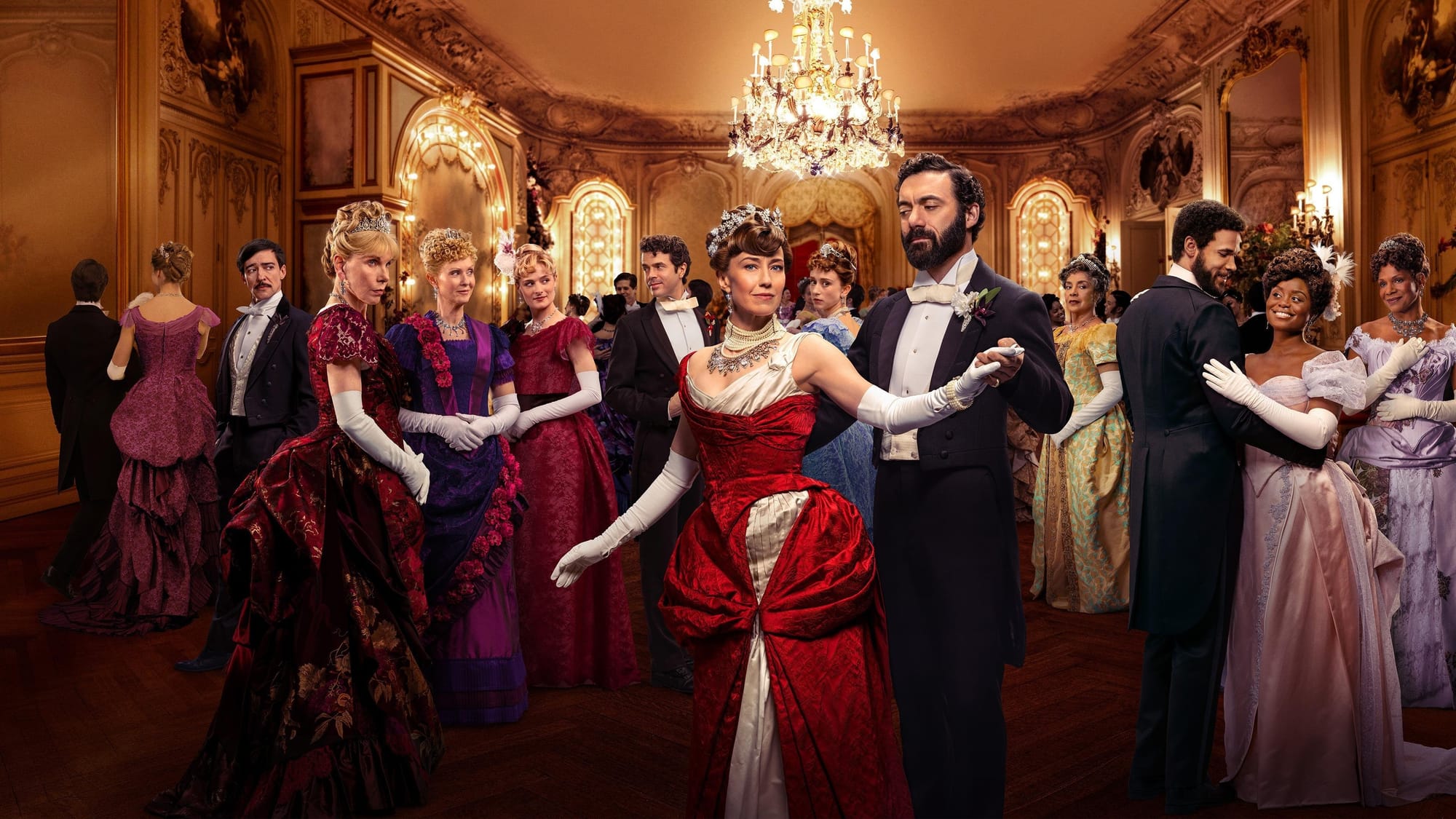
The numbers confirm that audiences sense the show has arrived at something. The Gilded Age reached a new viewership high every week for five consecutive weeks during its third season, with the finale clearing 5 million viewers after three days — a series record. Season 3 closed 30% ahead of Season 2's viewership pace, and the finale achieved an 88% increase over the Season 3 premiere's numbers. By mid-run, the show had placed itself, in the words of one trade report, "in the same ratings league as some of HBO's biggest hits, like The White Lotus and The Last of Us." For a drama that spent its first season being quietly championed by a committed niche audience, that trajectory is striking.
The renewal for Season 4 came on July 28, 2025 — before the third season had even finished airing, a signal of institutional confidence that is relatively rare outside of HBO's marquee properties. Filming ran from February through August 2026 in New York, with additional weeks in Rhode Island, where Newport's Gilded Age mansions have stood in for both New York interiors and European estates across the show's run. The eight-episode fourth season will run weekly through December 20.
The central dramatic engine of Season 4 is consequence. The official logline frames it with a clean economy: Bertha Russell changed Society at a cost, and now her family must reckon with the fallout as Agnes van Rhijn seizes an opportunity to reclaim her position. The Gilded Age has always understood that social power in the 1880s was not merely inherited or purchased — it had to be performed and re-performed, and every performance risked overreach. Carrie Coon's Bertha, the show's most compelling creation, has spent three seasons engineering her family's ascent with a ruthlessness that the show codes simultaneously as admirable and corrosive. Season 4 appears to be arriving at the bill.
The returning ensemble — Coon, Christine Baranski as Agnes, Morgan Spector as George, Cynthia Nixon as Ada, Louisa Jacobson as Marian, Denée Benton as Peggy Scott — is augmented by a guest roster that reads as the most ambitious the show has assembled. Phylicia Rashad joins as Mrs. Elizabeth Kirkland; Bill Camp, Elizabeth Marvel, Jim Gaffigan, Adrienne Warren, Dennis Haysbert, Bonnie Milligan, and Dallas Roberts round out the additions. According to the show's writer-producer Sonja Warfield, the season is set in 1885 and 1886 — a period of particular turbulence in the real Gilded Age, when the gap between capital and labour was becoming impossible to ignore and the social rituals of the ruling class were growing more elaborate in almost direct proportion to their precariousness. Season 4 introduces John D. Rockefeller as a formidable opponent for George Russell, which suggests Fellowes is willing to let at least some of that historical pressure into the frame. Jordan Donica, who plays Dr. William Kirkland, has been promoted to series regular, centralising Peggy's storyline in ways previous seasons kept peripheral.
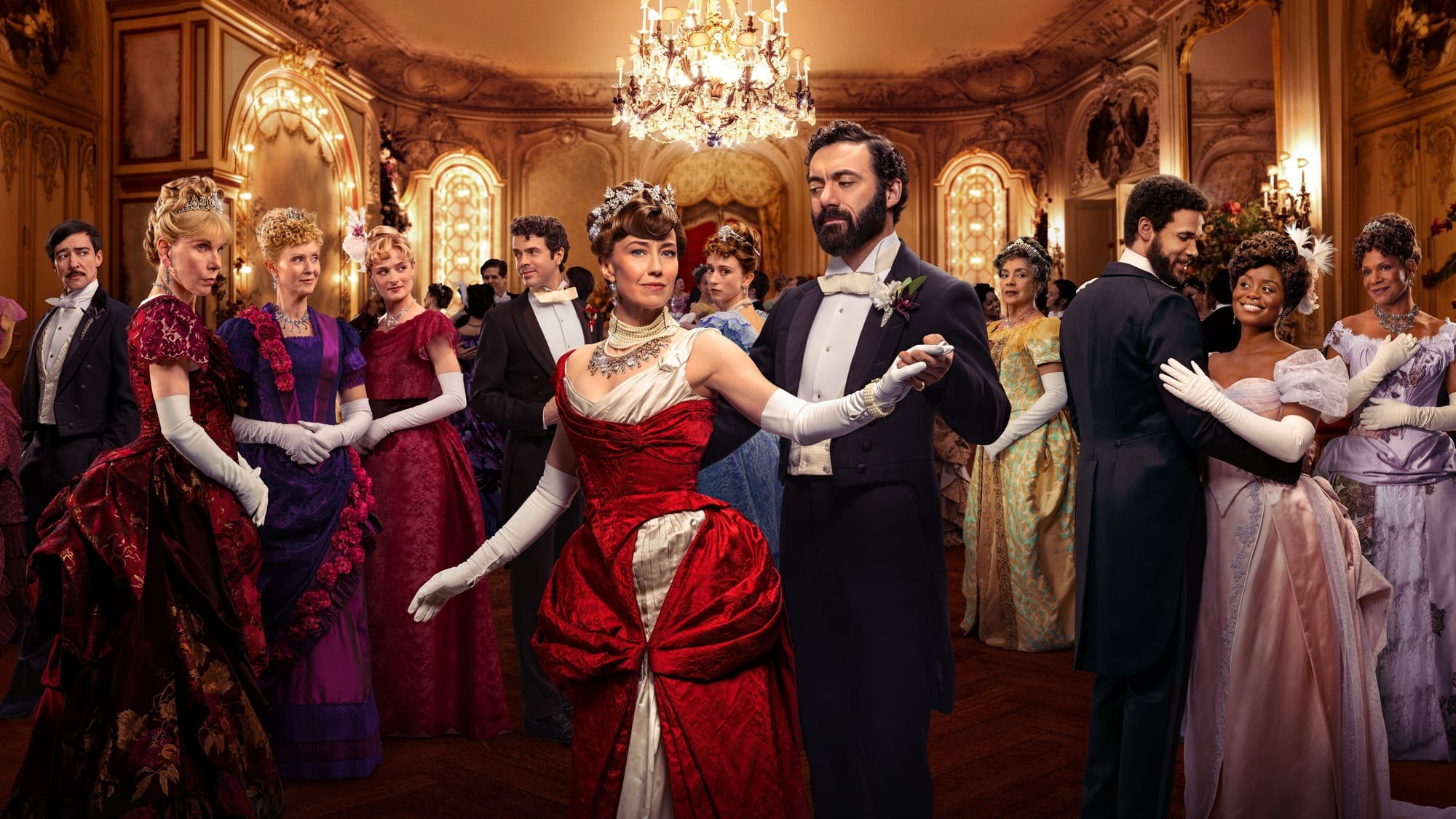
What The Gilded Age has quietly worked out, across four seasons, is that the period drama form is most durable not when it offers escape but when it offers analogy. The 1880s that Fellowes has constructed — in which new wealth rewrites the rules faster than old wealth can codify them, in which the social contract is understood by everyone to be a fiction that nonetheless carries real force — is not a refuge from contemporary life. It is a diagram of it. The show's fashion axis amplifies this: at a moment when the industry is processing its own questions about hierarchy and legacy, the aesthetic of maximum-effort dressing that The Gilded Age embodies has migrated from the screen into the actual calendar of cultural events. The show's costumes, designed to read as the aggressive self-presentation of people who understand that appearance is argument, now circulate as a general influence on how people dress when the stakes feel high.
That influence is visible even in the friction around the show's own premiere. Carrie Coon attended in Acne Studios Spring 2027 — a metallic blue top paired with a voluminous floral skirt, deliberately futuristic against the period drama she was there to promote. Louisa Jacobson wore Conner Ives to the premiere and pivoted to fluid Calvin Klein tailoring the following morning for press. These are not Gilded Age looks; they are responses to the Gilded Age sensibility, proof that the show has generated enough cultural gravity to produce opposition as well as imitation. When a drama's aesthetic becomes a reference point strong enough to push back against, it has moved beyond television into something that functions more like a shared visual language.
The harder editorial question is whether Season 4 can do anything meaningful with that position. Prestige drama has a reliable tendency to mistake atmosphere for argument, and The Gilded Age has been accused, not without basis, of keeping its more interesting social material — the show's treatment of Peggy Scott's navigation of race, ambition, and belonging in 1880s New York — at the margins of a frame that privileges the domestic theatre of its white characters. Whether the expanded roles for Denée Benton and the Kirkland family this season represent a genuine structural shift or a continuation of the show's existing proportions will become apparent quickly. Prestige television in 2026 is increasingly aware that its cultural authority depends on more than production value and wardrobes.
For now, though, The Gilded Age Season 4 arrives as the most anticipated run of a show that has spent four years building from a modest debut into something that functions as a genuine cultural barometer. The first episode airs tonight. The remaining seven follow weekly until December 20, which means the show will run directly through the holiday season — an appropriate schedule for a drama whose central subject is the performance of wealth, during the period of the year when everyone is most acutely aware of what that performance costs.