San Diego Comic-Con 2026 hasn't closed its doors yet and the back-issue bins are already on fire. The moment Marvel Studios confirmed a Nova series written by Michael Waldron, copies of The Man Called Nova #1 (1976) vanished from dealer tables at $40 a pop — the same copies that were sitting ignored at $8 three days earlier. That's not enthusiasm. That's a market reacting to information the way a trading floor reacts to an earnings call.
This is the dominant economic reality of the printed comic book in 2026: its value is largely determined not by the story inside it, but by what gets announced in a convention panel. SDCC has become the single most consequential event on the speculator calendar, a 72-hour window where IP confirmations translate directly into cash moving through the secondary market. The convention has always been a launchpad for pop culture news — but the feedback loop between announcement and comic book price spike has never been faster, tighter, or more ruthless than it is right now.
The Nova Effect
Waldron's attachment to a Nova MCU project was the most incendiary announcement of the week. His credits — Loki, Doctor Strange en el Multiverso de la Locura (Doctor Strange in the Multiverse of Madness, 2022) — signal a writer comfortable with cosmic mythology and structural complexity, which is precisely what a Richard Rider adaptation demands. Within six hours of the panel, CGC-graded copies of Nova #1 had listed and sold on eBay at prices ranging from $180 to $340 depending on grade. Raw copies followed. Then New Warriors #1 (1990), Nova's Bronze Age relaunch anchor. Then Annihilation #1 (2006), the cosmic war epic that redefined the character's modern relevance.
The cascade is predictable in structure if not in scale. Speculators have mapped the MCU's historical announcement-to-spike pattern long enough to anticipate which issues will move. What's changed in 2026 is the velocity — social media arbitrage means a key issue can be bought, relisted, and flipped before the panel Q&A has ended.
G.I. Joe and the McBride Variable
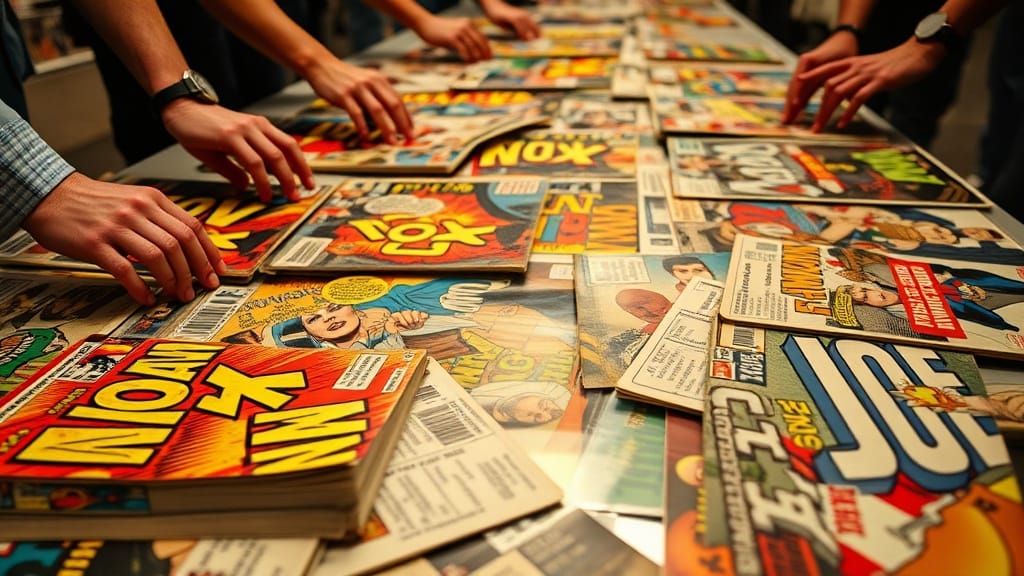
The announcement of a live-action G.I. Joe film directed by Danny McBride introduced a different kind of market logic. McBride's involvement doesn't signal prestige IP reverence — it signals tone, irreverence, the possibility of a film that treats the franchise as material rather than mythology. That ambiguity, paradoxically, drove speculation into early-run G.I. Joe: A Real American Hero issues precisely because collectors weren't sure which direction the film would pull. First appearances of Snake Eyes, Destro, and the Baroness all saw movement. When the market doesn't know what to bet on, it bets on everything foundational.
That scattershot speculation pattern is revealing. It suggests that a significant portion of buyers aren't reading these comics — they're reading announcements, trailers, and casting rumors, and using comics as the most accessible speculative asset tied to the IP.
X-Men '97 and the Nostalgia Premium
The confirmation of X-Men '97 Season 2 operates on a slightly different register. The first season's critical performance — widely considered the most emotionally precise superhero animation since the original run — gave Season 2 news a weight that pure IP speculation doesn't fully explain. Here, the market spike in key X-Men issues carries a nostalgia premium layered on top of speculative logic. Uncanny X-Men #221, the first appearance of Mr. Sinister teased as a Season 2 antagonist, moved sharply. So did issues featuring the Nasty Boys. The buyers include a meaningful number of actual fans, not just flippers — which makes the price data messier but the cultural signal clearer.
What X-Men '97 demonstrates is that animation, long treated as the minor leagues of IP prestige, now commands the same speculative attention as live-action announcements. The ceiling has risen.
The Dependency Problem
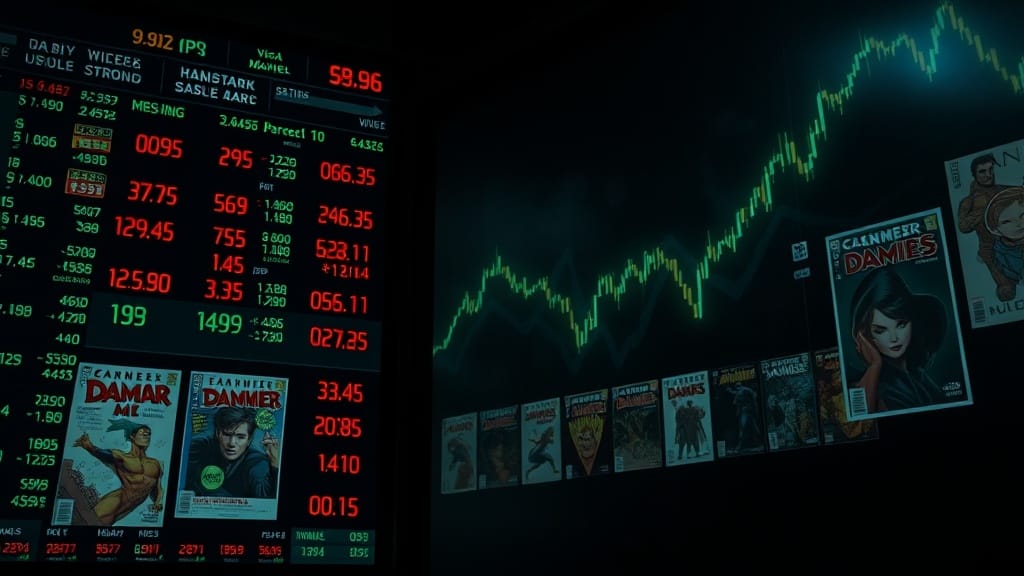
The throughline across all three announcements is structural dependency. The printed comic book market — already contracting at the direct-market retail level — has found a secondary lifeline in speculation driven entirely by Hollywood and streaming calendars. That's not a sustainable creative economy. Publishers don't control the pipeline that generates demand for their own back catalog. A single production delay, a casting controversy, a project that quietly enters development hell, can deflate a speculative bubble and strand retailers who ordered heavily on momentum.
SDCC 2026 will be remembered as a strong convention. The announcements were real, the energy was genuine, and the Hall H crowds delivered the spectacle the industry needs. But the spectacle is now doing the work that the comics themselves used to do — building anticipation, establishing value, generating desire. Until publishers find a way to reclaim that function, every July will feel less like a celebration of the medium and more like an earnings report.
The back-issue market is thriving. The medium it feeds on is still figuring out whether that's good news.