The $111 billion merger between Paramount Global and Warner Bros. Discovery was never going to be quiet. But the specific noise it is making now — Teamsters locals coordinating with WGA leadership, open letters demanding enforceable workforce commitments, regulatory testimony that is as much political theater as legal strategy — cuts closer to a structural truth than most of the financial press has been willing to name. This is not a labor dispute layered onto a corporate deal. The labor dispute is the deal, made visible.

David Ellison's Skydance-backed play for Paramount was sold, in the language of its own press releases, as a creative renaissance. New capital, renewed IP pipelines, a streaming platform finally funded to compete. What it was not sold as — though anyone who modeled the debt-service obligations could see it plainly — was a consolidation requiring the elimination of redundant cost centers at scale. In a merged entity carrying the combined leverage of two already over-leveraged studios, "redundant cost centers" is a euphemism with a very specific human count attached to it.
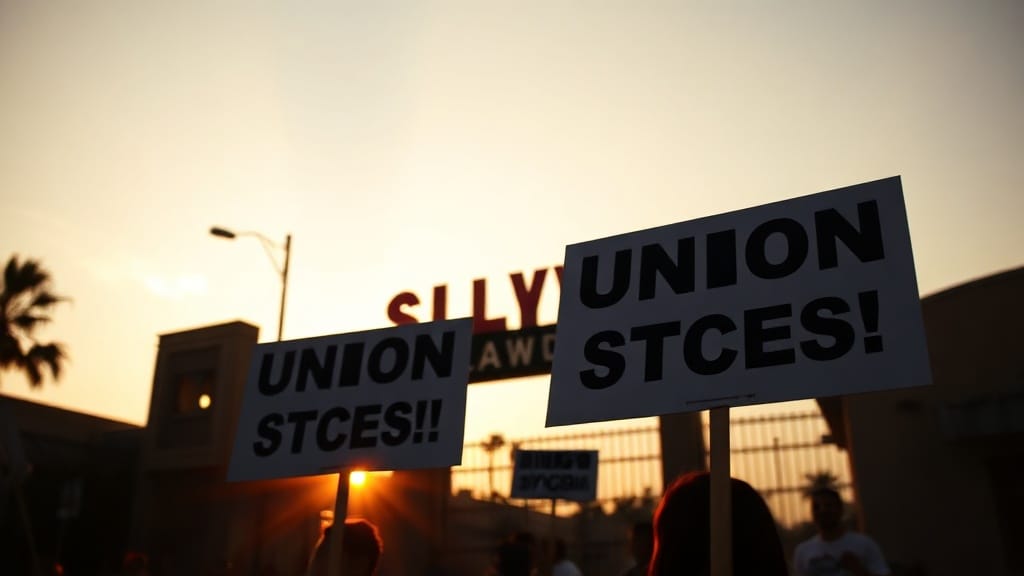
The Teamsters and the WGA are not naive about this arithmetic. Their public demand for binding workforce commitments — not letters of intent, not aspirational language in an SEC filing, but contractually enforceable protections — is a demand that Ellison's team translate its creative-prosperity rhetoric into a legal instrument. The silence in response to that demand is, functionally, an answer.
The Consolidation Paradox
Every major Hollywood merger of the past fifteen years has been narrated through the same ideological frame: scale as salvation. The argument is structurally coherent on its surface. Streaming fragmentation has eroded the theatrical revenue floor. Advertising markets are volatile. Content budgets require a balance sheet large enough to absorb multi-season bets. Therefore, consolidation is not predatory — it is defensive, even necessary.
What this frame systematically obscures is that the debt instruments used to finance consolidation generate pressure that runs directly counter to the creative investment being promised. When AT&T absorbed WarnerMedia and then spun it into Warner Bros. Discovery, the resulting entity carried approximately $43 billion in debt at close. The creative casualties — the Batgirl write-downs, the CNN+ shutdown after 30 days, the aggressive content library purges — were not strategic failures. They were debt-service logic expressed as programming decisions. The merger did not create a stronger creative enterprise. It created a more efficient extraction machine, at least in the short term.