On July 15, 2016, Netflix dropped all eight episodes of Stranger Things (Stranger Things, 2016) without a premiere party, without a red carpet, and without a single piece of conventional prestige-TV marketing machinery behind it. There were no weekly countdowns, no critical consensus building over months of screener releases, no awards-season campaign laying the groundwork. The Duffer Brothers' series arrived the way a rumor spreads in a small town: quietly, then all at once. Within seventy-two hours, it was the only thing anyone was talking about.
 Official trailer
Ten years later, that origin story matters more than the show's mythology. Stranger Things did not simply revive the aesthetic vocabulary of the 1980s — John Carpenter synths, Spielberg suburban dread, Stephen King paperback horror. It demonstrated, with empirical finality, that the internet could manufacture a shared cultural moment without any of the broadcast infrastructure that had made shared cultural moments possible for the previous fifty years. It was the last great myth the streaming era produced, and it is unlikely to produce another one like it.
The Machine Before the Myth
To understand what Stranger Things accomplished, it helps to understand the specific cultural vacuum it filled. By mid-2016, the binge model had been dominant for roughly four years. House of Cards, Orange Is the New Black, Narcos — Netflix had proven it could make prestige television. What it had not proven was that it could generate the kind of spontaneous, cross-demographic, you-need-to-watch-this-right-now contagion that had defined network television at its peak. The water-cooler conversation, already a cliché by 2010, seemed structurally incompatible with a platform where everyone watched at a different pace, in a different time zone, alone on a laptop.
Stranger Things collapsed that incompatibility. Its eight-episode first season was short enough to finish in a weekend but dense enough in reference and feeling to sustain weeks of online dissection. Its nostalgia operated on two simultaneous frequencies: adults who had lived through the 1980s experienced recognition; younger viewers who had not experienced it as discovery. Both groups wanted to talk about it. Both groups were on the same platforms. The conversation, for a few weeks in the summer of 2016, had the texture of a live event — something streaming had, until then, almost never achieved.
Nostalgia as Infrastructure
The critical consensus at the time framed the show's appeal as primarily nostalgic, which was accurate but insufficient. Nostalgia was not the product Stranger Things was selling. Nostalgia was the delivery mechanism for something more durable: a grammar of storytelling so legible, so precisely calibrated to produce specific emotional responses, that it functioned almost like open-source code. The Duffer Brothers had studied their sources — E.T., It, Poltergeist, The Thing, Dungeons & Dragons manuals, the entire Amblin Entertainment catalog — with the rigor of scholars and the instincts of engineers. What they built was not a pastiche. It was a reconstruction of the affective architecture of childhood adventure, stripped of irony, and deployed without apology.
That absence of irony was the decisive formal choice. The prestige-TV landscape of 2016 was saturated with shows that wore their genre influences as a kind of costume, always maintaining a metacritical distance from the pleasures they were trafficking in. Stranger Things refused that distance. It was sincere in a way that read, paradoxically, as radical. Eleven's pain was real. Will Byers's disappearance carried genuine weight. The friendship between Mike, Dustin, Lucas, and Will was rendered with an emotional specificity that no amount of retro styling could have manufactured on its own. The '80s aesthetic was the frame, but the sincerity was the engine.
What the Upside Down Actually Mapped
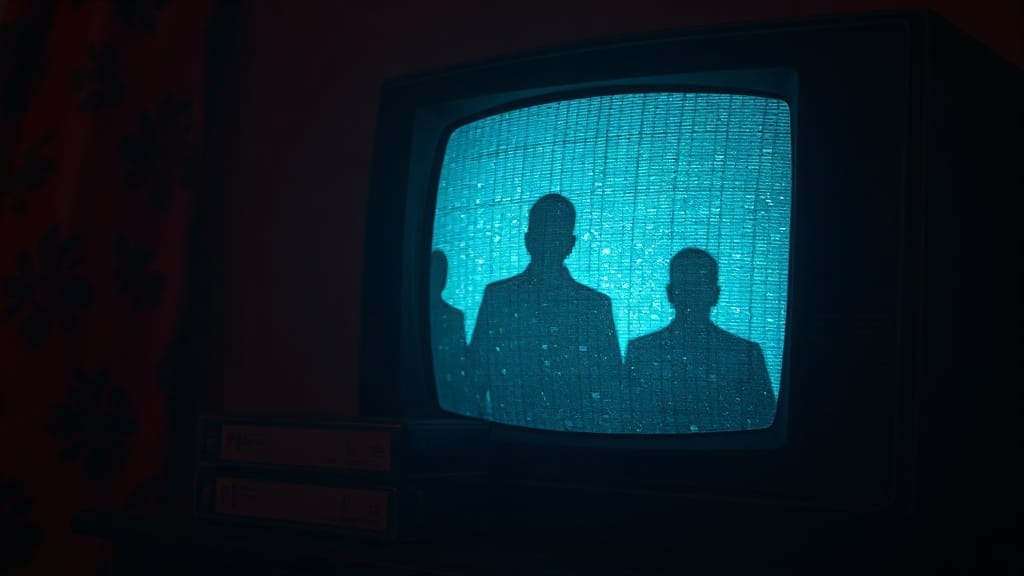
The Upside Down — the show's central metaphor, a mirror dimension of rot and shadow layered beneath the surface of Hawkins, Indiana — proved unusually generative as a cultural symbol precisely because it was interpretively elastic. In 2016, with a presidential election four months away and a decade of economic anxiety metastasizing into something more structural, a literal underworld of decay lurking beneath an idealized American suburb hit differently than the Duffer Brothers may have intended. The show never made that subtext explicit, which was the correct instinct. The Upside Down worked as political allegory, as psychological metaphor for trauma and depression, as a visual language for the specific terror of something ordinary revealing itself as monstrous. It accumulated meaning without demanding it.
That interpretive flexibility is a property of myths, not of television shows. Most television shows, even great ones, produce a fixed meaning and then close around it. Stranger Things remained porous. Fan theories, academic essays, think-pieces that used Hawkins as a lens for examining Reagan-era optimism — the show absorbed all of it without contradiction. A decade later, it still functions as a Rorschach test for the anxieties of whatever moment is being examined. That is not a product of planning. It is the signature of something that accidentally achieved mythological density.
The Machine After the Myth
The show's cultural arc after Season 1 is a study in the tension between organic phenomena and industrial replication. Season 2 was larger, darker, and more expensive. Season 3 — set in a mall, scored to "The NeverEnding Story," accelerated to the rhythm of an action film — was the highest-rated season in the show's history and, arguably, the moment the franchise completed its transformation from cultural event to cultural institution. By Season 4, with its feature-length episodes, its global rollout, its Kate Bush resurrection, and its $30 million per-episode production budget, Stranger Things had become something it had never been designed to be: a content franchise in the full industrial sense of the term.
The Kate Bush phenomenon deserves specific attention because it illustrates something important about how the show's cultural power evolved. When "Running Up That Hill" returned to the top of the charts in 2022 — forty years after its original release — it was not because the song had been featured in a licensed, carefully curated playlist. It was because the show had embedded it into a narrative moment of such emotional precision that the song became inseparable from the character of Max Mayfield, from her specific desperation, from the precise mechanics of how the scene was scored and cut. Streaming had, in theory, democratized access to every piece of music ever recorded. Stranger Things demonstrated that curation with narrative context could still produce discovery at scale. The show turned a forty-year-old song into the most-streamed track of 2022. That is an extraordinary exercise of cultural leverage.
Stranger Things demonstrated that curation with narrative context could still produce discovery at scale. It turned a forty-year-old song into the most-streamed track of 2022. That is an extraordinary exercise of cultural leverage.
The Last Shared Myth
The streaming landscape in 2026 looks nothing like it did in 2016. The consolidation of platforms, the introduction of ad-supported tiers, the fragmentation of audiences across an ever-expanding catalog, the algorithmic personalization that increasingly delivers people into self-contained content silos — all of these developments work against the conditions that made Stranger Things possible as a cultural event. The show's first season succeeded in part because Netflix was still a relatively unified audience environment. Everyone on the platform saw the same thumbnail. There was less competition for attention within the platform itself, and the external cultural conversation had not yet fully atomized into the algorithmic micro-communities it inhabits today.
The shows that have approached Stranger Things' cultural footprint in the years since — Squid Game, Wednesday, The Last of Us — have each achieved massive viewership numbers and generated significant online conversation. None of them has quite replicated the specific quality of simultaneous cultural saturation that Hawkins produced in July 2016. The conditions were too specific, the moment too unrepeatable. The streaming wars fragmented the audience. The algorithmic feed replaced the shared timeline. What Stranger Things built required a moment of collective attention that the industry has since systematically dismantled in pursuit of scale.
This is not a lament for a lost golden age. It is an observation about structural change. The broadcast era produced shared myths through scarcity — everyone watched the same three channels. The early streaming era produced a brief window in which abundance had not yet atomized into isolation. Stranger Things arrived in that window and built the last monument to the idea that a piece of popular entertainment could mean the same thing to everyone, at the same time, all at once.
Hawkins, Indiana, as a Place That Never Existed
What the show's creators understood — and what the show's longevity confirms — is that Hawkins was never really about the 1980s. It was about the feeling of a world in which the scale of human relationships was still legible: a town where you could know everyone, where a missing child could mobilize an entire community, where friendship was enacted through physical presence and shared risk rather than networked connection. The 1980s setting was the most plausible container for that fantasy in a contemporary context, but the fantasy itself is not historical. It is perennial.
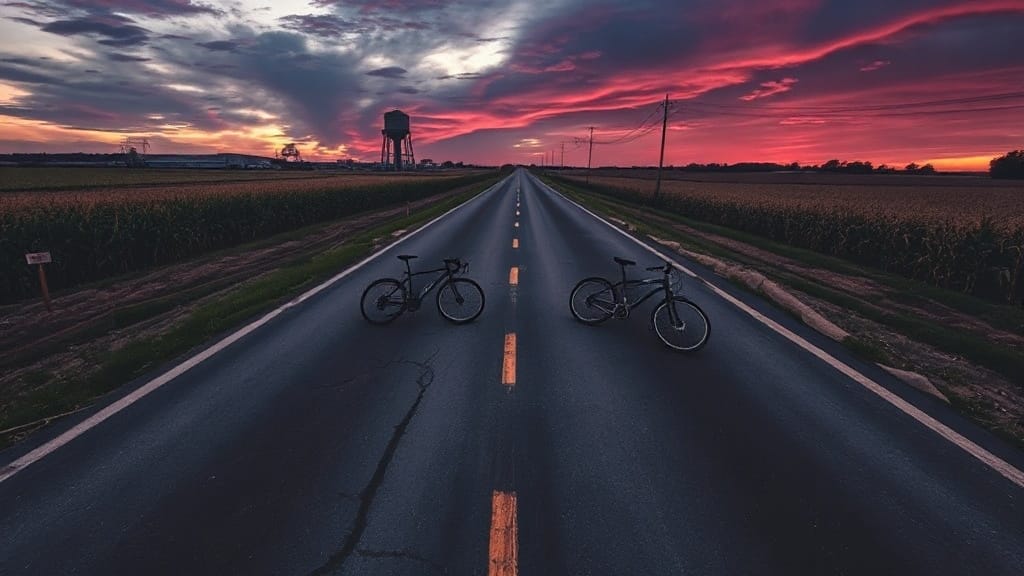
Children's adventure stories have always been about this — the moment before the world becomes too large to navigate on a bicycle. What Stranger Things understood was that adults in 2016 needed that story at least as badly as the children watching it. A decade of social media, of ambient connectivity, of the peculiar loneliness produced by being permanently reachable, had made the image of four kids on bikes in a midwestern suburb into something more than nostalgia. It was aspiration. It was grief. It was, for a summer, the only story everyone was telling each other.
The final season — scheduled to arrive before the decade closes — will almost certainly be watched by tens of millions of people. It will generate enormous numbers. It may even generate the kind of conversation that its first season did, though the structural conditions for that conversation no longer fully exist. What it will not do is surprise anyone the way July 15, 2016 surprised everyone. The mythology is now institutional. The monster is known.
But the Upside Down is still there, mapped onto a decade of collective memory. And the lights are still flickering.