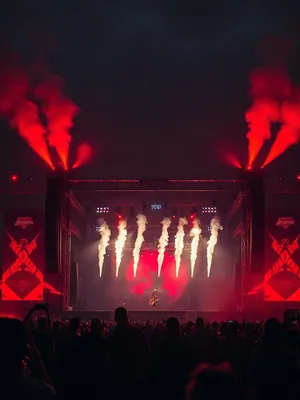
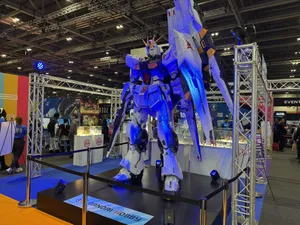
When Anime Expo 2026 confirmed that Kimetsu no Yaiba: Castillo del Infinito (Demon Slayer: Kimetsu no Yaiba – The Movie: Infinity Castle, 2025) would hit Crunchyroll and Netflix on July 28, the announcement landed less like news and more like a ratification. The date had been anticipated, negotiated, and structurally inevitable — the final beat in a distribution strategy that Ufotable and Aniplex had been engineering since the film's theatrical debut.
The model is worth examining precisely because it doesn't look revolutionary at first glance. A theatrical window followed by a streaming release is, on its surface, standard industry practice. What Infinity Castle has executed is something more deliberate: a two-stage event architecture, where each phase is designed to function as its own cultural moment rather than a handoff between formats.
The Theater as Ritual, Not Prerequisite
The theatrical run of Infinity Castle was never positioned as a prerequisite for the streaming experience. It was positioned as a different experience entirely — one defined by communal viewing, IMAX screenings, and the social weight of being in the room when something happens. Box office figures validated this framing. The film crossed $500 million globally in its opening weeks, driven largely by an audience that had every intention of watching it again on a screen at home. That dual-consumption behavior is not incidental to the strategy. It is the strategy.
Ufotable understood that the franchise's fanbase operates on layered engagement. Viewers who had followed Kimetsu no Yaiba through three television seasons and the record-breaking Mugen Train arc were not going to choose between the cinema and the stream — they were going to do both, at different emotional registers. The theatrical window didn't protect the streaming release from cannibalization. It primed it.
The Streaming Drop as a Second Premiere
Announcing the July 28 date at Anime Expo was not a logistical update. It was a programming decision. Anime Expo functions as the largest anime-specific cultural gathering in the Western market, and using it as the venue for a streaming confirmation turns a distribution milestone into a fan event. The crowd reaction, the social media amplification, the clip cycles — all of it extends the film's cultural footprint without a single additional marketing dollar spent on traditional media.
Crunchyroll and Netflix securing simultaneous availability is the other structural novelty here. The anime streaming landscape has historically been fragmented by regional exclusivity deals that create exactly the kind of friction that drives piracy and audience attrition. Dual-platform day-and-date availability on July 28 doesn't just maximize reach — it removes the excuse for delay. Every market, every subscriber tier, every device, on the same day. The event logic of theatrical becomes the event logic of streaming.
What This Model Demands — and What It Risks
The "event drop" architecture works because Infinity Castle is a property with a decade of accumulated audience investment behind it. The question its success raises is whether the model is replicable or whether it is, at its core, a franchise privilege. Smaller anime films cannot manufacture the kind of anticipation that makes a streaming confirmation into a news cycle. What they can study is the underlying principle: that the relationship between theatrical and streaming need not be hierarchical. One window does not diminish the other if each is given its own ceremonial weight.
The risk, of course, is inflation. If every major anime release begins engineering dual-event structures, the architecture becomes ambient noise. The model's power depends on scarcity — on the sense that this particular film, in this particular moment, demands to be witnessed twice. Infinity Castle earned that perception. The franchises that follow it will have to build it from scratch.
The Broader Recalibration
What Anime Expo 2026 confirmed is not simply a date. It confirmed that anime — long categorized as a niche import even at its most popular — now operates with the distribution infrastructure and strategic intentionality of a global entertainment category. The separation of theatrical and streaming into distinct cultural events is the same logic Hollywood has attempted and largely fumbled with its own tentpole releases. Anime, working with a more cohesive fanbase and a clearer understanding of how that fanbase consumes media, may have threaded the needle first.
July 28 is when Infinity Castle arrives on your screen. The premiere, structurally speaking, already happened — and then happened again. That's the point.