Walk through the concept art of any major film, game, or album released this year and the same visual vocabulary keeps surfacing: rain-slicked streets lit by signage in languages the characters can't read, chrome bodies failing under neon, corporate logos stacked taller than the buildings they're bolted to. None of this originated recently. It is cyberpunk's aesthetic, assembled across four decades from Blade Runner (1982) and William Gibson's Neuromancer (1984), and it has become the default visual language for describing a culture that feels like it is collapsing in slow motion. The question worth asking isn't whether cyberpunk imagery is everywhere — it obviously is — but why a genre built to warn about corporate dystopia became the style corporations themselves now reach for first.
A Warning That Got Absorbed
Cyberpunk fiction was never meant to be aspirational. Gibson, Bruce Sterling, and the genre's other foundational writers built worlds where megacorporations had replaced governments, where bodily augmentation was a symptom of economic desperation rather than empowerment, and where the "cool" surface of hacker culture masked total precarity underneath. The genre's visual signature — neon against decay, luxury against rot — was supposed to be legible as critique. You were meant to look at Ridley Scott's Los Angeles in Blade Runner and feel the wrongness of a world where advertising is the only thing still thriving.
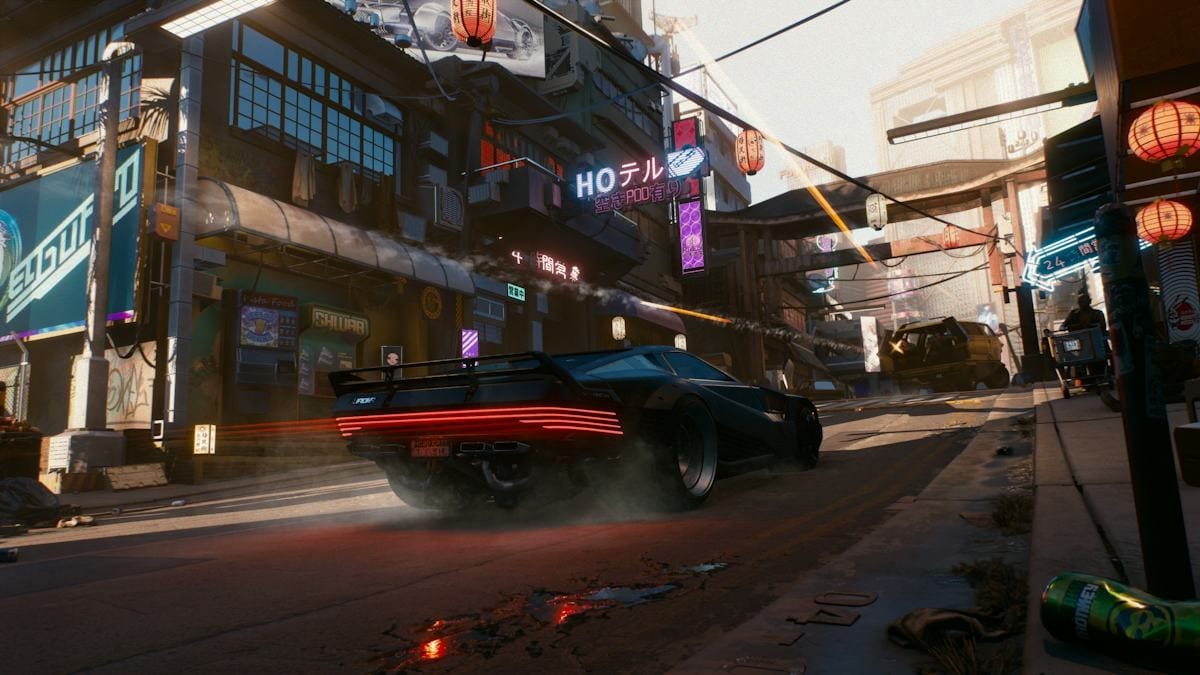
That critique survived mostly intact through the genre's first wave. It started eroding once the aesthetic proved more durable than the politics attached to it. By the time Cyberpunk 2077 (2020) let millions of players drive through Night City's advertising canyons for fun, the imagery had been thoroughly decoupled from its original argument. You can admire the skyline without absorbing the critique of the economic system that produced it — and most people, understandably, do exactly that. The warning became wallpaper.
Why the Style Outlived the Subtext
Aesthetics travel faster than arguments, and cyberpunk's visual grammar happens to be extraordinarily efficient at signaling "the future" to a contemporary audience, regardless of what that future is supposed to mean. Neon-on-wet-asphalt reads as technologically advanced and emotionally bleak in a single image, which makes it useful shorthand for everything from luxury fashion campaigns to corporate tech-conference branding — contexts that have no interest in the genre's actual critique of corporate power and every interest in its surface sophistication. Cyberpunk: Edgerunners (2022) briefly reversed that drift, using Studio Trigger's kinetic animation to reattach real stakes and real grief to the imagery, which is part of why its 2026 sequel carries so much pressure to repeat something that was never supposed to be replicable on demand.
There's a second explanation that has less to do with style and more to do with material conditions. Cyberpunk's imagined future — extreme wealth concentration, privatized infrastructure, surveillance normalized as convenience, bodies modified to stay economically competitive — increasingly describes the present without much translation required. A genre built on exaggerating late-capitalist anxiety doesn't have to exaggerate as much as it used to. Wealth concentration keeps setting new records, gig work keeps colonizing more of daily life, and algorithmic surveillance keeps getting rebranded as personalization. Cyberpunk's aesthetic circulates so widely now partly because it has stopped requiring much imagination to parse.
What Gets Lost in the Repetition
The risk in all of this is not that cyberpunk imagery is overused — genres recycle their own signatures constantly, and that is not inherently a problem. The risk is that the aesthetic's omnipresence has made it legible as mood rather than argument, a filter you apply rather than a warning you absorb. When neon-and-rain becomes interchangeable with "futuristic" in general, divorced from any specific claim about who the future serves and who it grinds down, the genre has been fully neutralized by its own popularity. Cyberpunk didn't fail to predict the culture of collapse it was warning about. It succeeded so completely that the warning got mistaken for the brand.